
Why Helen Has a Scar on Her Face in Christopher Nolan’s ‘The Odyssey’?
Credit: Universal Pictures
Credit: Universal Pictures
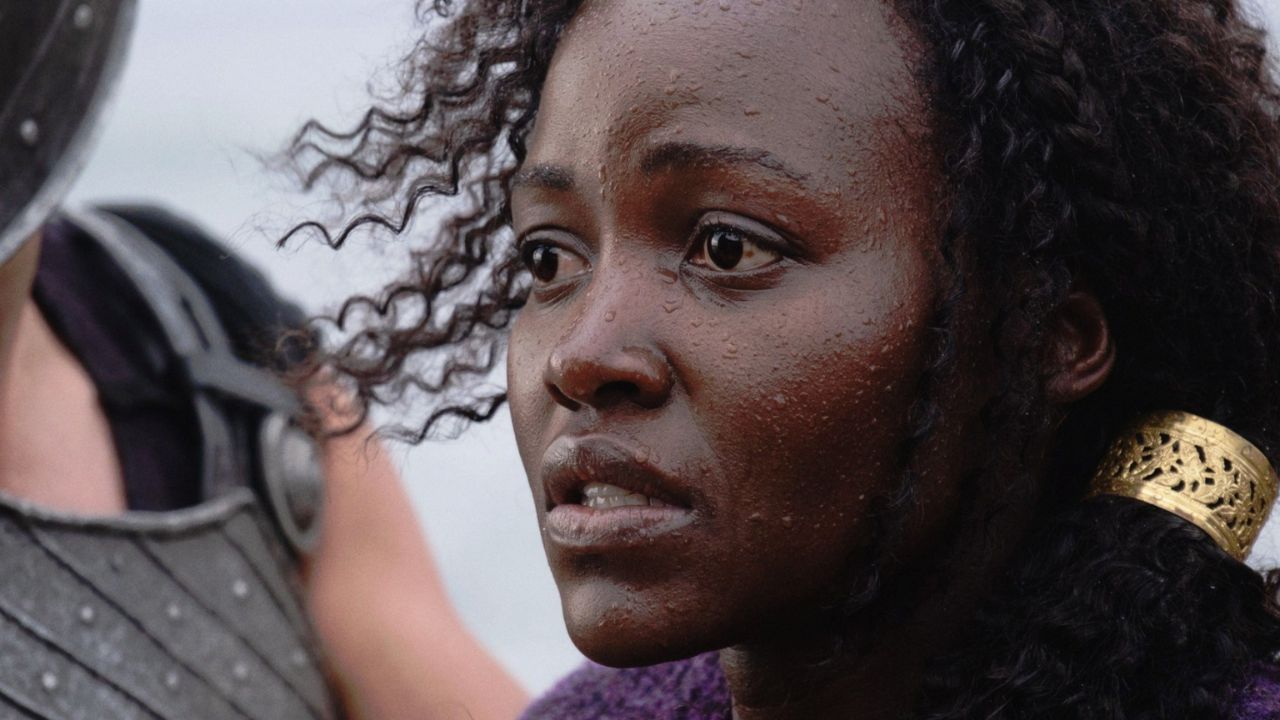
Christopher Nolan's The Odyssey is packed with bold reinterpretations of Homer's ancient epic, but one subtle visual detail has sparked plenty of discussion among fans. When Lupita Nyong'o appears as Helen of Troy, she is no longer remembered solely for the legendary beauty that "launched a thousand ships." Instead, she bears a prominent scar across one side of her face—a feature never associated with the character in Homer's poem or most previous adaptations.
The decision has left many viewers wondering why Helen has a scar in Nolan's version of the story. While the filmmaker never explicitly explains how she received the injury, the film drops several clues that point toward its significance. More importantly, the scar reflects how Nolan reimagines Helen not just as the woman who sparked the Trojan War, but as someone forced to live with its devastating consequences.
What Christopher Nolan's The Odyssey reveals about Helen's facial scar?
ADVERTISEMENT
Article continues below this ad
Helen's facial scar is introduced without much explanation, but the film wastes little time hinting at what happened. By the time audiences meet her, Helen has already returned to Sparta and resumed life alongside her husband, Menelaus. However, their reunion is far from the happy ending that many traditional retellings suggest.
One of the biggest clues comes through Menelaus himself. Referring to his wife, he jokes about "the face that launched a thousand ships," before quipping that it may now be "five hundred." The remark directly acknowledges Helen's scar while implying that it serves as a lasting reminder of everything that followed her relationship with Paris and the outbreak of the Trojan War.
Although Christopher Nolan never depicts the moment Helen receives the injury, the dialogue strongly suggests that the scar was inflicted after Troy's fall, with Menelaus' bitterness over the war hanging heavily over their relationship.

via Imago
Credits: Imago
Rather than portraying Helen as someone simply welcomed home, the film presents a far more complicated aftermath in which the emotional wounds of the conflict have become physical as well. The scar also reshapes Helen's role within the story.
Instead of remaining the mythical beauty whose appearance defined her legacy, she becomes another survivor marked by the violence and trauma left behind by the decade-long war.
The key difference between Helen in The Odyssey and Troy
One reason Helen's appearance has attracted so much attention is because the scar has no basis in Homer's original poem. Throughout The Odyssey, Homer never describes Helen as carrying any facial injury after the Trojan War. In fact, the epic offers very few physical descriptions of Helen at all, instead defining her through her reputation, her beauty and the role she played in one of mythology's greatest conflicts.
Ironically, the famous scar in Homer's work belongs to Odysseus rather than Helen. His old nurse recognises him after noticing a scar on his thigh, making it one of the poem's most memorable identifying features. Helen, meanwhile, remains physically unchanged in the text.
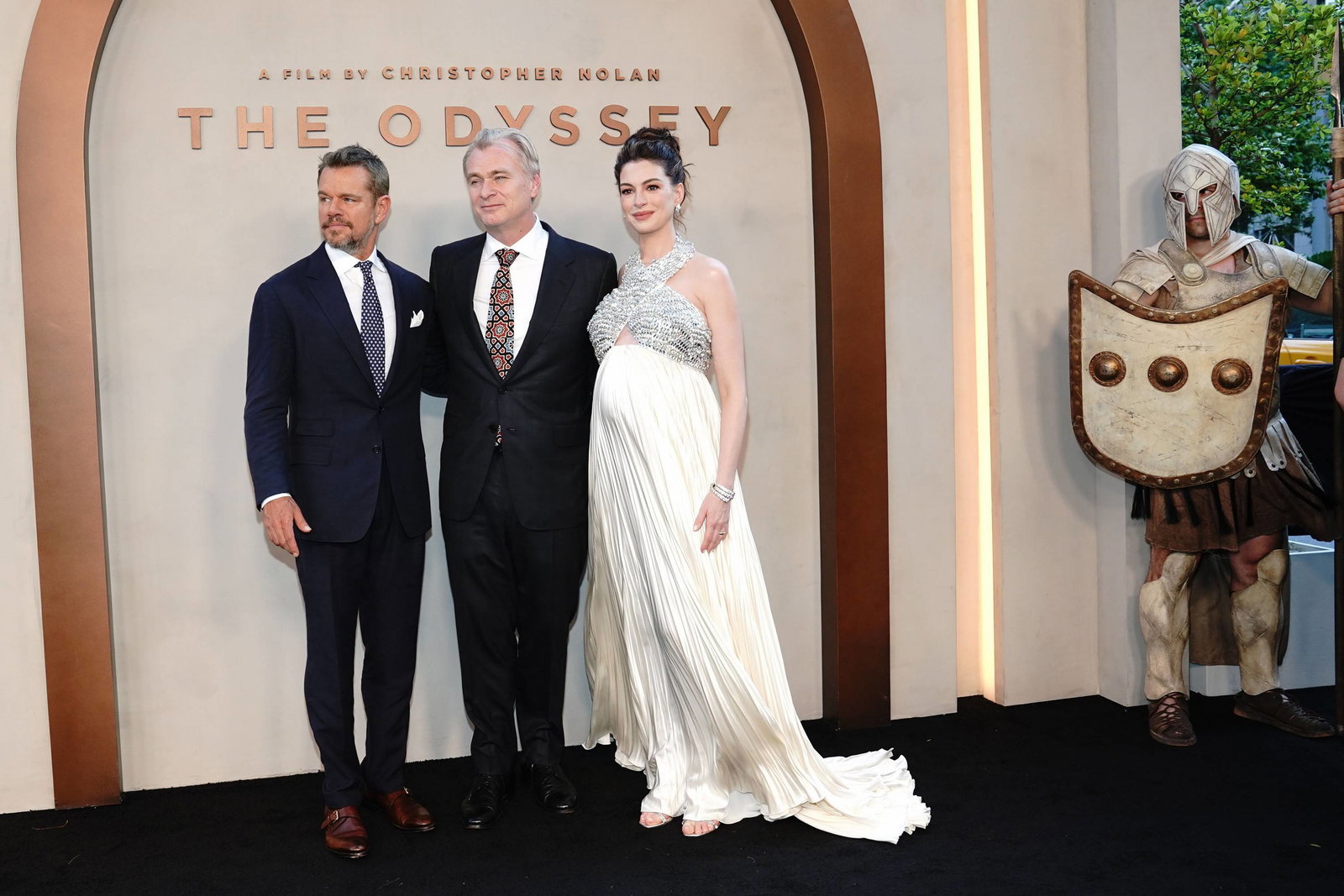
Matt Damon, Christopher Nolan, Anne Hathaway at arrivals for THE ODYSSEY Premiere, AMC Lincoln Square 13, New York, NY, July 14, 2026. Photo By: Kristin Callahan Everett Collection THE ODYSSEY Premiere PUBLICATIONXNOTxINxCANxCHNxFRAxITAxJPNxNORxPOLxRUSxESPxUKxUSA
Matt Damon, Christopher Nolan, Anne Hathaway at arrivals for THE ODYSSEY Premiere, AMC Lincoln Square 13, New York, NY, July 14, 2026. Photo By: Kristin Callahan Everett Collection THE ODYSSEY Premiere PUBLICATIONXNOTxINxCANxCHNxFRAxITAxJPNxNORxPOLxRUSxESPxUKxUSA
The same is true of Wolfgang Petersen's 2004 film Troy. Diane Kruger's portrayal of Helen never features a facial scar, and her return to Menelaus is handled very differently from Nolan's interpretation. By introducing this entirely new detail, Christopher Nolan deliberately distances his adaptation from both Homer's epic and one of the most recognisable modern retellings of the Trojan War.
That creative liberty also reflects Nolan's broader approach to adapting The Odyssey. Rather than treating the poem as a scene-by-scene blueprint, the filmmaker makes several notable changes throughout the film, reworking characters, relationships and historical context to support the story he wants to tell.
Helen's scar says more about The Odyssey than you might think
Viewed on its own, Helen's scar may seem like a minor SFX or makeup decision. Within the larger context of Christopher Nolan's adaptation, however, it becomes another piece of a much bigger idea.
Throughout The Odyssey, Nolan repeatedly explores the lasting consequences of the Trojan War rather than celebrating its victories. Odysseus is haunted by overwhelming guilt over the destruction of Troy and the suffering that followed, believing his role in creating the Trojan Horse helped unleash cruelty that ultimately contributed to the collapse of the moral order governed by what characters repeatedly call "Zeus' Law." The film constantly returns to themes of guilt, violence and the human cost of war instead of presenting its heroes as triumphant conquerors.

Credits: Universal Pictures
Credits: Universal Pictures
Helen's scar fits naturally within that interpretation. Rather than existing only as the woman whose beauty started the conflict, she physically carries its consequences long after the fighting has ended. Her appearance serves as a reminder that even those who survived Troy were permanently changed by it.
ADVERTISEMENT
Article continues below this ad
That approach also aligns with Nolan's tendency to use visual details to communicate emotional burdens. Just as Odysseus spends the film wrestling with memories of Troy and the lives lost because of his decisions, Helen's scar quietly reflects the same idea from a different perspective. It transforms one of mythology's most famous figures from an almost untouchable legend into someone visibly shaped by the trauma of war.
Whether audiences embrace that reinterpretation or prefer the traditional version of Helen remains a matter of personal opinion. What is clear, however, is that Christopher Nolan's decision was far from accidental. By giving Helen a scar that neither Homer nor Troy ever did, the filmmaker reinforces one of The Odyssey's central themes: no one truly leaves war unchanged.

ADVERTISEMENT
Article continues below this ad
What do you think about Christopher Nolan's decision to give Helen of Troy a facial scar in The Odyssey? Let us know your thoughts in the comments!
ADVERTISEMENT

Edited By: Itti Mahajan
ADVERTISEMENT
ADVERTISEMENT
