
10 Movies That Built Stomach-Churning Tensions Through Conversation, Not Explosions
Credits: MASS • Jason Isaacs/ Yana N via YouTube / Production: 7 Eccles Street / Circa 1888 / 5B Productions / Distribution: Bleecker Street
Credits: MASS • Jason Isaacs/ Yana N via YouTube / Production: 7 Eccles Street / Circa 1888 / 5B Productions / Distribution: Bleecker Street
Explosive action and startling visuals often dominate conversations about cinematic tension, delivering thrills through chaos, destruction, and relentless spectacle. Yet some of the most unforgettable suspense emerges from something far quieter: a conversation. Carefully chosen words, lingering pauses, hidden motives, and subtle shifts in tone can tighten the knot in your stomach more effectively than any explosion ever could.
Every line becomes a strategic move, every silence a warning, and every exchange a battle of minds. These ten films demonstrate how dialogue alone can become the deadliest weapon, creating unbearable anticipation that lingers long after the conversation ends.
10. Mass (2021)
ADVERTISEMENT
Article continues below this ad
Mass proves that emotional devastation needs neither action nor spectacle to leave audiences shaken. Set almost entirely inside a modest Episcopal church meeting room, the film marks the remarkable directorial debut of Fran Kranz and features powerhouse performances from Jason Isaacs as Jay Perry, Martha Plimpton as Gail Perry, Reed Birney as Richard, and Ann Dowd as Linda. Six years after a devastating school shooting, two grieving families meet face-to-face for the first time. Jay and Gail seek answers after losing their son, Evan, while Richard and Linda struggle with the unbearable reality that their son, Hayden, was the gunman.
Every exchange unfolds in real time, allowing uncomfortable silences, restrained emotions, and carefully chosen words to carry enormous weight. As the discussion deepens, blame gives way to guilt, shame, parental responsibility, grief, empathy, and the impossible search for forgiveness.
Rather than offering easy resolutions, Mass confronts the painful complexity of healing, demonstrating how a single conversation can become more emotionally exhausting and suspenseful than any action sequence ever could.
9. The Hateful Eight (2015)
Quentin Tarantino's The Hateful Eight transforms a snowbound Western into a masterclass in conversational suspense, where every sentence carries the threat of violence. Starring Samuel L. Jackson as Major Marquis Warren and Kurt Russell as bounty hunter John "The Hangman" Ruth, alongside Jennifer Jason Leigh, the film follows a group of strangers trapped inside Minnie's Haberdashery during a relentless Wyoming blizzard. With a dangerous fugitive in custody and suspicion hanging over every newcomer, the cabin becomes a battlefield of competing motives and hidden identities.
Tarantino builds the suspense through relentless interrogations, simmering racial tensions, psychological manipulation, and carefully crafted deception instead of nonstop action. Every anecdote becomes a calculated test, every question hides an ulterior motive, and every answer is examined for cracks that could expose an accomplice or uncover a k***er. The dialogue constantly shifts power between the characters, proving that words can be deadlier than bullets long before the inevitable eruption of bloodshed arrives.
8. Who's Afraid of Virginia Woolf? (1966)
Adapted from Edward Albee's acclaimed stage play, Who's Afraid of Virginia Woolf? unfolds almost entirely inside the home of George and Martha over the course of one alcohol-soaked night. Directed by Mike Nichols in his feature debut, the film stars Elizabeth Taylor and Richard Burton in career-defining performances as a married couple whose relationship has decayed into a relentless cycle of emotional warfare. After a faculty party at a small New England college, they invite young professor Nick and his wife, Honey, over for late-night drinks.
An ordinary social visit gradually spirals into an agonizing psychological battle as private resentments, humiliations, failed ambitions, and painful secrets are laid bare. Every conversation becomes a calculated attack, exposing how intimacy can turn into a weapon when trust disappears. Through its razor-sharp dialogue, the film examines illusion versus reality, the fragility of marriage, unfulfilled dreams, and the destructive stories people create to survive, proving that words alone can inflict wounds as lasting as physical violence.
7. Night Moves (2013)
Set amid Oregon's tranquil wilderness, Night Moves quietly builds one of modern cinema's most unnerving psychological thrillers. Directed by Kelly Reichardt, the film follows Josh (Jesse Eisenberg), Dena (Dakota Fanning), and Harmon (Peter Sarsgaard), three environmental activists who secretly plan to destroy a hydroelectric dam in hopes of making a powerful statement against environmental exploitation. The operation unfolds with remarkable restraint, emphasizing careful planning, coded conversations, and long stretches of uneasy silence instead of spectacle.
After the mission unexpectedly claims an innocent life, the group's shared purpose fractures beyond repair. Conversations once centered on environmental justice become tense interrogations marked by fear, denial, and mutual distrust. Every phone call and private meeting carries the possibility of betrayal, confession, or exposure. The film ultimately portrays how guilt can poison even the strongest alliances, revealing that psychological pressure often becomes more destructive than the crime itself.
6. Hard Candy (2005)
Hard Candy confines nearly its entire story to one isolated house, creating a claustrophobic arena for an intense battle of intellect and manipulation. Directed by David Slade, the psychological thriller follows Hayley (Elliot Page), a teenage girl who arranges a meeting with photographer Jeff (Patrick Wilson) after weeks of online conversations. Their casual encounter quickly transforms into an elaborate interrogation as Hayley reveals she believes Jeff is a s***al predator.
The film abandons physical spectacle in favor of relentless verbal combat, where every statement is challenged, every denial dissected, and every attempt at persuasion becomes another move in a dangerous chess match. Conversations about consent, grooming, justice, and moral responsibility continually shift the balance of power between hunter and prey. Instead of offering easy answers, the film examines how manipulation can wear many faces, leaving viewers to wrestle with uncomfortable ethical questions long after it ends.
5. Locke (2013)
Directed by Steven Knight, Locke transforms a solitary car journey into one of cinema's most gripping conversation-driven thrillers. Tom Hardy, the only actor seen on screen, plays Ivan Locke, a meticulous construction manager driving from Birmingham to London on the eve of the biggest project of his career. During the trip, he chooses to confront the consequences of a single mistake by making a series of life-altering phone calls.
He confesses an affair to his devastated wife, reassures the colleague giving birth to his child, guides his inexperienced assistant through a massive concrete pour, comforts his confused sons, and endures his employer's fury, all without leaving the driver's seat. Every conversation chips away at the orderly life he has spent years building. The film's dialogue stands out because it unfolds entirely in real time, balancing personal heartbreak, professional disaster, and moral responsibility while proving that honesty can be as suspenseful as any action sequence.
4. The Sunset Limited (2011)
Inside a dim, locked New York apartment, The Sunset Limited unfolds as a pure dialogue-driven confrontation between two opposing worldviews. Tommy Lee Jones and Samuel L. Jackson portray White and Black, two men bound together after Black rescues White from a subway s***ide attempt. What follows is a continuous exchange where Black argues for faith, meaning, and human connection, while White dismantles those ideas with unflinching logic rooted in nihilism.
The apartment becomes a sealed arena where belief and despair collide without interruption, and every pause carries as much weight as spoken words. The conversation grows increasingly intimate and unsettling as philosophy turns personal, exposing grief, trauma, and conviction beneath abstract arguments. With no movement beyond the room and no escape from dialogue, the film transforms speech itself into tension, making each sentence feel like a final attempt to define whether life has value at all.
3. Margin Call (2011)
Margin Call turns a collapsing financial institution into a pressure chamber of language, where every decision is made through conversation rather than action. When a junior analyst uncovers a model predicting total systemic failure, executives are summoned into a night-long sequence of urgent discussions that climb the corporate ladder. The tension comes not from uncertainty about what is happening, but from how it will be explained, justified, and executed.
Conversations shift between technical jargon and stripped-down moral reasoning, exposing how easily complex systems reduce human consequences into manageable numbers. As dawn approaches, the dialogue becomes colder, more decisive, and increasingly detached from individual accountability. What emerges is a portrait of capitalism as a conversational machine, where collapse is not stopped but negotiated, and where the most devastating outcomes are delivered through calm voices in well-lit rooms rather than chaos or violence.
2. The Invitation (2015)
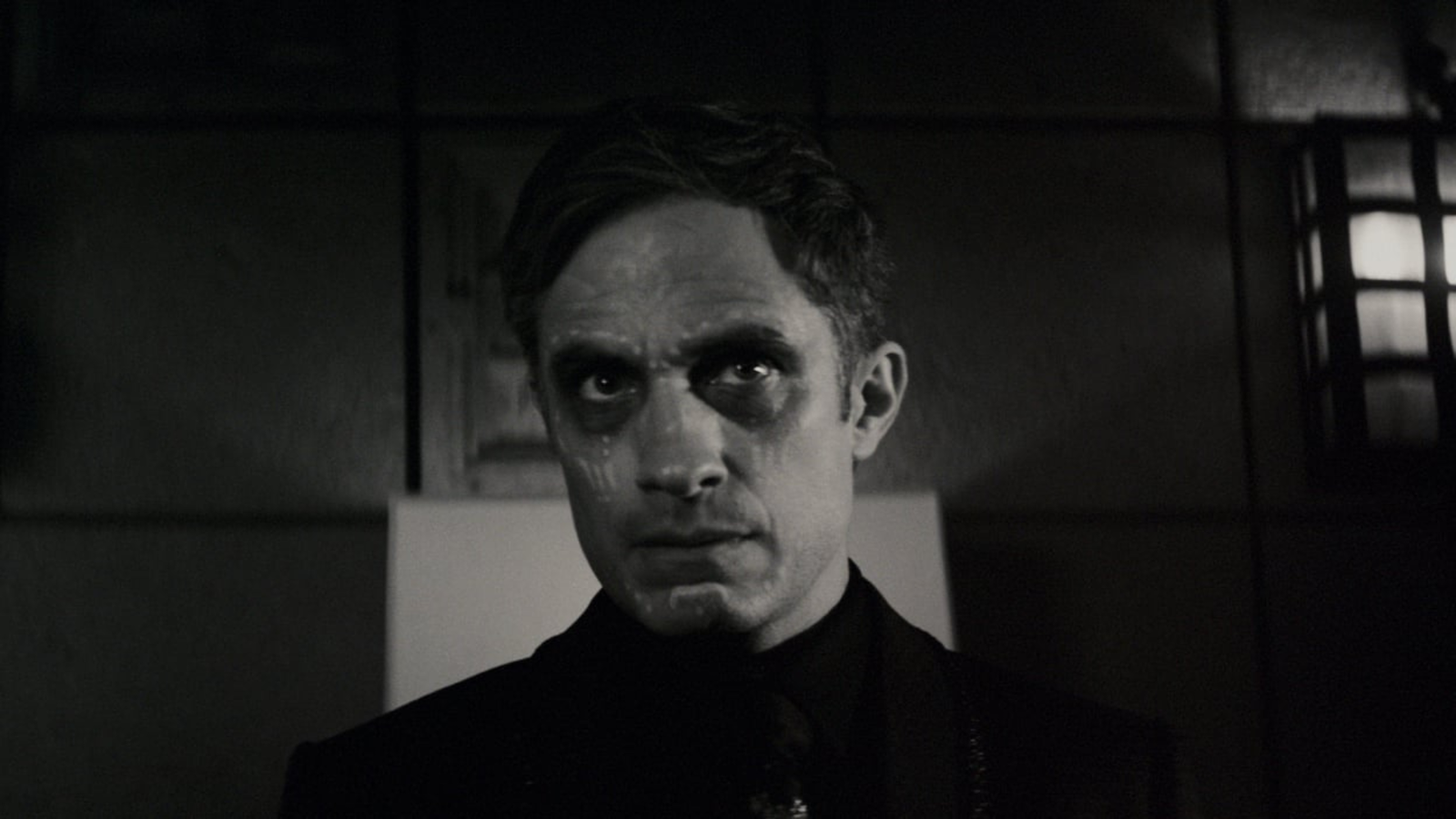
Karyn Kusama’s The Invitation builds its horror entirely through conversation inside a single Hollywood Hills home, where a dinner party becomes a controlled psychological experiment. Logan Marshall-Green plays Will, a man returning to the house of his ex-wife, Eden, after years of absence following the death of their child. What begins as an uneasy reunion with old friends gradually shifts into something more structured and unsettling as Eden and her husband, David, introduce a philosophy centered on emotional release and detachment from grief.
The film relies entirely on dialogue to shape its tension, where every statement is layered with reassurance, correction, or quiet dismissal. Will’s concerns are repeatedly reframed in therapeutic language that isolates him from group perception, making his instincts appear distorted. As conversations continue, language itself becomes architectural, shaping what is acceptable to feel, say, or question, until the boundaries of trust and threat dissolve into the same space.
1. Exam (2009)
A single sealed room becomes the entire world in Exam, a corporate thriller where eight candidates compete for one prestigious job through a test with no visible questions. Directed by Stuart Hazeldine, the setup forces participants to rely entirely on conversation to uncover what is being asked. At first, dialogue functions as collaborative reasoning, with candidates carefully interpreting rules and exploring possibilities. Over time, spoken interaction shifts into strategic positioning, as individuals begin exploiting ambiguity and testing psychological limits.
ADVERTISEMENT
Article continues below this ad
Trust erodes as each participant recognizes that only one outcome is possible, turning language into a competitive weapon. Every suggestion is filtered through suspicion, every silence treated as a tactical move. The room gradually transforms into a mental battlefield where intellect, pressure, and desperation converge. The narrative builds its intensity entirely through speech, revealing how quickly cooperation collapses when survival depends on outperforming others through thought alone.
Across these 10 films, tension is never detonated; it is spoken into existence. Rooms, cars, and dinner tables become pressure chambers where words cut deeper than violence, and silence feels louder than chaos. Each story proves that conversation alone can unravel minds, relationships, and entire moral worlds with unsettling precision.
ADVERTISEMENT
Article continues below this ad
Which film are you adding to your watchlist? Let us know in the comments.
ADVERTISEMENT

Edited By: Adiba Nizami
More from Netflix Junkie on Hollywood News





ADVERTISEMENT