
‘Lucky’ Episode 6 Recap: A Painful Family Reckoning Changes Everything as the Endgame Begins

Credit: Apple TV
Credit: Apple TV
After ending Episode 5 with one of the season's boldest cliffhangers, Lucky wastes no time reminding viewers why it has quietly become one of the year's most compelling crime dramas. Lucky and her father, John, willingly surrendered themselves to the FBI in an unexpected move that completely shifted the balance of power, leaving audiences wondering what possible endgame could justify giving up their freedom after finally recovering the missing fortune.
Rather than immediately answering those questions with another explosive action sequence, Episode 6, aptly titled Wherever You Go, There You Are, takes a more confident approach. It slows down, allowing its characters to confront years of buried resentment, regret and painful truths before the inevitable chaos of the season finale arrives. The result is an hour driven less by gunfights and elaborate cons than by conversations that fundamentally reshape the relationships at the heart of the series.
That does not mean the episode lacks suspense. Its final minutes deliver one of the season's most shocking cliffhangers, but what truly elevates Episode 6 is the emotional journey that gets there. Every major conversation peels back another layer of characters who have spent their lives hiding behind carefully constructed personas, only to discover that the hardest person to outrun is themselves.
John's childhood story quietly explains the philosophy that shaped his entire life
Episode 6 opens in the most unexpected way imaginable. Instead of immediately picking up after Lucky and John's surrender, the series gives Timothy Olyphant several uninterrupted minutes to deliver a deeply engaging and personal story from John's childhood.
John recalls being eight years old when his father regularly took him to watch a preacher named Billy Grace, whose sermons were held beneath a circus tent. Billy possessed an extraordinary ability to command a room. By the time his sermons ended, ordinary people would willingly empty their pockets into the collection plate without ever being directly pressured to do so.
John was not fascinated by the preacher's message. He was fascinated by the skill that the preacher had in how his sermons could persuade so many people so effortlessly. The story becomes more revealing when John remembers his own father placing a $20 bill into the collection plate. To John, it made no sense. This was the same man who would hesitate to give his son $2 for ice cream, yet had no problem handing $20 to a stranger.

Credit: Apple TV
Credit: Apple TV
Rather than admiring Billy Grace, John saw the congregation as a room full of “suckers.” He did not see generosity or faith. He saw persuasion and influence. Most importantly, he did not blame Billy Grace for taking advantage of people. He blamed the people who allowed themselves to be convinced.
When the collection plate reached him, young John quietly slipped the $20 bill into his pocket. His father noticed, forced him to return it and punished him. But John was not angry at Billy Grace. He was angry at his father for allowing himself to become exactly what John despised: a mark.
That anger drove John back beneath the circus tent later that night, where he stole the entire collection plate and walked away with $942. It was not simply the first money he ever stolen. It was his first successful con and perhaps the first moment he understood how the world worked. The greatest cons, John learned, were not necessarily built on force. They were built on understanding people so completely that they willingly hand you what you want.
That philosophy has quietly defined John's life ever since. Only after the story ends does the camera reveal who John has been speaking to all along: Lucky. Their playful exchange about her own “first haul” creates an important contrast. John's first success came from taking, while Lucky's came from performing. Both inherited the same gift; they simply learned to use it differently.

And Episode 6 soon reveals exactly why that difference matters.
Lucky and John's heartbreaking confrontation finally exposes the truth they have been avoiding
The opening monologue becomes even more meaningful once the episode returns to the present. Lucky has what Agent Billie Rand wants: the missing millions. Billie, meanwhile, has what Lucky desperately needs: freedom.
Lucky makes her position clear. She is willing to return every remaining dollar, but only if she and John receive complete immunity. Billie refuses to simply let them walk away. Instead, she sees their surrender as an opportunity to reach the people behind the larger criminal operation, Whitaker and Priscilla.
Placed under FBI protection while the operation is prepared, John and Lucky finally have a chance to spend some time together. But even with the money recovered and their immediate future in the FBI's hands, John still cannot quite believe Lucky is actually ready to walk away. At one point, he looks at her and asks the question that has defined their relationship for years:

Credit: Apple TV
Credit: Apple TV
“What's the angle?” John assumes there must be another play hidden underneath Lucky's agreement with the FBI. Surely she is not genuinely prepared to give the money back and leave this life behind. But Lucky tells him there is no angle. She is giving it back. The conversation is brief, but it captures the fundamental difference between them. John still thinks in terms of the next move, the next con and the next escape. Lucky, for perhaps the first time in her life, isn't thinking about an angle at all. She is thinking about what comes after.
Later, the tension between them gives way to a quieter moment. Dressed in bathrobes and watching television, John looks at Lucky and tells her, “I'm proud of you.” For a brief moment, it feels as though years of resentment might finally be giving way to something resembling peace.
But the tenderness of the moment allows Lucky to finally say what she has spent years suppressing. She never wanted this life. She wanted school, friends and the chance to stay in one place long enough to experience a normal childhood.
Instead, every day carried the possibility that John had lost another gamble, angered the wrong person, failed to pay the rent or pulled another job that forced them to disappear overnight.
She was not learning how to live. She was learning how to run. Lucky also points out that countless people hate her despite never truly knowing who she is. Every alias, scam and escape has left behind another person whose only memory of Lucky is betrayal. Then comes the line that redefines her journey: “I'm not that person.”
For the second consecutive episode, Lucky openly rejects the identity she has spent her entire life performing. John, however, genuinely cannot understand her frustration. He insists she had an incredible childhood because she learned things most people never understand until adulthood. By the time she was twelve, she knew how to read people, survive impossible situations and think several moves ahead. Every lesson he taught, every scam he pulled and every city they fled together happened, in his mind, because he was preparing her for a world he believed would never show mercy.
That is what makes the argument so devastating. Neither of them is lying. Neither is manipulating the other. They're simply measuring love by completely different standards. To John, love meant teaching survival. To Lucky, love would've meant giving her a life where survival wasn't necessary.
The conversation becomes even more painful when Lucky reveals a secret John never knew. Two years earlier, she secretly worked with Billie Rand to build a case against Priscilla. She genuinely believed Billie would honor their agreement and leave John untouched once Priscilla was arrested.
Instead, Billie arrested them both. John lost two years of his life. The revelation leaves him stunned, but not simply because Lucky worked with the FBI. He's furious because she trusted someone enough to believe they would keep their word.
John's response is immediate: “You're an idiot.” The words land especially hard because only moments earlier, he had called Lucky his greatest achievement. Yet the writing refuses to take an easy side. John isn't angry because Lucky betrayed him. He is angry because she believed somebody else would value loyalty the way he does.
In John's world, trust has always been the most dangerous gamble of all. Their argument eventually ends in silence. Father and daughter lie awake on separate beds, staring at the ceiling, while the episode intercuts the moment with memories of their younger selves lying in almost exactly the same position.
The following morning, John finally admits something he has never allowed himself to say before: he wasn't the father he believed he was. He was a bad one. Lucky apologizes for the anger she unleashed the night before. Neither wins the argument, and neither loses it. Instead, they finally stop trying to defend the past and simply accept it.
Before Lucky leaves to meet Priscilla, John offers her one final piece of advice. When she meets Whitaker, he tells her not to watch Whitaker. Watch Priscilla. Around Whitaker, she becomes a completely different person. For once, his advice is not about winning a con.
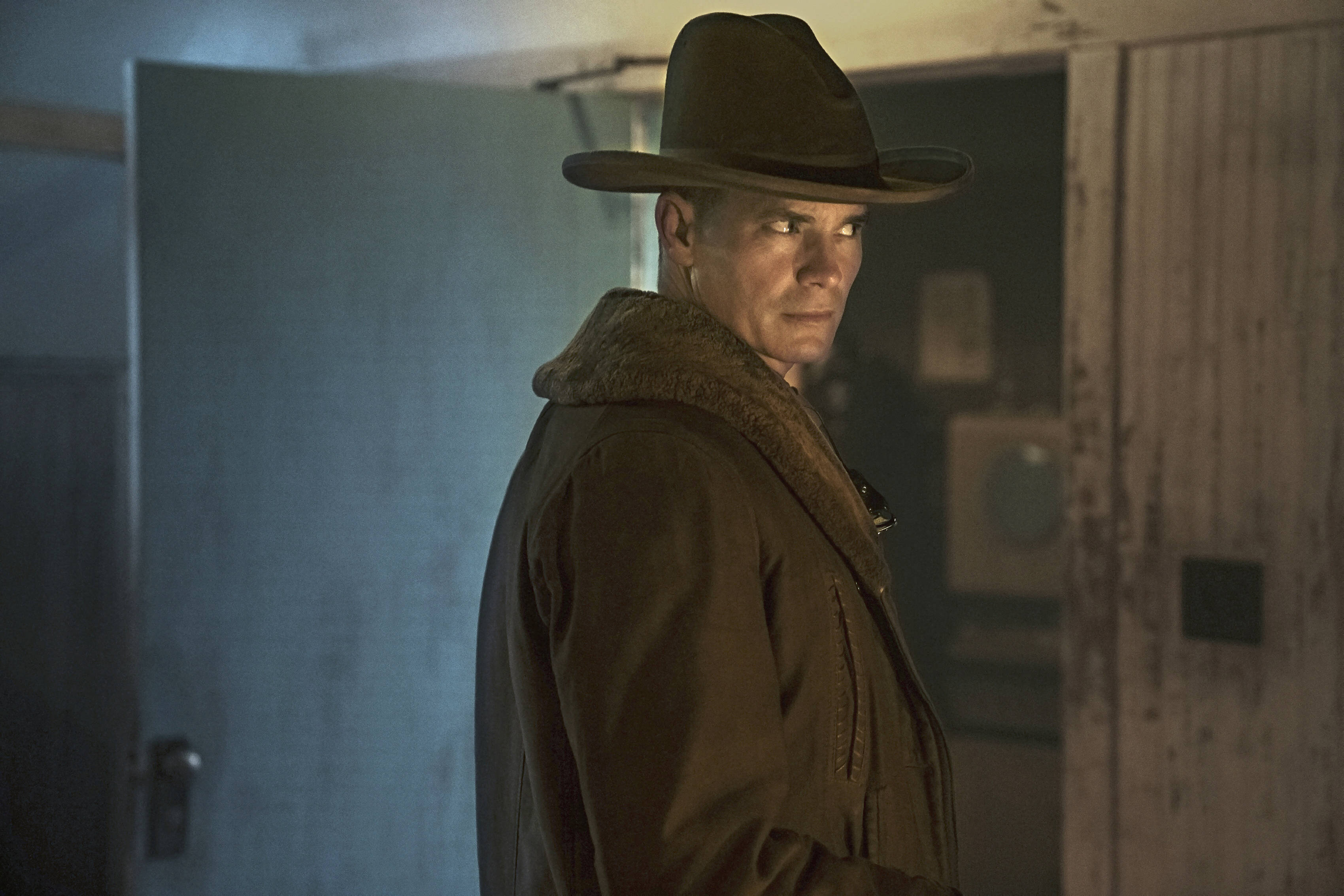
It is simply about keeping his daughter alive.
The final act reminds us that truth alone is not enough to escape the past
If the first half of Episode 6 is about confronting painful truths, its closing stretch reminds viewers of an equally uncomfortable reality: honesty does not erase consequences. By the time Lucky walks into her meeting with Priscilla, every major relationship has shifted. She and John have finally confronted years of unresolved resentment, Billie Rand has secured the leverage she needed, and the missing money has been recovered. On paper, all the pieces finally seem to be falling into place.
But Lucky has never been a series where solving one problem means the danger simply disappears. Instead, every answer creates another question. Lucky's meeting with Priscilla perfectly illustrates that idea. Having finally recovered the missing cryptocurrency, Lucky offers to return every last dollar. She makes it clear that she no longer wants the money. The fortune that has driven nearly every betrayal, chase, and murder throughout the season has become meaningless to her. The only thing she wants now is freedom.
But even here, Lucky wants to do things on her own terms—because that is what Billie wants. She insists on handing the money directly to Whitaker, looking him in the eye as she buys back her future. It is a significant moment because Lucky has spent much of the season reacting to other people's plans. Now, she is trying to reclaim control over her own story by confronting the man whose money set this entire nightmare into motion.

Credit: Apple TV
Credit: Apple TV
Priscilla immediately reminds her that power does not work that way. Whitaker does not attend meetings arranged by other people. People attend meetings arranged by Whitaker. In one brief exchange, the series quietly re-establishes the hierarchy governing this criminal world. Lucky may possess the money, but Whitaker still controls the room before he has even entered it. Once again, everyone else is forced to move according to his timetable.
It is another reminder that possessing leverage is not the same as possessing control. Back at FBI headquarters, Billie Rand receives the updated location and begins restructuring the operation. Yet even as the investigation appears to be moving in the right direction, Episode 6 continues exploring the personal cost hidden beneath every professional decision.
In the earlier segment of the episode when John and Lucky were brought to Agent Billie's office for the first time while Lucky has gone to talk to Priscilla, John and Billie finally find themselves alone, and their conversation quickly becomes one of the episode's sharpest exchanges. John wastes little time attacking the thing he believes hurts Billie the most. He accuses her of being someone who always chose work over family, suggesting that her children must hate her. It is a cruel observation, delivered less to discover the truth than to provoke a reaction.
Billie, however, refuses to let John dictate the conversation. Instead of defending herself, she attacks the foundation of John's identity. She tells him that, unlike him, she did not turned her child into a commodity.
It is one of the episode's most devastating accusations because it reframes everything John has spent six episodes believing about himself. Throughout the series, he has viewed every sacrifice, scam and dangerous lesson as proof of his love for Lucky. Billie forces him—and the audience—to consider another possibility.
Perhaps he was not simply protecting his daughter. Perhaps he had built an entire life around using her. It's a painful accusation, made even more powerful because John has no immediate answer. The episode then shifts its focus to one of its most unexpected pairings.
Left behind at the hotel while Lucky prepares for the operation, John passes the time playing cards with Gates; Agent Billie Rand's partner. On the surface, the scene appears almost insignificant, yet it quietly continues one of Episode 6's strongest themes: understanding what made each character the person they are today.
John asks Gates why he returned to the FBI after serving in the Marine Corps. Gates explains that after completing two tours in Afghanistan and eventually returning home, he could not shake the feeling that he hadn't done enough. Rather than settling into civilian life, he chose another form of service because he believed he still had more to give. John jokes that all of that experience ultimately led to babysitting him inside a hotel room.
“The world's a complicated place.” Gates simply smiles, giving right back to John in his own line, which he said just moments ago to Gates when he asked John about how he became a thief and if he always wanted to become one. It is an understated exchange, but it gives Gates a humanity rarely afforded to supporting characters in crime thrillers. Until now, he has largely functioned as Billie's reliable partner. Here, the series gives him convictions, regrets and a quiet sense of duty that extends far beyond the current investigation.
That humanity makes what follows almost unbearable. The mood shifts almost imperceptibly. A strange sound. An uneasy silence. Gates pauses. “Did you hear that?” John does not. Years of military training immediately take over. Gates removes his earpiece, repeatedly calls the agent stationed outside and receives nothing but silence in return. Every instinct tells him something is wrong.
With his weapon drawn, he cautiously moves into the hallway. The sequence is staged with remarkable restraint. The episode does not rely on frantic editing or excessive music. Instead, it allows silence and an uninterrupted single shot to become the source of tension, forcing viewers to anticipate danger long before it appears.
When the attack finally comes, Gates reacts exactly as an experienced Marine would. He quickly eliminates the first gunman before advancing toward the fallen body. Then comes the fatal mistake. Not because Gates acts recklessly. Because someone else was waiting.
A second attacker emerges from behind and fires twice into Gates' back before approaching him and raising a gun toward his head. The episode never needs to explicitly confirm his fate. The image says enough.
Inside the hotel room, John hears the gunfire. His expression changes instantly. He repeatedly calls out Gates' name, desperately hoping for an answer that never comes. Instead, bullets rip through the hotel room door. The impact freezes John in place as someone violently slams against the entrance from the other side. Then—Cut to black.
It's an exceptional ending because it does not merely leave viewers wondering whether John survives. It leaves them questioning whether anyone's carefully constructed plan was ever really in control to begin with. Throughout “Wherever You Go, There You Are,” nearly every major character finally tells the truth. John confronts his failures as a father. Lucky admits the life she always wanted but never had. Billie refuses to hide behind procedure. Gates reveals the quiet sense of duty that continues to drive him long after the war.
For one extraordinary hour, Lucky strips away aliases, cons and manipulation, allowing its characters to speak with an honesty the series has rarely afforded them, building on the tensions that have been simmering since the events of the previous episode. Written by Kevin Rosen and directed by Jonathan van Tulleken, the episode then lets that emotional honesty give way to something far more unsettling. In its closing minutes, the outside world crashes back in with brutal force. Because Lucky has never really been about whether its characters can successfully deceive other people.
It is about whether they can ever escape the lives they have built for themselves. And Episode 6 leaves that question hanging on the other side of the door.

Do you think Agent Billie Rand's plan is already falling apart, or do Lucky and John still have one last move up their sleeve? Let us know your thoughts in the comments!

Edited By: Itti Mahajan
