
Exclusive: 'Code of Misconduct' Director Sébastien Trahan Talks Challenges, Streaming Possibilities, and the Road Ahead
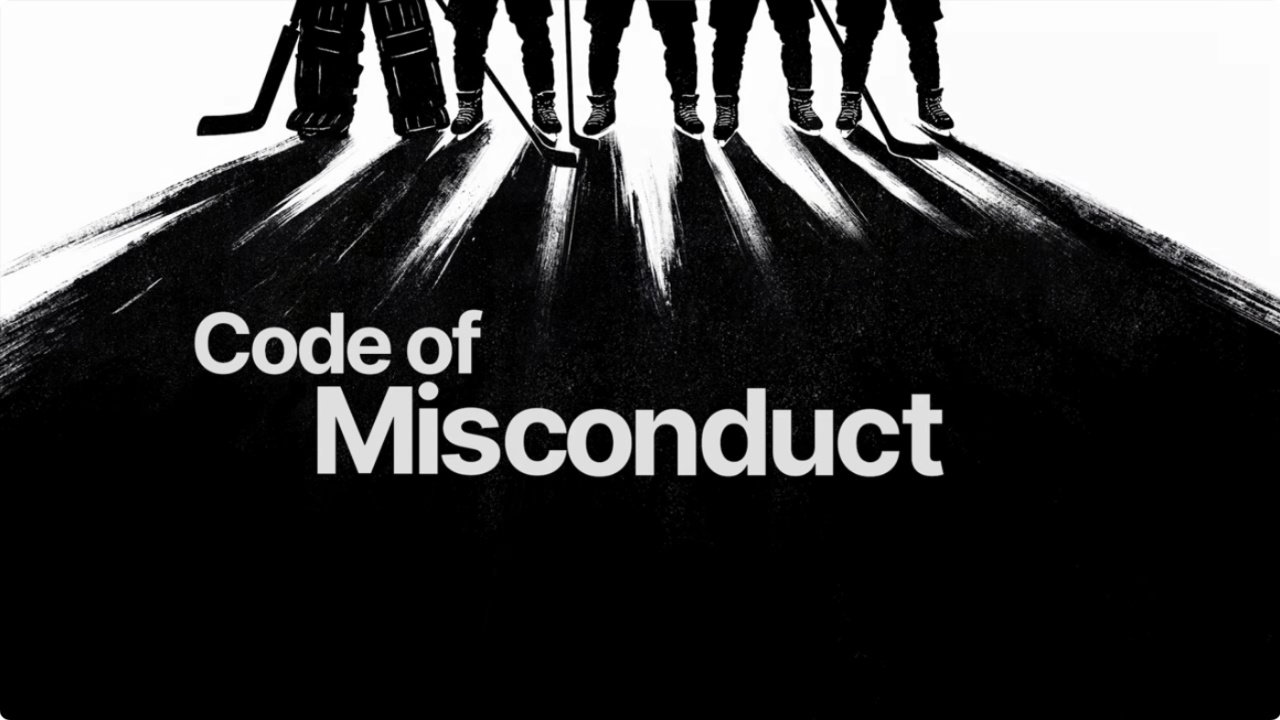
Credits: Code of Misconduct | Documentary Trailer / Super Channel via YouTube/ Production: URBANIA / Distribution: Cineflix Media
Credits: Code of Misconduct | Documentary Trailer / Super Channel via YouTube/ Production: URBANIA / Distribution: Cineflix Media
In an era where the entertainment industry is increasingly dictated either by box office numbers, or campaigns, stories rooted in accountability and social responsibility often struggle to find space. As studios continue their relentless pursuit of profits and trends, a handful of filmmakers still choose to tell stories that matter, not because they are commercially expedient, but because they are morally imperative. Stories that urge society to stop and contemplate.
If not for counting bucks, most contemporary documentary discourse, particularly in the streaming age, is dominated by true-crime narratives where the delineation between victim and perpetrator is mostly stark. Real life, however, is rarely so binary. Many cases unfold within a labyrinth of public perception, media narratives, and legal dramas. Yet beneath the cacophony, one principle remains immutable: consent. Regardless of whatsoever circumstance, a no remains a no. That fundamental truth lies at the heart of Code of Misconduct, director Sébastien Trahan’s incisive documentary examining the Hockey Canada sexual assault scandal and the culture that enabled it.
Following the film’s acclaimed run at HotDocs 2026, Netflix Junkie had the opportunity to speak with Sébastien Trahan about the genesis of the documentary, the challenges of navigating such a sensitive subject, the culture the film seeks to interrogate, and why conversations surrounding consent remain as indispensable as ever.
Shraddha: I watched the documentary before joining this interview, and as beautifully made as it was, the subject matter was deeply disturbing. As a viewer, I felt emotionally overwhelmed to feel so many things at the end. As the director behind the camera, did the story take an emotional toll on you? If so, how did you cope with it?
Sebastian: Yeah, for sure, it’s a really good question. Yeah, it did put a toll on me because it’s hard to read and reread the fact of the case about that subject and to hear some of the victim talk about it. But we are also being pushed by a sense of purpose on the story. Because what we really want is that the crime don’t repeat itself. So, we feel important that we need to talk to our boys and to tell them that men don’t act like that and they shouldn’t act like that.
Shraddha. Was there a particular moment during the making of the documentary that stayed with you personally, something that you learned or that continues to resonate with you?
Sebastian: Yeah, for me, the interview with the policewoman that did the investigation on the case of EM really struck me hard because we saw how some people are really allies on the system with the survivor or the victim, depending on which term you prefer to use. EM prefer a victim. But to see in our eyes, in our emotion, that she really took the peril, the talk of EM and fight for, it really moved me and gave me hope on the system sometimes.
Shraddha: When you first started with this project, did you realize that it would stop being about just one night and continue towards a broader conversation about sportsmanship, team environment, masculinity, power, institutional structure and everything, which would include so many things and stakeholders into consideration.
Sebastian: Yeah, at the get-go, when I was talking with Rick Westad, he was already starting to write his book. And one of the conversation that we had, ongoing conversation that we had, is a lot of people said, oh, it’s a few bad apples. It’s just one case, it’s just one exception. It happened in every culture. And when I was studying the case, it was striking to me that you can see the same thing at Saint-Saëns-Québec and in Yellowknife, in the other side of the country. So, for me, it was bigger than one case, and it was really important to show that. And I think the fact that EM keep his anonymity helped this also show to the victim or survivor that they can go through the process and keep their dignity, and also that every story can project on this story.
Shraddha: At the end of the documentary, there is a note mentioning that the accused were contacted for comment. Did you also remain in contact with EM after the documentary? Was she able to share any thoughts after seeing the support and public response surrounding the case?
Sebastian: EM did saw the movie and we had some communication with her, but for the principle that we talked with our lawyer also, and for the principle that she keep her anonymity, her story, her public story, and when the trial ends. And it was also embedded in the concept of the movie that we don’t want to open that door because we really want to say to people, our public duty stopped when the trial did stop. And she don’t have to answer any further question, but she received all the message and I will keep her reaction to myself.
Shraddha: How was it working with Rick? His journalism, his passion, became the backbone of the entire documentary. He was just there bringing out every other minute intricate details about the case going forward. Can we expect any new collaborations in future?
Sebastian: For right now, we don’t have any collaboration prepared. At the start of the project, I was always talking about a comparison. I like to have a comparison with my, with the other project. When I start a project, I was always talking about Spotlight, the movie.
And I was saying the story is also about how journalists keep our democracy straight. How they can put accountable everybody.
And I really admire what the job, the work that Rick do in the living. He really have a high moral standard to keep his objectivity. And as I sometimes say, it’s like an old school journalist that we all hope that is the main way that journalists work.
And Rick embody that. So, for sure, it will be great to recollaborate together. I know for Rick, it was hard to not have the control of the story. Working with the documentary, he was going out of his comfort zone. But I think we discover with Rested that we rarely seen before.
Shraddha: That brings me to my next question. Since we talk about ethical journalism, empowering through so many obstacles in our way, when you came out with the final product, was there any pressure that you felt, given the times that we are living in right now? There are continuous bans on movies, takedowns, backlash, public discourse and so on. Did you feel any pressure or concerns about censorship, or resistance once the film was completed?
Sebastian: No, because I was really lucky because I had Super Channel as a diffuser. In Canada, you can see the movie with Amazon Prime, with the Super Channel sub stack. And Super Channel was really, really behind the movie and they are independent. So, that really helped us in the process of doing the movie.
But my last movie was named It’s Not Funny Anymore. And it was about Gavin McGinnis, the founder of the Vice magazine and the Proud Boys. So, I was comfortable to go on difficult subjects. And like we say in the movie Code of Misconduct, if we want to be loved by everybody, we don’t do this job. And hard subjects are sometimes really hard to do, really hard to distribute, but are meaningful because they are hard to do it.
Shraddha: Your filmography often focuses on challenging and socially relevant subjects. Are there any upcoming projects you’re currently working on that audiences should look forward to?
Sebastian: Yeah, we’re about starting new development in an English movie. Right now, I’m working on two projects in the French-Canadian market. So, it’s going to be more for late 2027, but right now it’s more open. But in our industry, we can hope to do some projects before we do it. It’s going to be probably not the one I think I will do right now that I will finish to do it.
Shraddha: There seems to be significant demand for the documentary in the United States, especially judging by the response to the trailer online. Do you have any update for viewers who are eager to watch it there?
Sebastian: We are aware of the demand and we see it and we’re really touched by it. I think it’s talk about the importance of the movie. I’m really fortunate to have a great distributor in Canada. It’s called Cineflix. It’s one of the biggest distributors in Canada. And they’re working on it and they have a couple of plans, but I let them do their work as of right now.
The reaction and the distribution is pretty amazing, but we hope to put that on something soon. But for right now, we’re just going to say we’re going to let the anticipation build.
Yeah, I think so. And I think it’s really… I received maybe five to ten inbox ideas right now. It’s pretty surreal on my side. So, yeah, we’re looking forward to announce something and I’m going to tell my team if something is concluded sooner than later to contact them.
Shraddha: What stood out to me was how the documentary never sensationalizes the subject, neither did it desensationalize it. There are no dramatic tricks, no forced suspense building yet it maintains a perfect balance, with the tension intact. What is the philosophy behind that storytelling approach?
Sebastian: Yeah. Thanks a lot for the kind word.
And my approach is pretty much the same approach I have on a couple of projects I did in France. I try to tell the story first and I want the fact to be true, but I really want to sometimes complicate the subject. And I don’t think we have to create complicated subject in the complicated matter for the people to understand it.
So I really think that we need to pass to emotion to go to the head. And I try to and I’m feeling like I’m a role more with kids. I’m following that line of thought that I try to give the point of view of the people I met. I want to be able to understand their truth and not the truth. It’s a little difference, even if the judge will not like it. But for me, it’s really important.
So I think the combination of the both that I work with some fiction theory that I want to quick sequence of one to four minutes of subject. And we go to something else. So that’s really technical, maybe. But it’s really my approach that I want.
I know what the subject is about, but I don’t really care about the answer. So I think that honesty in the approach really help that people don’t feel manipulated in the movie. The fact that I believe that my public is intelligent. I think they see and I don’t try to oversell my point of view. That feel, I think that honestly go through the screen.
Shraddha: Finally, is there anything you would like audiences to take away from the documentary?
Sebastian: I just want to thank a lot of people online that adopted the movie and to work really hard to the people, find a way to see it.
And I think that the fact that art is going in the final with the Las Vegas team of the hockey team is a great opportunity for people to watch the documentary. And between the first period and the second period, talk about it and talk about your friend, how they could react on the room. If their kids came in the room in the same situation, maybe they could talk with our kids and tell them, you can call somebody. Ask the girls if she’s really willing. Don’t assume anything.
And it’s really a great opportunity that art is in the final and the documentary brings so much interest to have this discussion. Because a documentary cannot do all the work. It’s the discussion that came around that will do the work.
Premiering at the 2026 Hot Docs Canadian International Documentary Festival, Code of Misconduct earned Trahan the Earl A. Glick Emerging Canadian Filmmaker Award.

Edited By: Hriddhi Maitra
