
Directors Shed Light on How Filmmakers Pulled off David Attenborough’s Ambitious Ocean Documentary
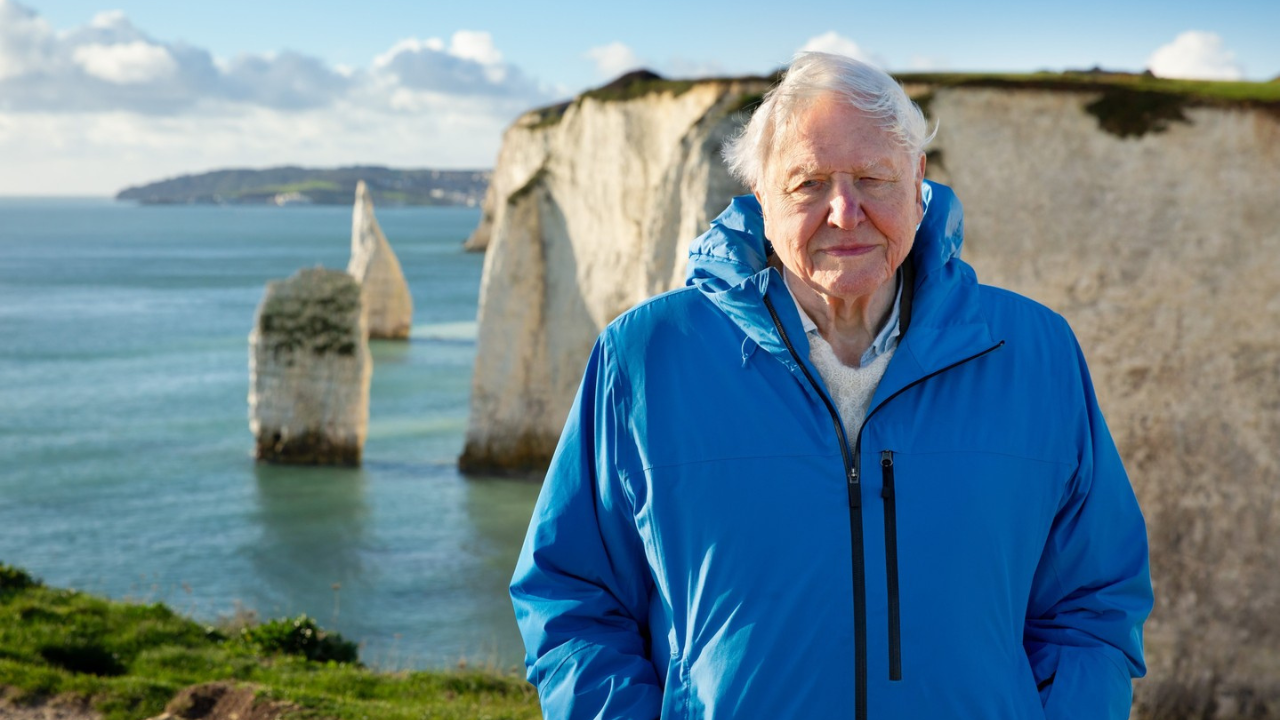
David Attenborough/@visitdorsetofficial via Instagram/Producer - Silverback Films and Open Planet Studios/ Distributor - National Geographic Documentary Films, Altitude Film Entertainment and Disney+
David Attenborough/@visitdorsetofficial via Instagram/Producer - Silverback Films and Open Planet Studios/ Distributor - National Geographic Documentary Films, Altitude Film Entertainment and Disney+
The directors behind Ocean with David Attenborough have revealed how years of global filming helped expose one of the ocean's most destructive yet least-seen threats. The project, which combines breathtaking marine imagery with an urgent conservation message, required far more than simply capturing stunning underwater footage.
At 99, when the documentary was released, Attenborough once again guided audiences through a natural world many rarely get to witness firsthand. But behind the sweeping visuals was a filmmaking effort designed to expose realities hidden beneath the ocean’s surface.
Now, one of the directors, Keith Scholey, has shed light on one of the production’s most ambitious achievements—and why it became central to the film’s story.
ADVERTISEMENT
Article continues below this ad
How filmmakers captured a hidden threat lurking beneath the ocean?
One of the documentary’s most striking revelations centers on industrial bottom trawling, a fishing practice that drags weighted nets across the seafloor and leaves widespread destruction in its wake. According to Keith Scholey, the challenge was not simply documenting the practice, but showing audiences something they had largely never seen before.
Speaking at Deadline's Contenders Television: Documentary + Unscripted event, co-director Keith Scholey explained why the team felt it was important to bring the practice to audiences' attention.
"It's one of the biggest things happening in the ocean, and most people don't know about it," Scholey said, referring to industrial bottom trawling and the scale at which it operates. The filmmakers partnered with scientific studies investigating the practice and spent two years filming across locations including Antarctica, Indonesia, Hawaii, California, and the Mediterranean to bring that reality to life.
The result was unprecedented footage revealing the scale of destruction caused beneath the waves. Beyond the documentary itself, the material has also been handed over to researchers and made available for educational and scientific use, extending its impact far beyond the screen.
Yet for the creative team, capturing extraordinary footage was only one piece of the puzzle.
Why storytelling remained the film’s most important tool?
For co-director Toby Nowlan, the challenge extended beyond capturing extraordinary footage. Speaking about his approach to filmmaking, he stressed that narrative remains the foundation of any successful documentary.
"What stimulates me is being as creative as possible and thinking of the very best story. It drives the very best film. Without it, even the most beautifully shot work falls apart," Nowlan said in an interview with Attitude.
ADVERTISEMENT
Article continues below this ad
Nowlan also pointed to filmmakers Christopher Nolan and Denis Villeneuve as creative inspirations, and that influence can be felt in the documentary’s attempt to blend scale, emotion, and urgency into a single cinematic experience. Combined with Attenborough’s decades of expertise and on-screen presence, the result is a film that aims not only to inform audiences but to leave a lasting impression, joining a growing wave of ocean-focused documentaries that seek to deepen public understanding of the marine world.
ADVERTISEMENT
Article continues below this ad
Do documentaries like Ocean with David Attenborough have a greater impact when they focus on storytelling rather than facts alone? Let us know in the comments.
ADVERTISEMENT

Edited By: Adiba Nizami
ADVERTISEMENT
ADVERTISEMENT
