
Christopher Nolan Explains How a Classic 'Lawrence of Arabia' Illusion Echoed in 'The Odyssey’s' Troy Sequence
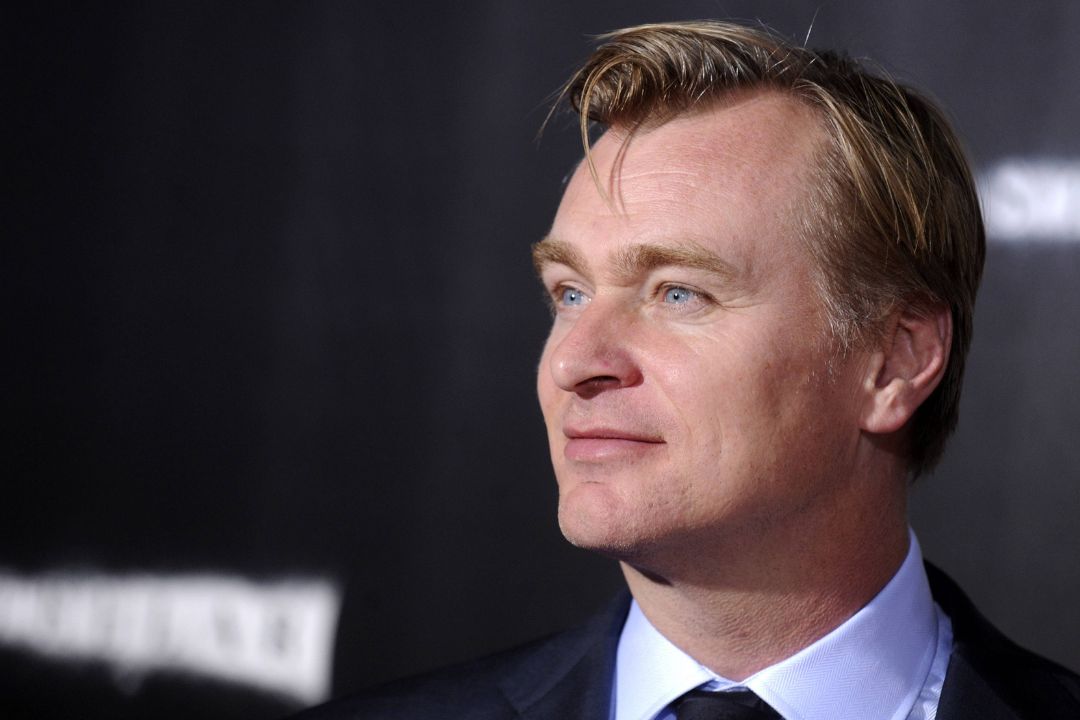
Christopher Nolan bei der Premiere des Kinofilms Interstellar im AMC Lincoln Square Theater. New York, 03.11.2014 Foto:xD.Tinex xFuturexImage
Christopher Nolan bei der Premiere des Kinofilms Interstellar im AMC Lincoln Square Theater. New York, 03.11.2014 Foto:xD.Tinex xFuturexImage
Christopher Nolan has shed light on how one of Lawrence of Arabia's most celebrated practical filmmaking techniques echoed in The Odyssey, comparing David Lean's cinematic illusion to the way Troy was brought to life in his latest epic. The filmmaker shared the behind-the-scenes insight while appearing alongside Tom Holland on Konbini Video Club, where the duo revisited the 1962 classic after a special screening arranged for the cast during production.
That screening had its own story behind it. Matt Damon previously revealed that Holland reached out to Sony Pictures chairman Tom Rothman to arrange a screening of one of Rothman's restored 70mm prints of Lawrence of Arabia for the cast, allowing Nolan and his ensemble to revisit one of cinema's defining epics while making The Odyssey.
Christopher Nolan drew a striking comparison between Aqaba and Troy
ADVERTISEMENT
Article continues below this ad
While reflecting on the iconic Aqaba sequence during the interview on Konbini Video Club, Christopher Nolan explained how production designer John Box used forced perspective to transform an existing location into the illusion of a sprawling city. Rather than relying on visual effects, the sequence achieved its remarkable scale through carefully planned practical design, an approach Nolan compared to the way Troy was constructed for The Odyssey.
"Not unlike the way we built Troy for the end of the film," Nolan remarked, before Holland elaborated on how the illusion came together.
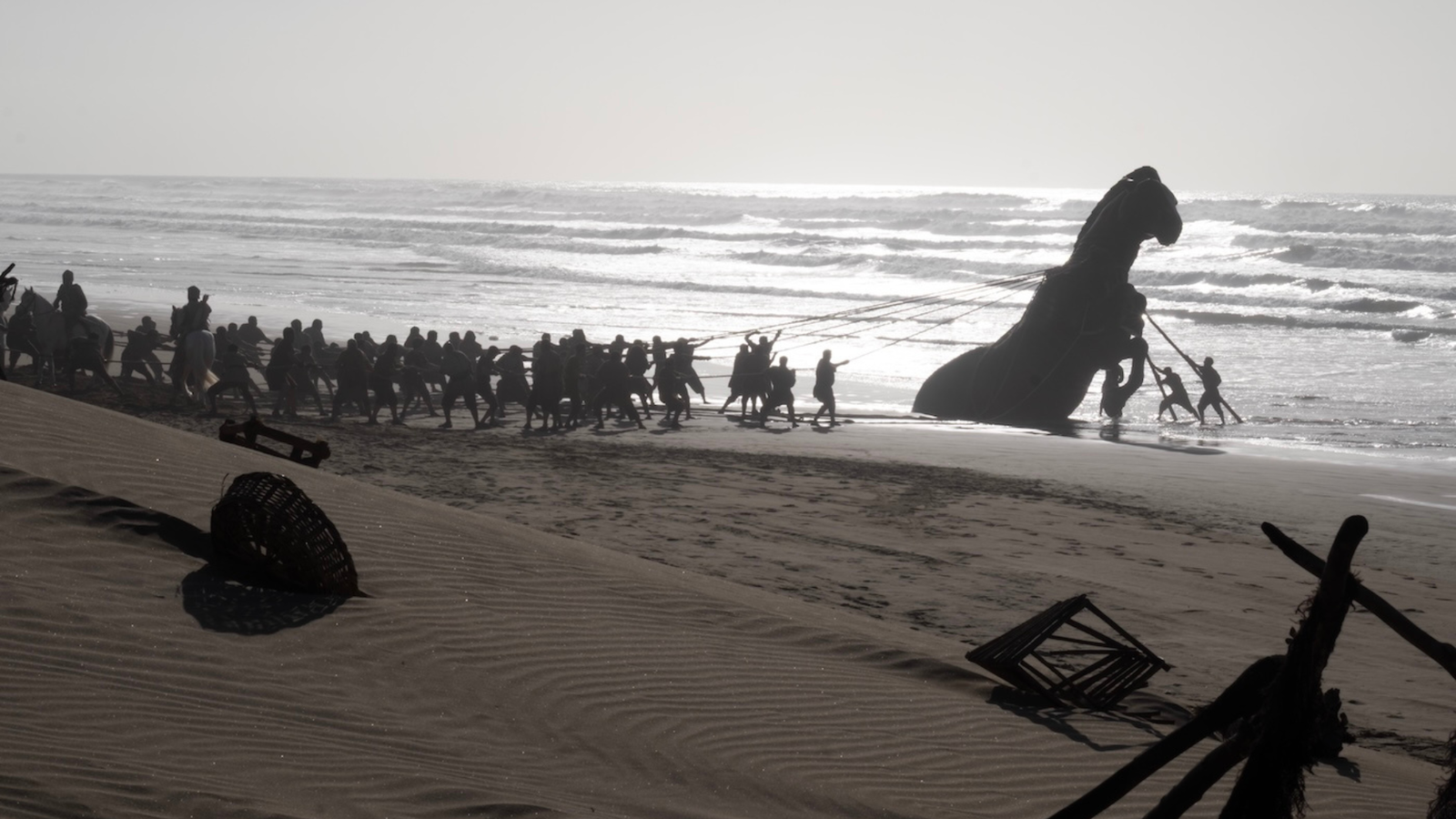
Credits: Universal Pictures
Credits: Universal Pictures
Tom Holland explained during his appearance on Konbini Video Club with Christopher Nolan that the production combined a full-scale Troy set with miniature structures positioned on a nearby mountainside while incorporating a real town in the distance. When viewed from the intended perspective, the three elements blended seamlessly into what appeared to be one vast city stretching across the landscape.
"Too much detail, you're giving away our tricks," Nolan joked, before brushing off the filmmaking secret with a smile, adding that it was "all the old tricks... all perspective," he said on Konbini Video Club.

While the conversation centred on Troy's construction, it also highlighted a creative philosophy that extends far beyond a single set piece. For Nolan, practical techniques are not simply callbacks to cinema's past, they remain an integral part of how he approaches filmmaking on the grandest scale.
Christopher Nolan's filmmaking philosophy extends far beyond a single sequence
The comparison between Lawrence of Arabia and The Odyssey also offered a glimpse into the filmmaking philosophy that has defined much of Christopher Nolan's career. While many modern blockbusters lean heavily on CGI to build expansive worlds, the Oscar-winning filmmaker has consistently favoured practical craftsmanship first, using visual effects to enhance what is captured on camera rather than replace it.
That commitment is evident throughout The Odyssey, widely reported to be Nolan's most ambitious and expensive production to date. Produced on a reported $250 million budget, alongside an estimated $125 million marketing spend, the film carries a total initial investment of around $375 million, making it one of the most expensive R-rated films ever produced.
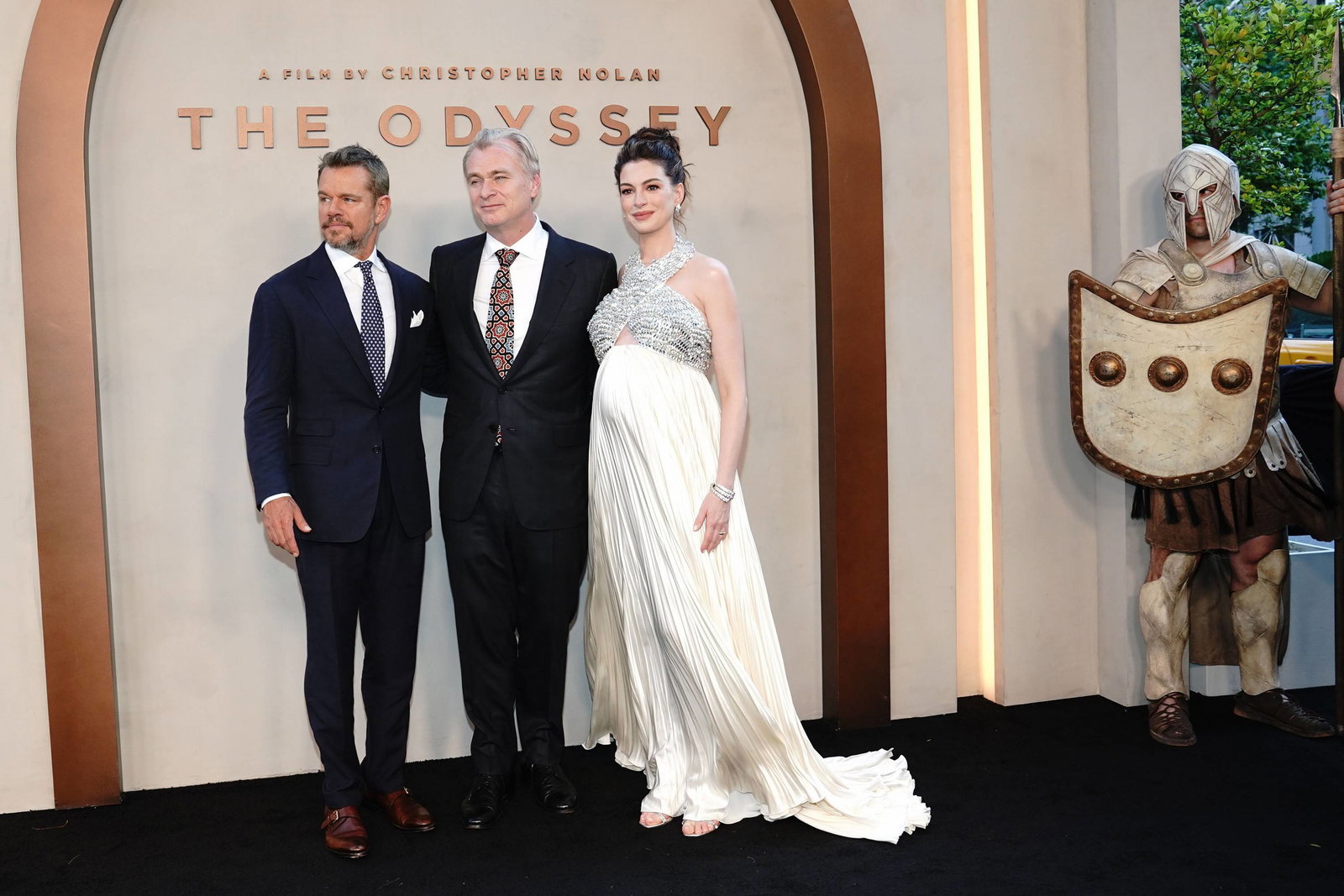
Matt Damon, Christopher Nolan, Anne Hathaway at arrivals for THE ODYSSEY Premiere, AMC Lincoln Square 13, New York, NY, July 14, 2026. Photo By: Kristin Callahan Everett Collection THE ODYSSEY Premiere PUBLICATIONXNOTxINxCANxCHNxFRAxITAxJPNxNORxPOLxRUSxESPxUKxUSA
Matt Damon, Christopher Nolan, Anne Hathaway at arrivals for THE ODYSSEY Premiere, AMC Lincoln Square 13, New York, NY, July 14, 2026. Photo By: Kristin Callahan Everett Collection THE ODYSSEY Premiere PUBLICATIONXNOTxINxCANxCHNxFRAxITAxJPNxNORxPOLxRUSxESPxUKxUSA
ADVERTISEMENT
Article continues below this ad
The film's practical approach extends well beyond Troy. The production built multiple full-sized Trojan Horses, staged large-scale battle sequences with thousands of extras and even created a towering animatronic Cyclops for Odysseus' encounter with Polyphemus instead of relying solely on computer-generated imagery. Every element reflects Nolan's long-standing preference for capturing as much as possible in-camera before visual effects are added to enhance the spectacle during post-production.
That approach has become one of the defining hallmarks of Nolan's filmmaking, stretching from The Dark Knight trilogy and Interstellar to Dunkirk and Oppenheimer. His comparison between Lawrence of Arabia and The Odyssey ultimately reinforces how techniques pioneered more than six decades ago continue to influence some of Hollywood's biggest productions, proving that practical ingenuity can still deliver cinematic spectacle on the grandest scale.
ADVERTISEMENT
Article continues below this ad
Do you think practical effects still create a more immersive cinematic experience than CGI? Share your opinion in the comments!
ADVERTISEMENT

Edited By: Aliza Siddiqui
ADVERTISEMENT
ADVERTISEMENT
