
(EXCLUSIVE): Sam Davis Breaks Down How Oscar Nominee 'The Singers' Turned a Simple Bar Sing-Off Into Pure Human Connection
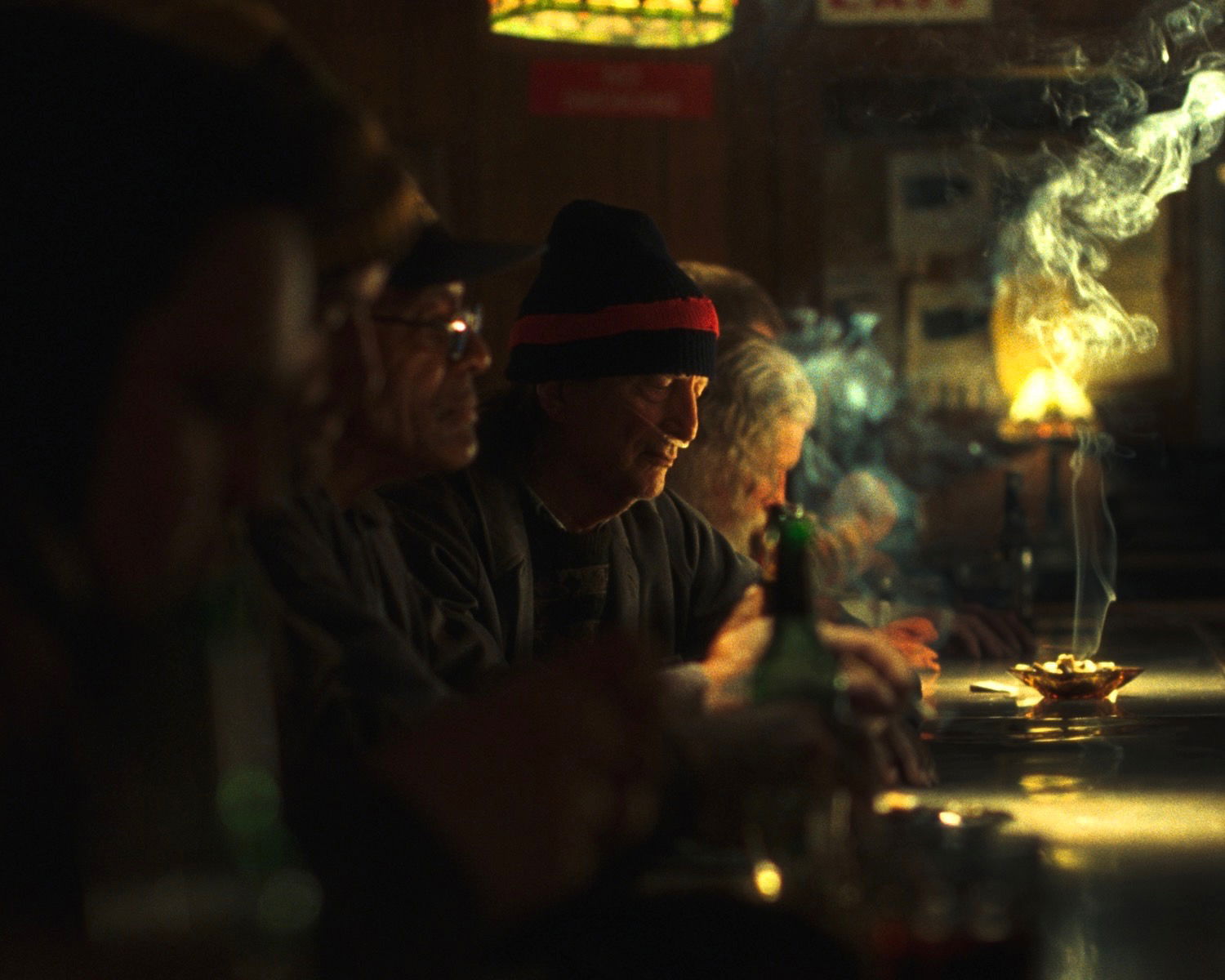
Sam Davis’ The Singers is the feel-good indie hit turning the Oscars’ Live-Action Short Film category upside-down. This 2025 musical gem throws ordinary barflies into an impromptu pub sing-off that turns loneliness into shared harmony, blending raw talent discovered online with deeply human storytelling. It is a spirited celebration of art, connection, and the magic of unexpected voices.
In a conversation with NetflixJunkie, director Sam Davis explained how The Singers transforms a simple bar sing-off into a deeply human story of connection, using real non-actors and improvised performances to capture the unexpected beauty of shared vulnerability.
Itti Mahajan: Firstly, congratulations for getting the nomination this year. I’ll begin by asking: how does it feel to make it to the nominations again? Because, you know, you have had a history of getting nominations earlier in the past as well. So how does it feel to get it for the third time now?
ADVERTISEMENT
Article continues below this ad
Sam Davis: It feels the same, which is great. It is not getting any less exciting or nerve-wracking, so that is good. I don’t think it ever will. You know, I feel really honored and happy to be in contention, and I still just can’t believe that my movie exists because it was such a crazy thing to put together, let alone that it is nominated for an Academy Award.
Itti Mahajan: Right, so I watched Singers, like last week, if I am not wrong, when I knew that I’ll be interviewing you. So I loved the movie a lot because I’m personally someone who loves jazz and blues a lot, and for me it was very nostalgic because I have, like, memories with my father listening to the songs, and it was just so great to watch it. And also the fact that it is based on Ivan Turgenev’s 1852 story as well. So, how did you balance that out — you know, staying true to that story while resonating it with the modern audience?
Sam Davis: Yeah, I don’t know how true we stayed to the short story. Yeah, I usually say inspired by rather than, like, based on, because it really—it is less of, like, an adaptation and more of a riff, you know, on some of the themes of that original short story. We really took from it the idea of a group of kind of lonely, sad men in a bar who have a sing-off, and it yields this moment of connection. That’s, like, the heart of the story, the way that I read it. Different people have different interpretations of that story, too, but that’s the—that’s kind of the theme that I pulled out of it, and we kind of took it and ran with it.
Itti Mahajan: Right, so, as you said, random people in the bar come together and sing the songs that resonate with them the most. So if we go back to the original story, right—in the story there are no names of the songs per se, right? It's just that one character is coming up and they are singing the song, so on and so forth. So Ivan’s real story has no songs, but you, like, had a soundtrack, like proper tracks, which were resonating and clearly indicating what these characters are going through.
So basically, in your adaptation, music becomes almost like a character in itself. So how did you approach building that atmosphere with those songs? And did you, pull an imagery or, a tone from Ivan’s description of the voices of the peasants and the collective response that was there in the story?
Sam Davis: Yeah, well, one thing that we wanted, which is in the story, is a variety of different voices and different sounds, and we wanted all the people to be saying something very different—not literally through the lyrics of the song that they're singing, but, like, with their soul and the way that they're singing the song.
So Mike Young, for example, who plays the bartender — I always had the idea that maybe he was singing to his wife who he had lost, and once I got to know Mike I found out that he actually had, in real life, lost his wife recently, and I said, you know, would you be willing to sort of dedicate the song, you know, to her? I had this idea, and he liked the idea and really leaned into it, and so his performance is, I think, that much more powerful because it's coming from a real place. And, but, all the guys, you know, tried to sing their songs authentically within them and say—like, say more than what the lyrics of the song are saying,
Itti Mahajan: Right, so I remember his song was 'Unchained Melody,' which was honestly a song I somehow forgot; it just came back to my playlist after the film, so it was…”
Sam Davis: Yeah, I didn’t know that song until—until I saw a viral video of Mike singing it in the subway station. That was my first exposure to it, and, you know, yeah, that song has a really special place in Mike’s heart because it triggered the—it put him on the map, you know. He went viral singing that song in the subway station, and then he performed it on America's Got Talent, so yeah, he really loves that song and it means a lot to him. He’s also constantly asked to sing it, so he gets a little tired of singing the same song all the time.
Itti Mahajan: So I guess that is why, you know, it translated so beautifully in the film in his character, right? It was like the perfect timing, the perfect song. As you yourself said, Mike was somebody who has, you know, been on America’s Got Talent, so, you know, most of the cast that is there in the film is, you know—you got them, they’re performers basically, right? Have been to reality shows or you found them via TikTok. Basically these are people who are artists, right—like singers, they know music, but they are not actors per se. So how did you, you know, like, shape your approach working with them, bringing out that element of acting basically in them in the film with these non-actors?
Sam Davis: Yeah, well, you know, you never really know who’s going to be able to act, because I did—I didn’t get to audition them properly. We would do phone calls and stuff like that, and I got to know them, but I didn’t have any way of knowing how they would react when they had a huge camera, you know, right here in their face. And the film was made without a script, so if, for example, Mike Young showed up and he was really bad at acting, and I couldn’t do anything to help him as a director, we would have leaned into a different character, you know—we would have adapted the story accordingly, and it would have turned out a lot different. Maybe better, maybe—maybe worse, probably worse, because I think Mike is pretty special. But that was kind of how we went about the process: keeping it really open-ended and, like, listening to it the way that you listen to a documentary while you’re making it. You know, it tells you kind of what it wants to be; it pulls you in where it’s good, you know. And—but—I’m so impressed with all the guys who took a big leap to be in a movie for the first time, and I think their performances are—I’m biased, obviously—but I think their performances are really impressive, especially never having been on camera before, and they’re really resonating with audiences.
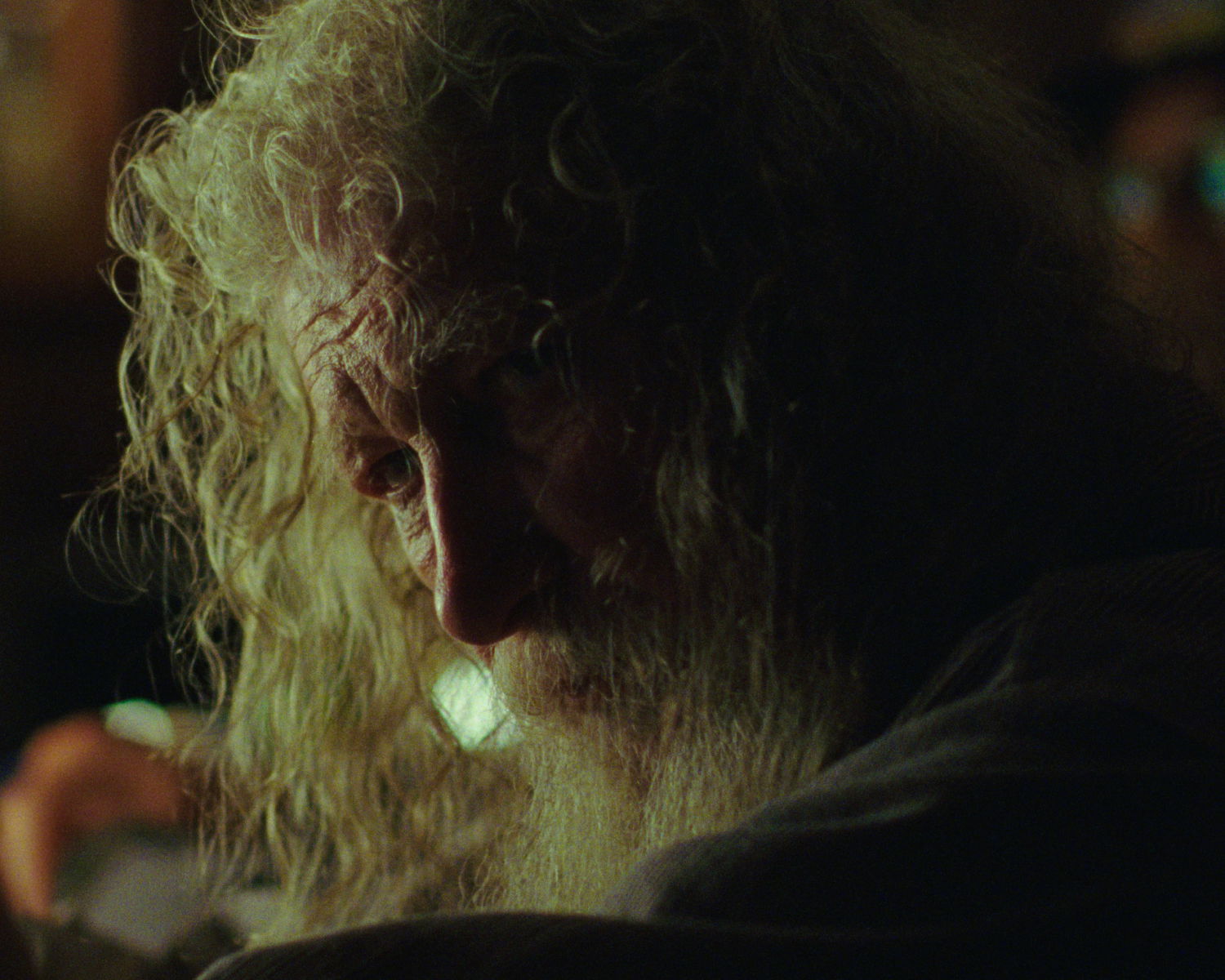
Itti Mahajan: Right, right. I think the—you know, their vocals is basically what their acting part actually was, which spoke to everybody around them, because they are artists, they could bring that emotion in so well that it came and reflected, and the audiences as well understood that. So as we are talking about this, the performances—the movie is set up just in a bar within, a few characters, and it was just a quiet pub, everybody having their own issues, and when they start singing, then it becomes, like an emotionally charged performance arena, right. So how did you design that visual language so that the space itself feels like a character, rather than just being a mere pub, like just being a location? And were blocking and camera movement planned around those emotional escalations instead of the dialogue beats as well?
Sam Davis: Yeah, the bar was a Moose Lodge, which is like a—like a members-only organization. I believe they’re dedicated to raising money for orphaned children, but the bar exists for their members, and it was—it was moose-themed, so every inch of every wall was covered in moose paraphernalia, which was distracting. So we had to take a lot of that stuff down. We wanted the bar to be, like, both specific and generic in a weird way—specific in its details but generic in that it could have been anywhere, you know, middle of America. And the sampling of people within it are kind of a hodgepodge of people from all over the world.
And yeah, visually, we—we—we also wanted it to be timeless. You know, it needed to be like any—I don’t know, maybe it plays like vaguely 1980s or something, but it could really be any time. Visually, we didn’t, you know, we didn’t have, like, a true shot list the way you typically do for a narrative film—again, just wanting to be improvisational and kind of make it up as we go. But we did have specific visual ideas that I knew we were going to shoot, like the dollar bills on the ceiling. I like the metaphor of, like, the diamond in the rough being the one $100 bill in a sea of one-dollar bills—that, as a metaphor, for each of these characters, these sort of, like, geniuses hiding in plain sight.
And the fish—the singing fish—wasn’t, you know, an idea I had in advance, and so we brought that in because I thought it would be funny if the first singer was that stupid fish. And, uh, yeah, so there were a lot of, like, little—little details and things that—there were certain shots that I knew I wanted to get. But for the most part, the visual language was, at least in terms of the camera movement, pretty improvised. It feels, you know, hopefully very intentional and well-thought-out, unlike the performances, which feel wild and sort of raw. We wanted the visual language to be pretty considered.
Itti Mahajan: Right, so, like, there’s also this aspect in the film that its exploring masculinity through competition that basically in the end turns into a beautiful connection, right. So were you consciously subverting this idea of rivalry by framing these performances as emotional releases instead of victory?
Sam Davis: Yeah, yeah, well, hopefully in the end no one really cares who gets the hundred dollars, because they’re, you know, they’re more—at least in that moment where the film ends—concerned with, like, the greater sort of catharsis and community that has emerged. But yeah, I mean, to me, it was never—of course it starts out as a bit of a competition, but that’s not really what the film is about. I think all guys, like, have something to say, and they just need an excuse to say it, to, you know, open up the—um—whatever they’ve been bottling emotionally through song.
And, um, yeah, I don’t know who—if I had to give the hundred dollars to one of them personally, I hope they don’t see this because they’ll be mad at me, but I would probably give it to—oh man—maybe to Will, who plays the piano, because he also plays piano for the other guys, and, um, his voice is just so—uh—so memorable. Yeah, it’s very raw, it’s very, you know, connecting, it’s very raw. His voice is, like, very raw, very natural. It’s so gravelly, it’s like a cement mixer or something.
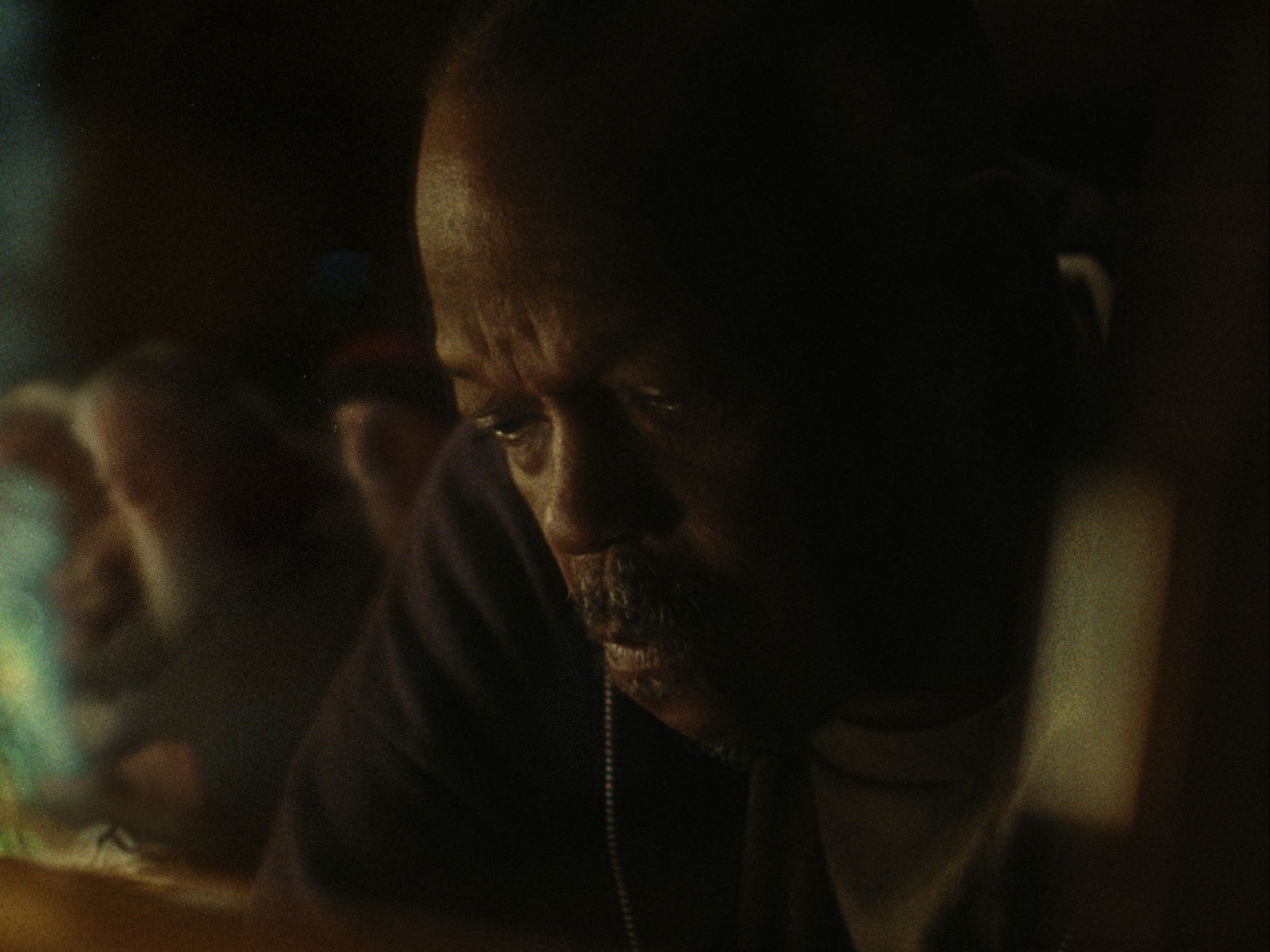
Itti Mahajan: So, there’s also, as I said in the beginning, that this is not the first time that your film is getting an Oscar nomination. So, you have, like, good experience working on, I say, documentary projects and narrative shorts now. So with Singers, now, how much do you feel that your documentary sensibility, especially in casting real people and improvisation, has shaped the emotional core of the film?
Sam Davis: Yeah, well, casting and writing were one process with the singers because there wasn’t a script, and so as I was casting, I was casting for not just, like, good faces and good voices but people who had stuff to lend to the story—you know, life experience and personality and mannerisms. And, um, so if I had to give credit for the script, I would credit the cast collectively, because it really was this, like, collaborative, uh, you know, dance that we did on the day to—to come up, to really shape the story. And I could never have written the stuff that they say, because it’s—it’s true to them, and—and hopefully it feels that way when, when you’re watching the film.
But yeah, lots of—lots of documentary influence in this, and I know I probably wouldn’t have made this film if I didn’t have my background in documentary, because it was the convergence of this short story with the thought that I could—I could tap into all these documentary skills that really was the spark that made me want to make this. I wouldn’t have, if I was just a narrative filmmaker and I wanted to do this in a traditional narrative way—I probably would have chosen a different project. But there was something really exciting about the opportunity to synthesize, you know, narrative and documentary and—and sort of give a spotlight to these, like, hidden-gem talents and underappreciated, you know, singers from around the world and—and let them play themselves. And yeah, it felt like a perfect opportunity to—to do that.
Itti Mahajan: If we talk about, short films and documentaries for that matter, they mostly, you know, they feel like proofs of concepts and not something that are, you know, like whole, because the time limit also is, you know, um, shorter over there. But it's not the case with Singers at all. So when you were directing and working on it, how did you decide what emotional information to leave unresolved so that the ending lingers rather than, you know, it explains itself entirely?
Sam Davis: Um, well, I think there were things like Judah Kelly, who sings in the bathroom and then he leaves. That was something, you know, I just liked the unevenness of that. I like that it was—I like that it stung a little bit. So many people are mad at me about having him leave and not—not—not participate, but that’s the point. Like, I want—you know, of course, we want to evoke those feelings. And I thought it’s like a mini tragedy that—not only that they don’t get to hear him, but that he didn’t get to experience the chaos and magic that’s about to unfold inside the bar, and he’ll never know.
So yeah, I don’t know, not all questions are necessarily meant to be answered, not all threads are meant to be tied up in a bow. People will have different interpretations of the film and, uh, hopefully see themselves in different—in different characters. But yeah, it’s not really the type of film that was meant to be, like, a proof of concept or a teaser for—for something longer.I think of it like a poem, you know—it’s like a true short film. It says what it wants to say in that short amount of time. And, while I would love to go make something else with those guys in a shady bar somewhere, I don’t know that it’s, like, the Singers, the feature we'll see.
Itti Mahajan: Right, I hope you do something around that because I honestly—as I said in the beginning—it was so fun for me to, you know, watch the film because of the music element in it, and I did not want it to end only, I’ll say. But, you know, like, it had to. That’s a great compliment—yeah, it had to.
Sam Davis: Yeah, so I hear from a lot of people saying that too. So many people are like, I wanted—I wanted two more hours of this, just to just watch people keep, you know, continuing to emerge. Which is a really lovely compliment, but in reality, I don’t know—I don’t know how all that would work.
Itti Mahajan: Right, but then again, you said that you could have The Singers feature, so maybe you have a future idea. Like, I have one last question to ask, and that is the question I was waiting for to ask you as well.
So, when the film ends, the last song, there is 'Unchained Melody', as I mentioned, which was being sung. The moment it ends, the entire room actually comes together. And if you look at the lyrics of the song, they’re very much steeped in longing and that pain of separation. But in the film, something which I’ll say is melancholic in nature, talking about pain and grief, seems to be uniting everybody emotionally. So, how did you come up with deciding on that particular song for that particular scene?
Sam Davis: Well, actually, that was the song that Mike Young sang in that first video that I discovered him in, and so I—for all the other singers—it was a big discussion about what we would, you know, what they would sing, and we brainstormed, we tried different songs. But—but for Mike, it was always going to be that song, um, because that kind of—like, that song kind of sparked the initial idea for me. So it was difficult to imagine him singing anything else.
Like you said, it also just fit the moment perfectly, especially with the, you know, the subtext of him singing to someone who he misses. And then, yeah, the moment of—of the giant group hug, which isn’t necessarily literal, you know. The film has—has gone into sort of this heightened place, I think, by this point.
But it’s, um, it’s sort of a visual interpretation of, like, uh—it’s almost like a mini, a mini fantasy moment. Of course, you know, 20 guys are not going to get up and—and start a group hug in real life. It’s not—it’s not meant to be grounded or literal. But—but I think it’s emotionally, um—and I hope it, it seems like it’s resonating with most audiences. So the film starts with a fight and ends with a—with a giant hug, and, uh, that’s kind of the—that’s kind of the arc, um, as simply as we can put it.
ADVERTISEMENT
Article continues below this ad
Itti Mahajan: Yeah, I guess that’s what the beauty of the film was because, you know, when they start the competition, I was like, there will be, like, maybe someone, you know, a winner, and it’s gonna end maybe there, and, you know, there would be something else. But the ending was something I did not think would happen, but it was beautiful.
Sam Davis: Well, the film is literally about bringing people together, you know, about the people coming together. It’s about—it's about—it’s about how music and art and vulnerability can, in this case, literally bring people together. So that was our way of sort of visually interpreting, literalizing a moment that’s really meant to be symbolic.
Netflix Taps Hans Zimmer for 'All the Sinners Bleed,’ Streamer’s Next Serial Killer Horror in Making
ADVERTISEMENT
Article continues below this ad
Have you watched The Singers yet? Let us know in the comments.
ADVERTISEMENT

Edited By: Aliza Siddiqui
ADVERTISEMENT
ADVERTISEMENT
