
(Exclusive) Meyer Levinson-Blount on His Oscar-Nominated ‘Butcher’s Stain’: Why Stories of Bias, Belonging, and Silent Resistance Matter More Than Ever
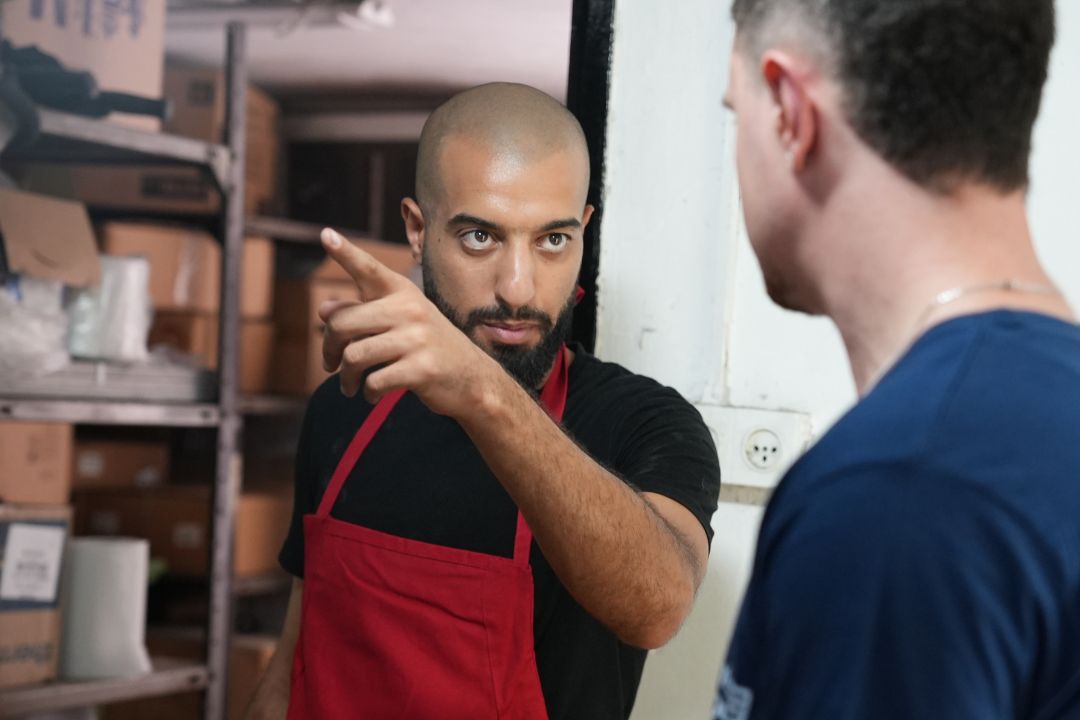
The tense, restrained Israeli short-film Butcher’s Stain has been turning heads on the awards circuit. Written and directed by Meyer Levinson-Blount, the 26-minute drama follows Samir, a Palestinian butcher accused of removing hostage posters in his Tel Aviv supermarket, as he struggles to prove his innocence and hold on to his job. The film, which blends Hebrew and Arabic dialogue, won a Silver Medal at the 2025 Student Academy Awards before earning a Best Live Action Short Film nomination at the 2026 Oscars.
The storyline turns a seemingly simple workplace incident into a powerful microcosm of prejudice, identity, and human dignity, reflecting broader societal tensions while highlighting one man’s struggle to retain both his job and his sense of self.
Netflix Junkie sat down with director, writer, and actor of the film, Meyer Levinson-Blount, to unpack the inspiration, craft, and messages behind this powerful story — and to explore why Butcher’s Stain resonates far beyond its short runtime.
ADVERTISEMENT
Article continues below this ad
Itti Mahajan: So while I was preparing for the interview, I was going through and skimming through your Instagram, and I saw this really cute post where you were all sitting together and watching the live reaction of the announcements being made. You were all doing these celebratory jumps and so on. So have those ‘celebratory jumps’ slowed down for you, or do you still feel that same burst of excitement when you think about being nominated for the Oscars this year?
Meyer Levinson-Blount: It's still surreal, it's still amazing. At that moment, it was probably the most amazing because it's just like you know you're waiting for that moment for a month. Every single day, I was just praying that it would happen. But yeah, every single day it's amazing. It just keeps on being more and more amazing. We keep on meeting more and more people at screenings, people who are industry members being able to network with them through the film, basically because they enjoy the film. So everything has been pretty amazing.
Itti Mahajan: Right, and I hope that the joy continues when the results also come out. So after watching the film and while researching, I found out how it draws very heavily from your own experiences. And I found out how you were working in a supermarket after October 7th, right? So how did those real-life moments shape your vision for Butcher’s Stain, and what was the hardest part for you to translate those experiences into, I'll say, cinematic storytelling?
Meyer Levinson-Blount: Well, as you said, I worked at the supermarket after the 7th of October. And I sort of experienced the tensions between the Arab-Palestinian employees and the Jewish employees, and I saw that as a miniature version of a trend that I was seeing in Israeli society in general after those events.
So I really wanted to tell the story of two things happening at the same time that are sometimes talked about separately, which is national crisis and collective trauma, but also, at the same time, how that collective trauma and national crisis affect the individual who is a part of an ethnicity that is then frowned upon, that is then pointed at and blamed. So I think that the biggest challenge translating that to the screen, translating that to a movie, was being authentic. It's always a challenge — you always want to make it feel like it's real life, make it feel like this could actually happen.
So a lot of that was making the acting feel authentic, of course, in all sorts of ways, and the DOP and all that. But working with the actor Omar Sameer, really what we were doing — what I was doing — was learning. I was trying to connect to his own experience, I was trying to get the details right, and he was a very big help in that, because he generously offered to change this and change that so that it would feel like the experience that he had gone through all his life, and it would feel like the experience that his community had gone through.
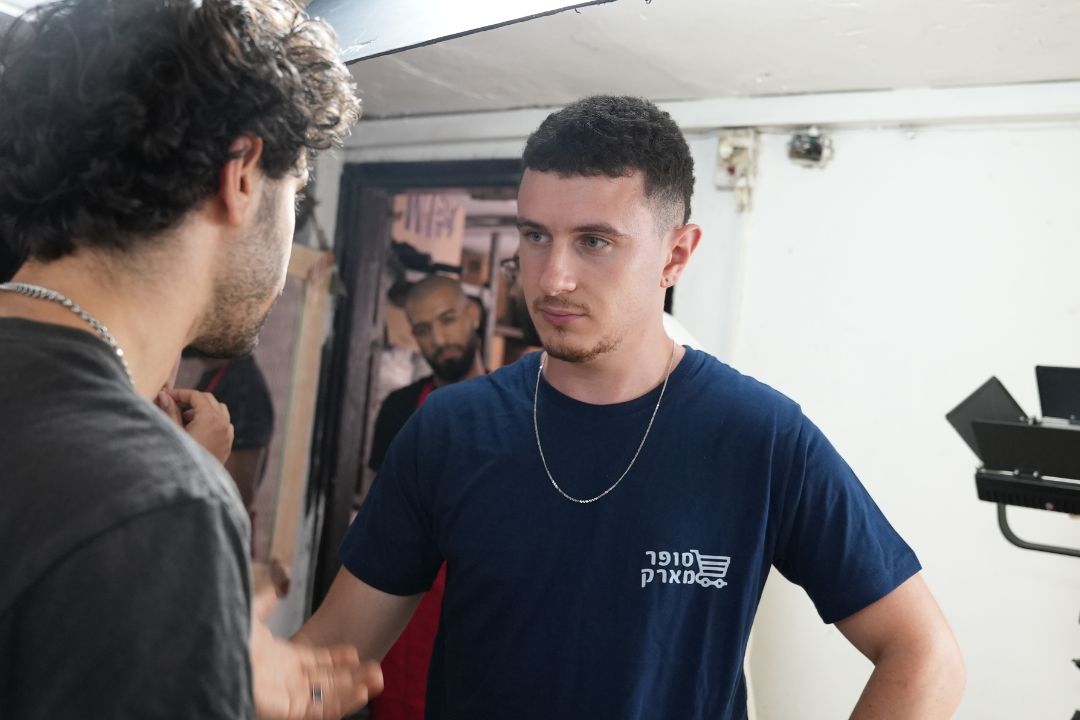
Itti Mahajan: Right, and that was something, I’ll say, that when I was watching the movie, I could also understand Samir’s POV really well because, as you said, you incorporated his experience as well — the inputs he was giving — which made it all the more authentic. You also said in one of your interviews that with the film you were trying to explore the deeply rooted racism that surfaces in everyday spaces, especially in times of national crisis, and that by focusing on one man’s quiet workplace struggle, Sameer in this case, you tried to reflect the broader societal fractures and the question of what it means to actually belong.
So how did you balance that — wanting to shine a light on these social issues while also portraying Sameer as someone who was fully individual and not just a mere symbol or a message, for that matter?
Meyer Levinson-Blount: Well, I think that it's a good question. I mean, it's a tricky thing because when you are trying to deliver a message as a filmmaker, you sometimes bend things so that they adhere to that message, and instead of doing that, when I was writing the script, I really wanted to have the story take me to a place that was a question mark, so that there really isn't a message essentially. I wouldn't personally call it a message unless the message itself is the question mark.
I would call it this sort of, you know, the way that I experience things from the side — how events go in these very random, unexpected ways, so that I'm building suspicion all the time, and then that suspicion is suddenly broken when you realize that the suspicion is baseless. I feel like a lot of times in life, because of social media and because of news and the media in general, we have these suspicions against other people, and we are so 100% sure of what they believe in and who they are because of these representations that we see on the news. And this film is about breaking that — it’s about building up that same suspicion, but also, at some point, breaking it and showing you that it's baseless.
So I think that when speaking about using Samir as a message, I, of course, wanted to do the opposite. I wanted to show his life, that it was just a regular person, just a person who had a complicated family situation, and then was suddenly forced into this political situation that he wanted nothing to do with. So the message at the end is very ambiguous, and it's a question mark, because I think that life itself is a question mark, and I think that life itself is confusing, and I think that I don't have any easy answers after 26 minutes. And honestly, I'm almost looking at the viewer for a solution.
Itti Mahajan: Right, right, that I get completely — that life works in very mysterious ways, and the more you try to untangle it, I feel the more complicated it gets in one way or the other. So there was one scene in the film which I really loved, where Sameer confronts Nir, who is your character, about spreading those lies, and that scene is very intense, and it is personally and emotionally charged, and it is tied to fear, identity, judgment, and human vulnerability, which can result in such situations in the workplace. So how did you write that up and direct that interaction so it conveys tension and uncertainty without settling it for the audience?
Meyer Levinson-Blount: Well, when I work with actors, I really, really try to bring it to their personal lives instead of talking about the actual things happening in the film. For example, in a scene where she accuses him of tearing down the posters essentially, I realized that what would work would be, instead of directing it as the scene it is, I wanted to direct it as a breakup scene that brings all of those interesting emotions and brings all the heartbreak. So it's basically the same thing in that scene with Nir. It's not a romantic heartbreak, but I tried to bring it so that it felt like a friend was stabbing you in the back.
So I tried to bring it to the personal experience of the actor and tried to connect with his personal experiences and connect to something that would charge him emotionally. And a lot of the time with scripts, the actual content can be interesting or infuriating, or whatever it is, but to connect with it emotionally and personally, you have to tap into your own life. So I think that was one of the things that we worked on when we were doing that scene.
And also, that scene is not the way that it was written in the script at all because when I write dialogue, I realize that it's really not something that I'm keen on keeping, because I think that actors have their own way of speaking and their way of doing things. So a lot of the times I will do an improvisation take while on set, and then I'll keep the improvisation take because I think it's so much more interesting. I think it's interesting when characters can take — when you're in the scene, and you can take it to wherever you want the scene to go — I think that's really interesting.

Itti Mahajan: Right, that is so true. So, talking about Sameer’s character, his innocence in the film is something that is very emotionally clear, but it is something not socially contested, for that matter. So when you were writing the character and when you were making this film, were you intentionally resisting that there should not be any kind of narrative certainty there, to force the audience to actually look at themselves and their own biases and instinctive judgments when they look at the character?
Meyer Levinson-Blount: Yeah, I think that it's a film that's supposed to leave you with space to think. I think that was the most important thing for me. And what I love about the film is that people come out of it and they have totally different things to say. Like every single time, there are people that think it's very, you know, to this side of politics, and they're like, I really like that, you know, you're standing up for this and that. And then there are people who think it goes to this side of politics, and then there are people who think it's balanced and it doesn't take a side.
And I think that when you force your opinions on the viewer, it becomes educational — it becomes like your mom lecturing you about something bad that you did, and I don't want that at all. I think that people can't change or develop without being ready for it themselves, without coming to conclusions themselves. And so I don't come to any conclusions for you. Instead, I show you this sort of experience that I saw from the side of a broken society, of a broken country, which basically lives on suspicion — that's the way that they survive — and racism and discrimination that is pointed to an individual who wants nothing to do with anything and definitely doesn't want anything to do with politics.
And so I kind of show you that, and then I really want the viewer to decide what the conclusion is. And I really, really hope the conclusion is — and this is the only thing I hope for — the conclusion is that I should rethink some of the things that I believe in. And it doesn't matter what side of politics you're coming from — that you should just kind of rethink some of the suspicion that you have towards others, rethink maybe I should be more respectful, maybe I should look people in the eye when I speak to them, and just altogether be more accepting and be more open to conversation.
Itti Mahajan: Right, and it's true that we can only develop and change when we challenge ourselves internally, no matter what is there. And I guess that is what your film also did — it made us look at our views which we hold, re-evaluate them, and move forward.
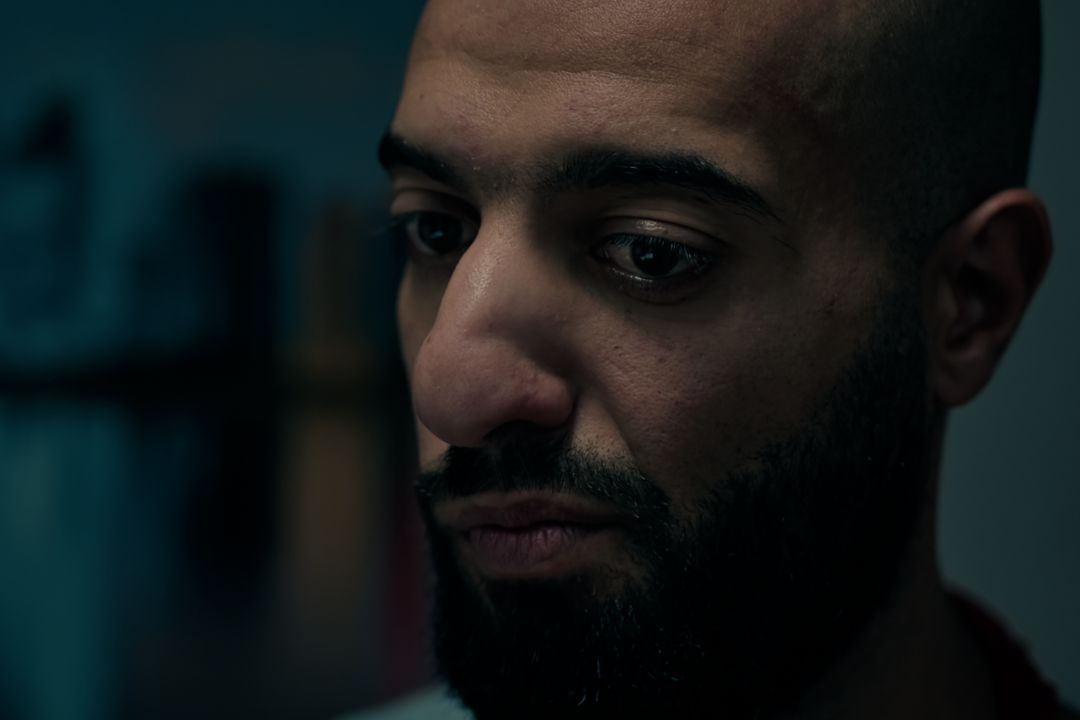
So, just taking the conversation forward on Sameer’s character only, he relies very heavily on internalized emotion rather than dialogue. So what directing techniques did you use to maintain that psychological intensity while keeping the character emotionally contained?
Meyer Levinson-Blount: So back to the accusation scene, I was directing it, and I felt like in the first few takes it wasn't exactly working. And I was trying to think to myself, why is this not working, because it's— and then so I tried to direct them in a way. It's important to say this is my first professional film, so I hadn't quite gotten to where I wanted to, and, you know, I just was still learning.
So I tried to direct them and say, you know, you're going to be fired, and you're going to lose your job, and you don't have enough money, and you think that he's doing this, and you're afraid of him, but you feel bad, and this and that. And it just wasn't working, and I was thinking to myself, how do I do this in a way that would be emotionally charged?
And then I realized that the whole film essentially is a human story, and because it's a human story, I shouldn't be directing the actors in the way of you're going to get fired, so you're scared. Instead, I really want to bring it to something that all people can relate to, which is heartbreak. It's a breakup. So I tried to kind of direct it in this way, that it was like a breakup — like she was breaking up with him. And a breakup is hard for the person breaking up with the person, and a breakup is hard for someone who's being broken up with. So that's how I directed that scene.
And it really is, when you think about it, really a breakup, because what it is and what you see in that scene is someone accusing someone of this act and saying you have to admit to this act that you didn't do in order to keep your job. And it's very vulnerable — Sameer is not confronting her, he's not saying why did you do this and I didn't do anything. Sameer is essentially not confronting her; he's asking her, why do you think I did this, do you really think that that's the person that I am? So I think that that's one method that I used to try to make it feel authentic and you know direct the actors.
Itti Mahajan: Right, so there was also one more thing in the film — that there is a coexistence of two languages, which is Hebrew and Arabic, and it subtly signals the feeling of belongingness as well as exclusion at the same time. So how deliberately did you use this linguistic shift as a narrative punctuation rather than just realism?
Meyer Levinson-Blount: It's a great question. I think that the scenes where he's going to see his kid and it's in Arabic are scenes that are essential in terms of building his own character outside of the film, outside of the main plot, which is really important for me because, you know, you talked to me before about the message and using the character for the message, and I really didn't want to do that. I didn't want to use him for any messages. So that was my way of saying I respect Samir and I want to show his personal life as well, because he's not defined by racism and discrimination.
So it was also important for me to have that language within the film because, although I am Israeli and I'm American, I didn't want it to be only in Hebrew. I didn't want it to be only from an Israeli's perspective. I wanted it to be a film about Samir. So it was really important for me to show his own native language and the way that he speaks it.
And also, those scenes are scenes that break stereotypes that people have about Arabs, Palestinians, or maybe even Muslims in general, because he has an ex-wife — they're divorced — something that is maybe not something that, you know, if the stereotype is that marriage is… yeah, it doesn't happen usually. So I think that those scenes are surprising to some people because they're so gentle in a lot of ways, and they're not like what you might expect when you see Arabic, because the use of that language in culture, in films and television, sometimes here in Israel, can be specifically for certain things.
And I think that what we were trying to do was break that and show a more humane representation of their culture. So that was what went in mostly when speaking about the Arabic.
Itti Mahajan: Right, so you know in the film there's also one more thing — that you were juggling actually three hats at once: the writer, director, and you also played a role of Nir, right? So how did juggling these multiple hats influence your connection to not just the story but also to the characters in the story?
Meyer Levinson-Blount: Well, I mean, juggling all those roles was extremely challenging. The most challenging was being an actor and being a director. I don't know if I would do it again. It was crazy running from the monitor to, you know, in front of the camera and then running back to watch the playback. It was pretty challenging and it wasted a lot of time, so I don't know if I would want to do it again.
The reason that I did it was because I felt like as a creator I didn't want to take myself out of the equation. I didn't want to say, listen, I'm doing a film about racism and discrimination and I've now cleaned myself of any responsibility of enabling a society that is structured this way. Instead, I wanted to say I'm part of it. I am an enabler like anyone else, and I also, day-to-day, am probably ignorant sometimes, and I can't pull myself out of this. We're all a part of this. We're all part of this in Israel; we're all part of this worldwide. The world has gone to such an extremist position all around the world, and people are really hating on each other, and people have— it's become okay to be racist online and hateful online, and people make assumptions all the time against people online. It's very, very toxic.
And I think that we all have a part in changing that, whether or not you yourself feel that you're being racist. It's not about that. It's about standing up against that, and it's about not enabling it, and it's about thinking twice before you're hateful against anyone. It doesn't matter whether it's an ethnicity or political stance, a certain group of people, religion. So I think that was mainly the reason that I didn't want to clean myself of responsibility, and that was why I decided to star in the film specifically in that role.
Itti Mahajan: So I think that you should, like, in your journey, you should be taking up acting roles because your character was really good, so I don't think you should be doubting that. So, um, you know, there's also one more thing — that your film also won the silver medal back in 2025 at the Student Academy Awards, right? So already, if I say it that way, amongst our industry peers, it becomes an achievement, right?
So now, you know, it's nominated at the Oscars for Best Live Action Short Film. So how did that early recognition, which you got, shape your journey, both creatively and professionally? And do you also feel that the momentum or confidence that ultimately, like, basically getting the silver medal also gave you that confidence, which helped the film reach the Oscars, like a manifestation of sorts, that the confidence you get after achieving something is what led to it being a nominated film at the Oscars this year?
Meyer Levinson-Blount: I think that manifesting is definitely a big part of it. If you think big all the time — and that’s what me and my producer Oron Caspi, who is also a director himself, do — he very much understands the vision and the drive, and he’s really a partner, a partner in crime for everything.
But I think that not compromising was a huge part of it as well. We didn’t, you know — people making student films sometimes take a soundman that’s one of their friends. We were like, no, we’re going to pay someone. Same thing with the DOP, same thing with lighting, and all these different things that we decided we weren’t going to compromise on. We were going to put the money in, we were going to put the extra energy in, we were going to try to find somewhere that’s even more cinematic. And I think that it all paid off.
And it’s so amazing to have that pay off. And I think that the awards that I’ve gotten are recognition. They’ve made me feel like my film is something that people want to see and want to engage in and talk about. And I’ve been able to meet so many important people and connect with them through my film, and this is a dream come true in every way possible. I wouldn’t have it any other way. It’s crazy, it’s exactly what I wanted.
It’s, you know, being able to go around and screen your film places and take questions from the audience, hear what they think about your characters that were in your mind, that you wrote, that came out of your imagination — it’s a really amazing experience for me.
Itti Mahajan: Right, so as we are moving towards the end of it, I have one question to ask, and I was actually waiting to ask this. So, you know, when the film ends, there’s this closing shot where you see Sameer and Adam sitting in a restaurant, and Adam is leaning onto Sameer. And it comes after when, in a way, Sameer takes a stand for himself in front of his wife actually wanting to take him away for a while.
So, in that scene, when it is closing up, we see the restaurant actually being surrounded by the same posters of the hostages because of which Sameer lost his job, right? So when I was watching it, how I connected to it was — for me it felt as if, like, when Sameer, although he lost his job, he stood strong with his dignity, he lost everything, and yet having Adam by his side was like a personal victory. This is how I interpreted that scene.
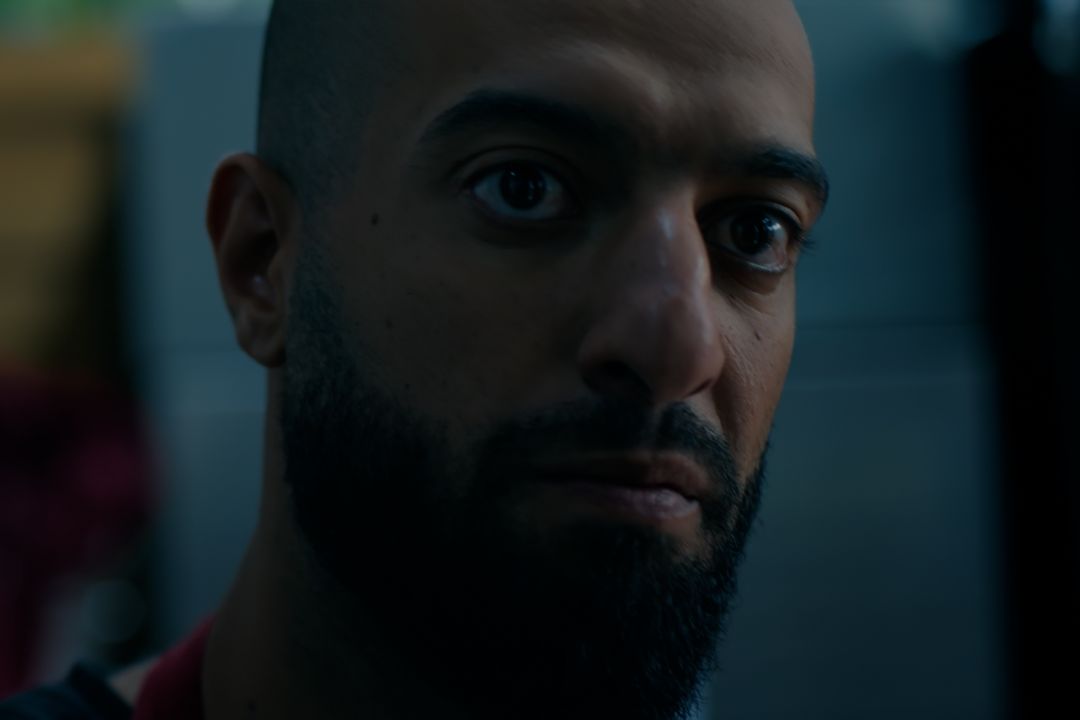
But I want to ask you: what message were you trying to give us with Sameer looking directly into our eyes in the closing shot?
ADVERTISEMENT
Article continues below this ad
Meyer Levinson-Blount: It was, for me, sort of Samir saying to the audience: I've done everything that I can. I've tried to prove my innocence silently. I've tried to confront the people who are accusing me, and I can't do anything else. And now it's your turn. Now it's your turn to stand up for what you believe in, to vote, to be engaged politically, and protest peacefully, and, you know, most of all, respect other people. Respect other people and don't come to conclusions before you've actually met the person and talked to them and understand how their lives are and the fact— and, you know, just really understand that people are exactly the same. They go through the same struggles everywhere, all over the world.
Obviously, there are different cultures and different religions, and all of that exists, but really every single person, everyone, just wakes up in the morning and tries to make enough money to feed their children. And everyone loves their children. Everyone loves their family. Everyone wants just to be loved. And, you know, it's cliché, but it's something that we've forgotten entirely. So that's really the last shot.
ADVERTISEMENT
Article continues below this ad
Have you watched Butcher's Stain yet? Let us know in the comments.
ADVERTISEMENT

Edited By: Adiba Nizami
ADVERTISEMENT
ADVERTISEMENT
