
Who Was the Better Winner? 'Squid Game: The Challenge' Season 1 vs Season 2 Complete Comparison

The global phenomenon of Squid Game: The Challenge has captivated audiences, transforming childhood games into a high-stakes psychological battlefield where strategic alliances and ruthless self-preservation are the only keys to survival. With $4.56 million on the line, the competition demands players to master not only the physical challenges but also the complex social game. As the reality series successfully crowned its first champion and recently concluded its thrilling second season, the inevitable question arises: who dominated the game more completely, and whose strategy led to a more impressive victory?
The legacy of the competition begins with the pioneer who survived 455 other players to claim the inaugural grand prize.
Who won the Squid Game: The Challenge season 1?
ADVERTISEMENT
Article continues below this ad
Season one of Squid Game: The Challenge tested the resolve of 456 contestants with a mix of familiar and new challenges, from the terrifying Red Light, Green Light to the nerve-wracking Glass Bridge. The competition ultimately narrowed down to three finalists: Sam (Player 016), a Florida-based artist; Phill (Player 451), a Hawaii-based scuba instructor; and Mai Whelan (Player 287), an immigration adjudicator and former Navy veteran. The finale involved a lavish meal, a tense Circle of Trust elimination game. Mai Whelan, Player 287, was crowned the winner of Season 1 in 2023.
Mai won the final challenge, which was a game of Rock, Paper, Scissors against Phill. The final victory gave Mai the massive $4.56 million prize, one of the largest cash payouts in television history. Her biggest moments included strategically breaking an all-women alliance agreement to save her friend Chad (Player 286) during the Dorm Test of allegiance. After filming, Mai used her winnings to fund two charity initiatives, including purchasing 15 acres for wildlife and supporting non-profits focusing on mental health and service animal training, as mentioned by Cosmopolitan.

With the first season setting a high bar for gameplay, the next set of competitors faced an even more intense environment.
Who is the winner of Squid Game: The Challenge season 2?
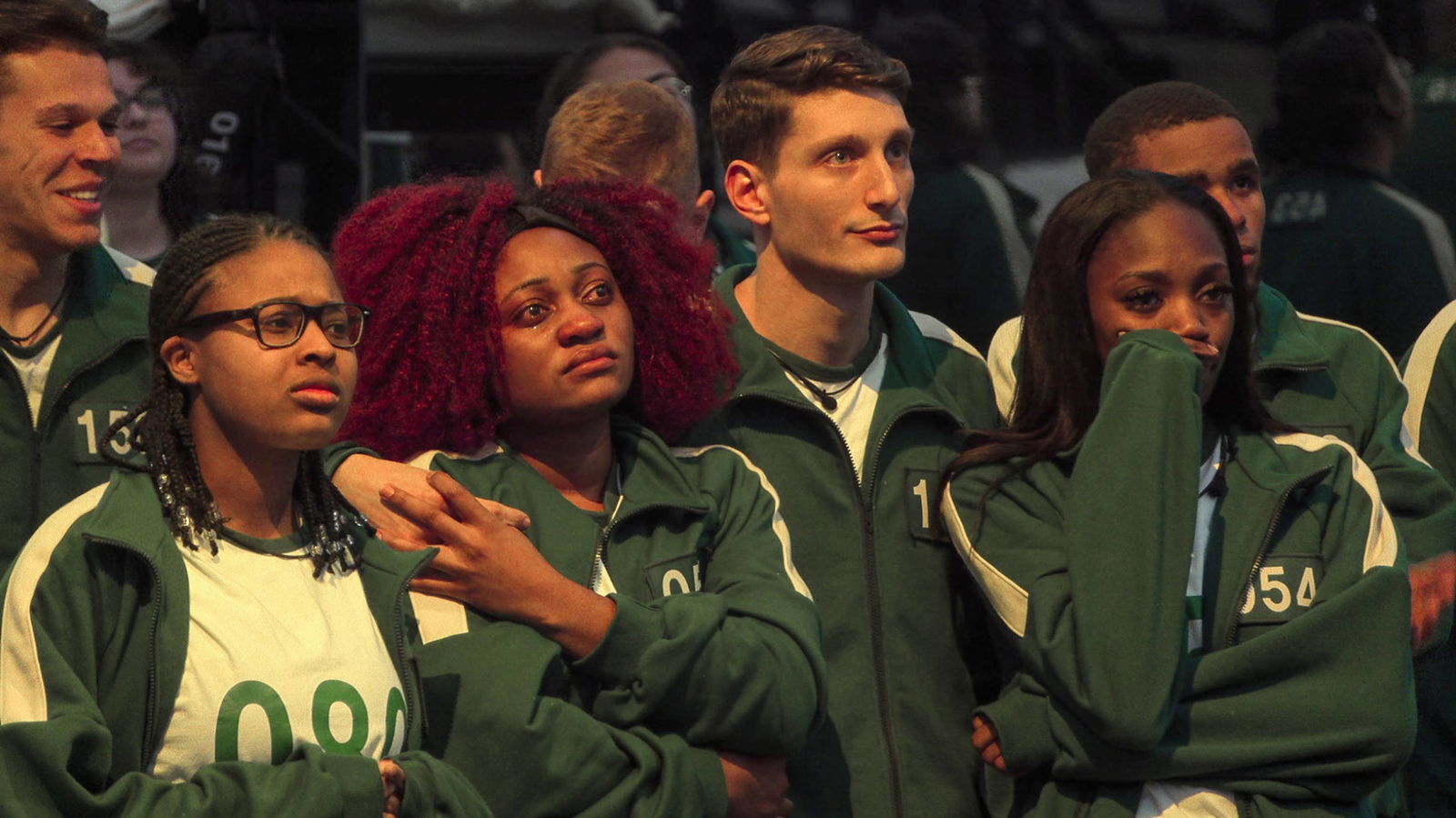
The competition again culminated in a last meal, where five players remained: Vanessa (Player 17), Perla (Player 72), Steven (Player 183), Dajah (Player 302), and Trinity (Player 398). The elimination process was immediately triggered, starting with a five-coin test of fate. The episode saw a shocking moment when Trinity asked for and accepted the black coin to self-eliminate, deciding that the remaining players deserved the money more, which dramatically reduced the final pool.
The final four, Vanessa, Perla, Steven, and Dajah, advanced to the infamous Red Light, Green Light game. This time, the game determined the winner. Vanessa was eliminated first, followed by Steven. Dajah suffered an injury, forcing her elimination. Perla Figuereo, Player 72, the 25-year-old model from the Bronx, successfully crossed the finish line to become the champion of Season 2.
Examining the approaches of the two champions provides insight into the different paths to victory.
Squid Game the Challenge season 1 & 2 winner comparison
Strategy comparison: Mai Whelan’s strategy was characterized by calculated ruthlessness and a forward-thinking social game. Her moves were often subtle but impactful; she maintained a small, loyal alliance but was prepared to make an isolating, ruthless play, such as trying to eliminate Ashley or eliminating her ally Roland, when she felt it necessary for self-preservation. Perla, on the other hand, played a more direct and physically focused game in the finale, where victory depended entirely on crossing the finish line first in Red Light, Green Light. Her most crucial strategy involved simply surviving to the final challenge.
Social game comparison: Mai’s social game was complex and polarizing, oscillating between nurturing alliances and being a divisive force. Her strong personality and willingness to challenge others, like Ashley, led to conflict but also garnered respect. She was an active player in the politics of the dorm. Perla’s social game was less overtly political and focused more on low-profile survival and camaraderie.
Physical performance comparison: Mai was consistent, navigating the physical challenges like Warships and Glass Bridge successfully, but her final victory came down to psychological pressure in Rock, Paper, Scissors. Her physical performance was solid but not the defining factor of her win. Perla's win, conversely, was purely physical and focused on speed and precision under extreme pressure during the Red Light, Green Light finale.
Psychological resilience: Both winners demonstrated extraordinary psychological resilience, necessary to endure the game's mental toll. Mai’s resilience stemmed from her difficult life as a refugee and Navy veteran, allowing her to make emotionally detached decisions when required, like the elimination of an ally. Perla's resilience was demonstrated by her ability to focus and maintain her composure during the fast-paced, high-stakes final challenge, where Dajah’s unfortunate ankle injury highlights the extreme mental and physical strain under which Perla succeeded.
Game difficulty level- Was season 2 harder than season 1?
It is difficult to definitively state whether Season 2 was universally harder, but the final format in Season 2 arguably presented a more straightforward and physically demanding challenge to secure the victory. Season 1’s finale ended with a game of pure chance and psychology (Rock, Paper, Scissors), whereas Season 2's finale required a direct physical test (Red Light, Green Light) under intense pressure to win the prize. Both seasons maintained the high-stakes pressure and uncertainty throughout the earlier rounds.
The comparison reveals two different, yet equally valid, paths to securing the prize.
Final verdict: Who was the better winner?
The determination of the better winner ultimately varies depending on the reader’s perspective regarding what defines true mastery of a reality game show. Both Mai Whelan and Perla Figuereo leveraged their unique strengths to conquer the immense challenges of the competition.
Mai Whelan (Season 1) may be considered the superior winner from a strategic and social perspective. Her strong zone was the mental and political game. She navigated alliances, survived suspicion, and outwitted the final two competitors in a test of pure psychological strategy.
ADVERTISEMENT
Article continues below this ad
Perla Figuereo (Season 2) holds the advantage as the better winner from a direct execution and physical performance perspective. Her strong zone was focus under pressure. She survived the final elimination rounds and then secured the win by flawlessly executing the most physically and mentally taxing challenge, Red Light, Green Light, when it mattered most, demonstrating unparalleled focus in the face of imminent elimination.
The show has proven that the legacy of original fictional series, Squid Game, and the path to the $4.56 million prize requires an unpredictable blend of wit, athleticism, and luck, cementing both players as champions in their own right.
ADVERTISEMENT
Article continues below this ad
Which winner's strategy do you admire more: Mai's social and psychological mastery or Perla's focused physical execution? Let us know in the comments below.
ADVERTISEMENT

Edited By: Itti Mahajan
ADVERTISEMENT
ADVERTISEMENT
