
'The Gentlemen' Season 2 Review: From Dukes to Dons, Guy Ritchie Crafts His Own Godfather
Credits: Christopher Raphael/Netflix
Credits: Christopher Raphael/Netflix
Guy Ritchie’s The Gentlemen always felt like an idea begging to become something bigger. The original 2019 movie looked at Britain’s lucrative cannabis trade through a gangster comedy built around aristocratic decay and criminal ambition. The 2024 Netflix series took that premise and made the British upper class the real criminal kingdom.
Eddie Horniman returned from the Army after his father’s death, inherited a crumbling estate, discovered a vast weed operation beneath it, and slowly found his footing in a world he never wanted. Season 1 ended with Eddie embracing the game.
Season 2 asks what happens when the Duke stops seeing the empire as an inconvenience and starts seeing it as his destiny.
ADVERTISEMENT
Article continues below this ad
The Godfather: An Inspiration or the Motivation?
Season 1 worked because it threw Eddie into absolute madness. Guy Ritchie surrounded this polished aristocrat with criminals, eccentrics, violence, drugs, and absurdity, forcing him to survive one bizarre crisis after another. There was a The Godfather quality to his transformation.
Credit: Christopher Raphael/Netflix
Credit: Christopher Raphael/Netflix
Michael Corleone enters organized crime because circumstances leave him no clean escape, and Eddie experiences a similarly reluctant descent. Eddie begins as a disciplined former soldier who wants distance from the family business. By the finale, he has discovered that he possesses a natural talent for the criminal world. Netflix itself describes his journey as a transition from duke to drug baron.
Season 2 picks up with that transformation already underway. Eddie is no longer stumbling through someone else’s operation. Theo James plays him as a man who knows exactly what he wants. His ambitions now stretch from the English countryside to Italy, where he and Susie establish a foothold around Lake Maggiore and enter the orbit of Marco Moretti, played by Sergio Castellitto. Series writer Matthew Read says the season was designed around Eddie expanding the criminal empire and testing his relationship with Bobby Glass.
That shift changes the rhythm. Season 1 often felt like a violent collection of criminal set pieces. Season 2 is more interested in strategy. Eddie schemes, negotiates, manipulates, and tries to build alliances that can eventually free him from Bobby’s control. His political maneuvering through Lord Hawthorne adds another layer, placing aristocratic influence beside organized crime. Hugh Bonneville is especially entertaining as Hawthorne, bringing exactly the sort of ridiculous British establishment figure Ritchie loves.
There is still chaos. There are still gangsters, betrayals, grotesque characters, and moments that could only exist inside Ritchie’s universe. Yet the season spends more time watching Eddie think. That makes his evolution fascinating because every calculated decision seems to chip away at whatever remained of the reluctant Duke.
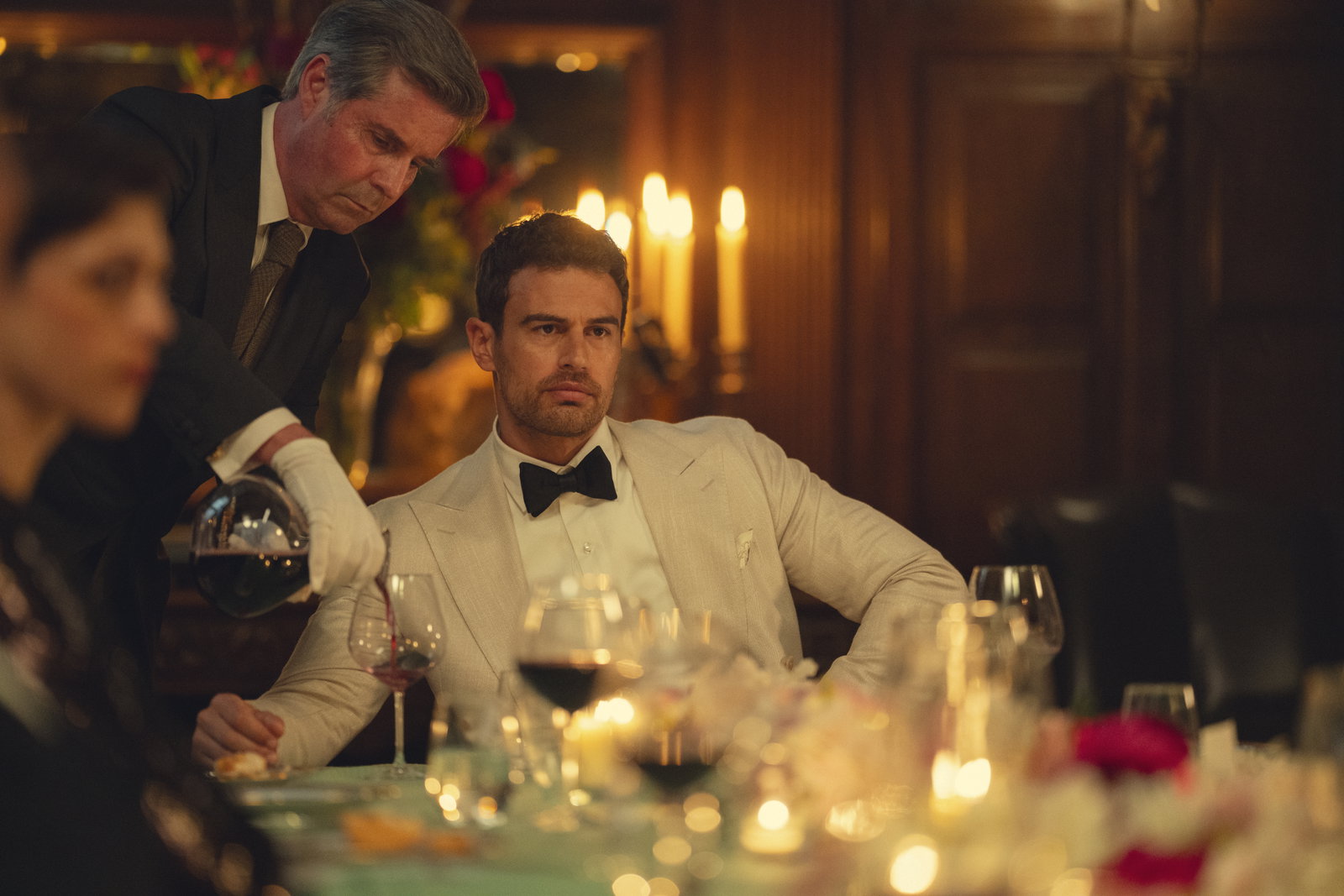
Then the plan collapses, and Eddie finally has to confront the monster that has been growing underneath the tailored suit.
Eddie finally channels his inner demon
The biggest strength of the season is Theo James’ gradual shift from reluctant aristocrat to criminal strategist. Eddie begins with a moral line, even while operating comfortably within an illegal empire. As the season develops, that line becomes increasingly difficult to locate. Netflix describes the central question as whether Eddie wants too much and whether his pursuit of power could cost him his soul. James himself has said Eddie’s morality becomes compromised.
Credit: Christopher Raphael/Netflix
Credit: Christopher Raphael/Netflix
Italy introduces Cico Maldini, played by Michele Morrone, as a chaotic counterweight to Eddie. Marco is the serious power broker, while Cico is the unpredictable fixer responsible for helping Eddie and Susie navigate the Italian operation. Benedetta Porcaroli’s Bella becomes far more important to the story. Her connection to the Italian world gives Eddie another possible route toward independence, and their increasingly close relationship becomes part business calculation, part romance.
This is where the season becomes messy. Eddie’s decision to pursue Bella has thematic potential because marriage gives him access to another world of influence while offering an escape from Bobby. Yet the romance develops with a speed that makes the emotional investment harder to buy. The idea works better on paper than it does dramatically.
Giancarlo Esposito’s Stanley Johnston remains a fascinating presence. He is less interested in being another gangster Eddie must defeat and more interested in feeding the Duke’s ego. Johnston constantly reinforces Eddie’s sense that he was born to rule. That manipulation plays beautifully against Eddie’s worsening moral condition. He is being told exactly what he wants to hear while believing he is the one controlling the board.
And then everything collapses.
Eddie is beaten down and left to recover after Bobby turns against him. His humiliation strips away the aristocratic polish. When the final personal blow arrives, Eddie has every reason to unleash the violence he has spent two seasons learning to control. That progression is the season at its most compelling. Ritchie is showing us the making of a gangster without giving him the usual gangster origin story.
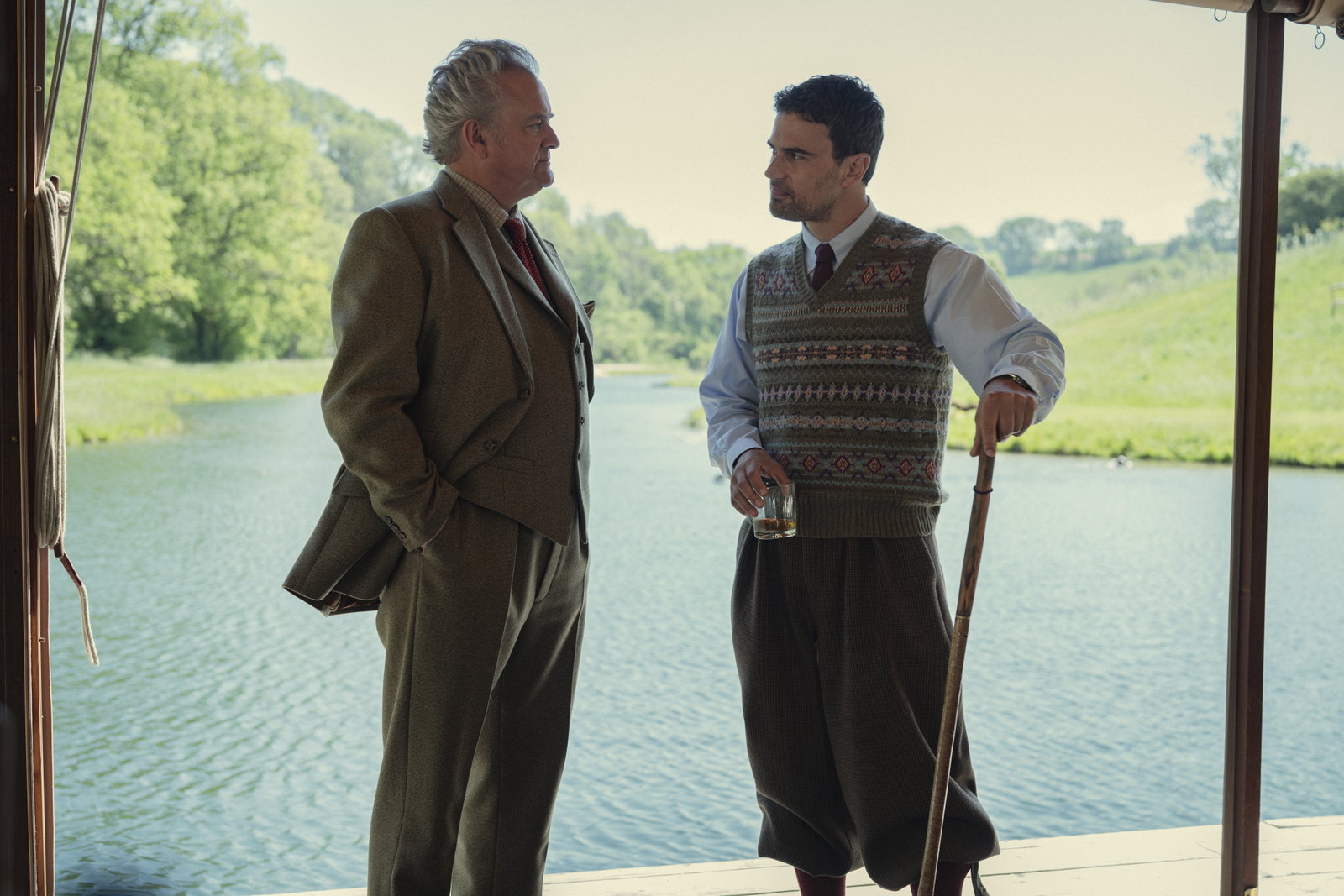
Once Eddie embraces that darkness, the season heads back to Halstead Manor for a finale that finally unleashes the old-school Guy Ritchie energy many viewers have been waiting for.
The Finale goes full Guy Ritchie, then trips at the finish line
The final stretch brings the story back to the Horniman estate, where the family is placed in immediate danger. This gives Geoffrey, played by Vinnie Jones, a chance to become the action hero the season has largely kept hidden. As the longtime keeper of Halstead Manor, Geoffrey knows the property intimately, and the siege allows Ritchie to turn the estate into a giant tactical playground.
Credits: Netflix
Credits: Netflix
It is one of the strongest action sequences of the season because the geography matters. Every corridor, room, piece of machinery, and stretch of land feels useful. The violence becomes messy, physical, and distinctly Ritchie. After a season built heavily around negotiations and shifting alliances, watching Geoffrey defend the house feels like someone finally plugged the show back into the mains.
The mystery surrounding the attacks initially points toward one culprit, Bobby Glass but the eventual explanation brings the story back to Freddy Horniman and John “The Gospel” Dixon. Freddy’s rehabilitation storyline has quietly positioned him as vulnerable, while Dixon’s return connects the season to unfinished business from the previous chapter.
ADVERTISEMENT
Article continues below this ad
The resolution gives Daniel Ings a powerful moment, although the reveal arrives with considerable exposition rather than the elegant misdirection Ritchie has delivered elsewhere. That is the problem with the finale. The season spends hours building complicated relationships, international alliances, political maneuvering, and Eddie’s psychological transformation, then resolves several major threads with startling efficiency.
John Dixon feels underused after the menace he carried in Season 1. Michael Vu’s Jimmy Chang, one of the first season’s most charming characters, also receives precious little room to breathe. The ending therefore feels smaller than the journey leading toward it. The good news is that Netflix has already renewed The Gentlemen for Season 3, with Guy Ritchie returning and promising to push the story further.
ADVERTISEMENT
Article continues below this ad
What did you think of The Gentlemen Season 2? Did Eddie’s transformation work for you, or did the finale leave you wanting more? Let us know in the comments.
ADVERTISEMENT

Edited By: Aliza Siddiqui
More from Netflix Junkie on Netflix News





ADVERTISEMENT