
'Stranger Things: Tales From ’85 Review': A Subtle Expansion of the 'Stranger Things' Universe
Credits: Netflix
Credits: Netflix
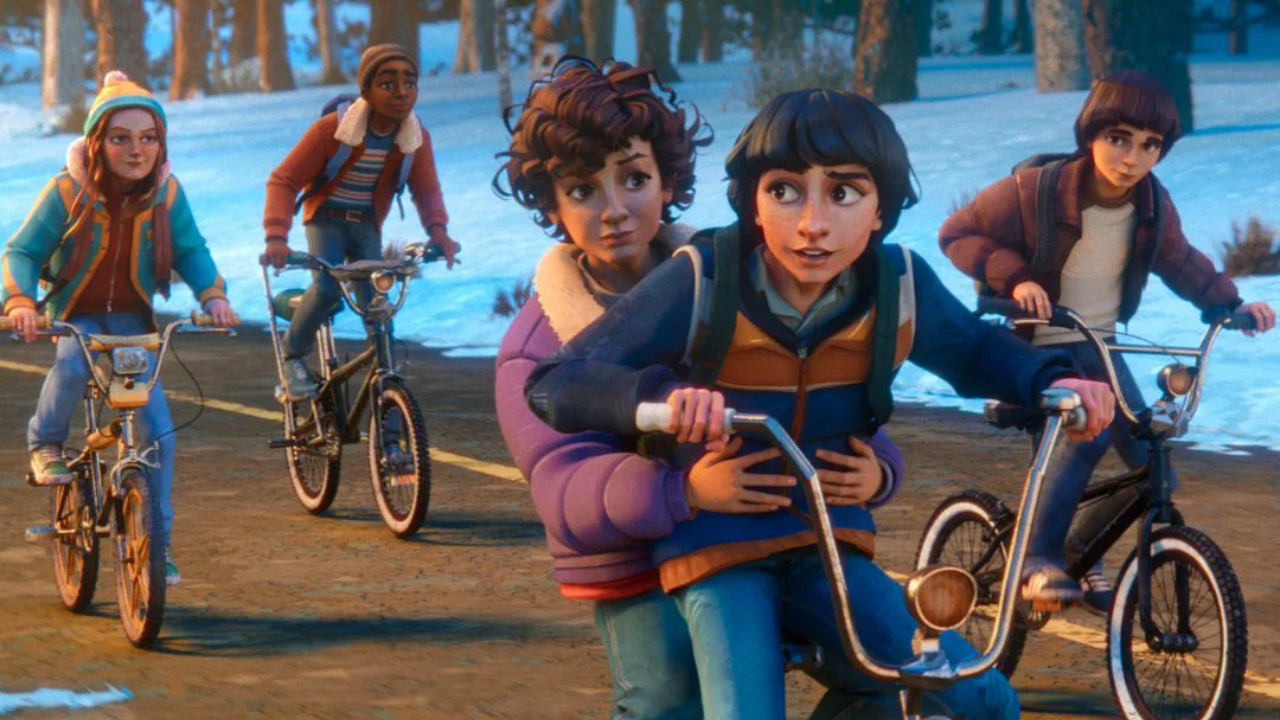
There is something magical about returning to Hawkins, Indiana. The small town we all fell in love with through the live-action Stranger Things series feels familiar yet fresh in this new animated adventure. Stranger Things: Tales From '85 takes us back to the winter of 1985, right after the gates to the Upside Down were closed. Our favorite group of kids is trying to live normal lives again. They play D&D, have snowball fights, and enjoy quiet winter days. But this is Hawkins, and peace never lasts long. Something dark and terrifying wakes up beneath the frozen ground, and our heroes must once again save their town
With its April 23 release widening access, Tales From ’85 offers something rarer than nostalgia: a chance to re-evaluate first impressions and decide whether the chill of scepticism is deserved, or simply premature.
Tales from ‘85: Beneath the snow, something stirs
Chronologically nestled between the aftermath of the gate’s closure in Stranger Things Season 2 and the neon chaos of Starcourt in Season 2, the series opens on a deceptively quiet Hawkins. Snow falls with an almost storybook gentleness, the kind that softens edges and buries memory. Eleven, Mike, Dustin, Lucas, Max, and Will drift back into routines that feel almost sacred in their normalcy: Dungeons and Dragons campaigns, bike rides across frost-lined streets, the fragile laughter of teenagers pretending the world did not almost end.
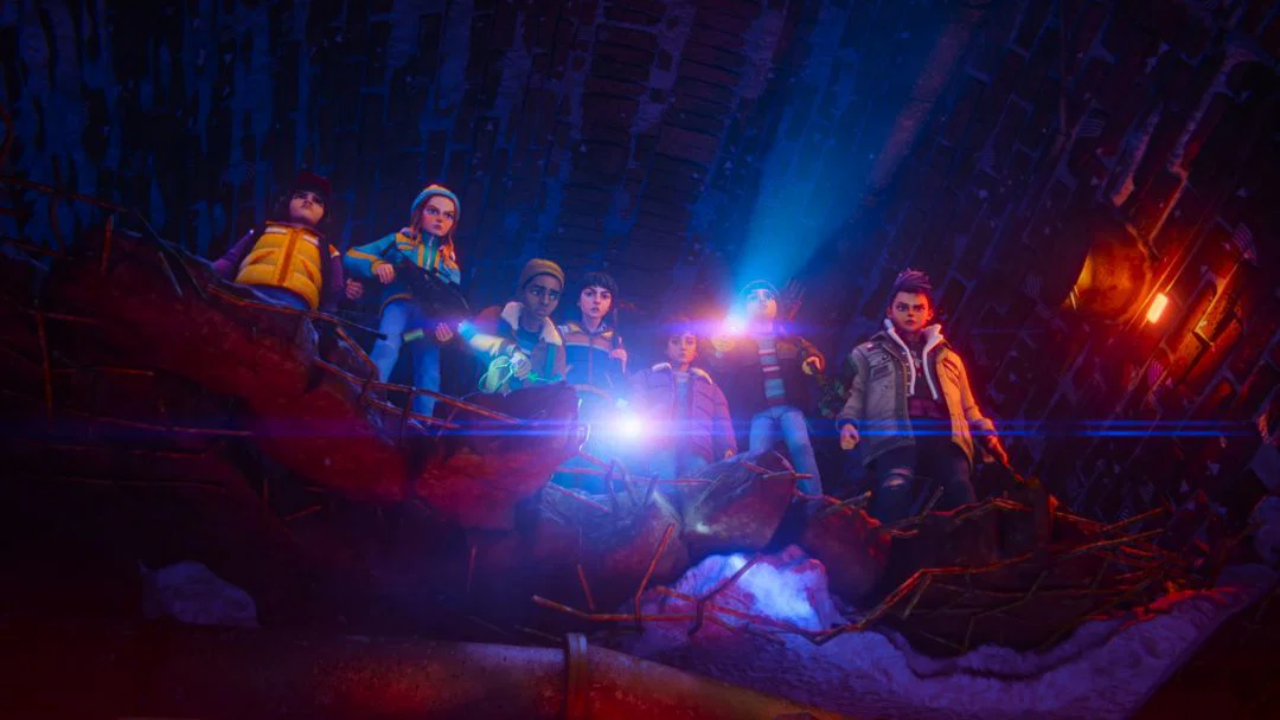
But Hawkins, as always, is a place where calm is a prelude. The series wastes little time in rupturing that stillness. What emerges is not a recycled Demogorgon terror but something more ambiguous, more subterranean in both design and implication. The creature here is a lingering infection of the Upside Down that refuses containment. Its presence expands the mythology in a way the live-action series often gestured toward but rarely explored with this level of visual freedom.
Credits: Netflix
Credits: Netflix
The tonal shift is immediate and intentional. Animation liberates the narrative from the physical constraints that once defined Hawkins’ horrors. Snow-covered cul-de-sacs bleed into surreal nightmare spaces with fluid transitions, and the Upside Down itself becomes a living organism. There is a faint echo of The Real Ghostbusters aesthetic in the exaggerated forms and kinetic movement, yet the emotional core remains distinctly Stranger Things.
More interesting is the recalibration of character dynamics. Will Byers, long defined by trauma, finds an unexpected evolution here. His friendship with Nikki Baxter introduces a new axis to his identity, one that resists the familiar framing of him as perpetually haunted. It is a subtle but meaningful shift. The boy who once whispered in fear now moves with cautious agency, as if the series is gently rewriting his narrative from victim to participant.
A second glance reframes the complaint entirely. What some call slow is, in truth, patient storytelling in a franchise that has often thrived on escalation.
Static, synth, and the shape of memory
Technically, Tales From ’85 is where the experiment becomes undeniable. Produced by Flying Bark Productions and guided by showrunner Eric Robles, the series embraces a hybrid 2D and CG approach that feels both retro and modern. There is a tactile quality to the animation, a sense that every shadow and flicker has been hand-considered. Lead animator Jacopo Di Martino and animating supervisor Matt Diks orchestrate sequences that would be logistically impossible in live action, particularly in the fluid transitions between Hawkins and its darker reflections.
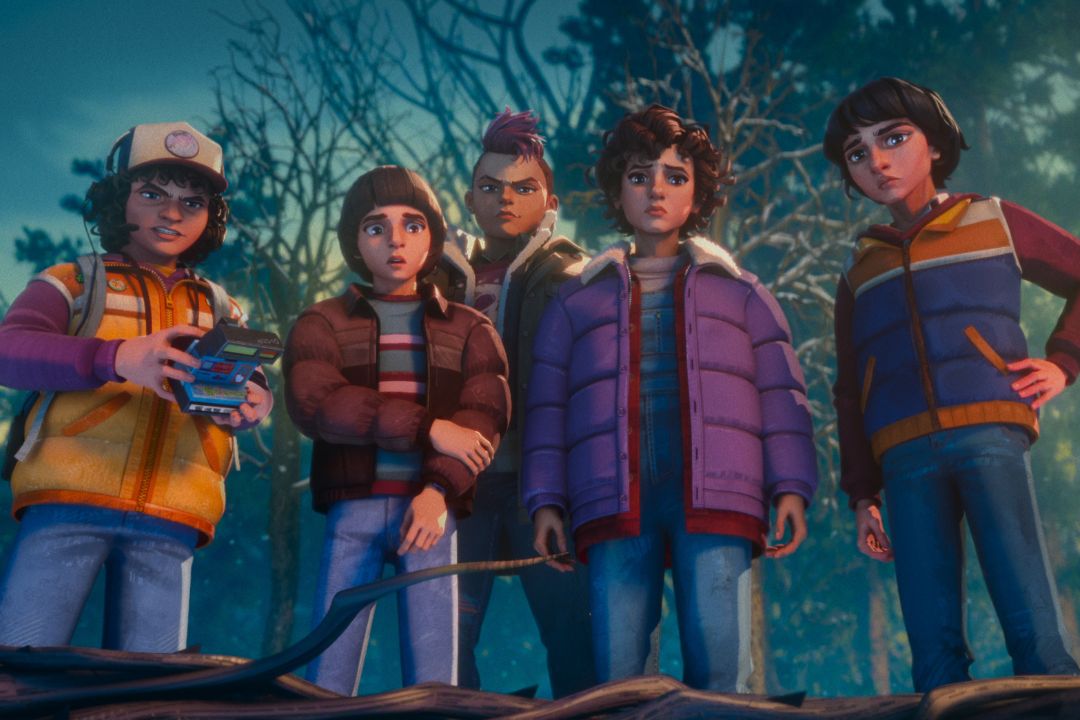
The voice cast carries the emotional weight with surprising precision. Luca Diaz as Mike channels that familiar earnest urgency, while Brooklyn Davey Norstedt’s Eleven balances restraint and vulnerability. Braxton Quinney’s Dustin retains his chaotic charm, and Elisha Williams gives Lucas a grounded intensity that often anchors group dynamics. Jeremy Jordan’s Steve Harrington slips effortlessly into the role, preserving the character’s layered blend of bravado and insecurity.
Yet it is Odessa A’zion as Nikki who leaves the most distinct impression, injecting the series with a fresh emotional current that refracts through Will’s arc.
Credits: Netflix
Credits: Netflix
Sound design and score operate as an invisible architecture beneath the narrative. Composer Brad Breeck constructs a sonic bridge between the eerie minimalism of the Upside Down and the bright, synthetic pulse of the 1980s. The soundtrack is not merely decorative; it is structural. Tracks like ‘Kids Riding Bikes’ and ‘Sewer Chase’ echo the franchise’s musical DNA while carving out their own tonal identity.
The needle drops are equally deliberate. Songs from Cyndi Lauper, Billy Idol, and The Cure do more than evoke an era. They function as emotional punctuation, reinforcing themes of longing, rebellion, and fleeting connection. It is a reminder of how deeply music has always been embedded in Stranger Things, from Kate Bush’s cultural resurgence to the thunder of Metallica redefining a climactic moment.
Even the episode structure, with runtimes hovering between 24 and 28 minutes, feels calibrated for balance. There is space for intimacy and spectacle, for whispered conversations and explosive confrontations. The series understands that scale is not measured by duration but by density of experience.
What emerges is not a mere extension of the franchise but a reconfiguration of its language. Animation becomes a lens through which Hawkins can be seen anew, less bound by realism and more attuned to psychological and visual abstraction.
Stranger Things: Tales From ’85 is not the anomaly early ratings suggest. It is a slower burn, yes, but one that rewards attention with texture, nuance, and a quietly expanding mythology. It respects the past without being imprisoned by it, carving out a space that feels both familiar and exploratory.
Does Hawkins still have new stories worth telling, or is this winter a sign that Stranger Things' magic is beginning to fade? Share your take in the comments.

Edited By: Adiba Nizami
