
Meet the Cast of ‘Sins of Kujo’: The Japanese Stars Behind the Live-Action Adaptation
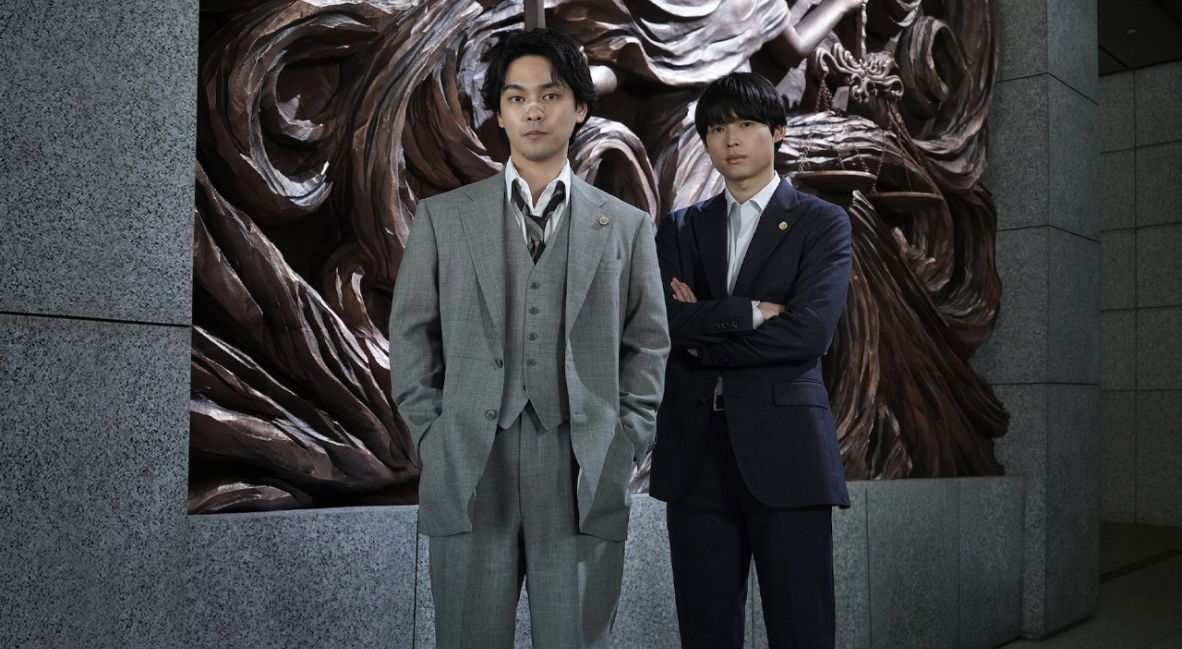
The final trailer for Netflix’s Sins of Kujo does not so much introduce a series as it sets a moral trap. Adapted from Shohei Manabe’s 2020 manga Kujō no Taizai, the show leans into a world where legality and ethics rarely overlap, teasing a protagonist who treats the law like a scalpel rather than a shield. With its global premiere locked for April 2, the live-action version arrives carrying both the weight of its source material and the expectation of Netflix’s increasingly precise Japanese slate.
But trailers can only do so much. The real question is simpler, and more decisive: who exactly is stepping into Manabe’s morally volatile world, and can they hold its contradictions without flattening them?
The faces translating ink to flesh in Sins of Kujo
ADVERTISEMENT
Article continues below this ad
If the manga thrived on interiority, those tight panels where silence does most of the work, the casting here suggests a deliberate pivot toward actors known for restraint rather than spectacle. Leading the ensemble is Yuya Yagira as Taiza Kujo, a performer whose career has long circled damaged authority figures. Opposite him, Hokuto Matsumura plays Shinji Karasuma, with Elaiza Ikeda as Hitomi Yakushimae, forming a central trio built less on chemistry and more on ideological friction.
The wider ensemble reads like a carefully assembled cross-section of contemporary Japanese screen talent:
- Yuya Yagira: As Taiza Kujo, he anchors the series with the same interior intensity that earned him the Best Actor prize at Cannes for Nobody Knows, later refining that stillness in Gannibal.
- Hokuto Matsumura: Playing Shinji Karasuma, he brings a calibrated vulnerability shaped through roles in Suzume and Knockin’ on Locked Door, often positioned as the emotional entry point into structurally complex stories.
- Elaiza Ikeda: As Hitomi Yakushimae, she extends her run of quietly subversive roles from Kakegurui and Followers, actors who understand systems but resist being consumed by them.
- Kenta Machida: Cast as Kengo Mibu, he leans into the controlled authority he honed in Alice in Borderland and Cherry Magic, here repurposed into a civilian façade masking underworld logistics.
- Takuma Otoo: As Detective Arashiyama, he draws on a long career of procedural gravitas (Midnight Diner, The Naked Director), embodying institutional resistance rather than overt antagonism.
- Toma Ikuta: Taking on prosecutor Kuroudo Kurama, he arrives with mainstream recognition from Hana Kimi and Ouroboros, often used to ground high-concept narratives in familiar star presence.
- Murotsuyoshi: As Kiyoshi Kyogoku, he pivots from his signature comedic timing into something more measured and strategic, reinforcing the idea of organized crime as structure rather than chaos.
- Ryo Iwamatsu: Playing Yuzo Yamashiro, Kujo’s former mentor, he brings decades of auteur cinema credibility, often cast in roles that carry quiet institutional memory.
- Yuu Kashii: As Reiko Kameoka, a human-rights lawyer, she extends a career defined by restrained, observational performances that sit slightly outside the mainstream current.
- Ken Mitsuishi: Appearing as Nobuteru Nagaragi, he adds veteran weight, his extensive filmography often functioning as a bridge between legacy storytelling and contemporary pacing.
There is also a rare kind of early validation coming from the one voice that usually stays the most guarded. Author Shohei Manabe, after previewing the full series, shared his enthusiasm.
“It’s so good I’ve already watched it three times! I kept finding myself wondering what was going to happen next, even though it’s my story…” he shared as per Netflix’s official press release.
At the center of it all is Kujo himself, 'a good lawyer, but a bad person.' He operates with a stripped-down philosophy: protect the client, discard everything else. What emerges from that friction is a conflicted framework.
A legal drama that refuses clean edges
Shohei Manabe’s original manga was never interested in tidy resolutions, and the adaptation appears to preserve that discomfort. This is not a courtroom drama in the procedural sense; it is closer to the lineage of morally ambiguous Japanese crime storytelling where systems fail quietly and individuals compensate loudly. In that context, Sins of Kujo slots neatly into Netflix’s ongoing investment in live-action adaptations that prioritize tone over fidelity, atmosphere over exposition.
ADVERTISEMENT
Article continues below this ad
The narrative ecosystem Kujo inhabits is deliberately unstable. Kengo Mibu (Kenta Machida) funnels cases from the underworld, turning legal defense into a transactional pipeline. Kiyoshi Kyogoku (Murotsuyoshi), embedded within the Fushimi-gumi, treats Kujo as both asset and liability. Meanwhile, Detective Arashiyama (Takuma Otoo) operates with open hostility toward anyone orbiting that ecosystem.
In the trailer’s closing image, Kujo blindfolded, evoking Lady Justice lands with calculated ambiguity. It is not clear whether the blindness signals impartiality or willful ignorance, and that tension feels central to the series’ thesis. Sins of Kujo ultimately positions justice as something elastic, shaped as much by who wields it as by what it is meant to protect.

ADVERTISEMENT
Article continues below this ad
What are you expecting from this adaptation, faithful translation or a reinterpretation that pushes the material further? Share your thoughts.
ADVERTISEMENT

Edited By: Hriddhi Maitra
ADVERTISEMENT
ADVERTISEMENT
