
Lewis Hamilton, Max Verstappen, and More Snub Netflix’s 'Drive to Survive' Season 8: What It Could Mean for Future Seasons
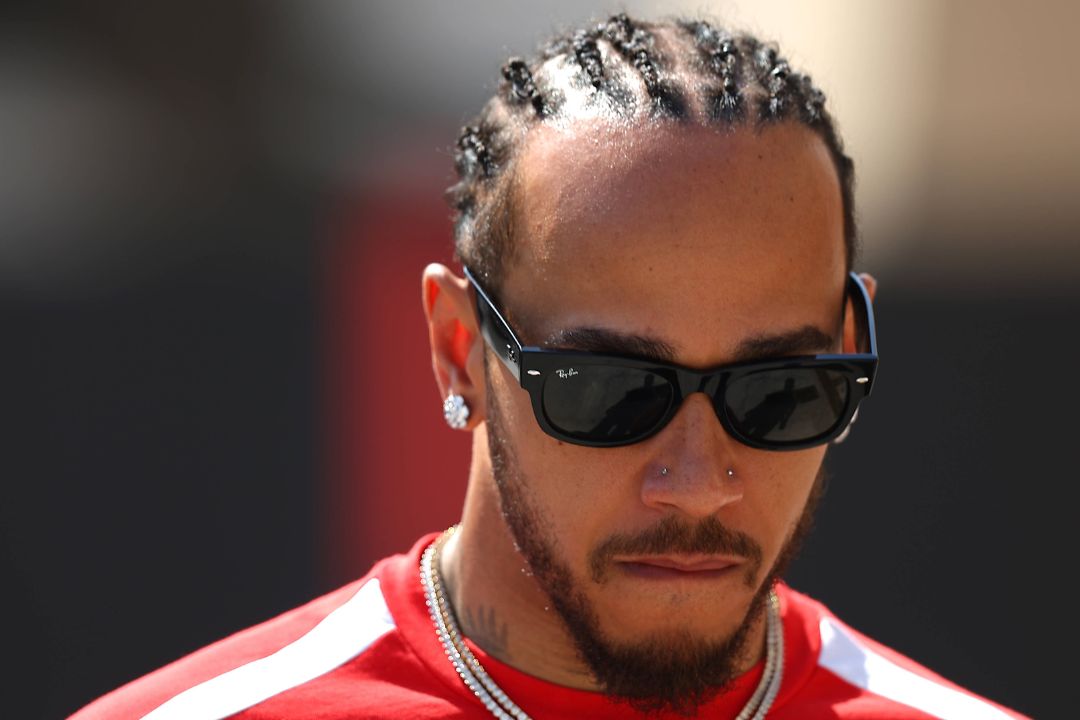
via Imago
Credits: Imago
Netflix's Formula 1: Drive to Survive has built its global success on unprecedented access to Formula 1's biggest personalities, taking fans behind the scenes of the sport's most dramatic rivalries, triumphs, and controversies. However, Season 8 faces an unusual challenge. Three of Formula 1's most recognizable world champions, Lewis Hamilton, Max Verstappen, and Fernando Alonso, declined to participate in the series' dedicated one-on-one Netflix interviews.
While the streaming giant still featured all three drivers through race broadcasts, FIA press conferences, team radio communications, and publicly available footage, the absence of exclusive interviews has raised questions about the show's future storytelling approach.
Their decision comes at a time when Drive to Survive remains one of Formula 1's most influential media products, making their collective refusal impossible to ignore. But what prompted Hamilton, Verstappen, and Alonso to decline Netflix's exclusive interviews, and how might that decision shape future seasons of the hit docuseries?
Lewis Hamilton's controlled narrative
For years, Lewis Hamilton has been one of the defining faces of Drive to Survive. Even when the cameras were focused elsewhere, his championship battles, rivalries, and off-track influence remained impossible to ignore. Yet when Netflix came calling for Season 8's exclusive interviews, Hamilton chose a different route. The decision was not rooted in conflict with the series itself. Instead, it came down to something much bigger: control of his own story.
Hamilton has been working closely with Apple TV+ on a major documentary project centered on his life and career. Unlike the race-focused storytelling of Drive to Survive, the Apple production offers a far more personal look at the seven-time world champion, granting filmmakers unique access to his experiences away from the paddock. With that level of behind-the-scenes access tied to an exclusive agreement, sitting down for Netflix's dedicated interviews became a far less likely possibility.
There was also the practical reality of Formula 1's relentless media schedule. Drivers spend race weekends balancing team commitments, sponsor obligations, press conferences, and television appearances. But if Hamilton had chosen to sit down for Netflix's cameras, Season 8 could have featured one of the most compelling storylines in Drive to Survive history.
His first year with Ferrari was not the triumphant fresh start many expected. Instead, it became the toughest season of his Formula 1 career. The seven-time world champion struggled to adapt to his new machinery, failed to score a single podium finish for the first time in 19 seasons, and was consistently outperformed by teammate Charles Leclerc. Exclusive interviews would have given viewers a rare look inside the mind of a champion confronting unfamiliar doubts.
Rather than relying on tense team radio exchanges and public press conferences, audiences could have heard Hamilton explain the emotional toll of a difficult Ferrari debut, the pressure of driving for Formula 1's most iconic team, and the challenge of adapting to an entirely different environment after spending over a decade at Mercedes. The interviews also could have explored the deeply personal side of his season. Beyond the struggles on track, Hamilton was dealing with grief following the loss of his beloved bulldog Roscoe, while simultaneously facing relentless scrutiny from fans and media questioning whether his move to Ferrari had been a mistake.
The irony is that Hamilton's story is arguably even bigger heading into Season 9. After enduring the worst season of his Formula 1 career in 2025, he has enjoyed a remarkable resurgence under the new 2026 regulations. He opened the year with a string of strong results, claimed podium finishes in China, Canada, and Monaco, and then delivered the defining moment of his comeback by winning the Barcelona-Catalunya Grand Prix on June 14, 2026, for his first victory in Ferrari colors and the 106th win of his Formula 1 career. With Hamilton now sitting near the top of the championship standings and firmly back in the title fight, his Ferrari revival has become one of the sport's biggest stories.
That comeback should be documentary gold for Netflix. Yet if Hamilton continues to avoid exclusive interviews, viewers may once again experience his story from the outside looking in. Rather than hearing Hamilton explain the emotions behind his Ferrari revival, the series will likely rely on race radio, paddock reactions, and commentary from figures such as Frédéric Vasseur, George Russell, and other rivals to tell the story.
Looking beyond Season 9, his continued absence could further accelerate the series' shift toward younger stars such as Oscar Piastri, Andrea Kimi Antonelli, and other emerging talents who are more willing to participate in the show's behind-the-scenes format.
Max Verstappen's authenticity concerns
Unlike Lewis Hamilton, Max Verstappen's absence from Drive to Survive is not about competing media deals or scheduling conflicts. His issue with Netflix is far more fundamental. Verstappen has spent years arguing that the series prioritizes drama over accuracy, turning real-life sporting rivalries into reality television storylines. For a driver known for his blunt honesty and no-nonsense approach, that has made participating in the show increasingly difficult.
His relationship with Drive to Survive has been turbulent from the start. While Verstappen appeared during the early years of the series, his frustration steadily grew as he watched Netflix shape narratives around drivers and teams. That frustration eventually exploded during Seasons 3 and 4, when he completely boycotted the show and refused to provide exclusive interviews or behind-the-scenes access. Verstappen publicly accused producers of exaggerating tensions and manufacturing rivalries, particularly involving former teammate Daniel Ricciardo.
Following widespread fan complaints about one of Formula 1's biggest stars being absent from the series, Netflix executives met with Verstappen privately and agreed to be more careful with his portrayal. That temporary truce led to brief appearances in Seasons 5 and 6. However, the relationship soured again, and by Seasons 7 and 8, Verstappen had once more pulled away from Netflix's interview setup. The breaking point appears to have been another example of what Verstappen sees as manufactured storytelling. Speaking on a Team Redline Twitch stream, he recently criticized the way the series portrayed his reaction to Lando Norris' first Formula 1 victory in Miami.
"There needs to be drama," Verstappen said. "They made it look like I was upset after Lando won, but I was actually happy for him."
It was hardly the first time he had voiced such concerns. Explaining his original boycott, Verstappen previously argued that Netflix had unfairly altered viewers' perceptions of several drivers.
"They made it look like Lando was a bit of a d***, which he isn't at all," he said. "I know Lando. He's a funny guy, a great guy."
Summing up his stance, Verstappen told BBC Sport: "It's just not my thing, faking rivalries. I am not really a dramatic show kind of person, I just want facts and real things to happen."
Notably, Verstappen is no longer alone in that criticism. Lando Norris himself has questioned some of the show's storytelling choices, arguing that Formula 1 already contains enough drama without producers needing to manufacture additional conflict. Norris even suggested some portrayals were "almost lying in some ways," lending credibility to Verstappen's long-running complaints.
That tension could become a major issue for Season 9 because Verstappen's 2026 campaign is shaping up to be one of the most dramatic periods of his entire career. After years of Red Bull dominance, the reigning champion has found himself trapped in an unexpected decline. Mercedes has surged to the front under teenage sensation Andrea Kimi Antonelli, Ferrari is winning races again with Lewis Hamilton, and Verstappen sits outside the championship fight with no victories and multiple painful retirements. His frustration has become increasingly visible, culminating in a blunt admission after the Spanish Grand Prix that Red Bull is now only the "fourth fastest team" on the grid.
Netflix will have no shortage of material. Verstappen's public war against Formula 1's new regulations, including his famous comparison of the energy-management systems to "Mario Kart," is exactly the kind of controversy the show thrives on. So too are the growing rumours surrounding his future after a secretive meeting with Red Bull CEO Oliver Mintzlaff in Salzburg, which sparked speculation about whether he could eventually leave the team or even consider stepping away from Formula 1 altogether. Add in several tense exchanges with the media throughout the year, and Season 9 already has the ingredients for a blockbuster Verstappen storyline.
The problem for Netflix is that the sport's biggest character may once again refuse to explain any of it directly. Without interviews, producers are left piecing together his story through fiery radio messages, crowded press conferences, rival commentary, and Christian Horner's interpretation of events. As a result, Season 9 could easily frame Verstappen as a frustrated champion watching his empire crumble, a secretive figure navigating uncertainty behind closed doors, and a driver increasingly at odds with the direction of the sport. Whether that portrayal captures the full reality is precisely the question Verstappen has been asking for years.
Fernando Alonso's media image control
Fernando Alonso's refusal to participate in Netflix's exclusive Drive to Survive interviews stems from a philosophy remarkably similar to Max Verstappen's. The two-time world champion has long been skeptical of the show's tendency to transform ordinary racing incidents into dramatic storylines. Alonso has previously criticized how track battles and competitive disagreements can be edited into personal feuds, creating narratives that may be entertaining television but do not always reflect reality. As one of Formula 1's most media-savvy veterans, Alonso prefers to control how his story is told rather than hand that responsibility to Netflix's producers.
That preference is hardly surprising. Unlike many drivers, Alonso has already opened his life to cameras on his own terms through his Amazon Prime Video documentary series, Alonso. The project allowed him to provide a far more controlled and authentic look at his career, ambitions, and personal life without the dramatic editing style that has made Drive to Survive both popular and controversial. At this stage of his career, Alonso is also highly selective with his time, often prioritizing family, sponsors, and personal projects over additional media commitments beyond Formula 1's mandatory obligations.
His absence had a noticeable effect on how Season 8 portrayed him. During the 2025 campaign, Alonso was quietly performing miracles in an underwhelming Aston Martin. While the team struggled for competitiveness, he still managed to drag the car into points-paying positions throughout the season, eventually finishing 10th in the championship with 56 points. His standout moment came in Hungary, where he delivered an impressive fifth-place finish despite lacking the machinery to consistently challenge the frontrunners.
Because Alonso never sat down for Netflix's cameras, the series was forced to build his storyline from public footage alone. The result was what could best be described as the "Silent Master" portrayal. Viewers saw a legendary veteran calmly extracting every ounce of performance from a difficult car, but rarely heard his deeper thoughts. Instead, Netflix relied heavily on Alonso's famously sharp team radio messages, using his blunt feedback and sarcastic humor to tell the story. His official FIA press conferences also became a major storytelling tool, allowing producers to frame him as Formula 1's master strategist, constantly playing psychological games with younger rivals despite never speaking directly to the documentary crew.
That storytelling challenge could become even greater in Season 9 because Alonso's 2026 campaign has turned into one of the most difficult periods of his Aston Martin career. After a respectable 2025, the introduction of Formula 1's new regulations has left the team struggling badly. Alonso sits near the bottom of the championship standings with just a single point after seven rounds and has already suffered four retirements, including another painful DNF at his home race in Barcelona. The contrast between a driver still regarded as one of the grid's sharpest competitors and a car incapable of matching his talent is exactly the kind of human drama that Drive to Survive thrives on.
Yet if Alonso continues avoiding Netflix interviews, figures such as Lawrence Stroll and Lance Stroll may become the primary voices explaining Alonso's role within the team while Netflix continues portraying him as the veteran warrior battling impossible odds. Alonso's future may become an even bigger storyline than his results. Although he remains contracted through the end of 2026, recent comments have fueled speculation that retirement could finally be approaching.
Following the Spanish Grand Prix, Alonso hinted that he would make a clearer decision about his future after the summer break, raising questions about whether fans could be watching the final chapter of one of Formula 1's most remarkable careers. If that happens, Netflix may once again face a familiar problem. The Season 8 interview snubs reveal a growing power shift between Formula 1 stars and Netflix.
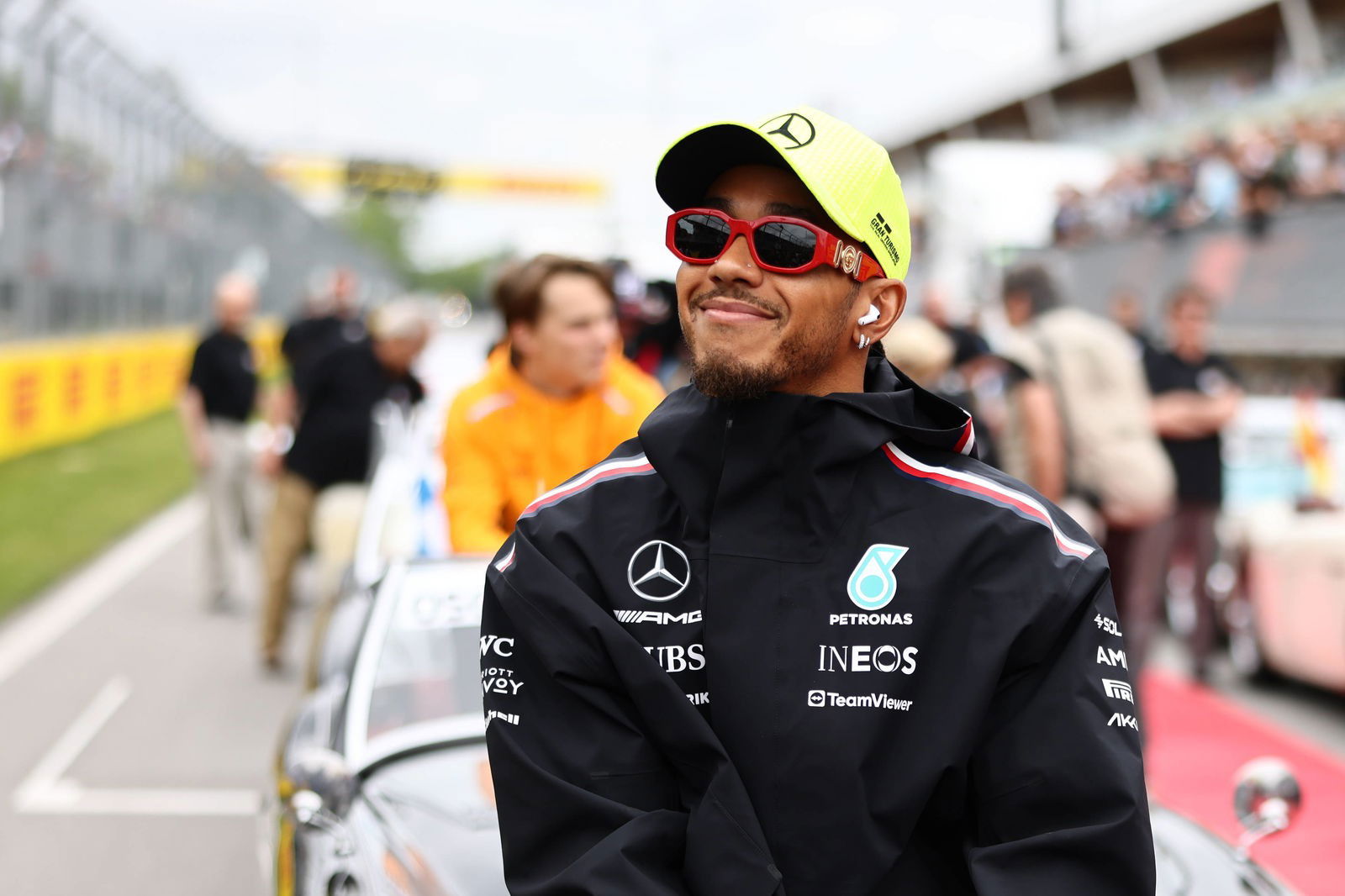
What are your thoughts on these drivers snubbing Formula 1: Drive to Survive interviews? Let us know in the comments.

Edited By: Hriddhi Maitra
