
‘Don’t Say Good Luck’ Review: A Poignant Cancer Dramedy Featuring Melanie Lynskey and Sunny Sandler
Credit: Netflix
Credit: Netflix
A cancer drama laced with a tinge of comedy may prove to be a tough nut to crack, especially when the lead is a 17-year-old nepo baby (Sunny Sandler), but I am happy to report that Netflix’s Don’t Say Good Luck defies all the skepticism with utmost grace. And part of the credit goes to that nepo kid who put forth such a formidable performance in an ensemble stacked with heavy-hitters. She, along with Melanie Lynskey (who plays her mother), is the heart of the film.
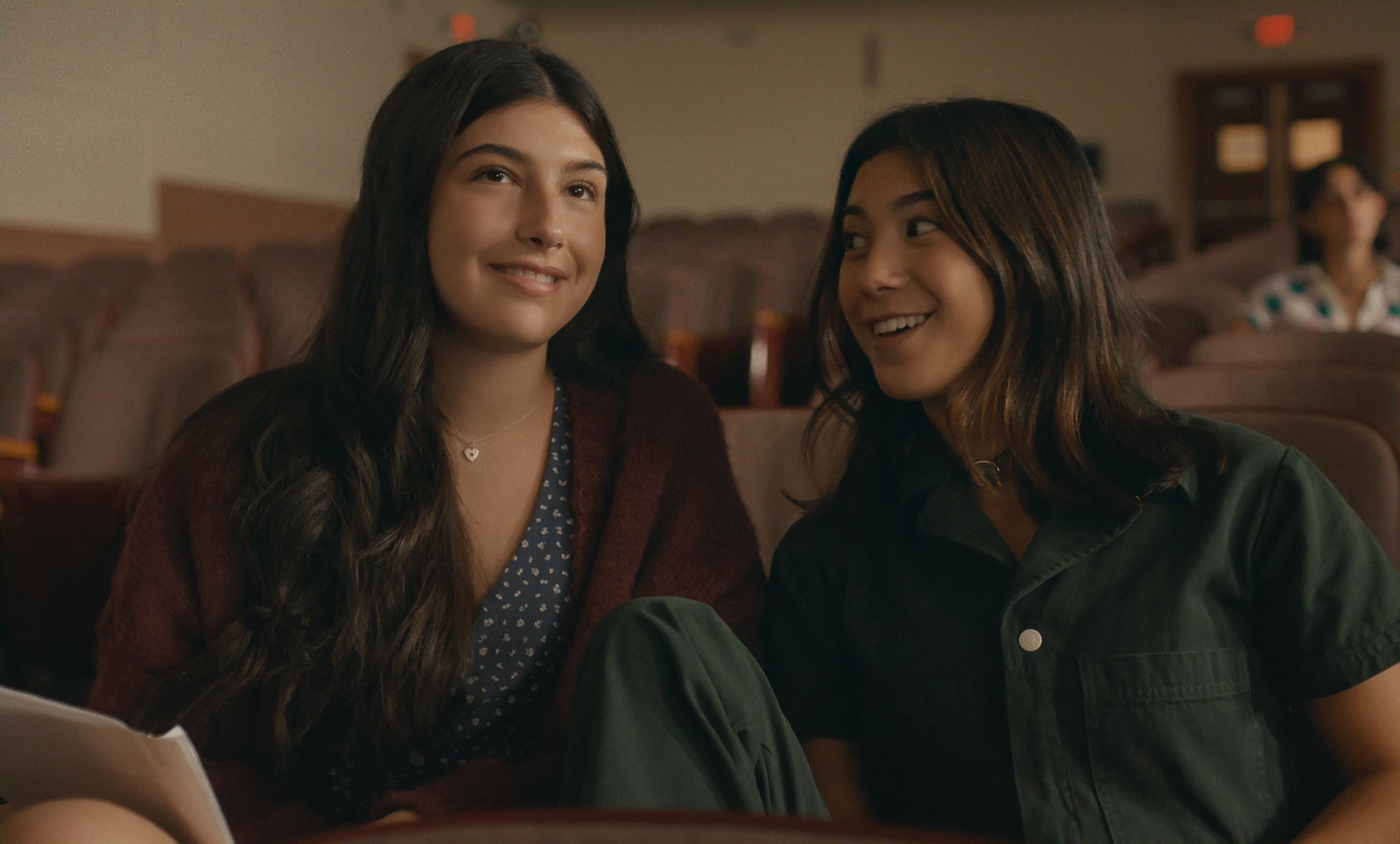
The story follows Sophie Birenbaum (Sandler), a high school sophomore who is vying for a side role in her school production of Waitress, but instead gets the lead due to her exceptional singing talent. This is the biggest moment of her life: getting to play the lead, plus she gets to stay close to her crush, Jack (Jack Champion). This, however, quickly transitions from a sweet ride to the biggest challenge of her life when she finds out her mother’s cancer is back. Now, she is torn between her obligations to the play, the desire to spend every remaining minute with her mother, and her mother’s wish to see her on stage.
The movie has everything a dramedy like this needs - moments of vulnerability, a strong mother-daughter bond, teenage high school problems, and a clear and heartfelt message. All of this is packaged well with the writing of Julia Hart (also the director), Jordan Horowitz, and Laura Hankin.
ADVERTISEMENT
Article continues below this ad
Writing becomes the North Star of Don’t Say Good Luck
Just as the North Star helps navigate travelers and sailors across the lands and the seas, the writing guides the several emotional beats of the film in the right direction so that they do not hit the audience all at once and overwhelm them. Rather, they come slowly and build things up slowly and steadily to keep the progression of the movie as natural as possible. More importantly, the script has room for the viewers to hop on Sophie’s cathartic journey of coming to terms with her mother’s condition while struggling with issues of her own.
This particularly helps in the scenes shared between the mother and the daughter, which are so meticulously written that the dynamic feels so familiar that it hits even harder. Whether they are casually gallivanting through a mall practicing their Southern accent, or having a deep heart-to-heart about the dread that looms large over their family’s happiness, all these scenes come across as so organic and close to home that it genuinely pulls on your heartstrings.
Credits: Netflix
Credits: Netflix
What feels so refreshing is that the writers really do justice to Sophie’s high school problems without adding too much drama. Movies rarely give importance to teenage struggles and ultimately dismiss them as a phase. Don’t Say Good Luck eschews that trend and tries not to let this aspect of Sophie’s life get overshadowed by what is happening at home. The movie maintains a strict balance in that regard, which would not have been possible without thoughtful writing. Her falling out with her best friend, her heartbreak with her crush, and her second-guessing herself at every step are all given due respect.
However, the writing also has some minor cracks in it, like that butt-dialing plot device that conveniently lets Sophie in on the private conversations between her parents about the cancer and their struggle to keep it together. This was not just a one-off instance in the movie, and it happens like three times just in the first 20 minutes of the movie, sort of losing the comedic value it had around the first couple of times.
Another obvious flaw in the writing is the lack of room it gives the side characters to breathe on their own. They just seem to be there when either of the mother-daughter duo needs something from them. Their own subplots or feelings are never explored in the running minutes, especially when it happens with Sophie’s best friend Carolyn, who is kind of an important figure in the storyline. This is not jarring, though, as whatever time they get on screen, they make the best of it. It was just an observation that felt odd in a rather emotionally fine-tuned narrative.
The writing is overall a hit out of the park, and it is only further elevated by the phenomenal acting of the star-studded ensemble.
Great acting rows this ship to its destination
While the writing builds a sturdy framework for this ship to survive the tumultuous cinematic landscape of cancer dramas, formidable acting becomes the rudders and the oars that help it navigate through the crests and troughs of the emotionally charged waves. At no point in the movie did the acting by any actor feel inadequate or not up to the mark, and it was expected when the roster is filled with such seasoned actors.
Sunny Sandler, despite carrying the weight of her father, Adam Sandler’s Hollywood-sized reputation, does not by any means let it interfere with her performance. Even though she has appeared in small roles in her father’s productions, notable among them is her outing with her sister, Sadie Sandler, in You Are So Not Invited to My Bat Mitzvah; she feels like a revelation in this one, appearing to be an all-new actor. And boy, can she sing? In the very first frame, she stunned with her singing skills, and it almost felt like professional-grade, with that natural crack in it that made it feel very real and not performative.
Max Greenfield, whom most of us remember from New Girl, surprises us as a very caring and slightly scruffy Ted, who is a devoted family man, trying to do everything he can, from managing his deli to taking care of the kids and household chores, just to make his ailing wife comfortable. Greenfield’s Ted holds his composure almost throughout the movie, but when that one scene comes, when the story requires him to be vulnerable and open, he really lets himself go, giving an honest portrayal of a man who does not know how to ease the pain of his aching daughter or how to hold it together for his dying wife any longer.
Credits: Netflix
Credits: Netflix
Stephanie Beatriz (from Brooklyn Nine-Nine) as Miss Parker does her job really well in guiding Sophie with her play; Bebe Neuwirth as the annoyingly controlling grandmother is sincere in her performance, and Steve Buscemi as the understanding and witty grandfather is just as impressive as ever. The additional cast includes Scarlett Estevez as Sophie’s best friend Carolyn, Jack Champion as her crush Jack, and Jon Lovitz as Ted’s employee. They are all convincing in their roles, but it is Melanie Lynskey as Sophie’s mother, Elizabeth Birenbaum, who steals the show.
Lynskey’s portrayal of Elizabeth comes with the familiar motherly warmth that is sweet, even cheesy at moments, but most of all is heartbreaking, as she has to keep encouraging her daughter to do what she was meant to do while struggling to keep at bay her desire to spend every waking minute of the limited time she has with her. Even if we see her performance as a cancer patient in isolation, it is absolutely to the point: the fatigue, the exhaustion, and the general sense of life slowly slipping out of her body while still keeping the facade of a happy mother are evident in her facial expressions and physical demeanor.
While Lynskey emerges as the highlight of the film, and Sandler becomes the marvel, the music of the film is also an element worth raving about.
Music embodies the main themes of the movie
Sunny Sandler's poignant, humble rendition of Sara Bareilles' stirring ballad 'She Used to Be Mine' is the focal point of the music in Netflix's Don't Say Good Luck, which is based on the high school production of the Broadway musical Waitress. The touching, heartbreaking coming-of-age tale is complemented by the unique score composed by multi-instrumentalist Yuli.
Credits: Netflix
Credits: Netflix
ADVERTISEMENT
Article continues below this ad
There are other musical pieces from the Broadway play, too, featured in the movie, which are used to complement the different moods of the film, but all of them are in fragments and do not get a solo entry like 'She Used to Be Mine.' However brief they are, they leave a lasting impact, leaving you wanting more.
While talking about the technical aspects of the film, I really like the choice of the color palette, which had a gloomy undertone to it, highlighting the grief that the Birenbaum family carried throughout the movie. However, there was ample use of warmer colors too that complemented their fighting spirit, especially Elizabeth’s. Overall, Don’t Say Good Luck is a great watch, particularly if you are craving a coming-of-age family drama that has a gut-wrenching soul bound by great acting performances.
ADVERTISEMENT
Article continues below this ad
Did you watch Don’t Say Good Luck on Netflix? If yes, then what did you think of the movie? Do let us know in the comments.
ADVERTISEMENT

Edited By: Adiba Nizami
More from Netflix Junkie on Netflix News





ADVERTISEMENT