
‘Bridgerton’ Season 4, Part II Review: The Ton Has Never Felt This Fragile
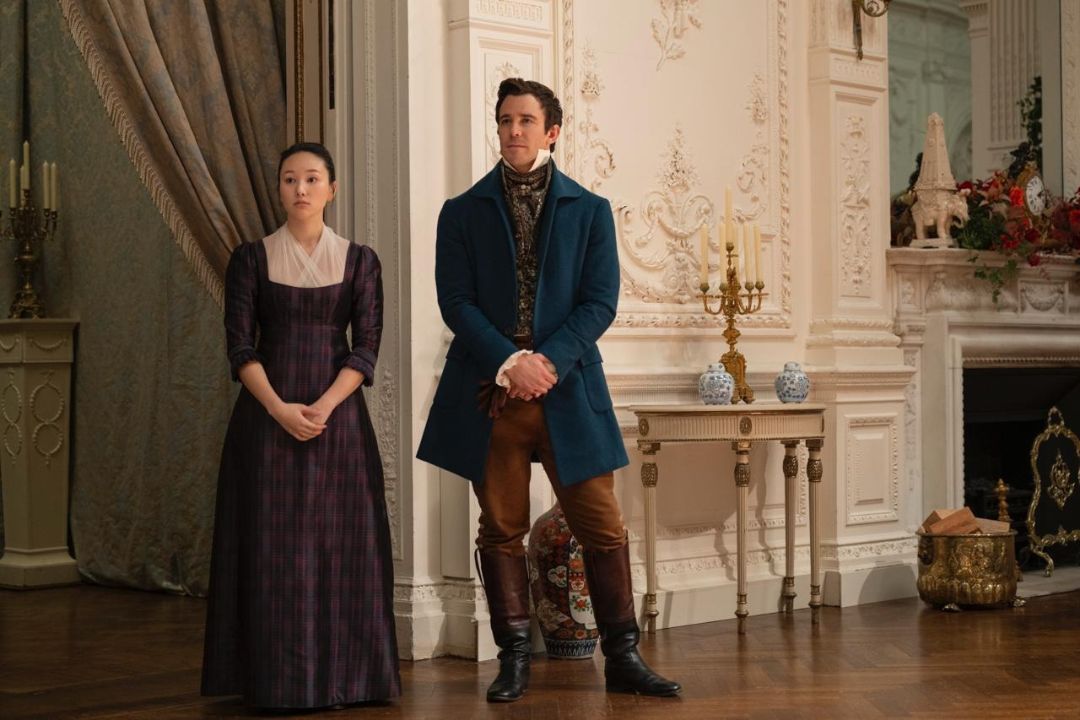
Credits: Liam Daniel/Netflix
Credits: Liam Daniel/Netflix
There was a time when Bridgerton felt like a sugared fever dream stitched together with string quartets covering modern pop and waistcoats tighter than the plot. Now, four seasons deep into the grand social experiment that is aristocrats behaving badly in pastel, the question is no longer who will marry whom.
The question is whether the fantasy can survive its own excess. Season 4, part II, arrives not as a gentle waltz but as a stress test. And the ton? It has never looked more breakable and brittle.
The ton’s golden facade begins to crack
ADVERTISEMENT
Article continues below this ad
Bridgerton season 4, part II, answers its own question with unnerving clarity. The ton has never felt this fragile because, for the first time, the glittering facade actually cracks. Benedict Bridgerton left three incendiary words hanging at the end of part I, “Be my mistress,” and now part II forces Sophie to answer them, turning the proposal into an emotional reckoning that detonates far more than romance.
It exposes the scaffolding beneath the chandeliers. Class is no longer a decorative obstacle. It is a loaded weapon. Sophie Baek accepting the offer does not create fairy dust. It creates fallout. The fantasy still twirls, but the floorboards creak loudly beneath every dance step.
What divides critics is not the chemistry but the consequence. Many call the series back on track in a big way. Many sigh that the lane feels overused. But if we see it really close both are correct.
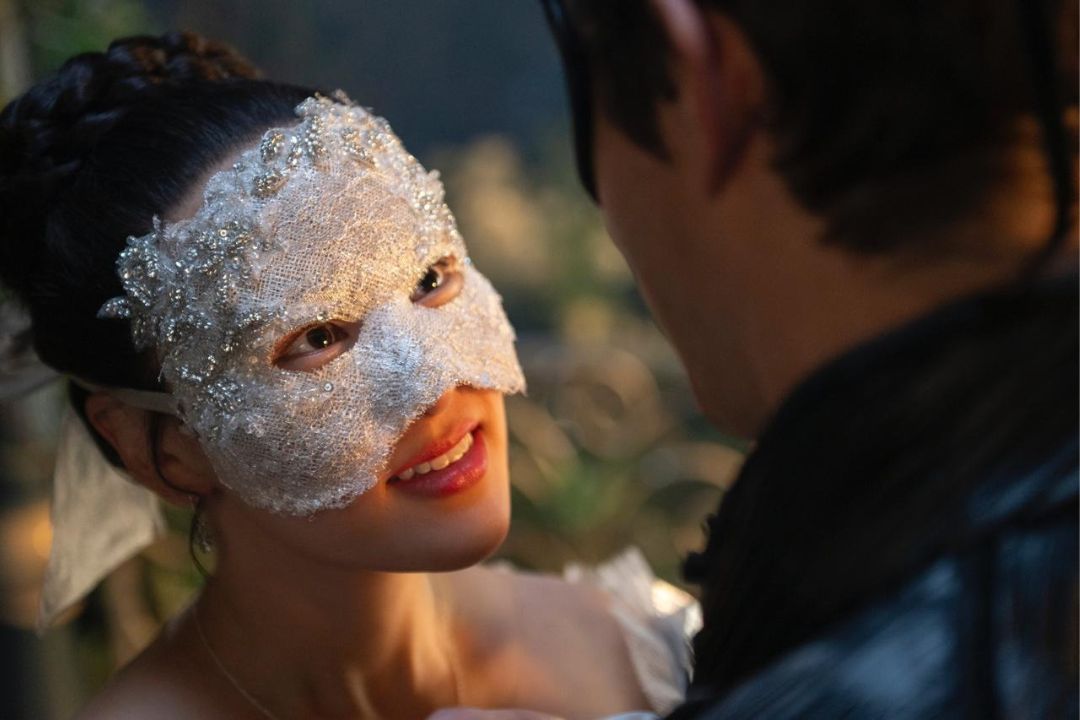
Credits: Liam Daniel/Netflix
Credits: Liam Daniel/Netflix
The show is simultaneously revitalised and repetitive. It has mastered yearning like a virtuoso violinist but occasionally forgets to compose new music. The tension between reinvention and routine becomes the true drama of part II.
The world is not kind to women, and this season actually lets that sentence linger. Instead of treating impropriety as spice, the narrative treats it as a cost. The fairy tale remains, but the glass slipper now feels sharp enough to draw blood.
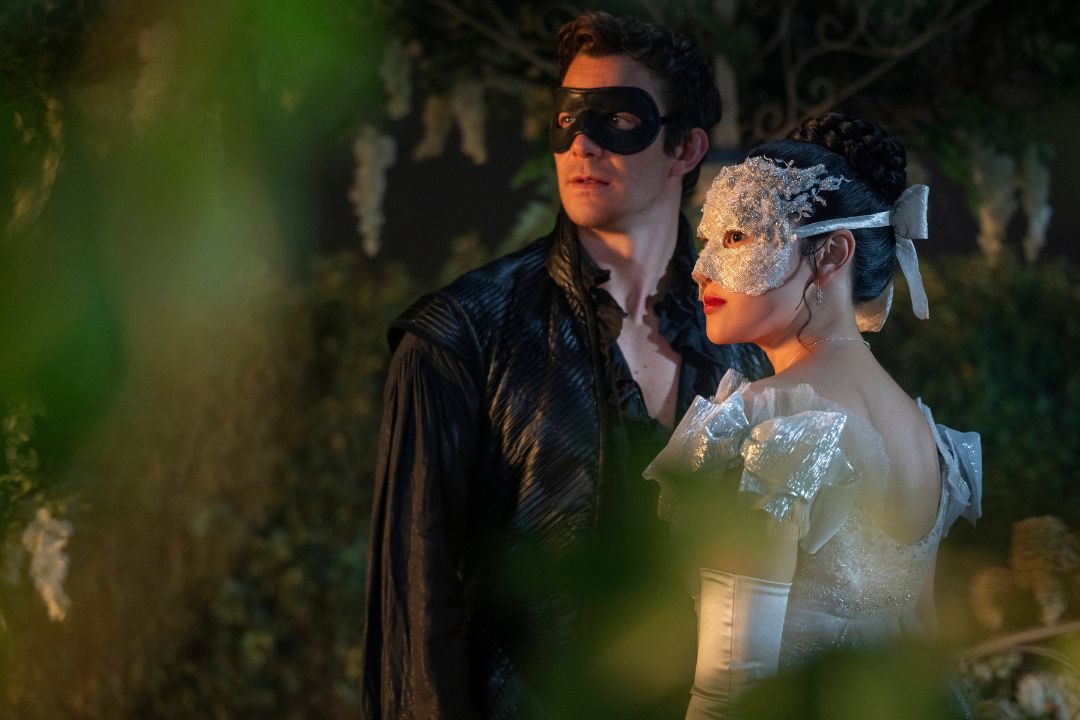
If the ton is wobbling under the weight of its own corsets, the central romance must either steady it or shatter it completely. And Benedict and Sophie are not here to play safe.
Benedict and Sophie and the cost of wanting more
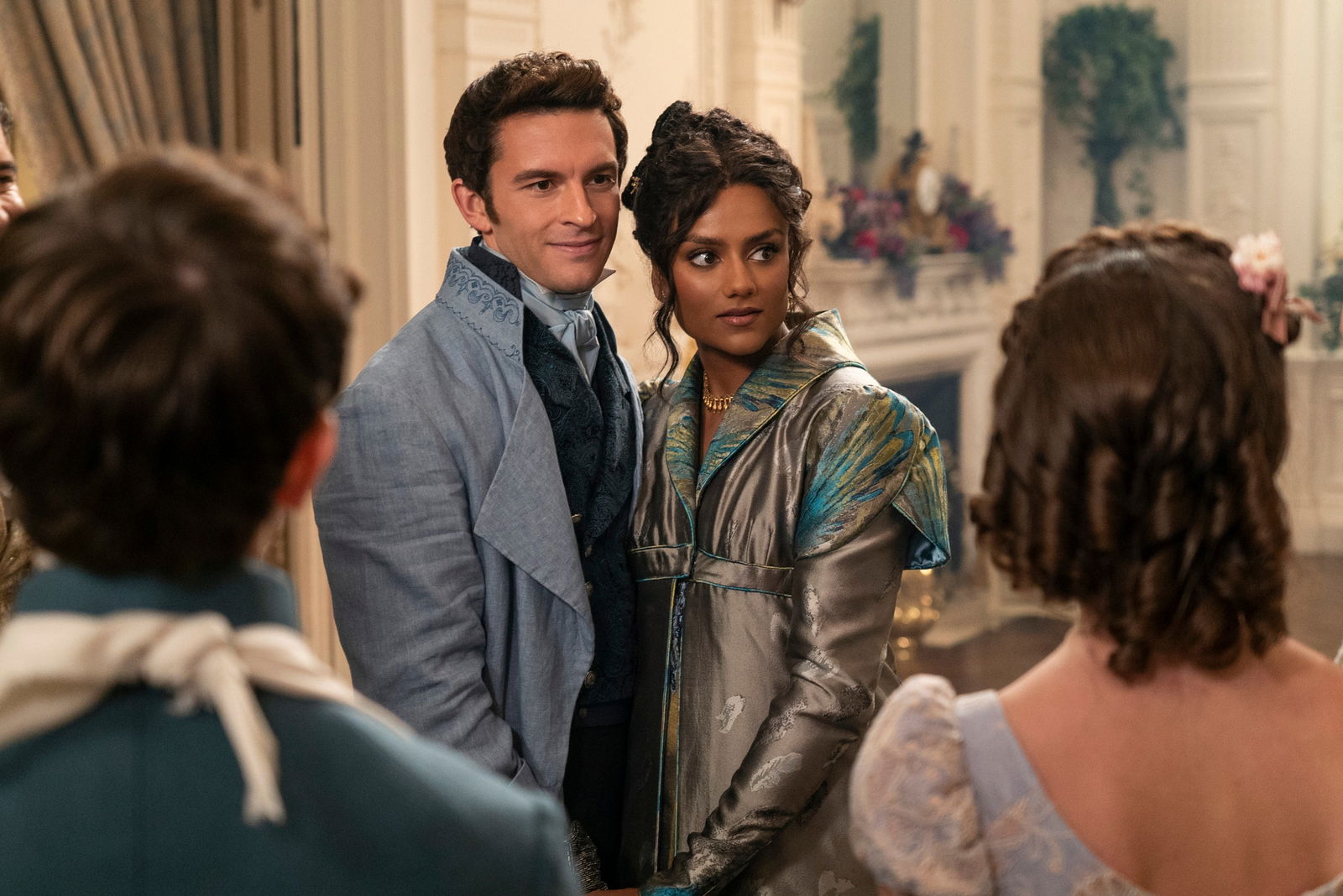
Benedict and Sophie have graduated from flirtation to philosophical crisis. Luke Thompson plays Benedict as a man discovering that charm is not a substitute for courage. Yerin Ha’s Sophie refuses to be a secret, and that refusal electrifies every scene. Metro promises a wave of emotions by episode eight, and that wave does crash. Not gently. It drags entitlement out to sea and leaves vulnerability stranded on the shore.
The romance is steamy, yes, but the steam finally has stakes. Without the Cinderella framework, the melodrama would feel theatrical. With it, the power imbalance becomes the point. The bathtub scene that viewers anticipated is not a spectacle alone. It becomes a negotiation. Passion here doubles as an argument. Desire and dignity wrestle in the same breath.
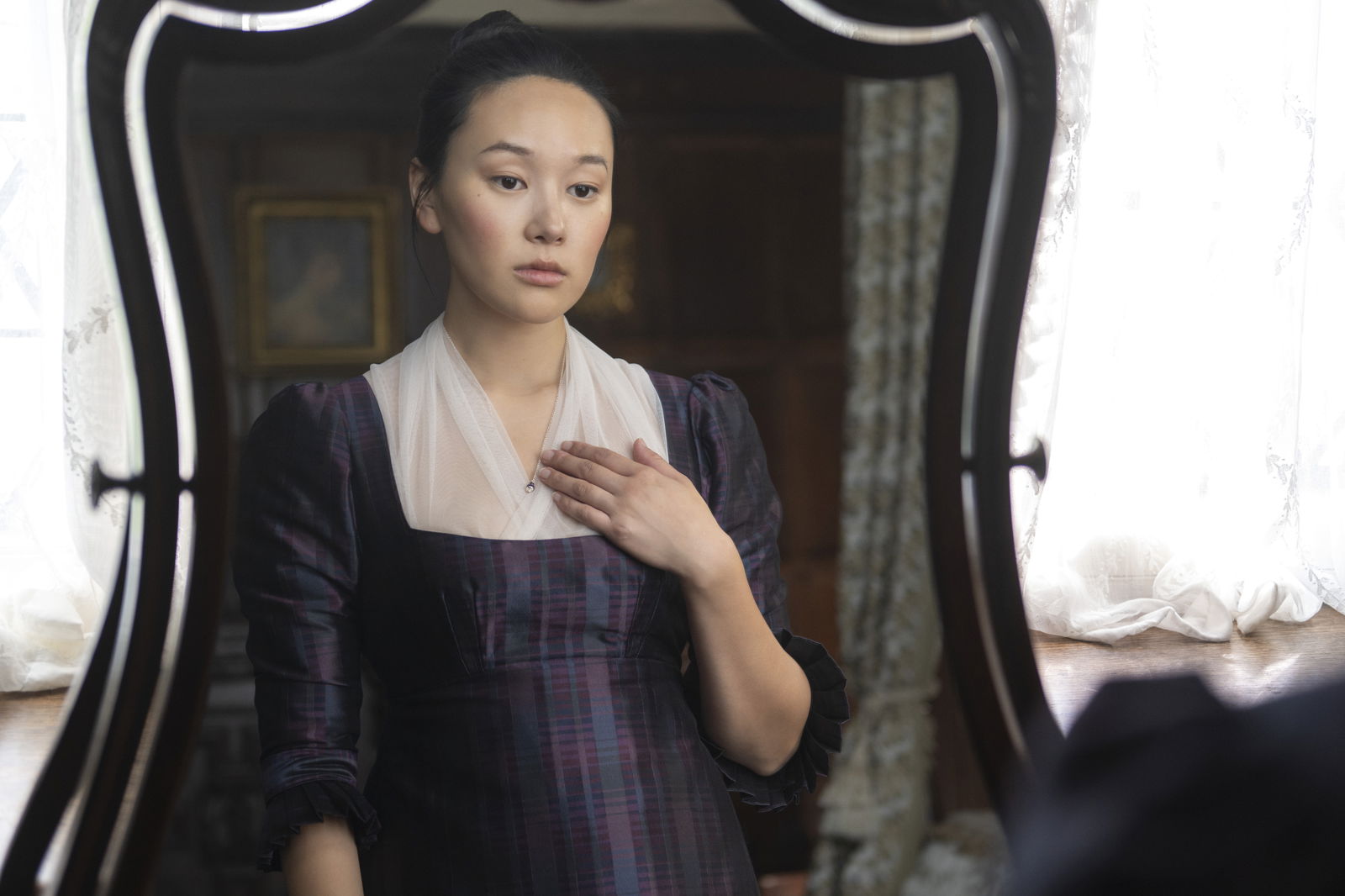
Credits: Liam Daniel/Netflix
Credits: Liam Daniel/Netflix
Still, the split-season format remains a pacing gamble. The interruption of romantic momentum, and that disruption is palpable. Part I lingered. Part II lunges. The result is intensity at the cost of cohesion. However, when Benedict declares that society should not dictate who one loves, the thesis lands. Yearning is no longer decorative. It becomes rebellion wrapped in silk gloves.
But romance cannot exist in a vacuum, especially not in a family that multiplies subplots like lace patterns. And that is where the chaos begins.
Too many Bridgertons, not enough breathing room
The family that once felt shockingly prolific now feels narratively overclocked. Many observed that sacred bonds require the world to fall away. Instead, the world crowds in. Violet’s evolution. Francesca’s quiet awakening. Penelope balancing ink and identity. Anthony returning with paternal gravitas. Each thread is compelling. Together, they risk suffocation. The ensemble sparkles, but the spotlight fractures.
The central couple should have been given room to utterly sparkle. That criticism stings because it rings true. Benedict and Sophie ignite whenever they are alone. The moment the ballroom refills, the intimacy dilutes. The show wants to be both a sweeping family saga and a concentrated love story. It achieves both in fragments rather than in harmony.
Credits: Liam Daniel/Netflix
Credits: Liam Daniel/Netflix
Even so, there is ambition in this overcrowding. The series proves it can juggle multiple arcs powerfully. At its best, it does. The tonal shifts between romance and grief reveal a series attempting emotional range rather than repeating formulas. The problem is not abundance. The problem is orchestration. When every violin insists on a solo, the symphony becomes noise.
And yet, amid the narrative traffic jam, one family subplot slices through with unexpected sharpness. The Guns do not whisper. They confront.
The Gun family and the politics of representation
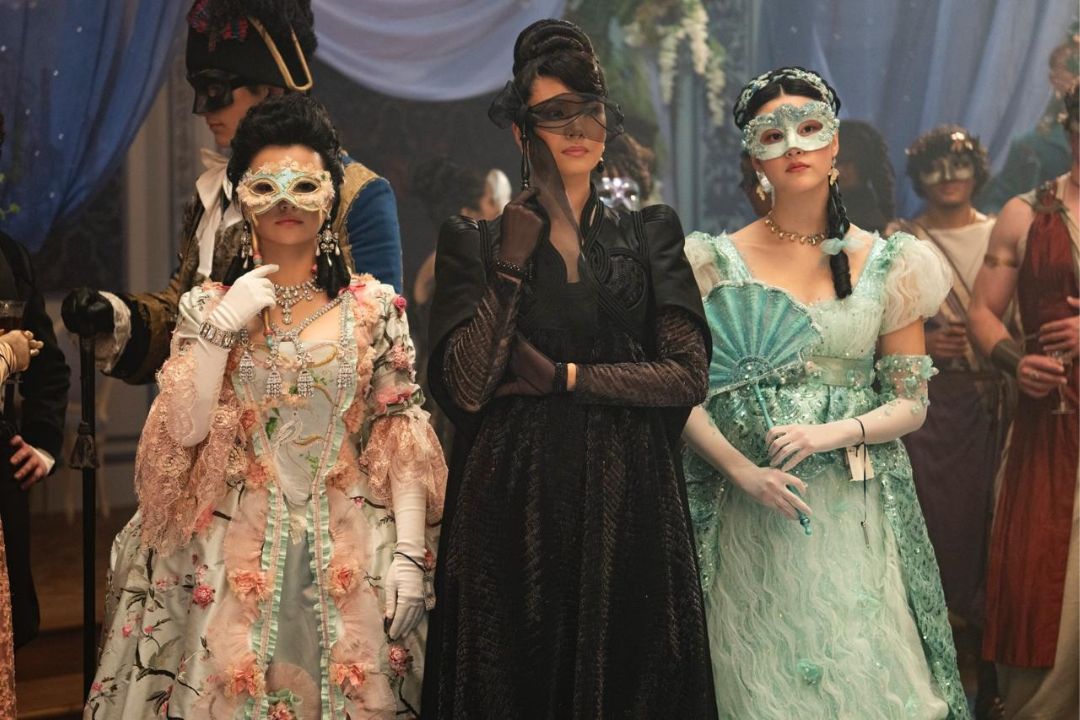
The Gun family arc delivers cultural specificity with both tenderness and bite. Lady Araminta, played with layered steel by Katie Leung, refuses to become a caricature. Her desperation to secure stability for Rosamund while diminishing Posy reflects generational pressure rather than villain theatrics.
The inclusion of Cantonese dialogue, however brief, signals intention rather than tokenism. Representation is not background decoration. It becomes thematic infrastructure. Sophie’s class struggle intersects subtly with cultural identity.
Credits: Liam Daniel/Netflix
Credits: Liam Daniel/Netflix
The show positions Asian characters within the ton not as novelties but as power players. That shift matters. It reframes the fantasy from ornamental diversity to lived presence within the narrative hierarchy.
ADVERTISEMENT
Article continues below this ad
Explanation and exposition occasionally crowd the room, and at times the dialogue leans a little too instructive. Yet the emotional undercurrents compensate. The grief arc and the shifting power structures lay deliberate groundwork for season 5, which now feels poised to foreground queer desire and a sharper social critique.
The series gestures toward evolution rather than complacency. Whether season 5 fully commits will decide if this fragility becomes a true transformation or merely a decorative tremor.
ADVERTISEMENT
Article continues below this ad
What are your thoughts on Bridgerton season 4, part II, and the state of the ton? Let us know in the comments.
ADVERTISEMENT

Edited By: Hriddhi Maitra
ADVERTISEMENT
ADVERTISEMENT
