
‘A Gorilla Story’ Review: David Attenborough Captures a World Where Every Glance Speaks Volume
Credits: Silverback films/Netflix
Credits: Silverback films/Netflix
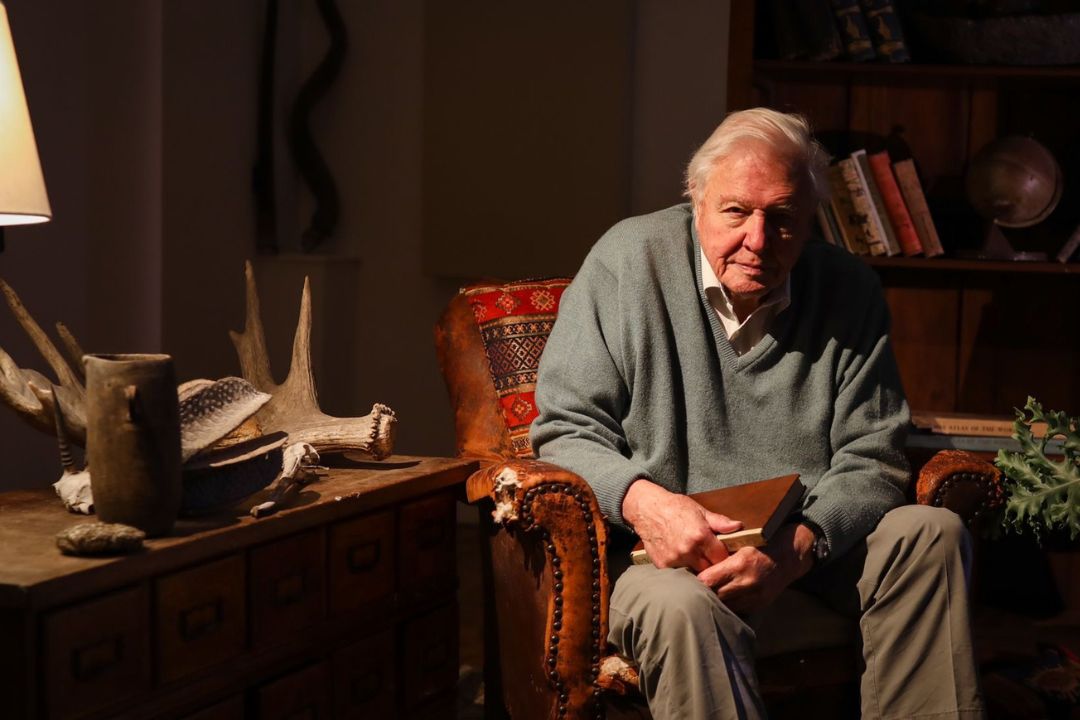
“The possibility of escaping the human condition and living imaginatively in another creature's world, it must be the gorilla.” That is how David Attenborough described his first encounter with mountain gorillas in the Virunga Mountains during the filming of the BBC’s Life on Earth in 1978. It was a defining moment, one that quietly laid the foundation for a career that would later give the world The Blue Planet, Planet Earth, and Our Planet. Nearly fifty years later, Attenborough returns to that moment in A Gorilla Story, a reflective Netflix documentary that feels like a reckoning with time, memory, and everything that has changed and survived since.
But this is not just a nostalgic walk through a legendary career. It is an invitation to step into a world that feels uncannily familiar, where alliances shift, loyalties fracture, and survival is as much about emotion as it is about instinct.
As the documentary unfolds, what begins as a quiet remembrance slowly sharpens into something far more intimate and unsettling, asking viewers not just to observe, but to recognize.
A story of power, belonging, and the fragile line between instinct and emotion
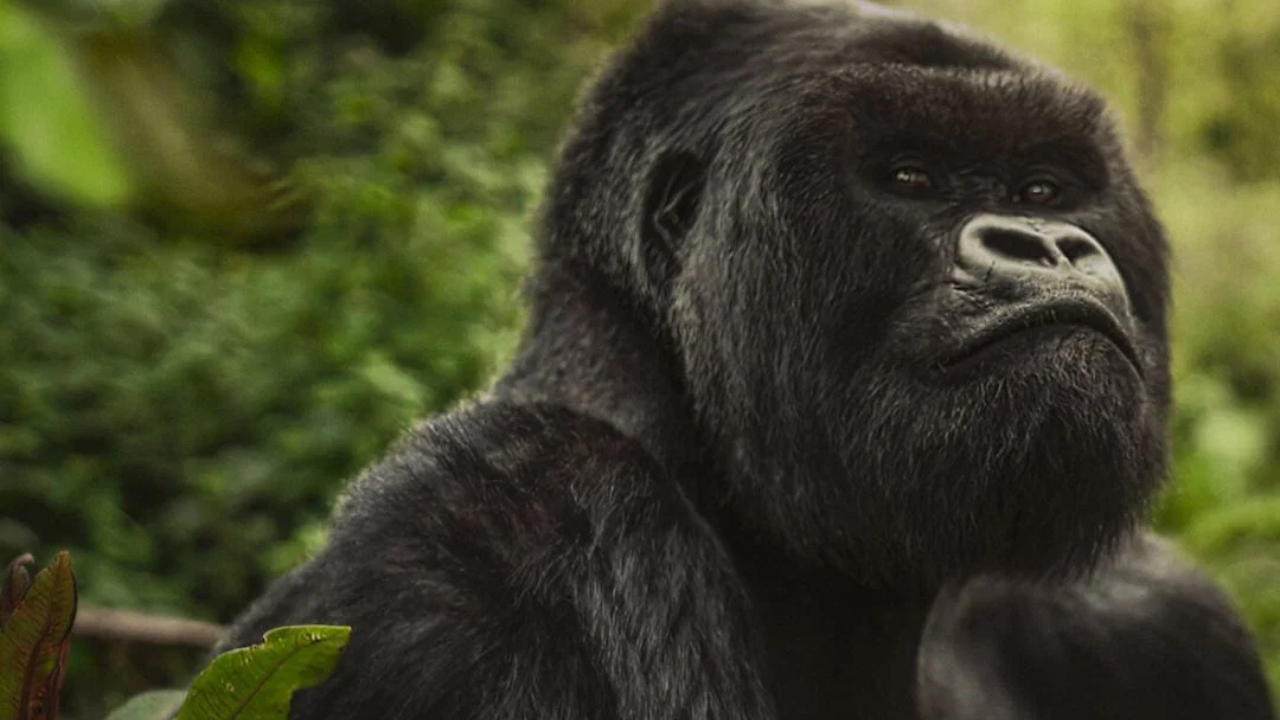
The documentary roots itself firmly in the dense, moss-covered jungles of the Virunga Mountains, where David Attenborough’s first encounter on January 9, 1978, becomes both a memory and a mirror. Surrounded by Spanish moss and the quiet tension of the forest, he recalls not just what he saw, but what he felt, a connection shaped by years of observation and influenced deeply by the work of Dian Fossey, who lived among gorillas and pioneered ways to gain their trust. That idea that there is something profoundly human in these animals becomes the emotional spine of the film.
From there, the narrative expands into the legacy of a single gorilla: Pablo. First seen by Attenborough as a three-year-old, Pablo’s life unfolds like a generational epic. By the age of 18, he leaves to form his own group, not through violence but through cooperation, a rarity in a world often defined by dominance. His group grows to 65 members, the largest ever recorded, marking him as a leader who redefined what strength could look like.
Credits: Silverback Films/Netflix
Credits: Silverback Films/Netflix
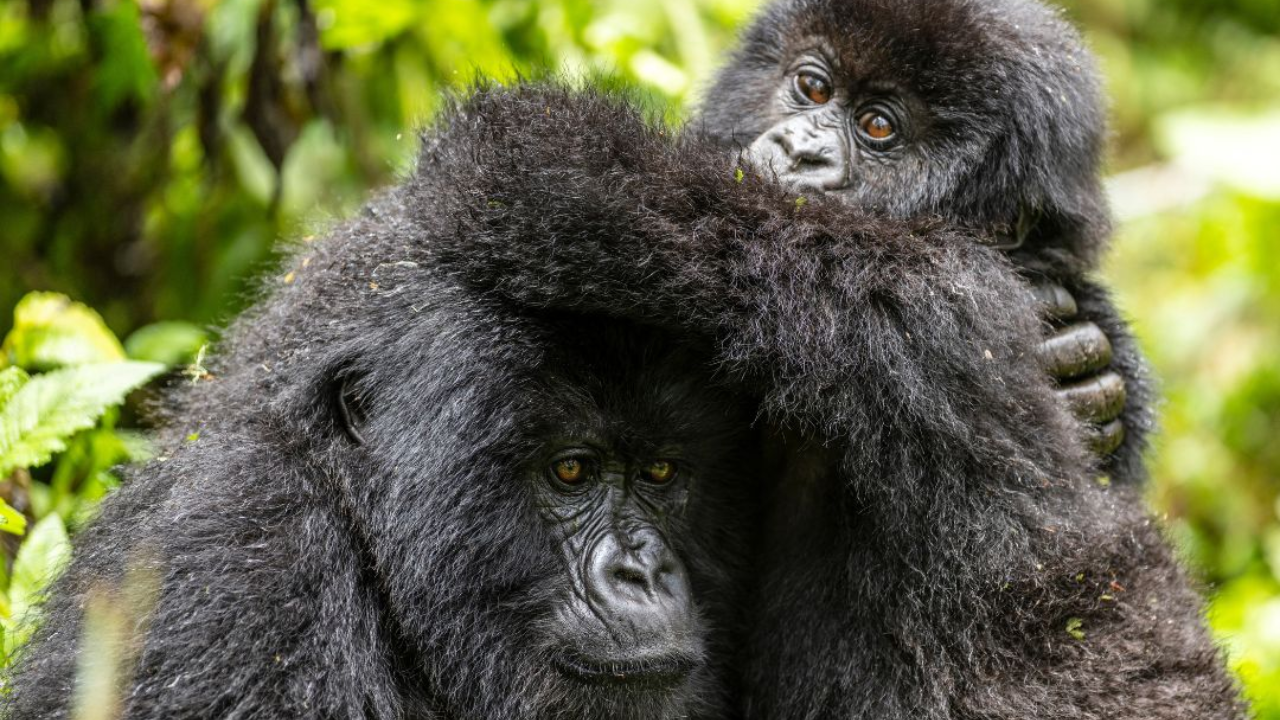
The film, released on April 17, then shifts to the present, following Pablo’s descendants within a three-square-mile territory rich in plant life, a reminder of the gorillas’ opportunistic nature. At the center is Gicurasi, a 27-year-old silverback whose leadership is tested almost immediately. Around him are Teta, his 13-year-old ally; Ubwuzu, a 17-year-old rival with clear ambitions; Imfura, a 14-year-old on the edge of belonging; and Ubi, a two-year-old whose curiosity echoes that of a young Pablo. These are not just names but fully realized presences, captured in such intimate close-ups that their expressions feel almost conversational, as if speech is the only thing missing.
It is within this group that the documentary finds its rhythm. The camera lingers on glances, pauses, and subtle shifts in posture, creating a sense that every interaction carries weight. When Ubi watches Imfura, there is fascination. When Gicurasi surveys his group, there is responsibility. And when Ubwuzu enters, accompanied by a shift in music that tightens the atmosphere, there is something unmistakably ominous.
But in the wild, power is never a single moment, it is a slow unraveling.
A battle for dominance unfolds into exile, grief, and survival
What follows is a slow-burning conflict that reshapes the group entirely. Ubwuzu challenges Gicurasi, initiating a confrontation that is as physical as it is symbolic. Though Gicurasi initially emerges victorious, leadership here is not decided by strength alone. Teta, whose loyalty once anchored him, begins to drift. Without her support, Gicurasi’s position weakens, and in a quiet but significant moment, he steps aside. It is not defeat in the traditional sense, but something more complex, a recognition of shifting power.
Ubwuzu takes over, and with him comes a different kind of rule. If Pablo represented cooperation, Ubwuzu embodies dominance. His aggression extends beyond Gicurasi, targeting Imfura repeatedly, leaving him marked, physically and socially. As David Attenborough observes, there is only so much a gorilla can endure. Imfura’s eventual retaliation is not framed as villainy but as inevitability. When he sneaks back into the group and kills Inyenge’s baby, it is an act born out of prolonged exclusion and pain, triggering a chain reaction that the group cannot ignore.
Credits: Silverback Films/Netflix
Credits: Silverback Films/Netflix
The response is swift and unified. Gicurasi, despite having stepped aside, joins in confronting Imfura. Ubwuzu asserts his authority. Together, they drive Imfura out, not just from the group but from the only world he has known. Even Ubi, once fascinated by him, turns away. The rejection is total. The camera follows Imfura as he moves toward the edge of the forest, crossing into human territory, a visual and thematic shift that reframes the entire narrative.
This is where the documentary broadens its scope. Attenborough reflects on a time when gorilla populations had dwindled to around 250 due to poaching, and how Dian Fossey’s work sparked a conservation movement that has since helped numbers recover to around 600. Yet, the problem has evolved. The land has not grown, and the boundaries between human and gorilla territories are increasingly blurred. Imfura’s exile becomes symbolic of this tension, an individual caught between survival and displacement.
The film does not shy away from the emotional weight of these events. Inyenge’s earlier loss, the group’s mourning rituals, and the quiet support they offer each other present a picture of grief that feels deeply familiar. These moments are not dramatized but observed, allowing their impact to settle without interference.
A masterclass in visual storytelling guided by a lifetime of observation
What elevates A Gorilla Story beyond its narrative is the precision of its storytelling. Behind the lens, the documentary carries the weight of an accomplished creative force. Oscar-winning director James Reed, known for his work on My Octopus Teacher, brings a similar intimacy to A Gorilla Story. His direction avoids spectacle in favor of stillness, allowing the smallest gestures, an exchanged glance, a hesitant movement to carry emotional significance. Complementing this vision is executive producer Leonardo DiCaprio, whose long-standing advocacy for environmental storytelling adds a layer of urgency to the film’s conservation message.
The cinematography leans heavily on close-ups, particularly of eyes, creating a visual language that prioritizes emotion over spectacle. There are moments where the camera holds just long enough for a glance to feel like a sentence, where the absence of sound becomes more powerful than any narration.
Credits: Silverback Films/Netflix
Credits: Silverback Films/Netflix
The use of music is equally deliberate, almost character-driven in its design. Each gorilla is given something akin to a cinematic motif, as if they carry their own emotional signature the way protagonists do in film. Netflix’s official 22-track album, composed by Patrick Jonsson, reinforces this approach with remarkable clarity. Pieces like 'Sir David' and 'Mountain Kingdom' feel expansive and reflective, grounding the story in a sense of place and legacy, while 'A Chain of Tenderness' moves with a quiet intimacy that mirrors the fragile bonds within the group. Tracks such as 'We May Have Missed Something' and 'Inyange (Reprise)' lean into introspection, almost functioning as emotional echoes, lingering long after the moment has passed.
What is striking is how these compositions do not simply accompany the visuals but actively shape our perception of each character. Ubi’s curiosity, Gicurasi’s burden of leadership, and Ubwuzu’s looming disruption all feel heightened through these subtle musical cues, as though we are being guided into their inner worlds without a single spoken word. The suspenseful cues accompanying Ubwuzu’s entrance signal more than just a new character; they announce a tonal shift, a darker undercurrent taking hold.
Silence, too, is used with precision, particularly in moments of grief, exile, or isolation, where the absence of sound becomes almost suffocating. In these pauses, the film trusts the viewer to sit with discomfort, to observe without mediation. The result is deeply immersive: a carefully orchestrated sensory experience where observation slips into participation, and where every glance, movement, and note feels composed with intent, echoing long after the screen fades to black.
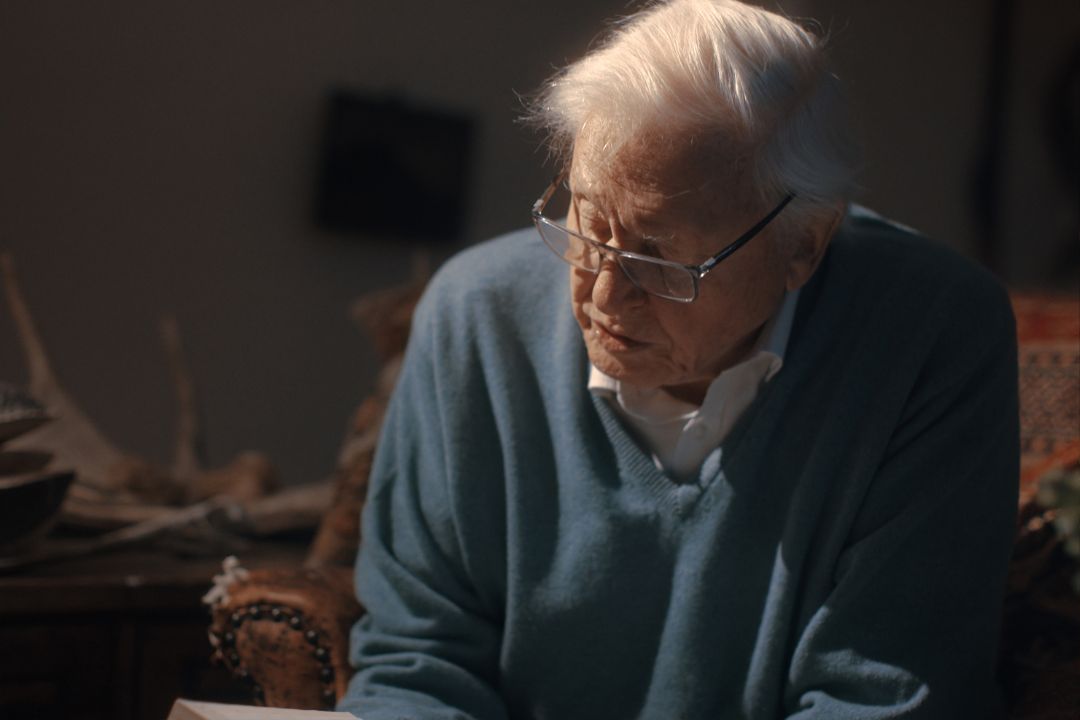
At the center of it all is David Attenborough himself. Approaching a century of life, his voice carries not just authority but reflection. As he revisits his diary entries from Rwanda, there is a sense of continuity, not just in the story of the gorillas, but in his own journey as a storyteller. His career, spanning decades, finds a kind of quiet culmination here, where the act of looking back becomes as significant as the act of witnessing.
There is a subtle parallel between Attenborough and the gorillas he observes. Just as the film lingers on their eyes, searching for meaning, it does the same with him. As he says, “There is more meaning and mutual understanding in exchanging a glance with a gorilla than any other animal I know.”
In the end, A Gorilla Story is a story of recognition, of patterns, emotions, and conflicts that feel strikingly familiar. It is a documentary that does not ask for sympathy, but earns it through observation and restraint.

What did you think of A Gorilla Story? Share your thoughts in the comments.

Edited By: Adiba Nizami
