
Stephen Sondheim’s Documentary on the Infamous Musical: Where to Watch Ahead of the Netflix Film Release
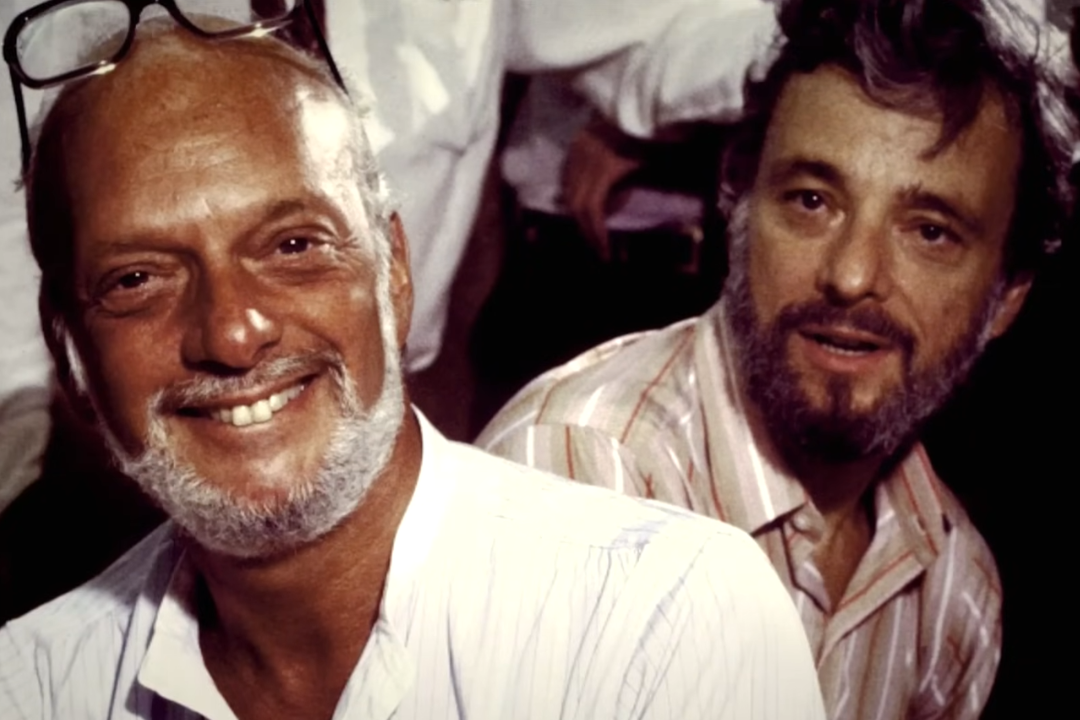
Credits: Best Worst Thing That Ever Could Have Happened | Best Worst Thing That Ever Could Have Happened (Trailer) | "Merrily We Roll Along" documentary/Atlas Media Corp via YouTube| Production - Atlas Media Corp., Allright Productions/ Distribution - Abramorama
Credits: Best Worst Thing That Ever Could Have Happened | Best Worst Thing That Ever Could Have Happened (Trailer) | "Merrily We Roll Along" documentary/Atlas Media Corp via YouTube| Production - Atlas Media Corp., Allright Productions/ Distribution - Abramorama
Stephen Sondheim composed against the grain, writing songs where characters rethink themselves mid-thought and emotions arrive in stages rather than all at once. In Merrily We Roll Along, ‘Not a Day Goes By’ circles the same lyric repeatedly, but what begins as devotion gradually reveals itself as heartbreak. In Company, ‘Being Alive’ resists its own conclusion, building line by line as the character pushes back against vulnerability before finally giving in.
And somewhere within that vast architecture of reinvention sits Merrily We Roll Along, a fragile experiment, its rise and fall captured in real time by the documentary Best Worst Thing That Ever Could Have Happened, like a time capsule of creation mid-collapse.
But here is where the story folds in on itself, because when audiences search for Merrily We Roll Along on Netflix today, what exactly are they looking for? The documentary that preserved its most infamous chapter, or something else entirely?
ADVERTISEMENT
Article continues below this ad
Best Worst Thing That Ever Could Have Happened: The documentary that remembers
Best Worst Thing That Ever Could Have Happened, the documentary capturing Stephen Sondheim’s journey to make Merrily We Roll Along, is not currently on Netflix. Instead, viewers can find it on platforms like MUBI, where it is available to stream or rent. Its availability may shift over time, but it is also typically accessible via major digital storefronts such as Amazon Prime Video and Apple TV for rental or purchase.
Directed by Lonny Price, who himself was part of the original cast, the film revisits the ill-fated 1981 debut of Merrily We Roll Along. When the musical opened in November of that year, it was met with blistering reviews and shuttered after just 16 performances, a commercial and critical collapse that seemed, at the time, definitive. Yet the documentary reveals something more complicated: a rehearsal room filled with young actors, hope stitched into every note, and the quiet presence of Sondheim and Harold Prince trying to will an unconventional structure into coherence.
With archival footage, grainy, intimate, and almost intrusive, it sits alongside present-day interviews, allowing the cast to reckon with what it meant to be part of something that failed publicly but endured privately. Notably, Seinfield’s Jason Alexander made his Broadway debut at age 22 in the original 1981 production. He played the role of Joe and appeared in the original cast reunion concert in 2002.
But then, a different question begins to surface: how did Merrily We Roll Along re-enter the conversation in the streaming age at all?
A revival reborn, and this time, it made it to Netflix
The version currently associated with Netflix is not the 2016 documentary, but the acclaimed 2023 Broadway revival of Merrily We Roll Along, later captured and distributed for streaming as a film.
This reimagined production, directed by Maria Friedman, reframes the musical with clarity and emotional precision that eluded its original run. At its center are performances that feel lived in rather than performed, Jonathan Groff, Daniel Radcliffe, who has successfully forged a stage career after being the biggest child star, and Lindsay Mendez, inhabiting characters who move backward through time, unraveling friendship, ambition, and regret.
ADVERTISEMENT
Article continues below this ad
Radcliffe’s portrayal of Charley Kringas, in particular, became a defining note of the revival. His performance earned him the 2024 Tony Award for Best Featured Actor in a Musical, a moment that felt almost like a corrective gesture from Broadway itself, recognizing, decades later, the emotional architecture that had always been there beneath the surface.
In the end, Merrily We Roll Along exists in two parallel frames: one preserved in a documentary that captures the ache of unrealized promise, the other revived for a generation that can finally see its brilliance without distraction. Between them lies the true legacy of Stephen Sondheim.

ADVERTISEMENT
Article continues below this ad
So, what do you think? Does knowing the musical’s original failure deepen your experience of its revival? Share your take in the comments.
ADVERTISEMENT

Edited By: Adiba Nizami
ADVERTISEMENT
ADVERTISEMENT
