
Netflix’s 'Sparks of Tomorrow' Season 1, Episodes 1–3 Recap: Kyoto Animation Builds an Age of Electricity on Faith
Credits: Netflix
Credits: Netflix
Faith. A myth for many. And a reality for most of us. Long before man learned how to cook, use fire or go to war, everyone just had faith. It is a curious thing. Sometimes it lives in stories. And sometimes, a story itself becomes proof that faith was worth holding on to. Sparks of Tomorrow is one such story, an anime that rose from the ashes of Kyoto Animation, only to tell a tale about believing in a brighter tomorrow.
For nearly eight years, Sparks of Tomorrow remained just that, a promise. First announced in 2018, Kyoto Animation's adaptation was caught in the wake of the 2019 arson attack that forever changed the studio, delaying a project that many wondered if they would ever see completed. Then came in producers, feeling that the grand vision could not be met with the technology back then. Yet, much like the very world it depicts, where light waits patiently beneath an age of smoke and steam, Sparks of Tomorrow endured. It did not simply return after tragedy—it rose through it.
Perhaps that is why faith feels woven into every frame of this anime. Not just as a theme, but as its heartbeat. Set in an alternate Meiji-era Japan where steam, not electricity, powers civilization, Sparks of Tomorrow is not merely a tale about inventions. It is a story about belief. About the quiet war between faith and doubt. Inako believes with the kind of innocence that can move mountains, while Kihachi refuses to believe in anything after losing the one person who taught him to dream. One sees miracles everywhere; the other demands proof before hope. Between them lies the question that defines both the series and, in many ways, its own journey to our screens: is the future built by those who know, or by those who choose to believe?
ADVERTISEMENT
Article continues below this ad
Three episodes in, Sparks of Tomorrow suggests the answer may be both.
Episode:1 The Electric Boy
The world of Sparks of Tomorrow does not begin with light. It begins with smoke.
In an alternate Meiji-era Japan, history has taken a different turn. The pioneers who could have ushered in the Age of Electricity—Benedict Franklin, Nikola Tesla, and Ryuzo Yashima—never lived long enough to leave their mark. Instead, steam became the foundation of civilization, powering trains, industries, and entire cities while electricity remained nothing more than an impossible dream.
Aboard one such steam train sits a young Kihachi Sakamoto beside his older brother, Seiroku, who treasures a notebook called The Twentieth Century Electrical Catalog. Rather than filling its pages with copied ideas, Seiroku urges Kihachi to dream of inventions that have never existed before. It is a simple conversation, yet it quietly establishes the heart of the series: every great invention begins with someone daring to imagine it first.
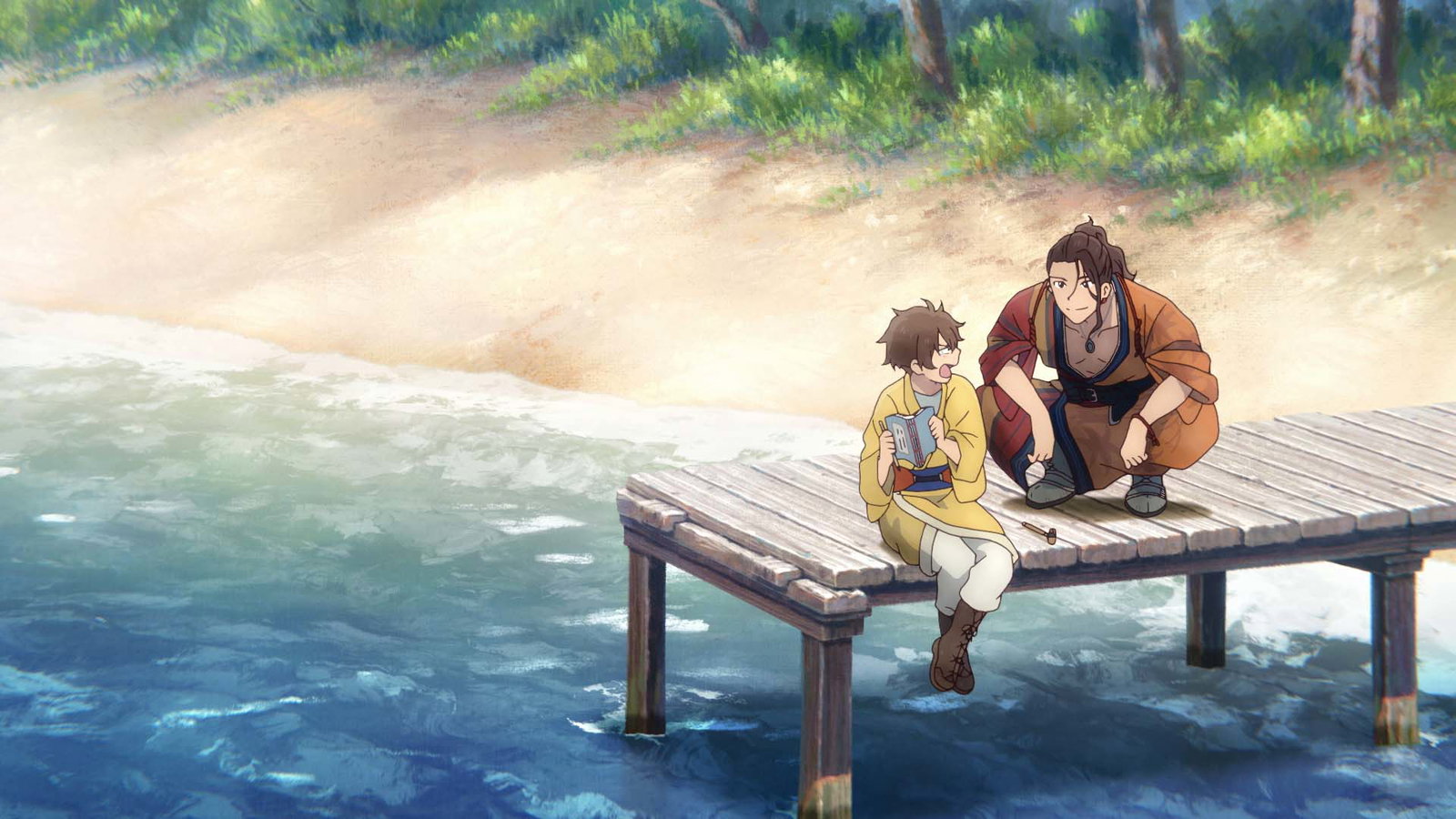
Their bond grows stronger during the Fifth National Industrial Technology Exhibition. After briefly leaving Kihachi alone, Seiroku is revealed to be secretly attempting something considered almost heretical in this steam-powered society, lighting electric lamps. Chased by the authorities for challenging the accepted order, he returns to his younger brother with a promise that echoes throughout the episode: together, they will bring about the Age of Electricity. As the brothers race through Kyoto's lantern-lit alleys surrounded by sparks, Kyoto Animation paints the sequence with the warmth and wonder that has become its signature.
Years pass, but the promised future never arrives.

The story jumps to the fortieth year of the Meiji era. Steam still dominates every corner of society, while Kihachi has grown into a gifted yet disillusioned repairman. Seiroku left for war carrying the Electrical Catalog and never returned. Unable to forgive either his brother or himself for the broken promise, Kihachi has abandoned belief altogether. His inventions survive, but his hope does not. That changes with the arrival of Inako Momokawa.
If Kihachi represents skepticism, Inako embodies unwavering faith. She first appears praying at a shrine, hoping simply to speak to her late mother once more. A small electrical device accidentally activates behind her, convincing the innocent girl that a deity has answered her prayers. Mistaking Kihachi for the "Great God Akubi," she bows before him with complete sincerity.

Credits: Netflix
Credits: Netflix
Their encounter is both hilarious and surprisingly revealing. Kihachi dismisses gods, miracles, and blind belief as foolishness. Inako responds with the line that becomes the philosophical backbone of the episode: "It's important to believe in something greater than ourselves. My belief's all I have." Rather than mocking her optimism, the series treats it as a genuine strength.
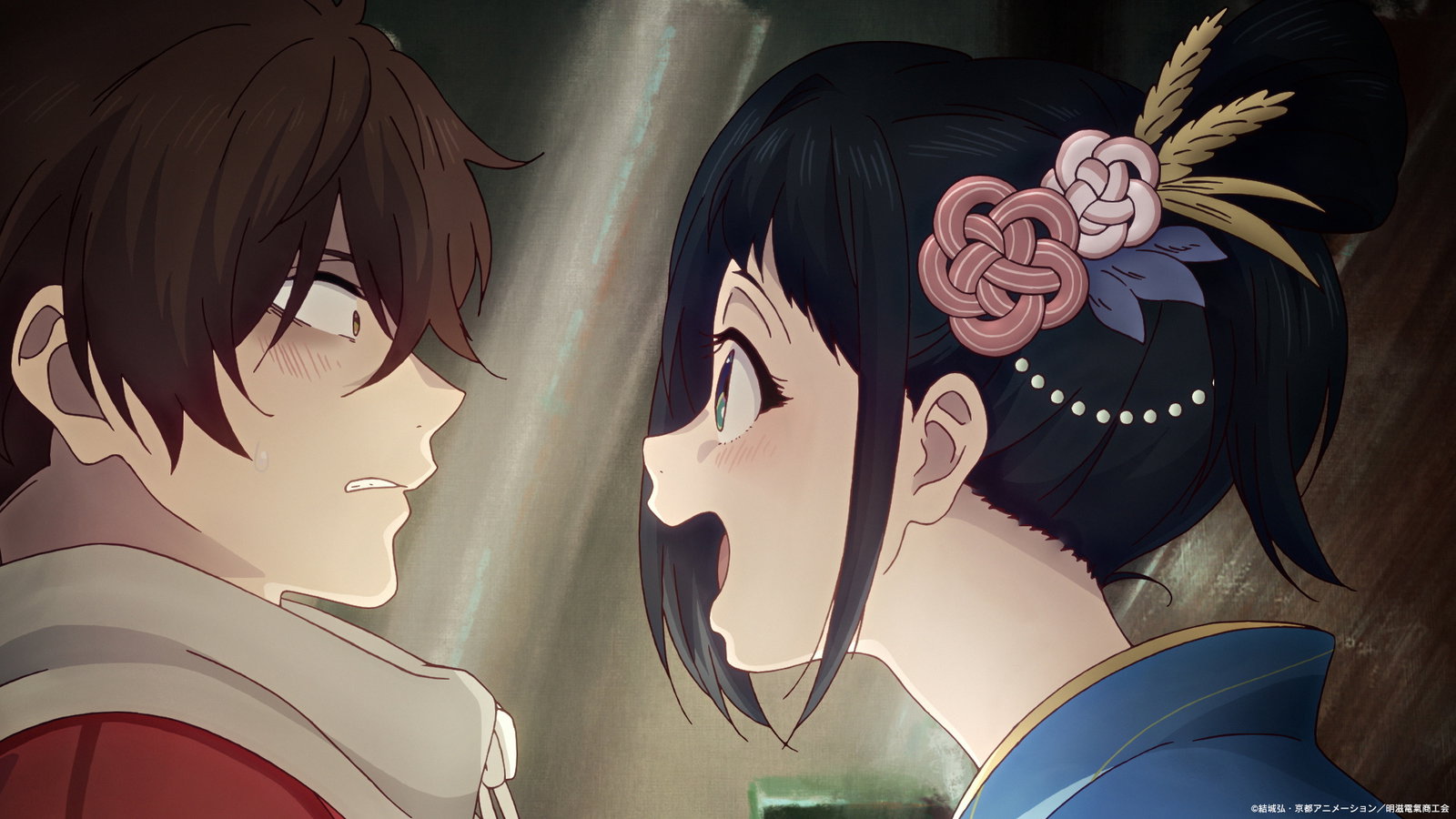
When Kihachi demonstrates an early recording device by preserving Inako's voice on a wax cylinder, she sees magic where he sees engineering. Where Kihachi explains mechanisms, Inako experiences wonder. The contrast perfectly captures the show's central conflict—not science versus religion, but skepticism versus hope. Progress, it suggests, requires both imagination and understanding. Life, however, refuses to remain peaceful.
Back at his quiet repair shop, Kihachi continues repairing machines while his uncle urges him to find proper work. Yet Inako's brief visit lingers in his thoughts. When asked what he plans to build next, his answer is unexpectedly telling: perhaps... paradise. Meanwhile, another figure enters the story.
Yosuke Mizoe arrives at the Momokawa household under the guise of celebrating Noriko's engagement, only to reveal his true intentions. Exploiting the family's financial troubles, he demands repayment of a debt before proposing marriage to Inako as an alternative. The proposal is accepted despite both sisters' objections, immediately establishing Yosuke as a manipulative force driven by motives that extend far beyond marriage.
Those motives become clearer when Noriko secretly entrusts Inako with Seiroku's long-lost Electrical Catalog and sends her directly to Kihachi. At the same time, Yosuke begins desperately searching the Momokawa household for the mysterious notebook, hinting that it carries a value known only to a select few.
Inako eventually reaches Kihachi's workshop, where exhaustion overtakes her. Upon waking inside one of his experimental projections, she mistakes the illusion for paradise itself and believes she has finally reunited with her mother. Once again, Kihachi dismisses it as nothing more than technology. Yet Inako's response surprises him. Rather than marveling at paradise itself, she praises the machine that made her feel as though she had truly been there, calling electricity "the century's greatest invention."
For Kihachi, those words reopen wounds left by Seiroku's disappearance. Every mention of electricity reminds him of a promise he believes died years ago. But Inako refuses to let him sink into despair. She tells him, without hesitation, that she believes in him. When Kihachi asks why, her answer is wonderfully simple:
"My talent is believing." It is perhaps the most important moment of the episode. Kihachi cannot yet believe in himself, so Inako believes enough for both of them.
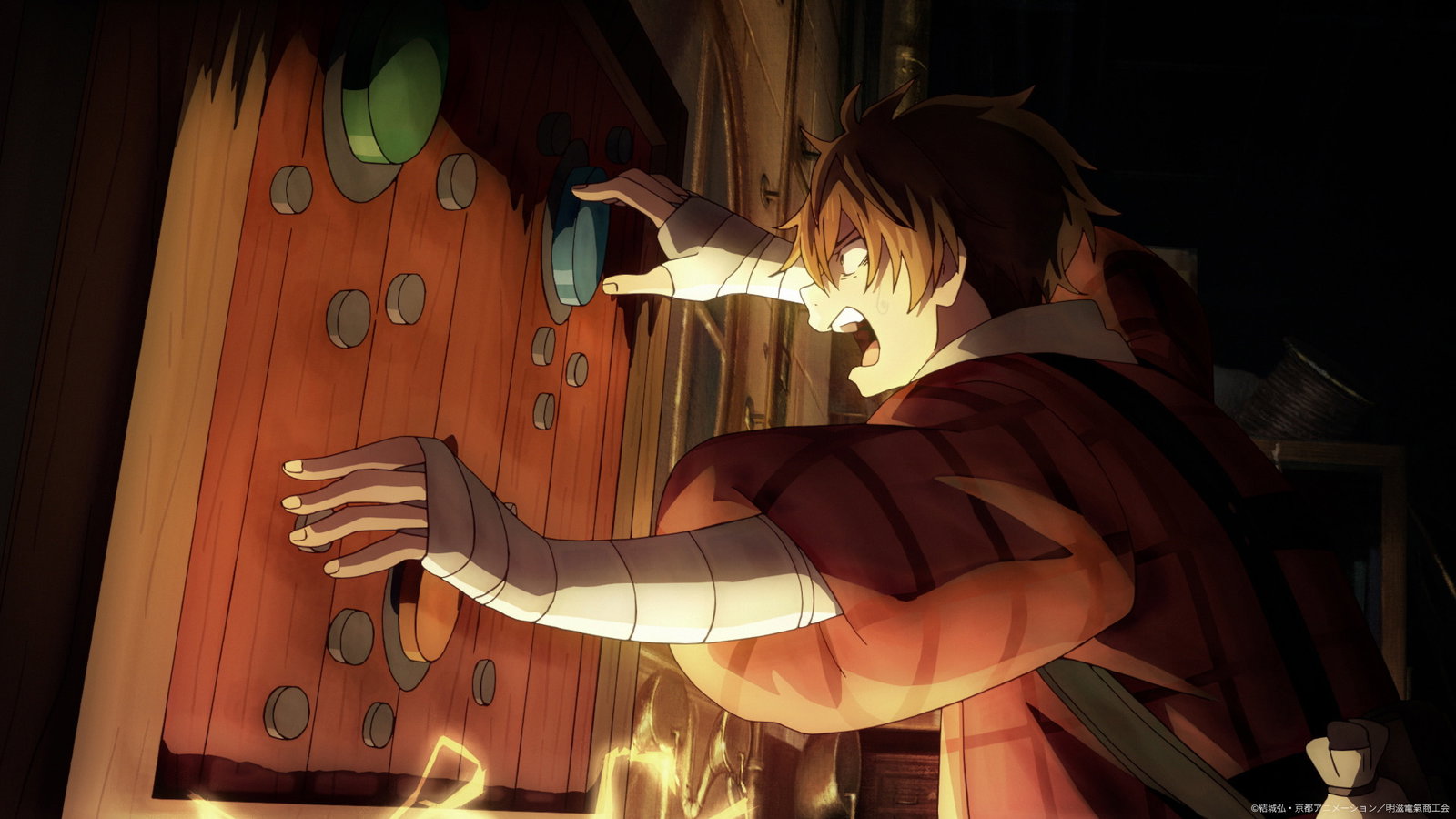
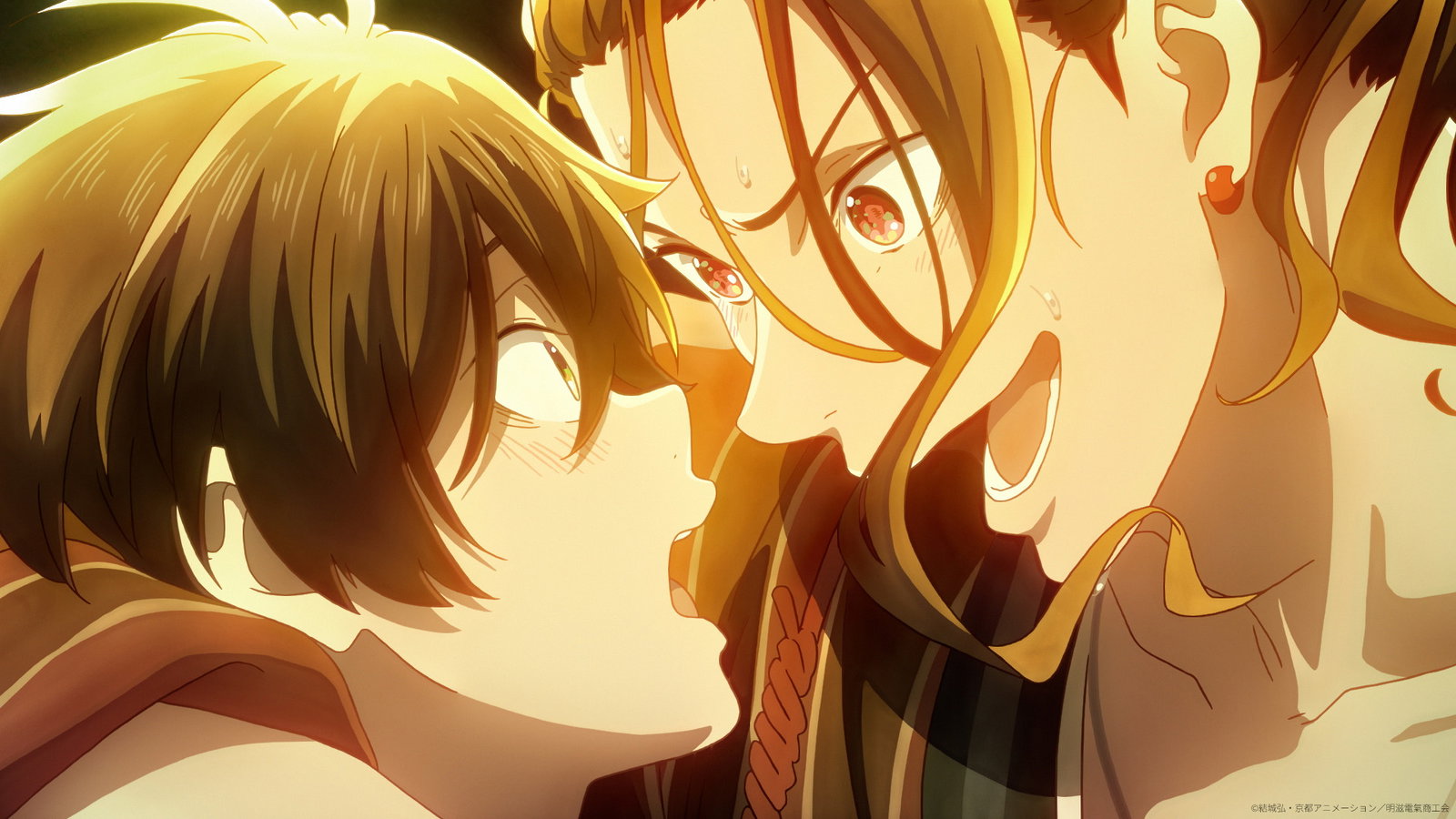
Before the two can explore the mystery further, Yosuke finally tracks them down. Inako hands Kihachi the Electrical Catalog just as Yosuke storms into the workshop through clouds of steam, accidentally embracing Kihachi while mistaking him for his intended bride. The comedic misunderstanding ends the premiere on a cliffhanger, but beneath the laughter lies a far greater mystery.
Who was Seiroku really? Why is everyone searching for the Electrical Catalog? And more importantly, can faith alone rekindle a dream that even its creator abandoned?
Episode 1 does not simply introduce its characters; it introduces an idea. In a world convinced that steam is humanity's future, perhaps the greatest revolution isn't electricity at all. Perhaps it's believing in tomorrow before anyone else does.
Episode 2: The Mysteries of the Catalog
Episode 2 wastes no time picking up from its hilarious cliffhanger, with Yosuke realizing that the person he embraced through the cloud of steam was Kihachi, not Inako. The comedy quickly gives way to conflict as Yosuke confirms that he is, in fact, Inako's fiancé after receiving her father's blessing. Inako refuses the marriage without hesitation, repeating her answer until Yosuke's composure finally cracks. His obsession, however, extends beyond Inako. The moment he spots the Electrical Catalog in her hands, he lunges for it.
Kihachi intervenes, triggering a scuffle that destroys his carefully built projection device. For Kihachi, the machine is more than scrap metal—it is another fragment of the dream he shared with Seiroku. Fueled by grief and anger, he retaliates with one of his electrical inventions, shocking Yosuke and proving once again that electricity is not merely a fantasy in this world. Before he can do anything else, Yosuke's loyal bodyguard, Izo, overpowers him and carries Inako away.
The chase that follows reveals another fascinating aspect of the series' alternate history. Damaged steam pipes are enough to redirect traffic because the Mizoe Firm effectively controls the city's steam infrastructure. In a society dependent on steam, power belongs not to governments alone but to those who own the machines that keep civilization running. Amid the chaos, the precious Electrical Catalog appears to fall into a river, prompting both Yosuke and Kengo Kuga to dive in after it. Believing the notebook lost, Kihachi returns home devastated, convinced that the final connection to Seiroku has slipped away forever. Fortunately, Sparks of Tomorrow loves rewarding faith.
Unknown to everyone else, Inako had anticipated Yosuke's greed. She secretly hid the real catalog and allowed only an empty box to fall into the river. Locked away in her family's storehouse after defying her father, she still convinces herself that he will eventually understand her decision. Even here, Inako refuses to surrender hope.
Guided by Inako's pet fox, Inari, Kihachi finds her hidden away. It is a wonderfully quiet sequence that slows the pace after the earlier chaos. While Kihachi initially comes looking only for answers about the catalog, their conversation gradually reveals something deeper. He recounts the promise Seiroku made years ago, that the twentieth century would belong to electricity—and admits that every strange vision of futuristic inventions has haunted him ever since. Yet beneath those memories lies resentment. To Kihachi, Seiroku broke the one promise that mattered by leaving for war and never returning.
When Inako finally returns the catalog, Kihachi is stunned. Instead of relief, however, suspicion takes over. The notebook is torn in half, and he cannot understand why Seiroku would ever entrust something so precious to Noriko instead of him. Every explanation only creates another question. Why did Seiroku know Noriko? Why leave the catalog behind? Why never come back?
Inako's response perfectly captures the philosophy that continues to shape the series.
"Believing in one another is what protects the bonds of humanity."
Unlike Kihachi, she refuses to let doubt become stronger than trust. Every time he searches for proof, Inako simply chooses belief. It is this contrast that makes their dynamic so compelling. Kihachi's skepticism is understandable, born from grief and abandonment. Inako's optimism, meanwhile, is not ignorance but a conscious decision to believe in people despite the possibility of being hurt.
Their relationship takes another meaningful step forward when Kihachi asks whether she truly intends to marry Yosuke. At first, Inako repeats what everyone expects of her—that she has no choice because her father has already decided. But when Kihachi asks what she wants, the answer changes. Quietly, she admits she does not want the marriage at all. Without another word, Kihachi reaches out his hand, affectionately calling her "the bug," and helps her escape.

Credits: Netflix
Credits: Netflix
Elsewhere, another mystery quietly unfolds. Kengo and Yosuke clearly share a complicated past, while Yosuke's obsession with the catalog grows even stronger. Despite claiming the notebook has no value anymore, his conversations repeatedly hint that he and Seiroku once dreamed of creating the Age of Electricity together. The audience is left wondering whether Yosuke's ambitions stem from greed, admiration, or heartbreak.
The episode's emotional high point arrives during Kihachi and Inako's rooftop escape. Nervous about testing his homemade flying machine, Kihachi hesitates until Inako gently hugs him from behind and whispers the words that have slowly become the driving force behind his inventions:
"I believe in you." For perhaps the first time since Seiroku disappeared, someone believes in Kihachi without asking for anything in return.
Their flight above Kyoto is breathtaking. Kyoto Animation fills the sky with warm evening colors as the pair soar above rooftops, clouds, and streets far below. For a brief moment, the series allows both its characters and its audience to forget the burdens chasing them. Naturally, that peace cannot last.
The machine begins to fail, forcing the pair into a frantic escape while Yosuke accuses Kihachi of kidnapping his fiancée. During the pursuit, Inako sprains her ankle, and the two seek refuge inside a pitch-black building. Darkness has always terrified Kihachi, yet Inako calmly takes his hand and leads the way, explaining that she has nothing to fear because the Great God Akubi is protecting them. Whether that protection is real almost doesn't matter. Her faith gives Kihachi the courage he lacks.
Eventually, Kengo catches up with them, and the Electrical Catalog slips from Kihachi's pocket. The moment Kengo sees it, his expression changes. A brief flashback reveals that he, too, knew Seiroku, adding yet another layer to the mystery surrounding the older Sakamoto brother.
By the episode's end, the catalog returns to Yosuke's hands. Convinced that he is finally about to fulfill the dream he once shared with Seiroku, he eagerly opens its pages—only to find childish sketches instead of revolutionary inventions. As Seiroku's words echo in his mind, calling the catalog a great secret, Yosuke collapses in disbelief.
For the first time, even the man who devoted years to finding it begins to wonder if the Electrical Catalog was nothing more than an elaborate lie.
Episode 3: Their Dream
Episode 3 opens by reframing everything we thought we knew about the Electrical Catalog. Through a pair of flashbacks, Seiroku's dream is no longer shown as his alone. Before leaving for war, he asks Kihachi to make him a promise—that when he returns, the two brothers will build every invention in the catalog together. Another memory reveals Seiroku watching fireworks with Yosuke, teasing him with just two words written inside the notebook: "Age of Electricity." Yosuke pleads to be included in that dream, confessing that his own family neither understands nor trusts him. Seiroku eventually agrees, promising that they, too, will create that future together. From the very beginning, the episode establishes that the catalog represents something different to everyone who seeks it—not just inventions, but hope, belonging, and promises left unfinished.
Back in the present, Yosuke refuses to accept the notebook before him. He dismisses it as a fake, insisting that Seiroku's catalog should have contained nothing less than the future itself. Even when Kihachi tries to defend it as their shared dream, Yosuke rejects him outright. It is Inako who once again steps between the two. Standing beside Kihachi, she declares without hesitation that she believes in him because no one understands electricity better than he does. After seeing him create a slide projector and a flying machine, she is convinced that the catalog is genuine. Her unwavering faith culminates in perhaps the episode's defining line:
"I know in my heart Kihachi will make the Age of Electricity a reality!" Those words linger long after Yosuke walks away. Although Kengo pretends to escort Yosuke to the authorities, he quietly lets him leave, hinting that there is far more history between these characters than the audience knows. Kihachi, meanwhile, continues staring at the notebook, unable to shake the feeling that it contains nothing but childish sketches.
The mystery deepens further at the hospital, where Inako is recovering from her injured ankle. Rather than worrying about herself, she is simply relieved that Kihachi managed to keep the Electrical Catalog. Curious, Suzu and Kate flip through its pages while Kihachi dismisses them as meaningless scribbles. Yet Inako notices something no one else does—the notebook carries the familiar scent of her late mother. Acting on little more than instinct, Suzu dusts the catalog with ash, revealing hidden writing concealed within its binding. Suddenly, everything changes.

Credits: Netflix
Credits: Netflix
As Kihachi carefully separates the pages, formulas, notes, and inventions begin emerging one after another. Hidden between the paper are Seiroku's real ideas, each written specifically for his younger brother. For the first time since Seiroku disappeared, Kihachi is confronted with undeniable proof that his brother never abandoned the dream. Even then, however, doubt refuses to leave him.
Unable to forgive the promise Seiroku broke, Kihachi convinces himself that the hidden inventions may simply be another cruel joke. His frustration boils over into an argument with Inako. She scolds him for doubting the person he admired most, while Kihachi lashes back, insisting that her greatest flaw is believing everything she hears. Inako's response quietly changes the course of the story.
If Kihachi truly doubts Seiroku's intentions, she says, there is only one way to discover the truth—build every invention inside the catalog. Rather than arguing over faith, test it.
Inspired by those words, Kihachi begins work on the first great invention: The Electric Full Moon. The project initially appears impossible. Seiroku's notes describe the filament as the "Moon Princess," leaving Kihachi completely baffled. It is Suzu and Kate who connect the clue to the legend of Princess Kaguya, the same princess who graced Netflix a few months ago, born from bamboo before returning to the moon. The metaphor suddenly makes sense. The ideal filament is bamboo itself.
For the first time, Kihachi realizes that Seiroku never intended to hand him every answer. The catalog is not an instruction manual but a challenge, encouraging him to think, experiment, and discover solutions for himself. Once again, Inako refuses to let him work alone.
Joined by Suzu, Kate, Yajiro, Noriko, and Kengo, the group transforms Kihachi's lonely pursuit into a collective dream. Even Kengo reveals another piece of Seiroku's past, explaining that he and Yosuke attended school with him and confirming that Seiroku constantly filled the catalog with ideas. Instead of dismissing the notebook, everyone chooses to believe that its impossible inventions can become reality.
What follows is perhaps the most rewarding montage of the series so far. Endless experiments with bamboo filaments stretch late into the night. Some burn too quickly. Others fail immediately. Even after successfully keeping a filament lit until morning, Kihachi insists they are still missing something. Inako then remembers the glass bottles produced at her family's brewery, offering another crucial piece of the puzzle. Together, the group melts, shapes, and reshapes glass bulbs, failing over and over again before inching closer to success.
The episode beautifully argues that invention is never the work of one genius alone. Every breakthrough is built upon countless failed attempts and the people willing to keep believing after each one.
Confident that they have finally succeeded, Inako sends an invitation to Yosuke, declaring that "The Electric Full Moon will rise. The catalog is not fake after all." Certain that she is mistaken, Yosuke arrives at Kihachi's workshop just as dozens of handmade bulbs begin glowing. Kihachi proudly reveals that his bamboo filament has remained lit for hundreds of hours, exactly as Seiroku envisioned. Yosuke refuses to believe it. To him, this cannot possibly be the future Seiroku dreamed of. Yet Kihachi simply asks him to wait for the full moon.
For one terrifying moment, everything goes dark. Kihachi freezes, overwhelmed by both failure and his lifelong fear of darkness. Once again, Inako silently reaches for his hand. She does not offer explanations or solutions—only belief. And then the miracle arrives.
As Kengo pedals the generator, the suspended bulbs illuminate together, forming a brilliant artificial moon that bathes the entire town in light. The "Electric Full Moon" finally rises, transforming Seiroku's dream into reality. Watching the impossible unfold, Kihachi experiences another vision of a future where even the night sky shines with endless light before hearing Seiroku's voice once more:
"You and I are turning this catalog into reality. Together."
For Kihachi, it is a moment of healing.
For Yosuke, it is heartbreak.
Collapsing to the ground in tears, he mourns not the invention itself but the dream he believes was stolen from him. When Kihachi quietly asks what Seiroku truly meant to him, Yosuke can only muster one bitter reply:
"I hate you, Sparky."
With that single line, Sparks of Tomorrow reminds us that the brightest dreams can cast the darkest shadows—and that every revolution begins by asking one simple question: what are we willing to believe in?
ADVERTISEMENT
Article continues below this ad
In the end, Sparks of Tomorrow is not merely a story about electricity replacing steam. It's about hope replacing despair, faith overcoming doubt, and dreams surviving long after the people who dreamt them are gone.
Some stories are written with ink. Others are written with ash. Sparks of Tomorrow is one of them.
ADVERTISEMENT
Article continues below this ad
Did you like Sparks of Tomorrow? Let us know in the comments.
ADVERTISEMENT
Edited By: Aliza Siddiqui
ADVERTISEMENT
ADVERTISEMENT


