
'BAKI-DOU: The Invincible Samurai' Review - The Resurrection of a Legend Redefines the Very Nature of Strength
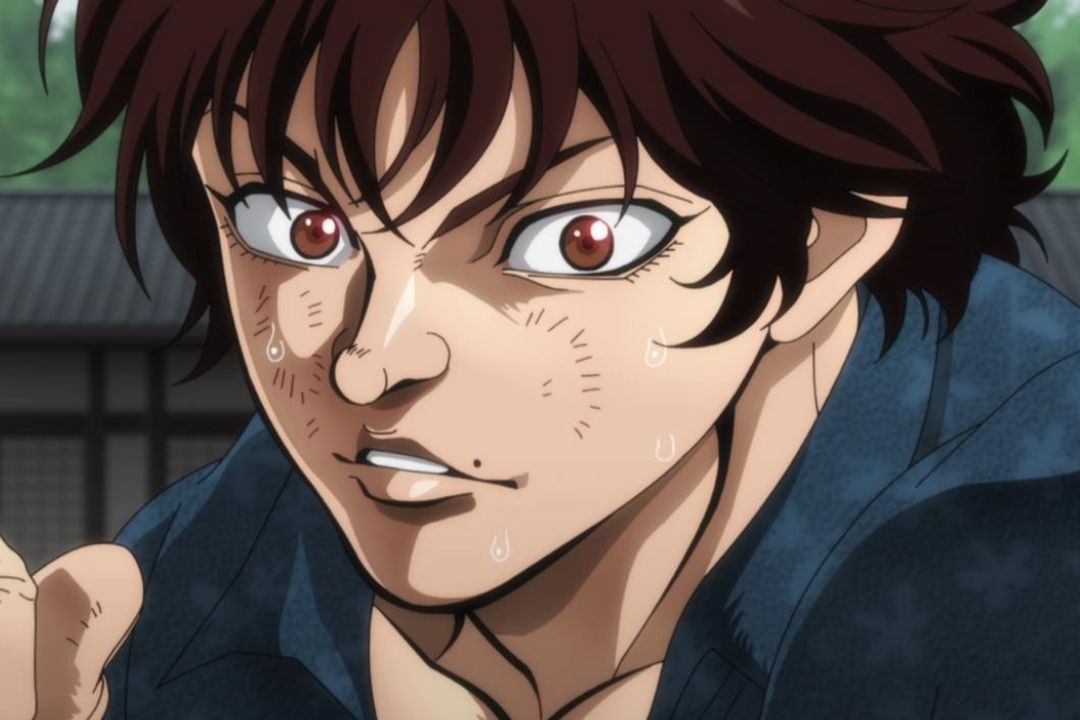
The 'Father-Son' showdown was always going to be an impossible act to follow. After decades of trauma and blood-soaked build-up, watching the 'Strongest Creature on Earth' share a purely psychological bowl of miso soup with his son felt like the only possible ending for the Hanma saga.
For years, we have debated whether the series should have just taken a bow there. But with the premiere of Baki-Dou, it is clear that Keisuke Itagaki was not done; he just wanted to shift the weight of the story from the question of 'who is the strongest' to the much darker, more existential exploration of ' what does it actually mean to be a warrior?'
Baki-Dou capitalizes on the power vacuum left by the Hanma War
ADVERTISEMENT
Article continues below this ad
The anime opens with a heavy, almost suffocating sense of boredom. Baki, now effectively the second strongest man alive, is just... cruising. He is going to school, he is training, but the 'hunger' that fueled him for three decades is gone. This setup is brilliant because it mirrors exactly how the hardcore fanbase felt after the Hanma war. We were satiated, and so was he. This 'peace' is portrayed not as a reward, but as a stagnant pond.
Then comes the 'resurrection' of Miyamoto Musashi. In any other series, cloning a legendary samurai using his mummified remains and a spirit medium would be the moment the show jumped the shark. In this universe, it feels like a logical progression of Itagaki-science. The way the anime handles the "blasphemy" of Musashi’s return is a perfect mix of high-level biology and absolute mystical nonsense that somehow maintains the series' internal logic, where every leap in modern evolution is met by a terrifying echo from the past. It forces us to ask: in a world of 'sport' fighting, can a man designed for total slaughter even exist?
Miyamoto Musashi is the ultimate philosophical antithesis to Modern Martial Arts
The standout achievement of this season is the characterization of Musashi. Unlike Pickle, who was a 'noble savage' acting on pure prehistoric instinct, Musashi is a refined, hyper-intelligent strategist who is deeply confused by the modern world. There is a terrifying politeness to him.
The anime nails his 'aura' in a way that static panels sometimes struggled to convey. When Musashi enters a room, the background hum of the city seems to cut out. He represents a time when losing did not mean a knockout or a broken limb; it meant being erased from history. Watching him navigate the 21st century, where men fight for trophies and 'honor,' is both darkly comedic and genuinely chilling. He is not a 'fighter' in the modern sense; he is a professional killer who finds our version of 'combat' to be a charming, harmless hobby.
The tension does not come from whether Baki can beat him, but from whether the modern world can even contain him.
Animation was the only way to truly capture the terror of the "Imaginary Blade"
One of the biggest hurdles for the Baki-Dou manga was the concept of the "Imaginary Sword." Seeing characters react to a blade that wasn't actually there often felt repetitive or abstract in black and white. The anime, however, uses the medium to solve this perfectly. Through clever use of lighting, shimmering translucent VFX, and top-tier sound design, the 'phantom cuts' feel visceral.
When Musashi 'slices' an opponent without a physical weapon, you see the spray of blood that is not actually there, and you feel the psychological weight of a man who has spent so many decades killing that his very hands have become steel. It turns what was a 'weird manga gimmick' into a genuine supernatural threat. You are not just watching a fight; you are watching a psychological breakdown of every character who realizes they are standing in front of a ghost they cannot touch, but who can absolutely touch them. The animation team at TMS has finally found a way to make the 'internal logic' of Baki feel as real as the external punches.
The anime adaptation redeems the most polarizing arc in the franchise’s history
Let us be honest: the Baki-Dou manga has a reputation for 'jabbing' fan favorites. Many of us felt Itagaki was sacrificing the legacy of characters like Doppo or Shibukawa just to hype up the new guy. However, the anime adaptation feels much more aware of this friction. The pacing is significantly tighter than the source material. By condensing the long-winded 'lore dumps' about Musashi’s grip strength or historical footnotes into sharp, punchy segments, the momentum stays high.
ADVERTISEMENT
Article continues below this ad
The defeats of our favorite characters feel less like 'disrespect' and more like a necessary evolution of the stakes. We are not in a martial arts tournament anymore; we are in a clash of eras. This season is a reconstructive surgery on the Baki formula. It is grotesque, philosophical, and arguably the most 'intelligent' anime has ever been. It proves that as long as there are legends to exploit and biological laws to break, the series still has its edge.
Baki-Dou is essentially a 'slasher movie' where the victims are world-class martial artists, and as a fan, I could not be happier to see the series find its teeth again.
ADVERTISEMENT
Article continues below this ad
What do you think about BAKI-DOU: The Invincible Samurai? Let us know in the comments.
ADVERTISEMENT

Edited By: Itti Mahajan
ADVERTISEMENT
ADVERTISEMENT
