
Every Time Taylor Swift Encountered a Stalker: Full Timeline of Incidents and Security Measures
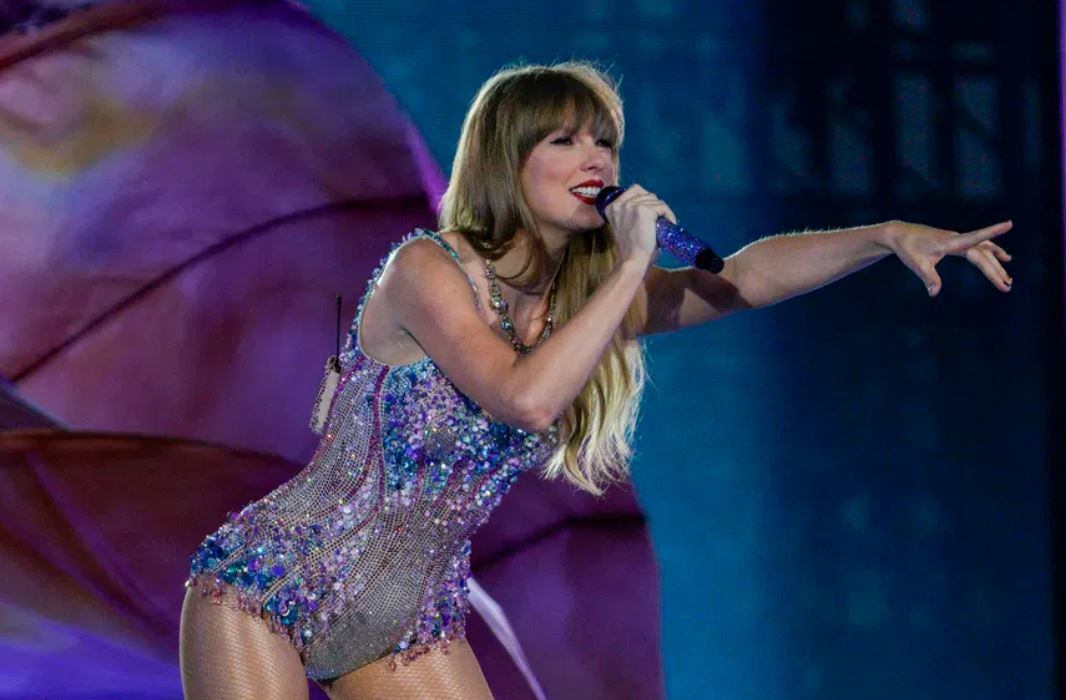
Fame may sparkle like a chandelier inside a royal ballroom, but it also attracts every moth that forgot basic boundaries. Taylor Swift stands at the center of global pop culture, where admiration bends into devotion and devotion sometimes bends into danger. Her art turns strangers into analysts, poets, and dreamers, yet when imagination leaps out of fantasy and reaches for her real life, the glow around her gains unsettling edges.
As her global glow refuses to dim, the shadows around it grow louder, and while fans chase clues in lyrics, others chase something far more unsettling.
Why does Taylor Swift face repeated stalker incidents?
ADVERTISEMENT
Article continues below this ad
Taylor Swift’s name functions like cultural WiFi. Everyone feels connected, even when the signal was never meant for them. The illusion of closeness creates worship that drifts into a realm psychologists call borderline-pathological. Some individuals begin treating her life as an unlocked quest, influenced heavily by media outlets that reveal addresses, floor plans, and even holiday schedules. While her eyes convey warmth and her aura radiates a storybook glamour, her security team moves with military precision, guarding her life as if protecting a global landmark.
While her fame feels dreamy to fans, it becomes a map for strangers with blurred boundaries, setting the stage for the first major escalation.
Timeline of every known stalker incident involving Taylor Swift
2016: Frank Andrew Hoover entered the picture in 2016 with behavior that resembled the plot of a psychological thriller. He followed her motorcade to a private airport hangar in Austin and reached a chilling fifty feet from her. His disturbing emails to Scott Swift expressed fantasies of murdering the family, revealing an intent that went far beyond obsession. His desire to join her on the plane turned the encounter into a breaking point, marking the start of a long legal battle.
2017: Mohammed Jaffar became a recurring presence in 2017 after flooding her team with consistent calls. He then escalated by entering her Tribeca apartment building, revealing the thin line between digital fixation and physical intrusion. Security treated the case with strategic care as the individual showed signs of mental health distress. His actions eventually led to placement in a psychiatric facility, where intervention prioritized the need for treatment over punitive response, highlighting the layered nature of celebrity security.
2018: 2018 delivered a double wave of danger. Julius Sandrock traveled more than a thousand miles to her Los Angeles home armed with ammunition, rope, gloves, and a knife. A temporary restraining order followed immediately. Not long after, Roger Alvarado broke into her Manhattan townhouse, used her shower, and slept in her bed as if rehearsing an unsettling fantasy. He was jailed for nine months. Hoover’s earlier case also closed this year, earning him ten years of probation and mandatory GPS tracking.
2019: After serving his sentence, Roger Alvarado returned and broke into her Manhattan residence again, proving that deterrence is not always enough. His second attempt resulted in a stricter sentence of two to four years in prison. A separate trespasser was arrested at her Rhode Island mansion later that year, marking the third intrusion at the property in a short span. Each incident displayed how fame can attract individuals who rewrite reality in their own minds.
2020: The case involving Eric Swarbrick reached its conclusion in 2020 after years of terrifying letters sent to Big Machine Label Group. His messages grew darker with each attempt, expressing graphic fantasies of assault and murder. This escalation forced authorities to act decisively. He was sentenced to thirty months in federal prison, giving her team a momentary sense of relief. Yet the emotional weight of such threats showed that cyberbullying and harassment at any age can rise to a level that stands equal to physical intrusion.
2021: In 2021, another alleged stalker arrived, convinced that Taylor Swift was communicating with him online. He attempted to enter her Manhattan apartment and was arrested for trespassing. The incident displayed how parasocial relationships gain new strength in the age of social media. Strangers see a curated glimpse of a celebrity’s life and confuse access with intimacy. The arrest emphasized how emotional delusion can become a physical risk once fantasy escapes the phone screen and walks into real space.
2022: The year 2022 brought an unusual situation when Morgan Mank crashed his vehicle into her Tribeca building while intoxicated. His attempt to enter the property soon after raised alarms and resulted in immediate charges. A protection order was granted to prevent further attempts. The crash became a dark symbol of how unstable obsessions may collide with real-world danger, especially when fueled by impaired judgment that ignores consequences entirely.
2023: In 2023, Mitchell Taebel appeared outside her Nashville residence after sending messages filled with intimidation, harassment, and invasion of privacy. The charges included stalking, and his presence underscored the multi-state challenges her security team faces. Fame travels, and unfortunately, so do fixations. His arrest represented yet another reminder that no city offers complete protection when someone starts believing a celebrity’s life includes them without invitation or reality.
2024: David Crowe surfaced again and again outside her Tribeca residence, appearing nearly thirty times in two months. He was arrested three times in five days, a sequence that shifted concern into urgency. A restraining order followed, and authorities kept him in custody to stop an immediate return. His letter to Taylor Swift even surfaced in her documentary. Later that year, Brian Jason Wagner began approaching her Los Angeles home and insisted he was her partner and the father of her child, revealing another layer of delusion disguised as devotion.
ADVERTISEMENT
Article continues below this ad
2025: The case involving Brian Jason Wagner concluded with a strict legal measure in September 2025. A five-year permanent restraining order was granted, requiring him to remain at least one hundred yards away from Taylor Swift and her properties. He was also ordered to surrender firearms, ammunition, and body armor. The ruling created a protective boundary that acknowledged both the escalating severity of his claims and the potential for violence.

ADVERTISEMENT
Article continues below this ad
What are your thoughts on how quickly admiration for Taylor Swift can tilt into danger in an age shaped by screens and fixation? Let us know in the comments below.
ADVERTISEMENT

Edited By: Aliza Siddiqui
ADVERTISEMENT
ADVERTISEMENT
