
10 Best Songs for 4th of July Parties, Parades, and Fireworks Nights
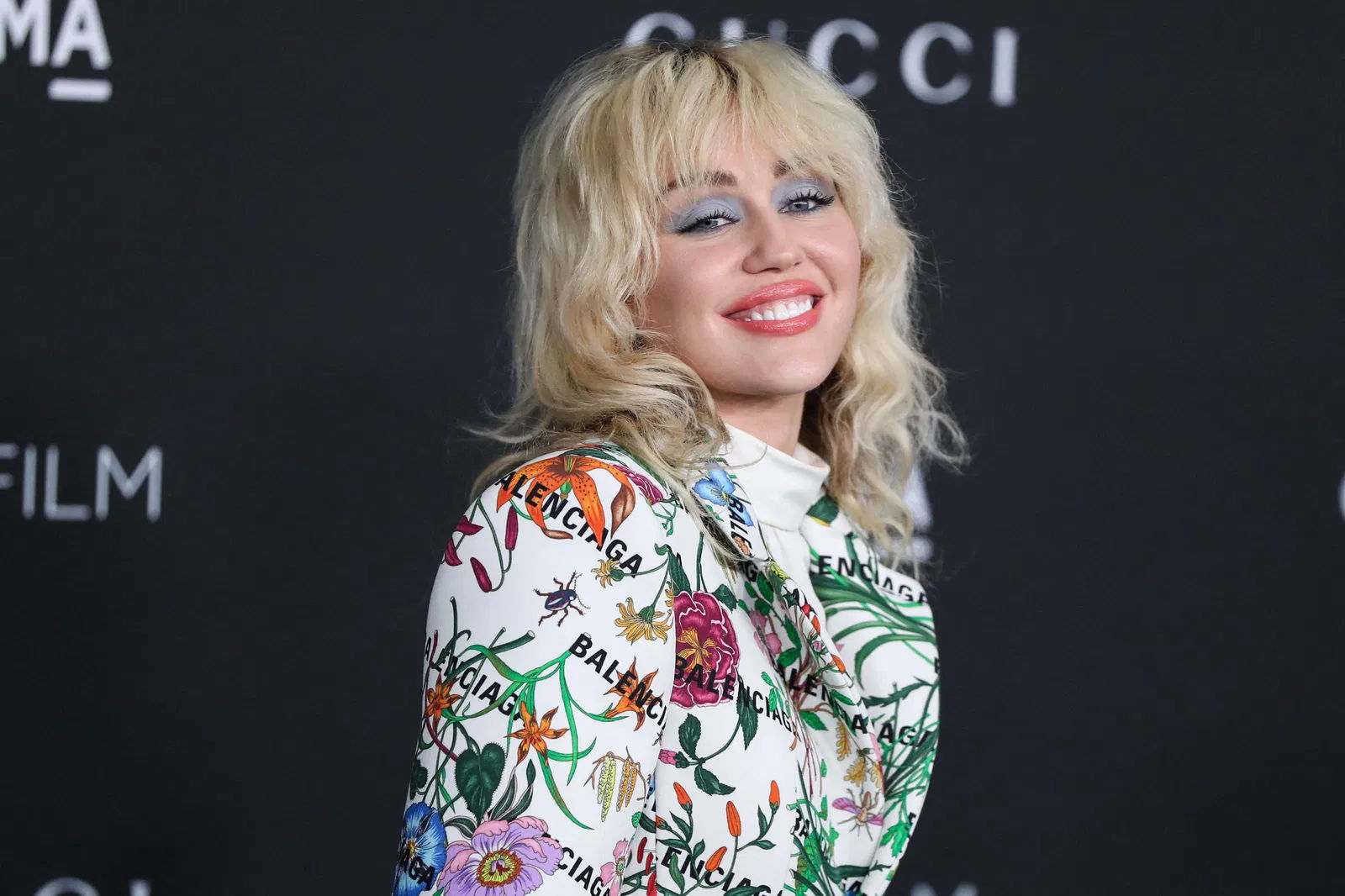
via Imago
Credits: Imago
4th of July celebrations across the United States bring communities together for parades, backyard parties, and fireworks displays that light up the night sky. The holiday marks Independence Day, honoring the nation’s history while also serving as a time for connection, relaxation, and summer joy. As the streets fill with marching bands, flags, and festive crowds, while evenings end with brilliant fireworks shows, songs play a key role in shaping the atmosphere, adding rhythm and energy to every moment.
These 10 tracks capture that spirit perfectly, making them ideal for parties, parades, and fireworks nights.
Party in the U.S.A. - Miley Cyrus
ADVERTISEMENT
Article continues below this ad
'Party in the U.S.A.' works so well for 4th of July celebrations because it blends pure pop escapism with a deeply shared cultural memory. Released in 2009 as part of Miley Cyrus’s EP 'The Time of Our Lives,' the track was originally written by Jessie J, Dr. Luke, and Claude Kelly, and was not even meant for Miley at first. Jessie J had written it about arriving in America, but it was later reworked into Miley’s Hollywood story for a Walmart-backed promotional EP tied to her fashion line.
Despite its corporate origins, the song became a massive cultural staple thanks to its instantly recognizable chorus, upbeat production, and universal “first big moment in a new place” feeling.
On the 4th of July, it thrives because it turns fireworks nights and backyard parties into collective nostalgia, uniting generations through a shared, easy-to-sing pop anthem of American summer energy.
Surfin' U.S.A. - The Beach Boys
'Surfin’ U.S.A.' is not just a surf anthem; it is a snapshot of early 1960s America seen through rose-tinted glass and ocean spray. Released in 1963, The Beach Boys turned a borrowed rock-and-roll blueprint into something bigger: a national daydream. Built on Chuck Berry’s rhythmic foundation, the song still reshapes itself into a distinctly Californian fantasy, where motion is constant, and the map feels endless.
Beneath its driving guitars and stacked harmonies lies a kind of mid-century optimism that feels almost weightless, an America imagined as endlessly mobile, sun-drenched, and uncomplicated. Cities blur into surf spots, highways stretch like open invitations, and youth becomes its own destination rather than a passing phase. Even its messy legal origins fade beside that larger illusion: a country where joy feels accessible, identity feels new, and the horizon never really closes. It is less a song about surfing than a soundscape of belief in infinite summer and forward motion.
Sweet Home Alabama - Lynyrd Skynyrd
'Sweet Home Alabama' endures as a 4th of July staple because it captures a uniquely American mix of pride, contradiction, and collective release. Released in 1974 on Second Helping, Lynyrd Skynyrd built it as a response to Neil Young’s critical portrayals of the South, yet it quickly outgrew its origin story. Musically, the song is built on one of rock’s most recognizable guitar progressions, laid-back, sun-warmed, and instantly infectious, anchored by a groove that feels like open roads and wide skies.
Its famous opening, complete with Ronnie Van Zant’s casual Turn it up, adds a raw, lived-in authenticity. On Independence Day, it thrives because it turns regional identity into shared celebration: backyard barbecues, windows-down drives, and mass sing-alongs. Beneath the debate and irony, it carries a defiant sense of belonging, loving where you are from despite imperfection. That emotional mix of pride and release makes it feel like fireworks set to guitar strings every July 4th.
Stars and Stripes Forever - John Philip Sousa
Born in 1896 on the deck of a ship crossing the Atlantic, Sousa’s march carries the glow of a country still shaping its own image. 'Stars and Stripes Forever' belongs to an era of brass bands, open-air concerts, and public optimism, when music was something lived in streets and parks rather than contained in recordings. First performed in 1897, it spread rapidly through sheet music, carried from town to town by marching ensembles and community bands.
Its structure feels ceremonial by design: a disciplined, forward-driving rhythm, a radiant piccolo line that flutters like a flag in motion, and a final brass surge that builds into overwhelming collective triumph. Nothing about it feels private or individual; it is built for gathering. On Independence Day, it becomes more than tradition; it transforms into ritual memory in motion, a shared soundscape where patriotism is not spoken but performed together in real time across streets and skies.
Yankee Doodle - Traditional / U.S. Military Bands
'Yankee Doodle' is one of the most unexpected reversals in musical history, a song born as ridicule that ultimately became a symbol of triumph. Originally used by British forces to mock disorganized American colonists during the mid-18th century, it painted them as naïve, unpolished, and laughably provincial. Yet instead of rejecting it, the Americans absorbed it, reshaped it, and turned it into something entirely different: a marching tune of defiance. Its melody stretches back even further than the Revolution, with folk origins in Europe.
But its meaning was rewritten in real time during the French and Indian War and later the Revolutionary War. What was meant as an insult, calling the “Yankee” a foolish country bumpkin with delusions of refinement, became fuel. By the time British troops were retreating, the same tune echoed back at them, now stripped of humiliation and loaded with pride. On the 4th of July, it survives as a kind of musical turnaround story: proof that mockery can be reclaimed, rewritten, and marched back louder than it was ever spoken.
Living in America - James Brown
'Living in America' thrives on the explosive energy of 1980s spectacle, where patriotism meets neon lights, stadium sound, and cinematic excess. Built on a polished synth-funk foundation and driven by James Brown’s electrifying vocals, the song transforms American imagery into something loud, urban, and kinetic. Its Midnight Energy Injection makes it a natural turning point in any 4th of July celebration, shifting the mood from daytime relaxation into full-scale nighttime celebration, where the party becomes a dance floor under fireworks and city glow.
As a Parade Showstopper, its thumping bass and sharp brass accents are engineered for motion, turning floats, dancers, and crowds into synchronized bursts of energy. Most importantly, its Gritty, Urban Patriotism redefines celebration away from rural idealism, instead embracing highways, concrete cities, and working-class rhythm. In true 1980s fashion, it celebrates America not as a quiet landscape, but as a loud, electric system constantly in motion and alive with sound.
Firework - Katy Perry
'Firework' sits at the intersection of literature, pop production, and emotional theater. Released in 2010 as part of 'Teenage Dream,' it arrived during Katy Perry’s peak chart era, when pop music felt larger than life, bright, maximal, and engineered for mass emotional release. Its central metaphor traces back to Jack Kerouac’s travelogue-autobiography, On the Road, where explosive imagery becomes a way of describing intensity, presence, and being fully alive in the world.
Perry, known for a long catalogue of emotionally resonant, uplifting pop songs and often epic love stories, reworks that literary spark into a stadium-sized anthem about visibility, self-worth, and inner release. She has also spoken about the song in deeply personal terms, connecting it to reflections on mortality and the desire to leave behind something incandescent and lasting. Structurally, it mirrors its message: opening in vulnerability before building into a full sonic detonation.
On Independence Day, it feels almost synchronized with real fireworks, turning the night sky into a mirrored extension of its emotional arc and shared celebration.
Born in the U.S.A. - Bruce Springsteen
'Born in the U.S.A.' is often mistaken for a straightforward patriotic anthem because of its explosive stadium sound, but it is actually one of Bruce Springsteen’s most powerful critiques of American post-war reality. Released in 1984 on the massively successful 'Born in the U.S.A.' album, its booming drums, bright synths, and anthemic chorus created a surface-level sense of triumph that many listeners, including political figures, misread as celebration rather than confrontation. Beneath that sonic power, however, the lyrics tell a far darker story: a Vietnam veteran returning home to unemployment, emotional abandonment, and institutional neglect.
The misunderstanding comes from this deliberate contradiction; the music sounds like victory while the narrative speaks of disillusionment. It should be understood as a protest song about the gap between national pride and lived experience, especially for working-class Americans and veterans who were left behind. On the 4th of July, its significance deepens: it does not reject patriotism, but challenges it. It transforms Independence Day from simple celebration into reflection, asking whether the ideals of freedom and dignity truly extend to everyone who “was born in the U.S.A.”
The Star-Spangled Banner - Whitney Houston (Live at Super Bowl XXV)
Whitney Houston’s rendition of 'The Star-Spangled Banner' at Super Bowl XXV in 1991 transformed a routine pre-game ritual into one of the most iconic live performances in music history. The performance took place in Tampa during a moment of heightened national tension, just days into the Gulf War, giving the anthem an emotional gravity that extended far beyond the stadium. Musical director Rickey Minor reimagined the arrangement in a slower, more flexible 4/4 structure.
It allowed Whitney greater freedom for phrasing and emotional build, even as NFL executives initially resisted the change. A pre-recorded vocal track was also prepared to ensure broadcast clarity, blending with her live delivery in the final mix. Her performance began with restraint, gradually building into a soaring crescendo that culminated in her legendary “home of the brave” note. The moment redefined the anthem for modern audiences, turning it into a commercial hit, a cultural symbol, and a benchmark for vocal excellence.
God Bless the U.S.A. - Lee Greenwood
'God Bless the U.S.A.' feels less like a country song and more like a national breath held in unison. Written by Lee Greenwood in 1984 at a kitchen piano, it began as a simple act of gratitude, an attempt to name the country in personal terms, stretching coast to coast through memory, landscape, and lived experience. Over time, it moved beyond its origins and became a recurring cultural signal, resurfacing during moments of collective strain and reflection, including the Gulf War and post-9/11 national mourning.
ADVERTISEMENT
Article continues below this ad
Its structure mirrors that evolution: a quiet, grounded opening that feels almost conversational, gradually expanding into a sweeping chorus designed for communal voice rather than individual performance. Nothing in it rushes; everything rises. On the 4th of July, it settles into the evening like a ceremony rather than entertainment, turning scattered crowds into a single reflective pause before the sky fractures into fireworks and shared light across the night.
Together, these 10 songs trace a shifting portrait of American celebration, from protest and pride to nostalgia, spectacle, and reflection. Played on the 4th of July, they transform fireworks into feeling, turning streets, skies, and sound into a shared language of memory, identity, and the many meanings of freedom.

ADVERTISEMENT
Article continues below this ad
Which of these tracks is making it onto your 4th of July playlist? Let us know in the comments.
ADVERTISEMENT

Edited By: Adiba Nizami
ADVERTISEMENT
ADVERTISEMENT
