
INTERVIEW: Netflix’s ‘Crew Girl’ Showrunner Vivian Lin on Teagan’s Search for Belonging, Rowing, and Teen Rivalries
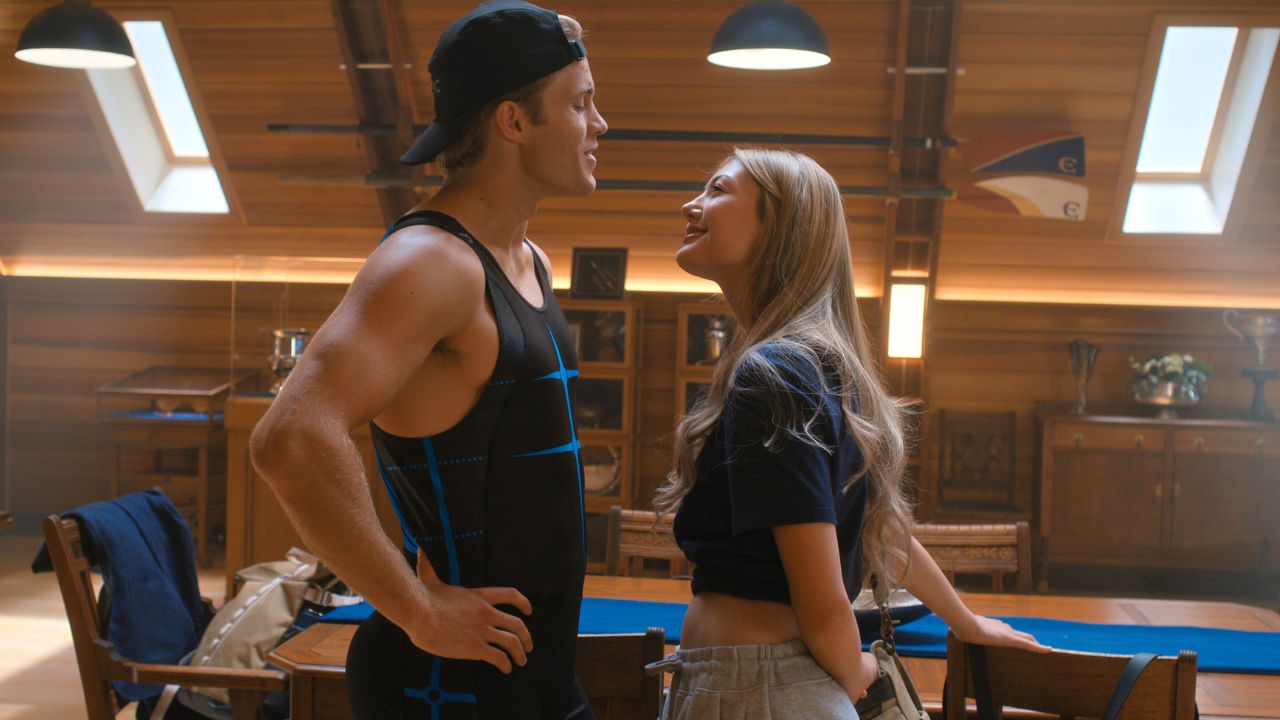
Showrunner Vivian Lin attending the premiere of the Netflix series and Miku Martineau as Teagan Croft in a still from 'Crew Girl' (Photo Credit: AUDREY PERSAUD/Craig Minielly/Netflix
Showrunner Vivian Lin attending the premiere of the Netflix series and Miku Martineau as Teagan Croft in a still from 'Crew Girl' (Photo Credit: AUDREY PERSAUD/Craig Minielly/Netflix
What happens when a 16-year-old girl is taken out of her comfort zone and forced to make a name for herself in a sport that is dominated by men? We get a fierce coming-of-age story about grit, rivalry, and finding your place. That's what Netflix's latest series Crew Girl is all about. Created by Vivian Lin, the show chronicles the journey of up-and-coming rowing star Teagan Tao (played by Miku Martineau), who is forced to start over at an elite East Coast prep school after a family scandal.
However, things take a bizarre turn when she learns that the school does not have a girls' rowing team and has to deal with the school’s dysfunctional boys’ crew. Now it's her time to make a name for herself at the school and garner respect from her male counterparts while dealing with her own aspirations and a complicated rivalry with 2 different teammates. What makes Crew Girl stand out from other young-adult dramas is the way it takes the familiar story of an outsider finding her place and makes it a gripping narrative about identity, ambition, and convincing everyone you belong in a world that was never built for you.
But Lin never stops bringing a sense of playfulness to the story, making Crew Girl an entertaining watch even when the dramatic elements get intense. NetflixJunkie caught up with showrunner Vivian Lin and discussed bringing Teagan's journey to life. Moreover, the creator opened up about creating a coming-of-age story around a male-dominated sport.
ADVERTISEMENT
Article continues below this ad
Aayush Sharma: Teagan begins the series as a highly accomplished single sculler, but after the family scandal, she is forced into a completely different position as a coxswain, someone who has to lead rather than physically pull the boat. Was that shift deliberately designed as a metaphor for her emotional journey? How did you build that transition into the writing of her character?
Vivian Lin: Yes, very much. There’s something about superstars that makes them really difficult to lead because, in her own world, she would just get in the boat and make it go faster. But she can’t do that. She actually has to work with other people. She has to be a conductor, rather than the person playing the violin. And I think that is particularly frustrating and difficult for her to learn. That is a big part of her journey: learning how to tame the boat, but also learning how to tame her own instincts and change herself in the process.
Credits: Craig Minielly/Netflix
Credits: Craig Minielly/Netflix
Aayush Sharma: Rowing is such a technically demanding sport because every movement has to be synchronized; one person's mistake can affect the entire boat. How did you translate that idea of synchronization into the show's storytelling and ensemble dynamics? Did you approach the crew almost like a single character, where each boy represents a different emotional or psychological obstacle Teagan has to overcome?
Vivian Lin: Yes, every member of Teagan’s crew had their own issue, and each one represented a different chapter in Teagan’s journey toward becoming a leader. One by one, she had to make a personal connection with each rower, and through that, she learned that what works for one person does not necessarily work for another. Every crew member brought out a different side of her and taught her a different lesson about leadership. So, in that sense, each relationship became its own facet of her journey.
Aayush Sharma: The show is set against the very polished, privileged world of Easton Prep, but the rowing sequences seem to take the characters into much more physically brutal environments: water, mud, exhaustion, and cold. Was that visual contrast intentional? Did you want the boat and the water to become a space where the social hierarchy of the school temporarily disappears, and the characters are judged purely by performance?
Vivian Lin: Definitely. The whole show really explores this idea of the haves and the have-nots: who has influence, what they are able to influence, and what they are not. But then there is also this idea of what ultimately has to shine through. On a boat, when you are a rower, you either can row that fast for that long, or you cannot. And the rowing is brutal, absolutely brutal. There is a thing they call the “pain cave,” where you just want to die. I remember speaking to one of our Olympic consultants, and they described it exactly that way: you want to die. So when you are faced with that kind of intensity, that level of competition, you are who you are. Sometimes, what is inside you just shines through. And that is why it mattered that the rowing was so hard. One, because it is authentic. And two, because it reveals who people really are.
Aayush Sharma: Filming rowing is considerably more complicated than filming a conventional team sport because the camera, actors, and boats are constantly moving. What were some of the biggest technical challenges of shooting the races and training sequences? Did you use boats specifically designed for filming, chase boats, drones, underwater cameras, or other specialized setups to capture the sport authentically?
Vivian Lin: So with the rowing, we were, I am pretty sure, the first show to do it this way. You might have to fact-check me on that, but our water unit kept saying, “We’ve never done this before.” We were shooting eight-person sculls, which are 67-foot boats with nine people in them. Because our set was on a lake, we had to build this huge barge and put our entire crew on it for the better part of a year. We strapped the boat to the barge, and that’s how we would shoot. It was incredibly challenging. For one thing, your light is the sun, so you are constantly chasing the light. And technically, it’s incredibly complicated because you are trying to capture authentic performances while also making sure the rowing itself feels authentic.
That is why we also wanted to give the actors some real experience. Before we started filming, we put everyone through a rowing boot camp, so they all actually learned how to row. Some of those drone shots are genuinely our actors rowing. They got good enough that, by the end, they could go out on their own and row together as a real team. That brought a level of authenticity to the show that you simply cannot fake.
Aayush Sharma: Canada has such a strong rowing tradition, so as a Canadian, did you draw on that connection while developing Crew Girl? Did you speak with Canadian Olympians or members of the national rowing team to understand the sport from their perspective and make sure the series captured the level of authenticity and intensity you were aiming for?
Vivian Lin: I wanted the show to be as authentic to rowing as possible, so we started talking to rowers and experts right from the very beginning. Very early on, we spoke with an Olympic rower who had won a silver medal in the eight, and she gave us incredible insight into what rowers actually care about: their personalities, the competition, what it feels like to race, and what it feels like to win. We really wanted to understand the full spectrum of that experience. We also had an Olympic coach working with our rowing team. The Canadian rowing team trained at the facility where we shot, as well as at another location on the island. So, surprisingly, we ended up being incredibly close to a lot of Olympians throughout the process. It gave us access to people who could help us make the rowing feel genuinely authentic, both technically and emotionally.
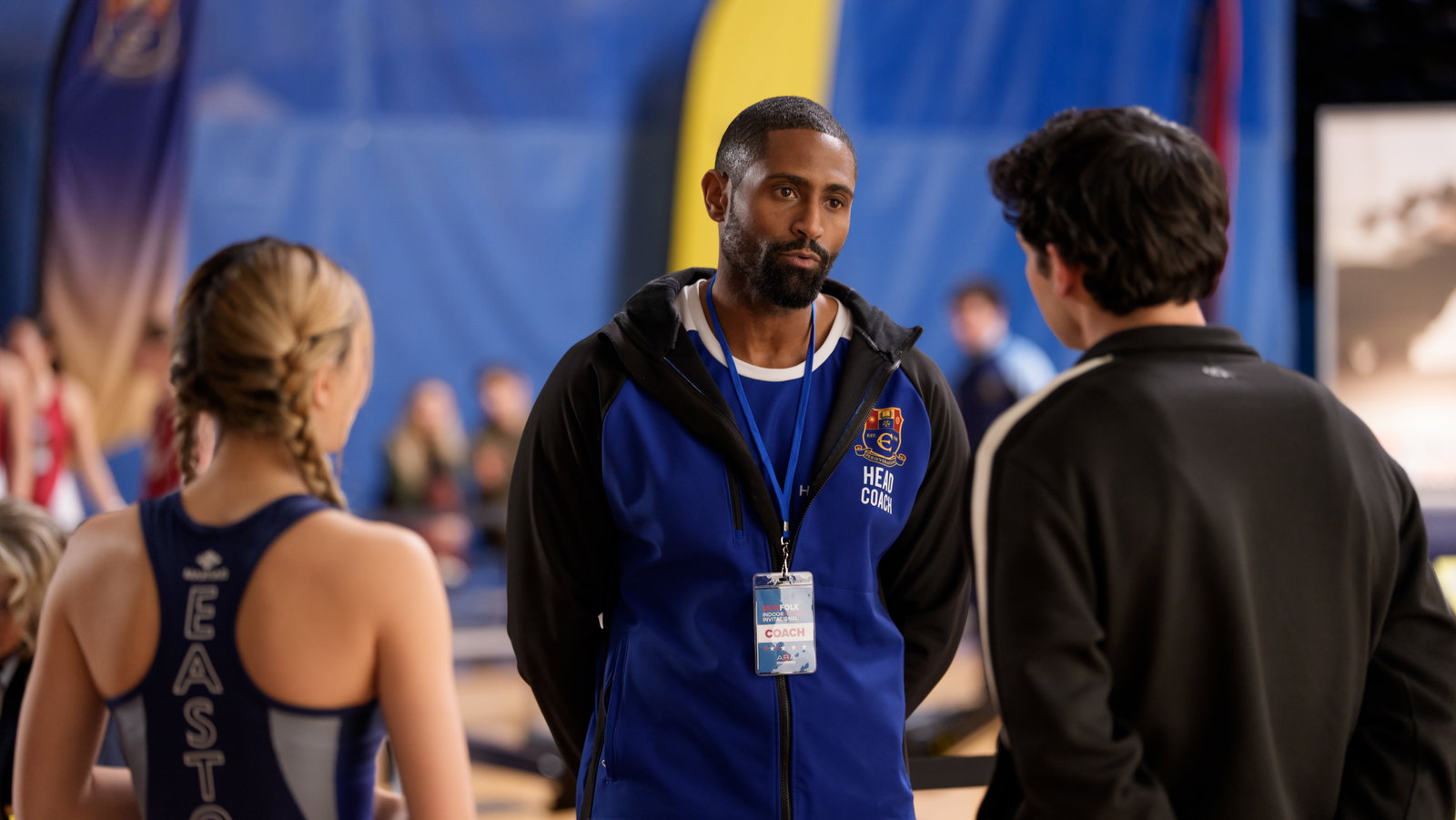
Miku Martineau as Teagan Tao in Crew Girl S1. (Photo Credit: Craig Minielly/Netflix)
Miku Martineau as Teagan Tao in Crew Girl S1. (Photo Credit: Craig Minielly/Netflix)
Aayush Sharma: Teagan's position as the only girl in an otherwise male varsity crew creates an interesting power dynamic. She isn't simply an outsider trying to fit into the team; she is actually placed in a leadership position over boys who may initially have very little reason to respect her. How did you want the series to explore the difference between being accepted by a group and earning authority within that group?
Vivian: There is an episode where we really dig into this. Obviously, there’s this idea that some of the boys don’t want to row for a girl, and we explore that. But then it becomes a question of all the shades in between: How do you earn their respect? How do you get them to see you as more than just the girl, the coxswain, or the outsider? There is a great example of that in Episode 3. I will give you the spoiler version. Teagan starts to realize that the whole point is that there is a team here. As a leader, you cannot just stand there and tell people what to do. You have to be accepted. You have to become part of the group. And even if the thing you have to do is childish or a little stupid, Teagan learns that sometimes you have to do it because that’s what makes you one of the guys, and therefore one of the team. It’s such a silly, childish thing, but it is also really fun.
That is part of what she has to learn: sometimes you have to humble yourself, let go a little bit, have fun, and actually join in. That is how you become part of a team, rather than simply trying to lead one.
Aayush Sharma: The family scandal is what forces Teagan to leave her old life behind, but the show doesn't seem interested in making that scandal her entire identity. How did you approach writing a teenager who is simultaneously dealing with public shame, family instability, academic pressure, athletic ambition, and the ordinary emotional chaos of being 16? Was it important to you that Teagan's biggest struggle ultimately be figuring out who she is beyond what happened to her family?
Vivian: I think it was. But I think we also dealt with the family scandal, and then the next step for Teagan was figuring out how to reconcile her feelings toward this person she loves, who shares the same passion for rowing and who shaped so much of who she is. Her love of rowing came from her dad. So how do you reconcile the fact that someone who instilled so much in you, and helped form so much of who you are, has also completely abandoned you? We explored some of that and looked at how those feelings affect you as a teenager. Then, just when Teagan feels like she’s found her own footing and established her own world, he comes back and blows it all up. She’s suddenly forced to confront all the things she thought she had buried or put aside. And sometimes, those feelings have a way of resurfacing at the most unexpected and unfortunate moments.
Aayush Sharma: The love triangle between Teagan, Josh, and Cam could easily have become a conventional YA romantic device, but the two boys appear to represent very different worlds and personalities. When you were constructing that triangle, were you thinking less about “Who will Teagan choose?” and more about what each relationship reveals about the version of herself she is becoming? How did you make sure the romance remained connected to her larger coming-of-age story?
Vivian: I think my favorite love triangles are the ones where each character brings out a different side of the other person. With Josh, it felt instinctual. It wasn’t something Teagan had to think about. It was a gut reaction. The thing that brings Teagan and Josh together is that the kid gloves are off. They don’t have to treat each other delicately. They’ll just tell each other exactly what they think, how they’re feeling, whether they like something or don’t. There’s something really appealing about that because it brings out a side of Teagan where she doesn’t have to be inhibited.
And then with Cam, it’s more about who she wants. They have so much in common. They’re both rowers, they’re both underdogs, and they’re both struggling in their own ways. So there’s this sense of community with Cam. That relationship brings out something different in her: camaraderie, comfort, friendship, and, of course, chemistry. So she kind of waffles back and forth between the two. Ultimately, the question becomes: Who does she need to be, or who does she want to be? And I think that answer is what ultimately informs her choice.
Credits: Craig Minielly/Netflix
Credits: Craig Minielly/Netflix
Aayush Sharma: The setting itself seems to play a major role in the series, particularly the contrast between California and the East Coast environment Teagan is suddenly dropped into. How much did the locations influence the visual identity of the show? Did you deliberately use architecture, weather, water, landscapes, and the physical distance between spaces to communicate Teagan's feeling that she has been transported into someone else's world?
Vivian: Yes, we really built out Los Angeles as a world for her. We found the palm trees, the architecture, and all these little details that could give you a real sense of where she came from. Her house had this breezy, relaxed, and more accepting feeling to it. Then we wanted to transport her into this very different world at Easton Prep in Massachusetts, which is a little stiffer, more traditional, and more rigid. So we really used the setting to reflect that transition. The places she ends up in also feel different. There’s more of a working-class atmosphere, especially around the crab shack, and she’s very isolated in her mom’s childhood home. We used those locations to convey her sense of loss and the feeling that she’s been dropped into a strange new world where she has to find a new sense of belonging.
Aayush Sharma: I viewed Crew Girl as essentially Gossip Girl and Friday Night Lights on a boat, which is an interesting combination of heightened teen drama and grounded sports storytelling. How did you balance the heightened, sometimes soapy elements- romance, rivalry, secrets, and social status- with the physical realism and emotional authenticity of competitive rowing?
Vivian: I sort of feel like Crew Girl, in some respects, is a bit of a hybrid show. We really wanted to make sure the sports elements felt like a true sports show, while the teen soap elements still felt like a genuine teen soap. The goal was to make sure both sides of the show could satisfy the audience, while also giving us the freedom to move between those worlds and shoot where we wanted to. And it was really fun to play with that as a writer because you’d suddenly find yourself thinking, “Is this a teen soap moment with Josh, or is this a sports moment with Josh?” And when those two sides can inform each other, that’s when it becomes really exciting and inspiring.
Aayush Sharma: One of the most interesting aspects of a coming-of-age story is that the protagonist often begins by believing she knows exactly who she is, only to discover that identity is much more complicated. Teagan already sees herself as a rower when we meet her, but circumstances force her to reconsider that identity. What did you want her to understand about herself by the end of the season that she could not have understood at the beginning?
Vivian: I think at the beginning of the season, Teagan is very much in that mindset. When you’re a competitive rower, or any competitive athlete, you have to think about yourself. You have to be a little bit selfish because your body, your performance, everything is ultimately about you. That’s part of the job. And I think that is where Teagan starts. She never would have imagined that she could just be a coxswain, let alone fall in love with it or care so deeply about a team. She gets to a point where she cares about these people so much that she’s willing to risk everything she has in the sport just to help them. So I think that is really the surprise of her journey. She ends up learning something about her identity that she never expected to learn, and in the process, she discovers that being part of something bigger than herself can be just as meaningful as winning for herself.
Aayush Sharma: Finally, because Crew Girl is built around a sport where success literally depends on learning when to pull harder and when to trust the people around you, there is a larger metaphor running through the entire premise about control, trust, and letting go. Was that something you consciously built into the series from the beginning, or did the metaphor emerge organically as you and the writers developed Teagan's story? And ultimately, what does “finding your crew” mean to you in the context of growing up?
ADVERTISEMENT
Article continues below this ad
Vivian: I think those were very intentional because when you learn how to be part of a team, you have to let go a little. You have to let other people in, you have to trust them, and you have to build that trust. So there was a lot of conversation about where everyone stood with one another. Because it’s not just about Teagan and the team. It’s about all the members of the crew and their relationships with each other. Where are they connected, and where are those relationships broken? And then finding your crew becomes, in a way, finding your family, your found family. It’s about having each other’s backs, seeing each other through the hard times, and understanding what you’re willing to do for one another and what sacrifices you’re willing to make. Ultimately, you have your team, you have your championship, and then you have your family. And I think the season is really about Teagan discovering that all three can be deeply connected.
Crew Girl is now streaming exclusively on Netflix.
ADVERTISEMENT
Article continues below this ad
Have you watched Crew Girl yet? Let us know your thoughts.
ADVERTISEMENT

Edited By: Hriddhi Maitra
More from Netflix Junkie on Netflix News


ADVERTISEMENT