
INTERVIEW | ‘Lucky Strike’ Director Rod Lurie on WWII Accuracy, Scott Eastwood and Filming the Battle of the Bulge
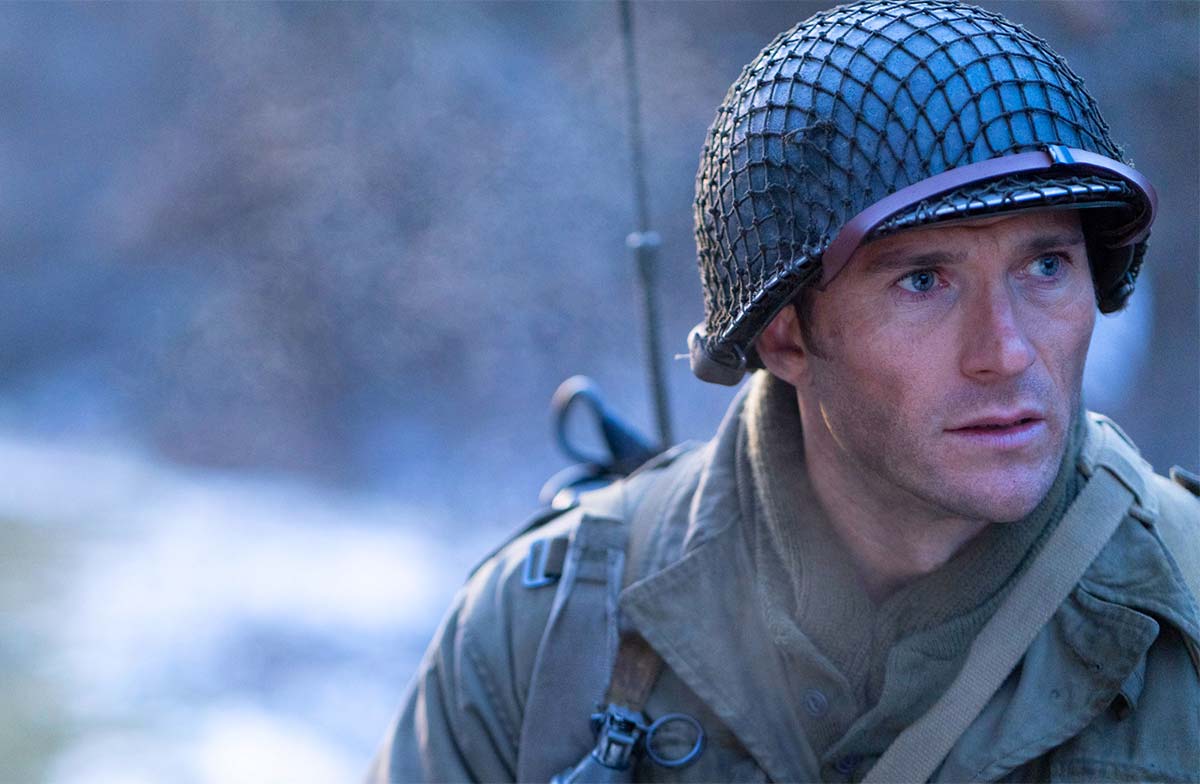
Scott Eastwood in a still from 'Lucky Strike' (Photo Credit: Roadside Attractions)
Scott Eastwood in a still from 'Lucky Strike' (Photo Credit: Roadside Attractions)
In 2019, filmmaker Rod Lurie stunned the world with the war film The Outpost and showed the world what army people go through while protecting their country from deadly terrorists. Almost seven years later, the director has returned to the genre with Lucky Strike, a story about an American soldier trying to make his way out of enemy territory during the Second World War. However, this film is unlike any other war film viewers have seen before. Most war films focus on explosions and large-scale battles. But Lucky Strike is different, and that is why it is so effective.
Set during the Battle of the Bulge in December 1944, the movie chronicles the journey of an American soldier named John Castle (played by Scott Eastwood), the lone survivor of a Nazi ambush. He gets trapped behind the enemy lines, and all he has is a field radio named Lassie and a pack of Lucky Strike cigarettes. With the clock ticking, Castle needs to do anything and everything to get himself out of a dangerous situation. The movie is all about one man's perseverance, and that is why Lucky Strike remains close to Castle, often putting viewers directly inside his fear and desperation.
In an exclusive interview with Netflix Junkie, director Rod Lurie opens up about the challenges of making a war film built around solitude, Eastwood's commitment to the role, and the importance of historical accuracy. He also discusses how focusing on Castle's point of view made this story feel immediate and intensely personal.
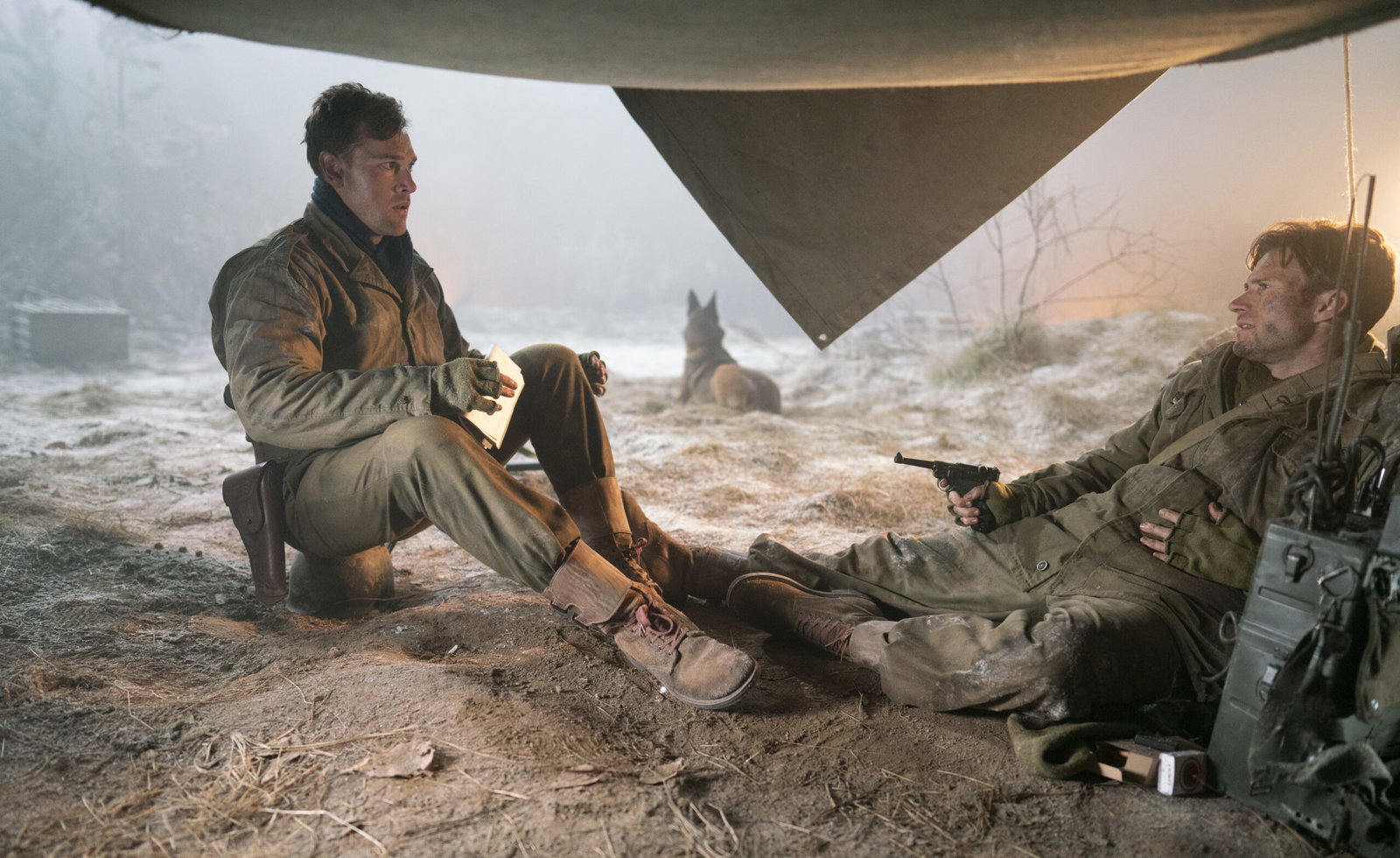
Scott Eastwood as John Castle in 'Lucky Strike' (Photo Credit: Roadside Attractions)
Scott Eastwood as John Castle in 'Lucky Strike' (Photo Credit: Roadside Attractions)
Aayush Sharma: One of the boldest creative decisions in Lucky Strike is that you've essentially built a war film around solitude rather than spectacle. With John Castle spending much of the narrative isolated behind enemy lines, how did you approach constructing dramatic tension without relying on constant dialogue or large-scale combat?
Rod Lurie: That's the first time I think I've gotten a question I've never heard before. That's a really good question. The answer is that if I'm going to focus on just one person, I have to make sure I stay as much as possible within that person's point of view. Once you start becoming objective, it stops being as interesting. So I try to keep his point of view in almost every shot of the film. There are a couple of exceptions, which is also why I wanted as many continuous shots with him as possible, unobstructed by cuts. For example, at the beginning of the movie, he's climbing up to a sniper's nest. We follow him, we follow him, we follow him, and we don't cut away for a long time.
There's another scene where he's climbing over rubble to go and kill some Nazis inside a house. Again, we follow him, we follow him, we follow him, and we stay in that shot for a very long time. I think that's the secret to successfully creating tension. Once you cut away, the audience knows they're watching a movie. But when you don't cut away, it's almost like they're witnessing it with their own eyes. That's really what I'm going for. I just made a Western in Calgary called The Horseman. It stars Barry Pepper and Kiefer Sutherland, and I'm trying to do the same thing there. I'm trying to keep as much of it in single, uninterrupted shots as possible. That was true of The Outpost as well. We used that approach all the time.
Aayush: The film unfolds almost like a survival thriller while never losing sight of the psychological scars of war. As a director, how did you balance the external geography—the forests, ruined villages, enemy patrols—with Castle's internal emotional landscape? Were there specific choices in lensing, camera movement, or shot composition that evolved alongside the character's deteriorating mental and physical state?
Rod: There is a scene in the movie where he is lying among dead Nazis as some other Nazis come to get him. And again, we keep that from his perspective as much as possible. So I think that we either see what he's going through, or we see what he sees. We use very wide lenses and a close-up in that case to give a sort of discombobulated look to his face and to what people are looking like. We are trying to enter into his psychology through the choice of camera lenses there. These are very good questions, because that's exactly what we're trying to do. Another question nobody has asked.
Aayush: The Battle of the Bulge has been portrayed in cinema numerous times, yet every filmmaker has to decide where historical authenticity ends and cinematic interpretation begins. During development, were there moments where you deliberately resisted the temptation to dramatize history because the truth itself was more powerful? How do you navigate that responsibility when directing a film rooted in real historical events?
Rod: That is a really good question. My writing partner and the producer of the film with me, Marc Frydman, is a complete freak for World War II and really insists as much as possible on being as authentic as we possibly can. And he's a real historian of the Battle of the Bulge. I am, but not like him. We had historians with us, and also great writers about the Battle of the Bulge contributed to our education on it. The only time that we would veer away from authenticity was for practical things. For example, the tank that you see in the movie is an M3 Panzer, right? And in real life, the M3 Panzers were mostly obsolete. There were a few in the Battle of the Bulge. They usually had M4s or the Tigers, but all we could get was an M3.
So it was very difficult to get that, and those are the areas where we had to take some liberties. We were sort of forced to do that. But, you know, the weather that we show in the film was pretty precise. The use of the radio is pretty precise. We maybe gave it more range than it actually had. And, you know, him trying to race to the Elsenborn Ridge, which is the rally point, is pretty precise. It's a pretty precise movie, I would say.
Aayush: Scott Eastwood carries an enormous amount of the film on his shoulders, often communicating through physical presence more than dialogue. What surprised you most about working with Scott as an actor, and how did the two of you develop Castle's emotional arc so that audiences could understand his fear, resilience, and exhaustion through subtle behavioral choices rather than exposition?
Rod: Nothing really surprised me because I had done a very big film with him where he basically went through the same thing. The thing about Scott is that Scott wants to do almost all his own stunts. I think he did all his own stunts in this film. And also, this guy never left the set. He never went back to his trailer, not once. And we were freezing our asses off on this film. It was terrible. We were in Bulgaria, on a mountaintop in December. It absolutely sucked shit. But he stuck it out with us because he knew that if he went back to his trailer and had to wait for the next shot, it would add a half hour or an hour to every day, which we didn't have. So, you know, he just went through everything that the crew and I went through.
You know, that is not something that movie stars do. In fact, I'll tell you something. At first, Scott said no to the film. And so, obviously, we went to a couple of other actors. And the reason why we didn't get them is that they didn't want to deal with how difficult this movie was going to be. You know, you keep hearing about how actors tough things out. I have, and that is true. The actors who do this stuff tough it out, but there are a lot of people who are turning down roles.
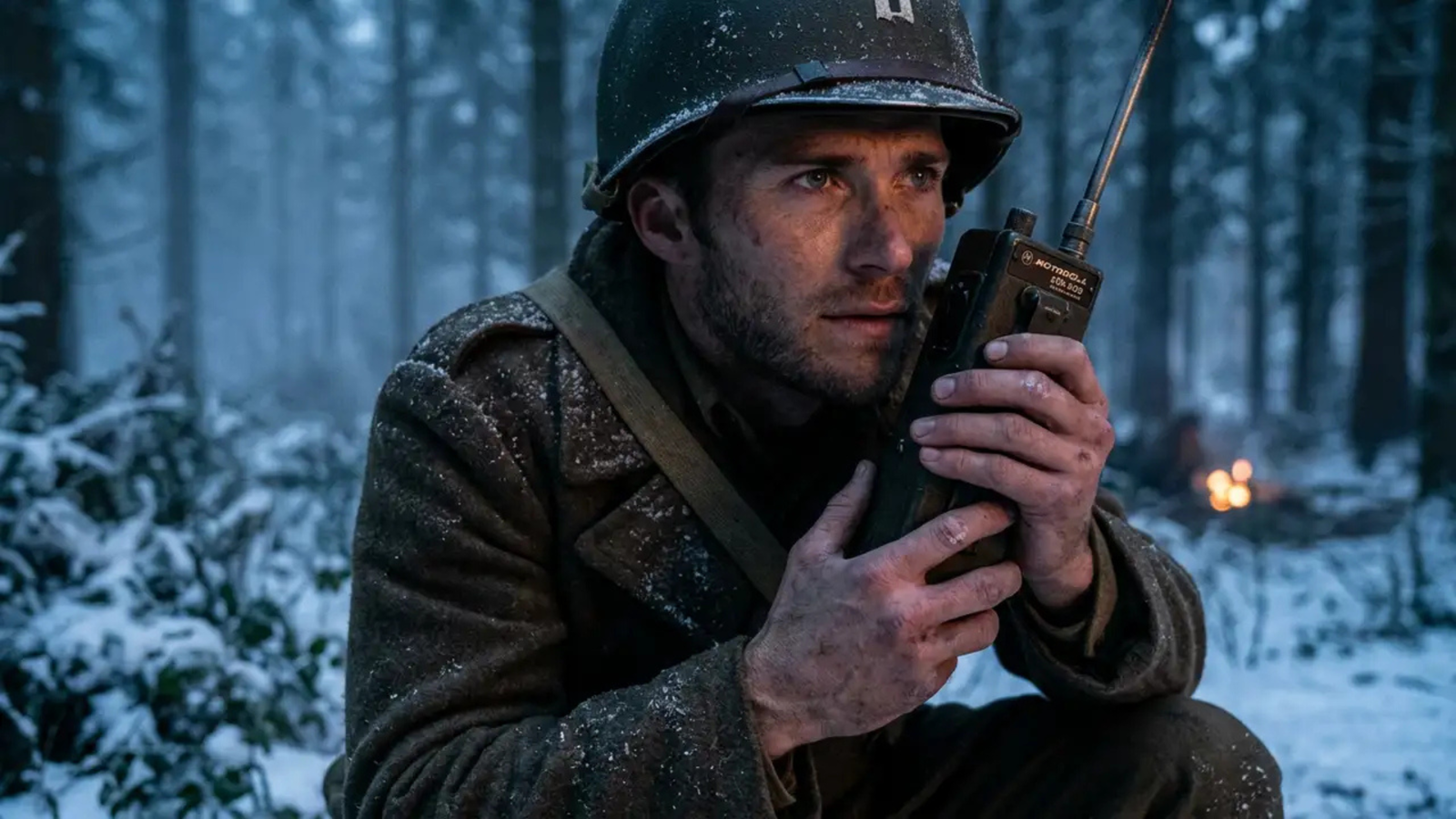
Scott Eastwood as John Castle in 'Lucky Strike' (Photo Credit: Roadside Attractions)
Scott Eastwood as John Castle in 'Lucky Strike' (Photo Credit: Roadside Attractions)
Aayush: One of the fascinating aspects of the film is how ordinary objects—a field radio and a pack of Lucky Strike cigarettes—gradually become emotional anchors rather than simple props. How closely did you work with your production designer, cinematographer, and editor to ensure these recurring elements accumulated symbolic weight throughout the story instead of feeling like narrative devices?
Rod: We knew that they were really important, and everybody who was involved was really aware of it. Like, you know, our editor, for example, and our prop master, they realized that we needed to have the Lucky Strike logo be large on the cigarettes. And our DP had to come with lenses that were so tight, or use diopters, so that you could see the logo. And not only that, you can see the logo burning off, right? And so we were very cognizant about that from the start. And Lorenzo Senatore, our DP, always made sure that the radio was front and center and that we always centered it in the film. That was really important to us. I am glad you caught that.
Aayush: You have directed political dramas, military stories, and character-driven films throughout your career, but Lucky Strike feels almost minimalist in its storytelling approach. Looking back now, was there a particular sequence that became your greatest directing challenge—not because of logistics, but because it demanded every department, from cinematography and sound design to performance and editing, to work in complete harmony?
Rod: I would say that there are some of the sequences in The Outpost and in Lucky Strike that required everybody to be completely on their toes. Like in Lucky Strike, there is a scene where he's in a farmhouse and the bad guys come in. He's got to jump out of the cellar. He has to take them all out. He has to hide the girl. He has to run outside. He has to kill another person, check on someone who's been shot, and climb up into the tank and go into the tank. How we pull that off, you know, well, I do know, but it was very difficult to get. But the harmony required to pull that off is amazing. And the actor has to remain completely in character.
This was very evident in The Outpost in a couple of sequences that Caleb Jones was in, where I think Caleb Landry Jones gives the best combat performance in the history of cinema. I do not mean the best performance in a war film, the best combat performance, you know. And my God, it's amazing. But that really does require total harmony with all the departments.
Lucky Strike is available on Digital.
Have you seen Lucky Strike? Let us know your thoughts.

Edited By: Aayush Sharma
