
Who Is Performing at the FIFA World Cup Halftime Show 2026? Star Power and Ceremonies Explained
via Imago
Credits: Imago
The FIFA World Cup stands as the pinnacle of global football, uniting nations in a tournament that transcends sport to become a cultural and emotional spectacle watched by billions. First held in 1930, it has evolved into the world’s most prestigious sporting event, symbolizing competition, identity, and unity on a planetary scale. With the 2026 edition expanding its scale and entertainment ambitions, FIFA is elevating the experience beyond the pitch, introducing large-scale opening ceremonies and a Super Bowl-style halftime show during the final.
This fusion of sport and global music culture marks a new era where football’s biggest stage becomes a shared celebration of athletic drama and star-powered performance. Against this backdrop, a lineup of globally renowned performers is set to take center stage at the FIFA World Cup Halftime Show, making this one of the most anticipated entertainment moments of the tournament.
The star power behind FIFA’s biggest halftime ceremony
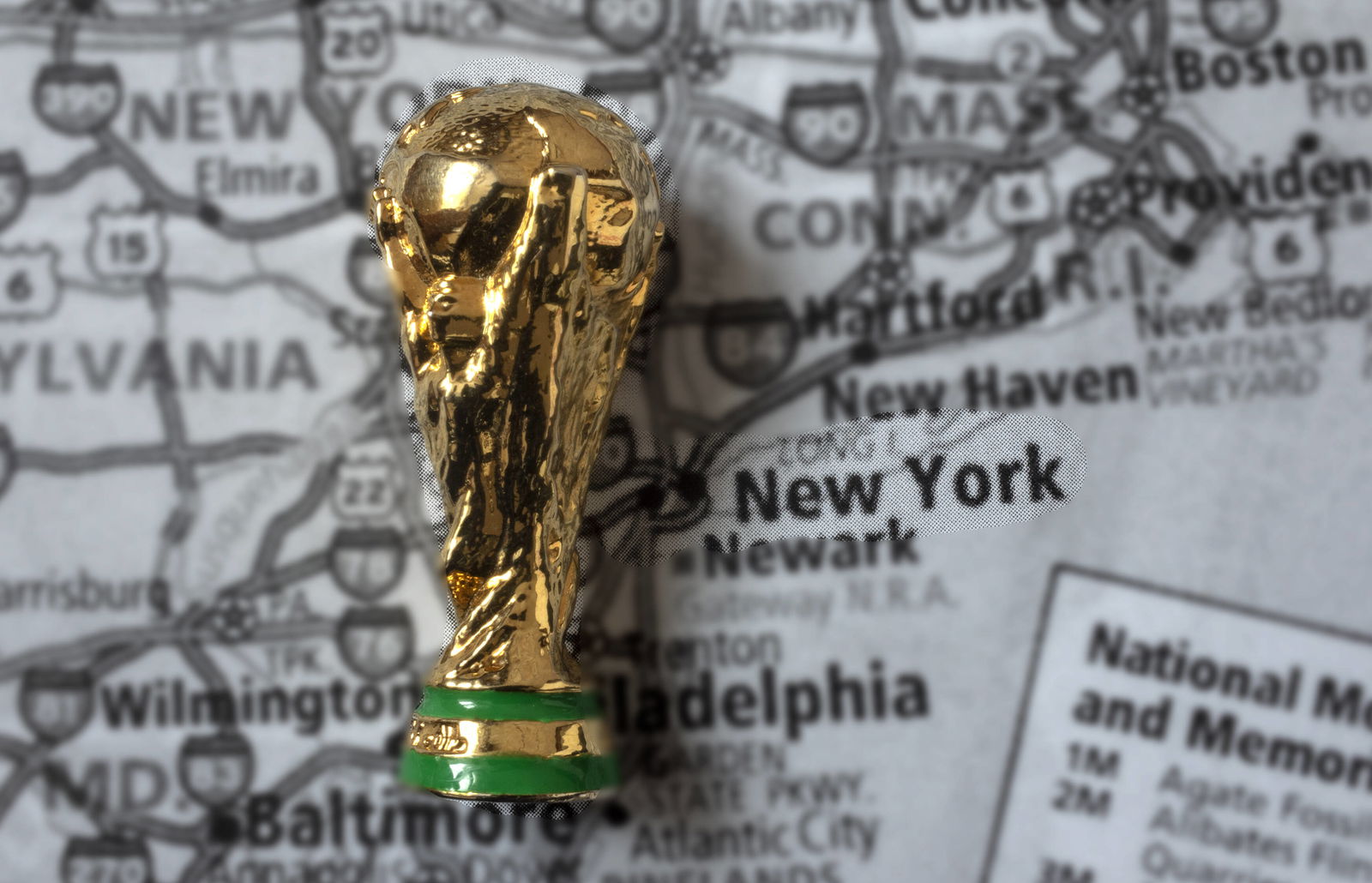
The star power behind FIFA’s historic, first-ever World Cup Final Halftime Show, scheduled for July 19, 2026, at the New York New Jersey Stadium (MetLife Stadium), represents a bold expansion of how football’s biggest night is experienced. For the first time, FIFA is transforming the final into a hybrid of sport and global entertainment, bringing together world-famous artists, visionary creators, and large-scale production teams to deliver a Super Bowl-style spectacle on football’s grandest stage. What unfolds is not just a halftime break, but a curated cultural moment designed for a global audience of billions.
At the center of the lineup is Shakira, the Colombian superstar whose long-standing relationship with World Cup history makes her a natural fit for the stage. Known for electrifying performances and iconic football tournament anthems, she is expected to deliver a performance that blends nostalgia with high-energy global pop appeal. Reports suggest she will perform her World Cup track 'Dai Dai,' reinforcing her deep connection to the tournament’s musical legacy.
Joining her is Madonna, often referred to as the “Queen of Pop,” whose influence spans decades of music, fashion, and performance innovation. Her inclusion signals FIFA’s intent to elevate the halftime show into a true pop-culture landmark, with a performer known for pushing boundaries and commanding massive global stages. Her presence adds a generational bridge between classic pop dominance and modern stadium-scale entertainment.
Completing the headline trio is BTS, the global K-pop phenomenon whose impact on international music culture is unmatched in the modern era. Their appearance marks a symbolic return to large-scale global performances following the completion of their military service obligations. With a reputation for precision choreography, emotionally driven music, and massive fan engagement, BTS brings a new digital-age energy to the World Cup stage.
Adding another layer to the spectacle are several beloved educational and entertainment characters who will appear as special guests during the show. In a move that directly connects the performance to the FIFA Global Citizen Education Fund, FIFA has confirmed that characters from Sesame Street will participate in the event. For generations, Sesame Street's Muppets have promoted childhood learning and educational development, making their inclusion a natural fit for a halftime show centered around expanding access to quality education worldwide.
The celebration will also feature The Muppets, including iconic characters such as Kermit the Frog, Miss Piggy, and members of the classic Muppet gang. Their appearance is intended to reinforce the show's educational mission while bringing a sense of nostalgia and family-friendly entertainment to one of the largest audiences ever assembled for a live performance. By incorporating characters that have inspired generations of children, FIFA and Global Citizen are emphasizing that the event's legacy extends far beyond music and football.
Together, the performers and guests confirmed by FIFA transform the FIFA World Cup 2026 Final Halftime Show into more than a celebrity showcase. It becomes a celebration of culture, education, and global unity, reflecting the tournament's broader ambition to leave a lasting impact long after the final whistle has blown.
Inside the creative team redefining World Cup entertainment
Behind the performances of the FIFA World Cup 2026 Final Halftime Show is a globally assembled creative team designed to transform football’s biggest match into a full-scale cultural broadcast event. At the core of the creative vision is Chris Martin, frontman of Coldplay, who serves as the official curator of the show. In this role, Martin is responsible for shaping the artistic direction and overall tone of the performance rather than performing himself.
His curatorial approach centers on a unifying theme of “togetherness,” bringing together artists from different genres, cultures, and generations to reflect the global nature of the World Cup. According to FIFA, the intention is to create a moment that feels inclusive and emotionally connected to audiences worldwide, reinforcing football’s role as a shared global language.
The broadcast and live production are led by Hamish Hamilton, one of the most experienced directors in large-scale global entertainment. Hamilton is widely known for directing the London 2012 Olympic opening ceremony as well as multiple Super Bowl halftime shows, giving him deep expertise in translating stadium performances into cinematic broadcast experiences. His role ensures the halftime show is not only a live spectacle for fans inside the stadium, but also a tightly choreographed global television event designed for billions of viewers across different platforms and time zones.
On the production side, the event is handled by Global Citizen, working in partnership with Live Nation and Done + Dusted. Global Citizen’s involvement goes beyond entertainment production, as the organization is known for integrating large-scale advocacy campaigns with live music events. For the World Cup final, the halftime show is directly tied to the FIFA Global Citizen Education Fund, an initiative aimed at raising funds to expand access to quality education for children worldwide.
A portion of proceeds, including contributions linked to ticket sales, supports this mission, making the show both a performance and a philanthropic platform. Together, this creative team forms the backbone of what FIFA is positioning as a new era of World Cup entertainment.
More than entertainment: the mission behind the Halftime show
Unlike most halftime spectacles, the FIFA World Cup 2026 Halftime Show is designed to achieve something bigger than entertainment. While the performances from global superstars will undoubtedly capture worldwide attention, the event also serves as the launchpad for a major humanitarian initiative: the FIFA Global Citizen Education Fund.
Created to leverage the unparalleled reach of the World Cup, the fund aims to address critical gaps in childhood education and access to sports opportunities around the world. FIFA and Global Citizen have set an ambitious target of raising USD 100 million by the conclusion of the World Cup Final on July 19, 2026. Funding comes from multiple sources, including a mandatory USD 1 contribution from every World Cup match ticket sold, proceeds from FIFA Club World Cup initiatives and FIFA Collect, as well as support from major corporate and philanthropic partners.
The money raised is split equally between two key areas. Half is allocated to grassroots grants that support community-based nonprofit organizations working in some of the world's most underserved regions. These grants help fund educational programs, youth development projects, and opportunities for children who often face significant barriers to learning. The remaining half supports FIFA Football for Schools (F4S), a joint initiative between FIFA and UNESCO that integrates football into educational systems across more than 200 countries, using the sport as a tool to teach life skills, promote inclusion, and encourage school participation.
The impact is already being felt. Dozens of grassroots organizations across multiple countries have received funding to support projects ranging from youth empowerment and educational access to specialized learning services and community development programs. By connecting the world's most-watched sporting event with a global education initiative, FIFA is attempting to transform the halftime show from a brief entertainment intermission into a platform for meaningful change.
To ensure transparency and strategic oversight, the fund is guided by an advisory board featuring leaders from sports, entertainment, and philanthropy, including FIFA President Gianni Infantino, Global Citizen CEO Hugh Evans, Shakira, The Weeknd, Hugh Jackman, and Ivanka Trump. Beyond the halftime spectacle, FIFA World Cup 2026 has redefined tournament traditions with a series of historic firsts, including separate opening ceremonies in the United States, Canada, and Mexico.
FIFA World Cup 2026 triple-country opening celebration
While much of the attention surrounding the FIFA World Cup 2026 has focused on the historic Final Halftime Show, the tournament has already made history with another unprecedented milestone. For the first time in World Cup history, FIFA launched the competition with a "Trilogy of Opening Ceremonies" spread across all three host nations: Mexico, Canada, and the United States. Held on June 11 and June 12, the ceremonies transformed the opening days of the tournament into a continent-wide celebration of football, culture, and music.
Produced by renowned creative director Marco Balich, each ceremony was built around a shared concept that reimagined the FIFA World Cup Trophy through the unique cultural identity of its host nation. While connected by a common vision, each event showcased distinct artistic traditions, musical performances, and storytelling elements that reflected the diversity of North America.
The festivities began in Mexico City at the iconic Estadio Azteca, where Mexico opened its World Cup campaign with a 2-0 victory over South Africa. The ceremony paid tribute to traditional Mexican artistry, incorporating vibrant papel picado designs and indigenous folkloric influences. Music took center stage as Shakira and Burna Boy performed the official World Cup anthem 'Dai Dai' together live for the first time. The celebration also featured performances from Mexican music legends Maná, Los Ángeles Azules, Alejandro Fernández, J Balvin, Belinda, Lila Downs, Danny Ocean, and Ryan Castro, creating a showcase of both traditional and contemporary Latin music.
The following day, the spotlight shifted to Toronto's BMO Field for Canada's opening ceremony before Canada's 1-1 draw against Bosnia and Herzegovina. Embracing the theme of a "Cultural Mosaic," the production celebrated the country's multicultural identity through a coast-to-coast visual journey. Actor and comedian Will Arnett welcomed fans as FIFA's official ambassador, while performers including Alanis Morissette, Michael Bublé, Alessia Cara, Jessie Reyez, Nora Fatehi, Elyanna, Vegedream, and William Prince highlighted the diversity of Canada's music scene.
Later that evening, SoFi Stadium in Los Angeles hosted the United States opening ceremony before the USA's commanding 4-1 victory over Paraguay. Built around immersive visuals, digital storytelling, and global pop culture influences, the event featured a star-studded lineup led by Katy Perry. She was joined by Future, Anitta, LISA of Blackpink, Rema, and Tyla, whose appearance marked her second performance of the opening-ceremony trilogy. These ceremonies mark a historic evolution of the World Cup experience, turning the tournament into a multinational celebration that matched the unprecedented scale of the first 48-team FIFA World Cup.
Which FIFA World Cup 2026 halftime show performer are you most excited to see? Let us know in the comments.

Edited By: Adiba Nizami
