
Where Was ‘The Odyssey’ Filmed? Every Location Chris Nolan’s Greek Epic Touched Down
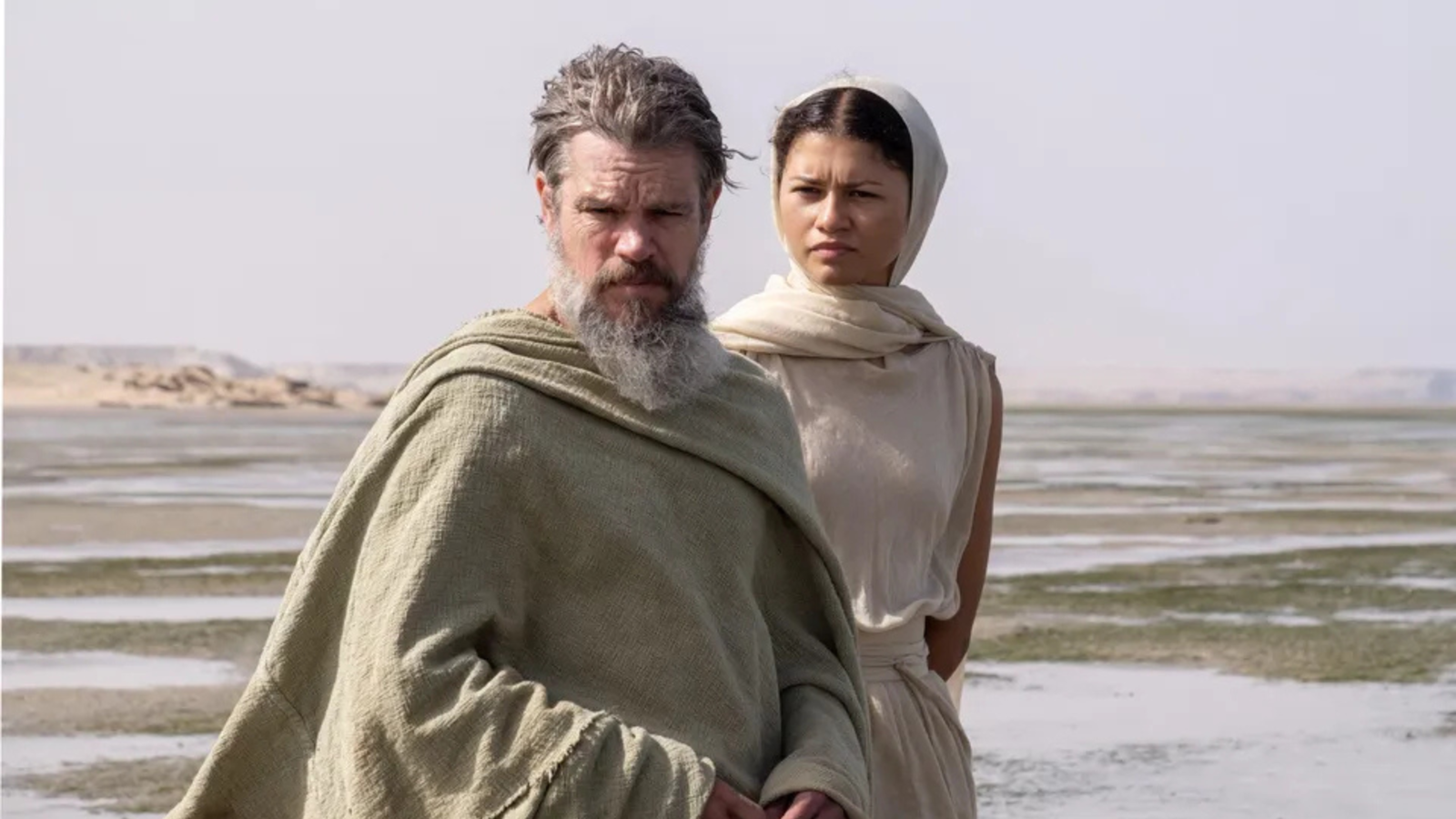
Credits: Universal Pictures
Credits: Universal Pictures
Christopher Nolan's Greek mythology epic The Odyssey is generating buzz not just for its star-studded cast, but also for the breathtaking real-world locations that bring Homer's legendary voyage to life. Fans have been praising the production's commitment to practical filmmaking, with Nolan once again choosing authentic landscapes over CGI-heavy environments. By seeking out authentic landscapes that echo the ancient world, the filmmaker aims to ground Homer's timeless tale in tangible realism.
That dedication to practical locations has only fueled anticipation, with many believing The Odyssey could become one of Nolan's most visually immersive and ambitious films to date. So, where exactly did Nolan and his cast travel to recreate Odysseus' legendary journey?
Greece
To recreate the world of The Odyssey, Christopher Nolan turned to the Peloponnese, the historic heartland of Mycenaean civilization, allowing Homer's epic to unfold against landscapes that have echoed through Greek history for centuries. Rather than relying on CGI, the production embraced towering fortresses, untouched coastlines, ancient caves, and picturesque harbors, grounding the film in the authenticity of real locations.
Among the region's standout settings were Acrocorinth, whose imposing hilltop fortress doubled as the grand palace of Ithaca, and the sea-bound Methoni Castle, where its monumental battlements and iconic octagonal tower added striking visual scale. Pylos Harbor was transformed into a bustling naval hub with a fully functional 37-meter trireme rowed by trained extras. At the same time, the crescent-shaped Voidokilia Beach served as the backdrop for a pivotal shipwreck sequence.
Just above it, the secluded Nestor's Cave provided the eerie setting for scenes involving the Cyclops, Polyphemus, with nearby Almyrolakkos Beach hosting additional coastal sequences.
At the center of the Greek production was Costa Navarino, which served as the operational base throughout the extensive shoot. The luxury resort housed the film's star-studded cast, including Matt Damon, Tom Holland, Anne Hathaway, and Robert Pattinson, while its strategic location allowed the crew to move efficiently between the surrounding beaches, castles, and archaeological sites. Its protected coastline, rolling olive groves, and sweeping Ionian vistas also provided many of the film's expansive landscape shots with little need for digital enhancement.
The choice of Costa Navarino carried symbolic weight as well. Located near the ancient Palace of Nestor, the region directly connects to Homer's narrative, where Telemachus journeys to Pylos in search of news about his father.
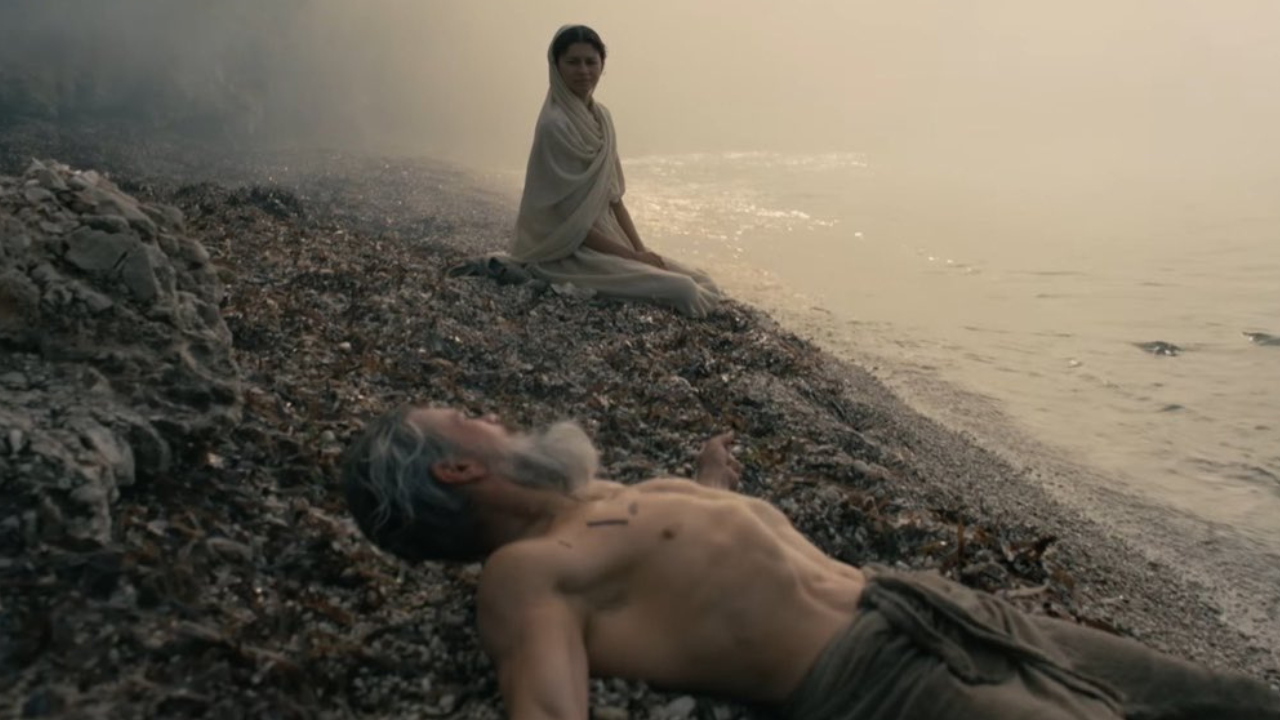
Following production, the destination has embraced its cinematic legacy with mythology-inspired experiences, inviting visitors to step into the same landscapes that now bring Nolan's ambitious adaptation of The Odyssey to life.
Italy
Italy's dramatic coastlines and volcanic islands became the perfect stage for the supernatural and elemental dangers that define Odysseus' long voyage home. Spanning Sicily's western shores and the Tyrrhenian volcanic arc, Christopher Nolan once again favored real landscapes over digital spectacle, using rugged islands, ancient fortresses, and active volcanoes to capture the mythical world with remarkable authenticity.
Much of the Italian shoot was centered around Favignana and the Egadi Islands, where the production spent nearly eight weeks filming with a crew of around 500 people. Long associated with literary theories identifying it as Homer's legendary "Goat Island," Favignana served as the setting for Odysseus' stop before encountering the Cyclops. The secluded Cala Rotonda became a hub for practical marine photography, with temporary pontoons and crystal-clear underwater IMAX sequences, while the untouched shores of nearby Preveto Island were used for the hero's cautious first explorations.
Overlooking the island, the Castle of Santa Caterina offered sweeping panoramic views that Nolan used to establish the scale and isolation of Odysseus' journey. Rather than creating expansive landscapes through CGI, the production climbed the fortress' rugged heights to capture vast, uninterrupted horizons that emphasized the loneliness of the voyage. The production then moved to the volcanic Aeolian Islands, where nature itself became part of the storytelling.
Lipari's towering pumice cliffs represented the realm of Aeolus, while Vulcano's smoking craters, sulfur-filled air, and black-sand beaches created an unsettling atmosphere worthy of mythical danger. Nearby, the dramatic pairing of Basiluzzo and the constantly erupting Stromboli allowed Nolan to frame ancient ships against real fire-spewing volcanoes, grounding the wrath of the gods in one of Earth's most extraordinary natural landscapes.
Morocco & Western Sahara
For the film's opening chapters, Christopher Nolan headed to Morocco and Western Sahara, where sun-scorched deserts, fortified cities, and the untamed Atlantic coastline provided the raw textures needed to bring the fall of Troy and Odysseus' first uncertain steps into the unknown to life. Staying true to his practical filmmaking philosophy, these landscapes became living sets rather than digital recreations, giving the ancient world a tangible sense of scale.
The production's centerpiece was Aït Benhaddou in Ouarzazate, the iconic UNESCO-listed ksar whose earthen architecture became Nolan's reimagined city of Troy. Rather than using the fortress as a simple backdrop, the production expanded and modified sections of the historic settlement to accommodate sweeping 360-degree battle sequences on IMAX cameras. One of the film's biggest practical achievements also unfolded here, with a colossal wooden Trojan Horse built on location and thousands of local extras brought together to recreate the city's fiery downfall.
From there, filming shifted to the Atlantic port of Essaouira, where towering stone ramparts and powerful ocean swells captured the perilous beginning of Odysseus' voyage. Instead of calm, controlled waters, Nolan embraced the unpredictable Atlantic, filming ancient ships battling real waves to evoke the relentless fury of Poseidon. The harsh conditions added a level of realism that visual effects alone could never replicate.
The journey then continued to Al-Dakhla in Western Sahara, where vast Saharan dunes meet the Atlantic Ocean in one of the world's most striking landscapes. The endless meeting of sand and sea became a visual metaphor for the crew's growing isolation as they ventured into uncharted territory, while the production's willingness to transport heavy IMAX equipment across the unforgiving desert further reflected Nolan's commitment to capturing epic mythology through real, extraordinary places.
Scotland (UK)
Scotland brought a striking shift in atmosphere to The Odyssey, replacing sunlit Mediterranean landscapes with mist-covered cliffs, windswept coastlines, and the cold expanse of the North Sea. Christopher Nolan used the rugged beauty of Aberdeenshire and Moray to portray the remote edges of the ancient world, where Odysseus ventures into lands that feel mysterious, unforgiving, and untouched by civilization. Among the production's most haunting locations was Findlater Castle, whose dramatic ruins sit atop a rocky cliff overlooking the sea.
The medieval fortress became the setting for Odysseus' journey toward the underworld, with its natural fog, sheer drops, and weathered stone creating an ominous backdrop that required little digital enhancement. Rather than recreating the environment in a studio, Nolan expanded the site with practical structures, allowing key scenes featuring Matt Damon to unfold against Scotland's raw coastal landscape.
The surrounding Moray Firth coastline further emphasized the isolation of the voyage. Burghead Harbour served as a launch point for large-scale maritime sequences, while the sweeping shores of Sunnyside Beach captured the harsh landings and uncertain arrivals of Odysseus' weary crew. At nearby Buckie Harbour, the production also employed the Draken Harald Hårfagre, the world's largest modern-built Viking longship. Though historically distinct from ancient Greek vessels, its immense scale, handcrafted timber construction, and fully operational rigging gave Nolan the physical realism he sought, with the ship's experienced sailing crew assisting throughout filming.
Away from the coastline, Culbin Forest offered yet another distinctive landscape, where dense pine woodland rises from vast coastal dunes. The unusual blend of forest and shifting sands created an otherworldly setting for the crew's overland journey, reinforcing the feeling that Odysseus had wandered far beyond the familiar world. Together, Scotland's dramatic locations added a darker, more atmospheric dimension to Nolan's practical vision of The Odyssey.
Iceland & Malta
From Iceland's frozen volcanic wilderness to Malta's world-class marine production facilities, these two locations allowed Christopher Nolan to explore two opposite sides of The Odyssey's mythical world. One offered vast, untouched landscapes that felt almost otherworldly, while the other provided the technical precision needed to capture the dangers of the sea with practical filmmaking at an unprecedented scale.
In Iceland, Nolan ventured into the country's stark volcanic terrain to create the haunting atmosphere of the Underworld. Hjörleifshöfði Mountain and its surrounding black-sand beaches provided a naturally ominous setting, with the towering rock formation and dark coastline creating the sense of an entrance into the realm of the dead. The production also utilized the icy channels of the Markarfljót River, where glacial waters cutting through volcanic landscapes added to the feeling of a harsh, mysterious journey beyond the boundaries of the known world.
The Icelandic Highlands further enhanced the film's sense of isolation, with vast glaciers and frozen landscapes bringing a supernatural scale to Odysseus' most challenging moments. Rather than building these environments digitally, Nolan relied on the country's raw geological beauty, allowing the silence, cold, and emptiness of the terrain to become part of the story itself.
In contrast, Malta provided a controlled environment for the film's most demanding maritime sequences. The Mediterranean Film Studios in Kalkara, home to some of the world's largest water tanks, allowed the crew to capture intense underwater photography, shipwrecks, and close-range ocean battles using practical effects and IMAX cameras. Beyond the studio, Malta's dramatic limestone cliffs and natural sea formations added further coastal textures, seamlessly expanding the film's mythic seascapes and completing Nolan's vision of a world where nature itself becomes a character.
While The Odyssey is defined by its breathtaking real-world locations, the production also relied on controlled studio environments when needed. At the Universal Studios Lot in California, Nolan filmed intricate interior scenes, technical practical effects, and detailed ship cabin sequences, combining the precision of soundstages with the authenticity of global landscapes.
Which of these incredible locations from The Odyssey do you think is the best? Let us know in the comments.

Edited By: Adiba Nizami
