
‘Vanished’ Ending Explained: Does Alice Monroe Prove Her Innocence? Is Hélène Lando Alive?

Endings usually either scream with fireworks or tiptoe out in socks, leaving everyone blinking in confusion. Vanished politely slides off like it owes no one an explanation, closing doors while making you wonder if anyone actually noticed who got out alive.
After four tightly wound episodes of romance curdling into suspicion and certainty dissolving into doubt, the series finale does not explode. It exhales. The result is an ending that answers its biggest questions while deliberately refusing emotional neatness, leaving viewers caught between relief and unease.
While Vanished technically resolves its mystery, the finale suggests that clarity and closure are not the same thing.
ADVERTISEMENT
Article continues below this ad
Vanished keeps answers clear but refuses to hand out emotional closure
The short answer is yes. Kaley Cuoco’s Alice Monroe proves her innocence, and Karin Viard’s Hélène Lando is alive. The police uncover the trafficked women and children, Alex (Matthias Schweighöfer) is arrested, and Alice is officially cleared of the conductor’s murder. Hélène is rescued and taken to the hospital.
On paper, justice is served. Yet Vanished refuses to frame this as a victory lap. The series immediately complicates its own resolution, reminding viewers that survival does not erase damage, and innocence restored does not undo what trust has cost.
The shipyard sequence functions as both climax and correction. Alice and Hélène confirm the container’s horrifying contents, which are captured and come frighteningly close to execution. Tom (Sam Claflin) intervenes to prevent their deaths, yet his role remains morally ambiguous, caught between conscience, survival, and secrets too deep to escape.

He is not revealed as a clean undercover operative or heroic savior. Instead, he admits he was deeply caught up in the operation, aware of its corruption, desperate to get out, and unable to do so without evidence. This distinction matters. The show resists absolution.
By choosing this explanation, Vanished shifts from conspiracy fantasy to moral compromise. Tom is neither villain nor protector. He is someone who stayed too long in something he should have escaped earlier.
Alice’s innocence is proven legally, but emotionally, she remains implicated. She trusted him. She followed his shadow. The series frames innocence as procedural, not personal. The darkness lingers precisely because accountability never fully lands where viewers expect it to.
As the danger subsides, Vanished pivots from physical survival to emotional reckoning, and that is where the ending becomes most divisive.
Vanished resolves the plot quickly while addressing key character outcomes
The finale moves fast. Perhaps too fast. After episodes spent unraveling Tom’s secrets, the explanation arrives in a compressed burst of dialogue. Tom explains his entanglement, his fear, and his inability to leave without proof. Logically, it tracks. Emotionally, it barely breathes.
Alice absorbs betrayal, manipulation, and relief almost simultaneously. Critics have pointed out that the series prioritizes narrative efficiency over psychological realism, asking the audience to accept emotional processing that never fully appears on screen.
This pacing issue extends to Hélène’s survival. Her rescue is crucial, yet the aftermath is brief. The partnership that carried much of the series resolves quietly, without reflection on how close it came to ending violently.

The show seems more interested in moving pieces off the board than examining how those pieces have changed. What made their bond compelling earlier is precisely what the finale underutilizes: conversation and shared meaning after trauma.
The police resolution follows a similar pattern. Alice leads them back to the shipyard. The victims are initially gone. Procedure delays urgency once again. Eventually, the truth surfaces and arrests follow.
The system works, but only after individuals disobey it. This irony feels intentional, yet underexplored. The finale gestures toward critique without committing to it. As a result, the ending feels resolved in structure but incomplete in spirit.
If the finale feels emotionally unsatisfying, it is because Vanished is more interested in what Alice does next than what she feels now.
Vanished proves closure and survival are not always the same
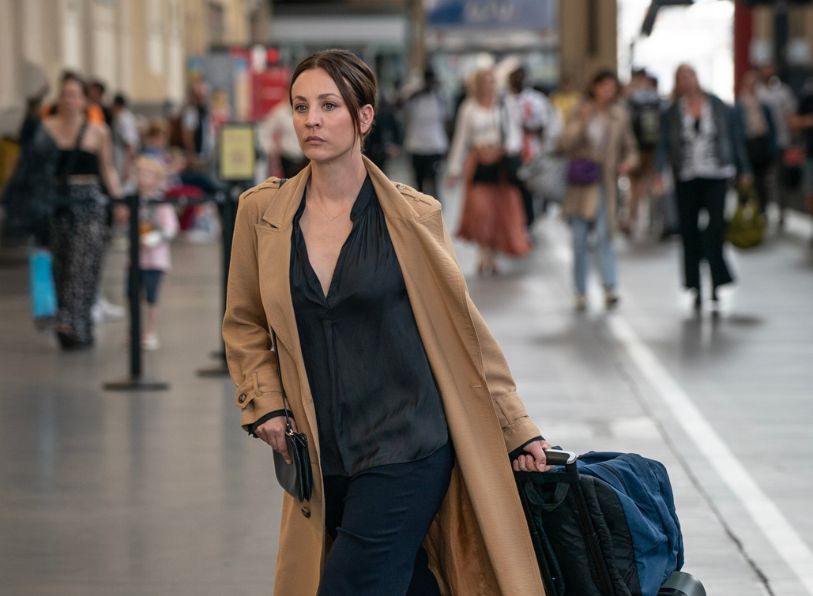
The most important moment in the finale is not the arrest or the rescue. It is Alice’s decision to leave. After a night of reconciliation with Tom, she disappears by morning. The note she leaves behind, "At least I had the good manners to leave you a fu----- note," is not an apology or a declaration; it is a boundary. Alice does not punish or forgive Tom. She just exits.
This departure reframes the entire series. Alice’s journey is not about uncovering who Tom truly is. It is about reclaiming agency after being placed inside someone else’s secrets. By leaving without confrontation, Alice refuses to continue participating in a story defined by omission and justification. The taxi scene is quiet, deliberate, and resolute. It suggests that self-preservation, not romantic resolution, is the series final thesis.
ADVERTISEMENT
Article continues below this ad
This choice also explains why the ending feels emotionally restrained. Vanished does not offer catharsis because Alice does not seek it. Closure would imply resolution through explanation. Instead, the series argues that some truths arrive too late to repair what they explain. Alice proves her innocence and survives the conspiracy, but she does not reclaim the life she imagined. The ending honors that loss by refusing sentimentality.
Vanished ends by answering its mysteries while denying emotional comfort. Even when Alice emerges innocent, and Hélène survives, the consequences linger. The fairy-tale French romance flips dark fast when surviving and winning do not fix broken trust.
ADVERTISEMENT
Article continues below this ad
What are your thoughts on Vanished’s dark French finale, Alice’s bold departure, and Hélène Lando’s survival? Let us know in the comments below.
ADVERTISEMENT

Edited By: Hriddhi Maitra
ADVERTISEMENT
ADVERTISEMENT
