
Top 10 Movies With Record Single-Day Earnings on the Fourth of July
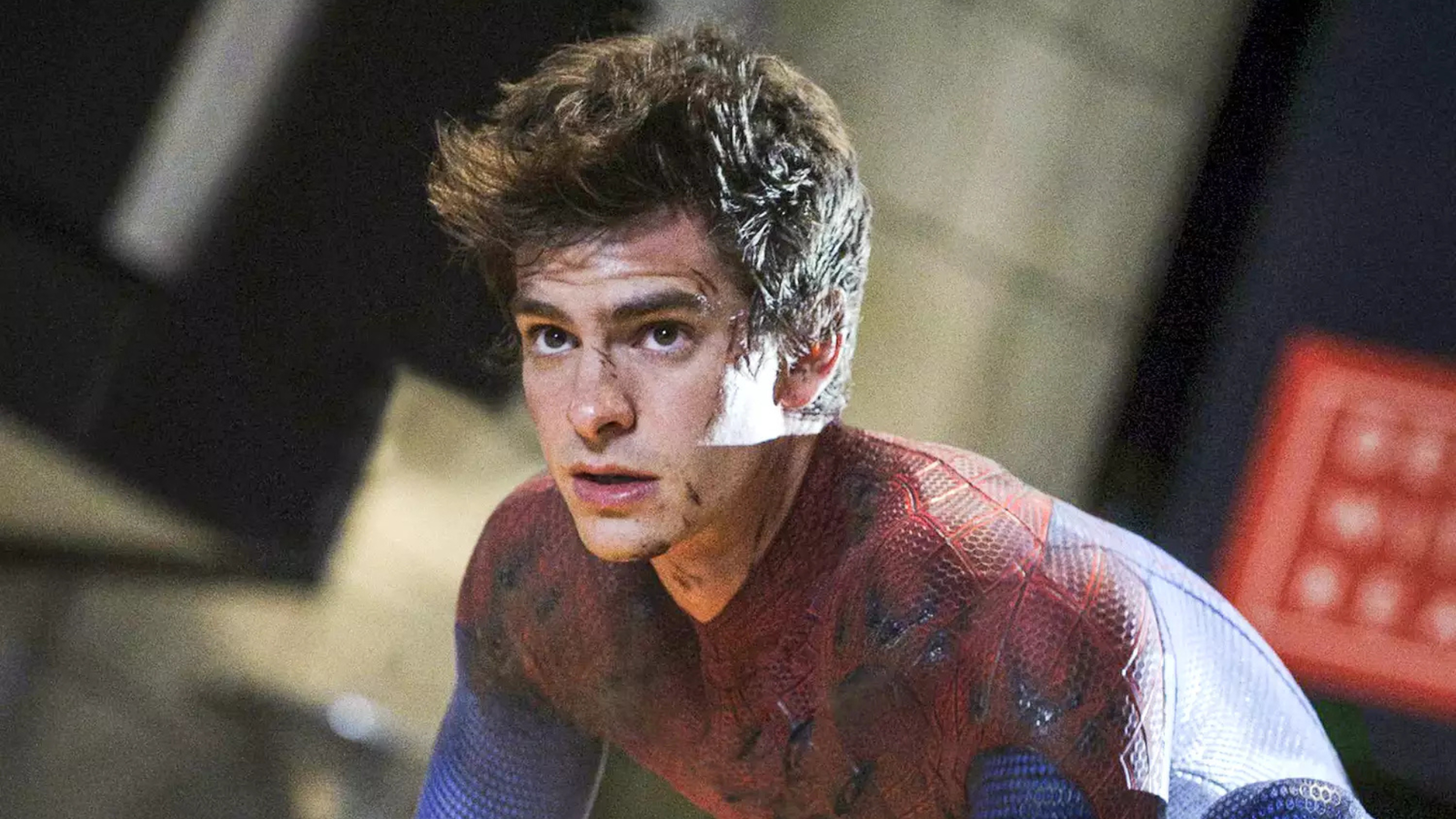
Credit: Columbia/Sony
Credit: Columbia/Sony
The Fourth of July, also known as Independence Day in the United States, is a federal holiday celebrated each year to mark the country’s independence in 1776. It is one of the most widely observed summer holidays, featuring fireworks displays, parades, barbecues, concerts, and large public gatherings across the nation. Since schools and workplaces are closed, the day often turns into a full leisure occasion, with families and friends spending time outdoors or enjoying entertainment activities. In the film industry, however, this holiday period is especially significant.
The combination of long weekends, summer vacation season, and festive mood leads to a major spike in cinema attendance, particularly during evening shows after celebrations conclude. As a result, July 4th has historically become one of the strongest box office days of the year in the United States, with blockbuster releases often recording their highest single-day earnings as audiences flock to theaters in large numbers. These are the ten films that rise above the rest, sitting at the peak of box office history.
10. Men in Black II (2002) - $16,493,214
Viewed through a “high-concept nostalgia” lens, Men in Black II plays like a 2002 time capsule where Hollywood engineering meets cosmic absurdity. The film’s core idea peaks in its Locker-World metaphor: Agent J’s discovery of a miniature alien civilization living inside a Grand Central Station luggage locker reframes scale itself, suggesting that entire realities may exist within overlooked urban corners. This culminates in the revelation that even our universe might be just another “locker,” turning human importance into a beautifully fragile illusion.
At the same time, the film sits at a visual crossroads. Rick Baker’s practical alien designs and physical puppetry carry a tangible charm, while Serleena’s early CGI tentacles reflect the growing pains of digital effects, making the film’s texture uneven but historically revealing.

It also toys with the buddy-cop dynamic by briefly reversing roles, as J becomes the exhausted professional managing a civilian, memory-wiped K, subtly destabilizing the franchise’s original chemistry.
9. Transformers: Dark Of The Moon (2011) - $18,033,185
Transformers: Dark of the Moon unfolds as a massive orchestration of motion and scale, where architecture, machinery, and myth collide in carefully arranged bursts of destruction. The Battle of Chicago stands as its defining sequence, with Michael Bay shaping the city into a readable map of collapse, glass towers folding inward, shockwaves rolling through streets, and the space bridge pillar acting as a central spine that holds the chaos in place. Even in its most overwhelming moments, the geography remains clear, as if the destruction is being revealed in deliberate layers rather than random noise.
At the ideological center is Sentinel Prime, voiced by Leonard Nimoy, whose betrayal carries a calm, unsettling conviction. His alliance with Megatron is rooted in calculation rather than chaos, driven by the belief that Earth can be sacrificed for Cybertron’s survival. This reframes his actions into something colder and more tragic than simple villainy. The film’s native 3D presentation deepens this spatial clarity, adding depth that lets the destruction breathe, turning spectacle into something the eye can trace and inhabit rather than simply endure.
8. Hancock (2008) - $18,527,967
Hancock sits at a volatile turning point in late-2000s superhero cinema, arriving right between a phase of experimental storytelling and the coming dominance of tightly structured franchises. It carries two competing identities at once: a sharp, satirical take on superhero culture and a more emotional, mythic drama, both pulling the film in different directions. The early sections reflect Vince Gilligan’s influence, where Hancock exists as a disruptive force in a worn-down Los Angeles, his actions causing as much damage as they prevent, shaping a world that feels sun-bleached, dusty, and permanently strained by his presence.
As the story shifts, it settles into something more intimate and unusual, built around Hancock and Mary’s connection, where closeness itself becomes dangerous. Their relationship is defined by a strange reversal of power, where affection weakens them, turning love into something fragile and physically disorienting. Looking back, the film feels like a moment just before superhero cinema standardized itself, held together largely by Will Smith’s screen presence rather than any larger franchise structure, giving it a loose, unstable energy that stands apart from what followed.
7. Despicable Me 4 (2024) - $20,398,275
Despicable Me 4 works like a precision-tuned entertainment engine, shaped less by the urge to reinvent itself and more by the need to preserve a steady, familiar rhythm of characters, comedy, and tone that has been refined over fourteen years into something reliably recognizable. Gru’s journey is framed through controlled displacement, as he moves from his familiar villain-adjacent world into the clean, almost artificial setting of Mayflower suburbia, where everyday domestic life quietly becomes a constant source of pressure and resistance.
Within this structure, Maxime Le Mal acts as a focused source of conflict, while Poppy Prescott introduces an unpredictable spark, turning ambition into disruption within Gru’s carefully balanced life. The Minions, especially in their Mega Minion form, amplify the chaos through exaggerated physical comedy, yet remain grounded in clear, readable action. Across it all, Illumination’s bright, saturated visual style and tightly timed slapstick rhythm keep everything moving with deliberate consistency, maintaining the franchise’s identity as something stable, familiar, and endlessly replayable.
6. Spider-Man 2 (2004) - $21,955,628
Spider-Man 2, directed by Sam Raimi, unfolds like a modern tragedy told with the clarity and emotional openness of classical theater. It rejects irony in favor of sincerity, treating Peter Parker’s life as a constant push and pull between responsibility and exhaustion. That tension becomes most intense in the hospital sequence, where Dr. Otto Octavius awakens, and the mechanical arms take on a life of their own. What follows feels almost predatory, as the operating room turns into a space of sudden, silent violence, with metal claws moving through the room and human presence reduced to vulnerability.
This sense of physical danger carries into Peter’s quieter struggles, especially the laundromat scene where his attempt at normal life unravels as his suit bleeds into his clothes. Even everyday moments become reminders of how fragile his balance really is, turning heroism into something worn down over time rather than celebrated. That emotional strain finally lifts in the train sequence, where New Yorkers collectively carry him after his sacrifice, transforming the moment into something deeply communal, as if the city itself briefly becomes part of his support system.
5. The Amazing Spider-Man (2012) - $23,335,925
The Amazing Spider-Man arrives as a cinematic re-justification, reshaping Spider-Man’s emotional tone for a post-Raimi era rather than simply continuing the existing myth. Marc Webb brings the sensibility of (500) Days of Summer into the superhero frame, treating the story with the intimacy of an adolescent drama where psychology matters as much as spectacle. Andrew Garfield’s Peter Parker is built around fracture and restlessness, a version of the character who leans into sarcasm as a shield, carrying grief and defiance beneath the surface instead of innocence.
Across from him, Gwen Stacy, played by Emma Stone, stands as an equal presence rather than a supporting figure, her intelligence as an Oscorp intern giving her real weight in the unfolding events. Rhys Ifans’ Dr. Curt Connors reflects ambition pushed beyond its limits, with his transformation into The Lizard shaped by the collapse of scientific control into something far more unstable. John Schwartzman’s cool-toned cinematography and the grounded, parkour-influenced swinging sequences keep the film physically present, turning movement through the city into something felt in the body rather than just seen on screen.
4. Despicable Me 2 (2013) - $24,546,980
Despicable Me 2 marks the moment Illumination consolidates its global franchise identity, privileging character synergy, visual cadence, and streamlined comedic accessibility over narrative ambition. The plot follows Gru, now retired from villainy and immersed in uneasy suburban domesticity, whose placid existence is disrupted by the theft of the PX-41 mutation serum, compelling his reluctant reinstatement into the Anti-Villain League alongside the erratic Lucy Wilde. Their covert investigation within a hyper-sterile shopping mall cupcake bakery reframes espionage through consumerist surfaces, where retail interiors, wigs, and themed eateries become instruments of surveillance and pursuit.
The Minions function as contemporary silent-film vestiges, inheriting expressive grammars from Chaplin, Keaton, and Looney Tunes, relying on gestural articulation and nonverbal phonetics to achieve translingual resonance. Their kinetic slapstick becomes the film’s most globally legible language. Beneath this, Gru’s arc recasts the midlife crisis as emotional disquietude rather than chaos, centering on the apprehension of vulnerability, intimacy, and the dissonance of inhabiting an unexpectedly prosaic domestic existence.
3. Spider-Man: Far From Home (2019) - $25,720,128
Spider-Man: Far From Home unfolds as a post-Endgame emotional aftershock, where Peter Parker’s attempt at normal adolescent life repeatedly fractures under grief, expectation, and inherited responsibility. Jon Watts structures the film as a coming-of-age story persistently interrupted by geopolitical intervention, as Nick Fury converts a school excursion into an international crisis involving elemental illusions and staged catastrophe. Mysterio emerges as the narrative’s central thesis: a non-biological antagonist defined entirely by infrastructure, where drones, projection systems, and curated storytelling transform perception into manipulable reality.
Watts renders the film as an unstable visual field; the illusion sequence becomes engineered disorientation, a form of cinematic gaslighting that collapses certainty for both Peter and the viewer. At its core, Peter’s imposter syndrome drives the emotional architecture, positioning him between inherited mythos and personal insufficiency. Even the European backdrop operates as ironic juxtaposition, historic environments repurposed into sites of artificial unreality, where identity itself becomes the final contested domain.
2. Jurassic World Rebirth (2025) - $26,235,450
Jurassic World Rebirth serves as a fresh start for the franchise, taking away years of narrative excess to return to its survival-thriller roots. Gareth Edwards frames the story around environmental extremity, where human presence feels temporary and outmatched within an ecosystem that resists control. The stranded civilian family becomes an unintended byproduct of corporate extraction, their survival entangled in a Big Pharma mission to harvest dinosaur biology as a medical resource, turning innocence into collateral consequence.
Edwards treats scale as environmental authority, where dinosaurs are staged less as characters and more as overwhelming natural forces. Low-angle framing reduces human figures to fragility beneath canopy and movement that behaves like weather rather than wildlife. David Koepp’s return functions as narrative purification, stripping away franchise sprawl to restore Michael Crichton’s original warning: a contained, cautionary structure about biological intrusion and corporate overreach. The result is a leaner, more controlled film focused on consequence over expansion.
1. Transformers (2007) - $29,073,898
Transformers captures Hollywood’s transition into full digital spectacle while still retaining the grounded texture of late-90s practical filmmaking. Michael Bay frames the film as a bridge between Spielbergian wonder and large-scale destruction, where alien machinery arrives with the awe of a creature feature rather than pure visual excess. The opening stretch leans into the “boy and his car” idea, as Sam Witwicky discovers that his first vehicle is alive, turning teenage desire and awkward adolescence into something unexpectedly tender and strange.
Bumblebee’s radio-spliced communication becomes the emotional center of the film, grounding its larger conflict in a simple bond between a boy and his car. The transformation sequences define the film’s identity through physical weight, metal folding, pistons firing, gears locking into place, all designed to feel heavy and real rather than purely digital. Beneath it all runs a post-9/11 military sensibility, where Blackout’s attack reframes desert combat imagery through the shock of alien arrival, blending real-world warfare language with impossible mechanical threat.
These ten films recorded the highest single-day box office earnings on the July 4th holiday, each benefiting from the surge of holiday audiences and turning Independence Day into one of the most commercially powerful moments on the cinematic calendar.
Which of these films is your favorite? Let us know in the comments below.

Edited By: Hriddhi Maitra
