
Top 10 Cannes Film Festival Scandals That Made Global Headlines
via Imago
Credits: IMAGO / Starface
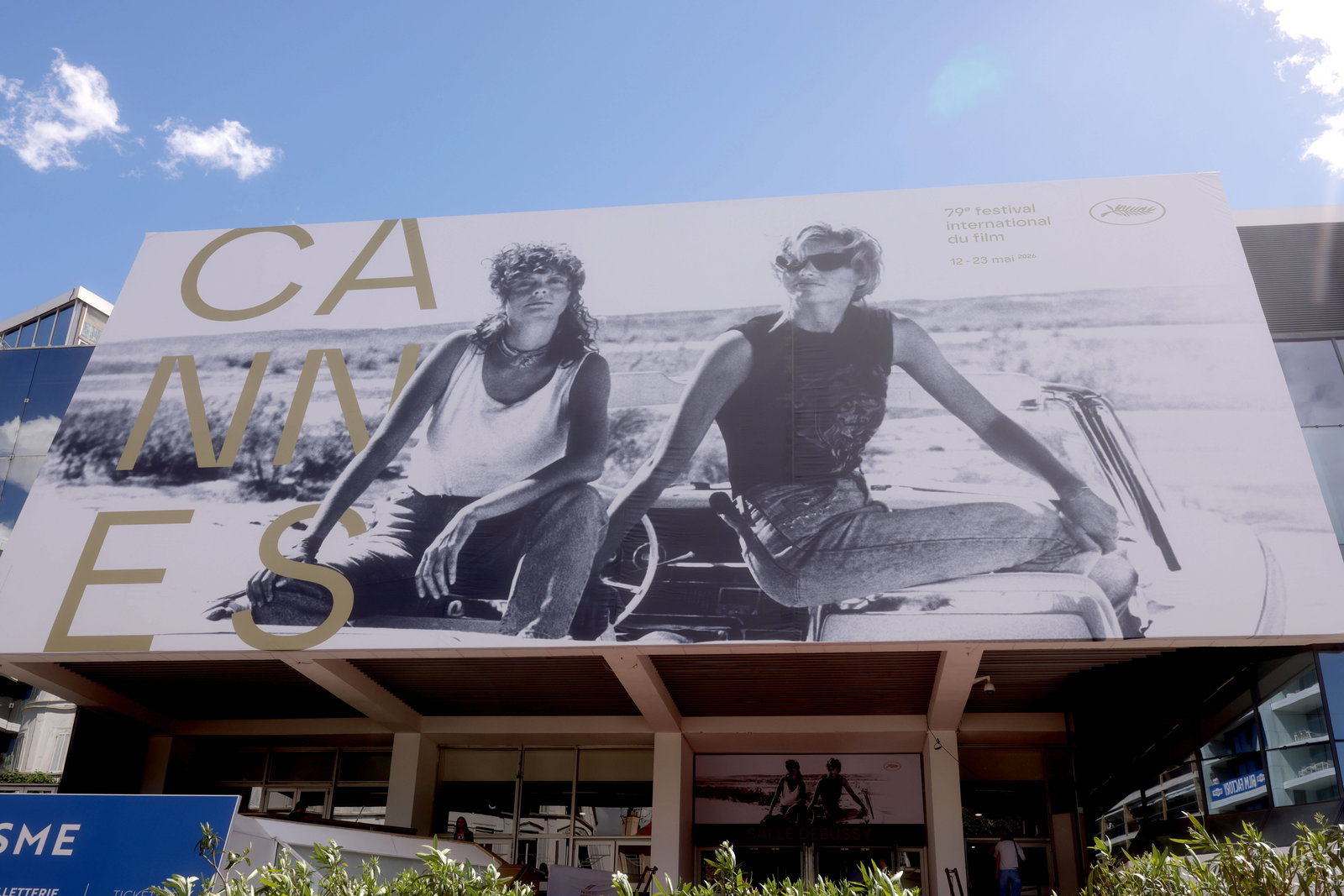
For nearly eight decades, the Cannes Film Festival has been the crown jewel of world cinema, a glamorous stage where legendary filmmakers, rising stars, and award-winning masterpieces compete for international acclaim. Yet beyond the dazzling red carpets and coveted Palme d'Or trophies lies a history filled with controversy.
Even the latest edition of the festival has captured global attention not only for its celebrity appearances, acclaimed premieres, and daring fashion statements, but also for a brewing canel+ controversy, proving once again that the world's most prestigious film event is about far more than movies.
Because controversy is never far behind at this event, here are 10 Cannes Film Festival scandals that made global headlines and left a lasting mark on the festival's legacy.
10. Lars von Trier Hitler remarks at Cannes (2011)
The backlash was immediate for Danish filmmaker Lars von Trier, who sparked outrage during a Cannes press conference for his psychological drama Melancholia. While discussing his German heritage, von Trier made a series of rambling remarks in which he claimed to "understand Hitler," described himself as "a Nazi," and joked about sympathizing with the German dictator.
The comments shocked journalists in attendance and left several people on stage visibly uncomfortable, including actress Kirsten Dunst, who starred as Justine, a deeply depressed newlywed at the center of Melancholia.
Although von Trier later issued a public apology, insisting that he was neither antisemitic nor a Nazi, Cannes organizers were unmoved. In an unprecedented move, the festival declared the filmmaker persona non grata, effectively banning him from the event. However, Melancholia remained in competition, and Dunst went on to win the festival's Best Actress award for her performance.
Despite the film's critical success, the controversy overshadowed its Cannes run and remains one of the most infamous moments in the festival's history, widely regarded as its most notorious press conference scandal.
9. Julia Roberts red carpet flat shoes appearance (2016)
One of Cannes' most memorable fashion controversies unfolded in 2016 when Julia Roberts arrived at the premiere of Money Monster wearing an elegant black Armani Privé gown, only to remove her high heels before climbing the festival's iconic red-carpet staircase. As photographers looked on, the Oscar-winning actress gathered her dress and confidently walked barefoot up the steps, instantly creating one of the most talked-about moments of that year's festival.
The gesture attracted worldwide attention because it came amid reports that several women had allegedly been denied entry to Cannes screenings for wearing flat shoes, including some attendees with medical conditions. Commentators praised the actress for drawing attention to a controversy that had already sparked debate about gender double standards on the red carpet. The discussion continued long after the festival ended, cementing Roberts' barefoot walk as one of the most iconic acts of red-carpet rebellion in Cannes history.
8. Director Maurice Pialat Palme d’Or win controversy (1987)
French director Maurice Pialat found himself at the center of one of Cannes' most infamous award controversies when his religious drama Under the Sun of Satan, starring Gérard Depardieu and Sandrine Bonnaire, won the Palme d'Or in 1987. The film had sharply divided audiences and critics throughout the festival, with many expecting the top prize to go to other acclaimed contenders, particularly Wim Wenders' Wings of Desire.
So, when Pialat's name was announced as the winner, the reaction inside the Palais des Festivals was far from celebratory. The audience erupted into boos, whistles, and jeers, creating a tense and highly public display of disapproval.
Pialat, however, refused to back down. Rather than ignore the hostile reception, he fired back during his acceptance speech with the now-famous line, "If you don't like me, I don't like you either." His defiant response instantly transformed an already controversial award win into Cannes folklore. The confrontation dominated headlines across France and further cemented Pialat's reputation as one of cinema's most uncompromising auteurs.
7. Irréversible mass walkouts (2002)
One of the most controversial and shocking screenings in Cannes history came in 2002 with the premiere of Irréversible, directed by French filmmaker Gaspar Noé and starring Monica Bellucci and Vincent Cassel. The film stunned audiences with its graphic violence, including an infamous nine-minute assault scene that many viewers found deeply disturbing.
Reports from the screening suggested that hundreds of attendees walked out before the film ended, while several others reportedly required medical assistance after feeling faint, nauseated, or overwhelmed by its intense content.
The reaction quickly became one of the defining stories of that year's festival. While some critics condemned the film as gratuitous and exploitative, others defended it as a bold artistic exploration of violence, trauma, and revenge.
The fierce debate that followed extended far beyond Cannes, with reviewers, filmmakers, and audiences sharply divided over whether the film's shocking imagery served a meaningful artistic purpose or simply sought to provoke outrage. More than two decades later, Irréversible remains one of the most controversial films ever screened at the festival.
6. Cannes Film Festival shutdown (1968)
Amid student protests and nationwide strikes sweeping across France, political unrest intensified in 1968 and soon reached the Cannes Film Festival itself. Several prominent filmmakers, including François Truffaut, Jean-Luc Godard, Louis Malle, and Claude Lelouch, argued that it was inappropriate to continue a glamorous film festival while the country was in turmoil.
In a powerful act of solidarity with the protesters, directors withdrew their films from competition, jury members resigned, and demonstrations began erupting inside the Palais des Festivals, turning the event into one of the most extraordinary controversies in Cannes history.
The situation escalated even further when filmmakers physically interrupted a screening of Peppermint Frappé. Director Carlos Saura, actress Geraldine Chaplin, Truffaut, and Godard famously clung to the theater curtains to stop the film from being shown, creating one of the most iconic images in Cannes legacy. The protest ultimately succeeded, and on May 19, 1968, the festival was officially canceled just five days before its scheduled conclusion, with no prizes awarded. It remains the only time the Cannes Film Festival has been shut down mid-event.
5. Isabelle Adjani Cannes photographers’ strike (1983)
In 1983, French actress Isabelle Adjani found herself at the center of a rare photographers’ counter-protest during the Cannes Film Festival. The situation reportedly stemmed from ongoing tensions over press access and Adjani’s discomfort with heavy media intrusion. After she skipped a traditional photocall earlier in the day, photographers responded on the red carpet during the premiere of One Deadly Summer by refusing to take her pictures, effectively staging a strike as they lowered their cameras and turned away while she climbed the festival’s iconic steps.
The result was a surreal Cannes moment. One of the festival’s biggest stars walked the red carpet as large sections of the press deliberately chose not to photograph her, breaking the usual rhythm of nonstop flashes and media attention. The standoff was widely reported and remains one of the more unusual examples of tension between celebrities and the press at Cannes, highlighting how even the festival’s glamorous image machine can briefly stall when questions of access and control collide.
4. Quentin Tarantino Pulp Fiction Cannes screening gesture (1994)
During the first screening of Pulp Fiction at the Cannes Film Festival, directed by Quentin Tarantino, the film received a sharply divided reaction. Some audience members applauded its bold storytelling and non-linear structure, while others were reportedly shocked by its violence and raw dialogue. When the credits rolled, the atmosphere inside the theatre was tense and unsettled, with the audience visibly split in its response.
As Tarantino stood on stage with the cast and crew, he responded to the polarized reception with a famously provocative gesture, raising his middle finger toward sections of the audience that had booed or reacted negatively. The moment quickly became part of Cannes legend and one of the festival’s most talked-about incidents. Pulp Fiction would go on to win the Palme d’Or, cementing its status as one of the most influential films of the decade and turning its Cannes premiere into a defining moment in the festival’s modern history.
3. The Vatican Viridiana controversy (1961)
One of the most politically explosive controversies in Cannes history came in 1961 with the Spanish-language film Viridiana, directed by Luis Buñuel. The film, a satirical drama exploring faith, hypocrisy, and social decay, went on to win the Palme d’Or at the Cannes Film Festival. However, its victory immediately triggered outrage far beyond the festival circuit, turning an artistic triumph into a global controversy. The backlash intensified when the Vatican publicly condemned the film, with L’Osservatore Romano denouncing it as blasphemous.
Spanish authorities under Franco also reacted strongly, banning the film and reportedly suppressing its circulation within Spain. The situation escalated into a diplomatic scandal, as Spain officially disowned the film despite its international recognition. The Cannes jury’s decision was heavily criticized in conservative circles, and Viridiana became one of the most politically charged Palme d’Or winners in the festival’s history. Over time, however, its reputation only grew, and today it is widely regarded as a masterpiece of world cinema.
2. Sophie Marceau disruptive Cannes speech (1999)
French actress Sophie Marceau delivered an iconic speech while presenting at the Cannes Film Festival in 1999, which quickly became one of the most talked-about moments of the ceremony. Breaking away from her prepared notes, she began an improvised, rambling address during the formal proceedings. Her remarks shifted between reflections on cinema, personal impressions of the festival, and broader thoughts on life and humanitarian concerns, delivered in a way that felt somewhat disjointed and unstructured.
As the speech continued, the tone took a more unexpected turn when she reportedly emphasized that films were not the most important thing, pointing instead to issues such as sick children and wider human suffering. The moment drew mixed reactions from the audience, with audible murmurs and some boos and whistles from the crowd. This prompted British actress Kristin Scott Thomas to step in and help bring the ceremony back under control, allowing the presentation to move forward and the broadcast to continue.
1. Canal+ controversy (2026)
The 2026 Cannes Film Festival also became the stage for one of the most significant off-screen controversies in recent years, involving Canal+, France’s most influential film financier and broadcaster, and its controlling shareholder, Vincent Bolloré. The dispute intensified after more than 600 film professionals, including producers, filmmakers, and actors such as Juliette Binoche and others, signed an open letter criticising Bolloré’s growing influence over French media and cinema.
In response, Canal+ leadership under Maxime Saada announced that the company would no longer collaborate with signatories of the petition, stating: “I no longer wish Canal+ to work with the people who signed this petition.” The backlash at Cannes was immediate, with strong reactions across the French film industry and political sphere. France’s Culture Minister also criticised the remarks as “disproportionate,” further escalating the debate around artistic independence, media power, and corporate influence within French cinema.
These 10 scandals continue to generate buzz even today, standing out as defining cultural moments that still spark conversation and debate.
Which scandalous moment interests you the most? Let us know in the comments.

Edited By: Hriddhi Maitra
