
‘The Testaments’ Episode 6 Recap: Ann Dowd Reveals the Dark Truth Behind Aunt Lydia’s Origin Story
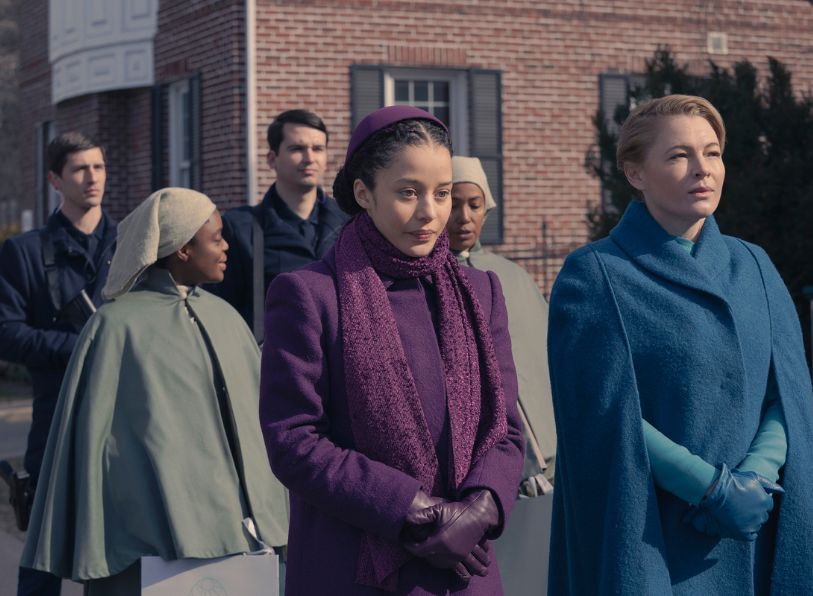
Credits: Disney/Russ Martin
Credits: Disney/Russ Martin
Episode 6 of The Testaments does not just revisit Aunt Lydia’s past; it dismantles everything viewers thought they understood about her. For years, she has stood as a symbol of fear, control, and unwavering devotion to Gilead’s brutal system. Now, the narrative shifts inward, allowing her voice to take center stage. What unfolds is not redemption, but revelation. The episode carefully blurs the line between victim and architect, forcing audiences to confront a far more complicated and unsettling truth.
As the myth of an untouchable enforcer begins to crack, a far more human story emerges, revealing choices that shape power while quietly setting the stage for something far darker.
The woman before the myth
Long before she became the feared enforcer of Gilead’s rigid order, Lydia existed within a world that still resembled normalcy, as Ann Dowd reveals through this layered backstory. She worked in a school, surrounded by colleagues, routine, and a sense of predictable stability. These early glimpses are intentionally calm, almost comforting, which makes the eventual unraveling feel far more disturbing. The transformation does not arrive with chaos, but with quiet shifts, as each moment subtly pushes her toward a future she does not resist, but gradually begins to accept.
What makes Lydia’s evolution particularly striking is her awareness. She does not stumble into power blindly, nor does she act purely out of fear. Instead, she observes the shifting dynamics and quickly understands that survival depends on alignment. By convincing powerful men that women should guide other women, she secures relevance within the new order. This is not a submission, but a calculated positioning. Lydia recognizes that influence, once gained, can be shaped, and she moves deliberately to claim it before others can.
The defining moment arrives with chilling simplicity. Faced with the task of executing a colleague, Lydia stands at the edge of an irreversible decision. The weight of the gun in her hand represents more than authority; it symbolizes identity. When she pulls the trigger, believing it is real, she reveals a willingness to cross moral boundaries for survival. The later revelation that the gun was empty does not lessen the impact. The choice itself is what defines her transformation.

While a single decision seals Lydia’s alignment with power, its consequences ripple outward, reshaping relationships and planting seeds of silence that will quietly fracture alliances in the chapters ahead.
Survival, silence, and shattered alliances
In the aftermath of that pivotal moment, Lydia’s relationship with Vivian becomes defined by what remains unspoken. Their shared history is heavy with tension, yet neither acknowledges it directly. This silence becomes a survival mechanism, allowing both women to function within a system that punishes vulnerability. However, the absence of confrontation does not erase the past. Instead, it lingers beneath every interaction, creating a fragile alliance built not on trust, but on mutual understanding of what is at stake.
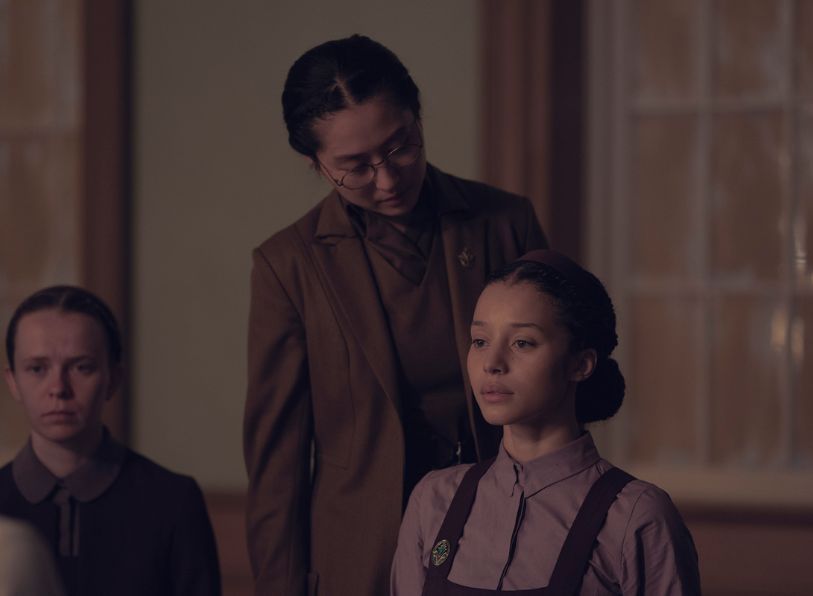
Credits: Disney/Russ Martin
Credits: Disney/Russ Martin
The coup sequence intensifies this atmosphere of fear and uncertainty. Women are gathered, stripped of their possessions, and forced into a prolonged state of waiting. The stadium becomes a symbol of complete powerlessness, where time itself feels relentless. Within this environment, Lydia does not collapse under pressure. She adapts once again, observing, learning, and preparing. Her ability to endure is not passive; it is strategic, reinforcing her instinct to navigate systems rather than challenge them directly.
When Lydia is finally brought to authority, the expectations are clear and unforgiving. Loyalty must be demonstrated without hesitation, and she complies. In return, she is confronted with a revelation about her own past, one that starkly contrasts with the values Gilead enforces. Rather than breaking her resolve, this contradiction strengthens her adaptability. Lydia does not attempt to reconcile the inconsistency. Instead, she internalizes it, proving that survival in this world often depends on the ability to compartmentalize truth.
As buried truths and unspoken tensions shape Lydia’s present, her growing influence takes on a new form, in which control softens into something deceptively gentle while remaining just as powerful.
Power, guilt, and the illusion of care
In the present timeline, Lydia’s authority is no longer questioned. She operates with confidence, guiding the next generation within Gilead’s rigid framework. However, her methods appear to have evolved. There is a noticeable shift in her demeanor, as she listens more closely and engages with the girls in a way that feels almost empathetic. This change introduces a layer of complexity, suggesting that power can adapt its appearance while maintaining its core purpose of control and influence.
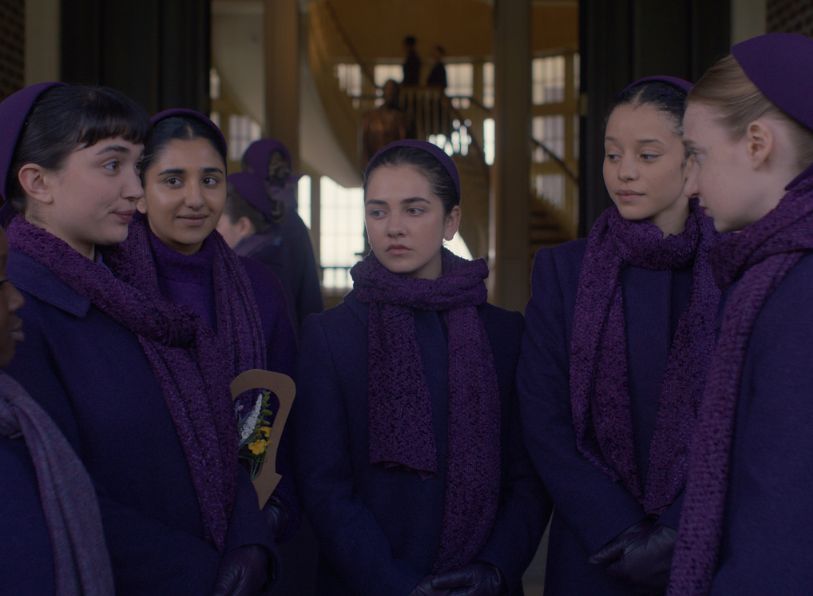
Credits: Disney/Russ Martin
Credits: Disney/Russ Martin
Her interactions with the girls reveal an understanding that goes beyond surface-level authority. Lydia recognizes their desires, fears, and ambitions, and uses this knowledge to shape their decisions. This approach creates an illusion of care, making her guidance feel personal rather than imposed. Yet, this perceived kindness does not diminish her role within the system. Instead, it reinforces it, demonstrating that control can be far more effective when it is disguised as compassion rather than enforced through fear alone.
The question of guilt remains deliberately unresolved. Lydia's actions suggest a level of acceptance rather than remorse, as she continues to move forward without visible hesitation. Whether she feels the weight of her choices or has learned to suppress it entirely is left open to interpretation, and only the upcoming episodes will reveal which side of that line she truly stands on. This ambiguity is what makes her character so compelling. She exists in a moral gray area, neither seeking redemption nor acknowledging wrongdoing, yet continues to operate with calculated intent, for now.
What are your thoughts on Aunt Lydia’s origin story? Do you think she can ever be trusted, or is it all just survival? Let us know in the comments.

Edited By: Itti Mahajan
