
The Real Reason ‘House of the Dragon’ Takes Liberties With George R. R. Martin’s Fire & Blood
Credits: HBO
Credits: HBO
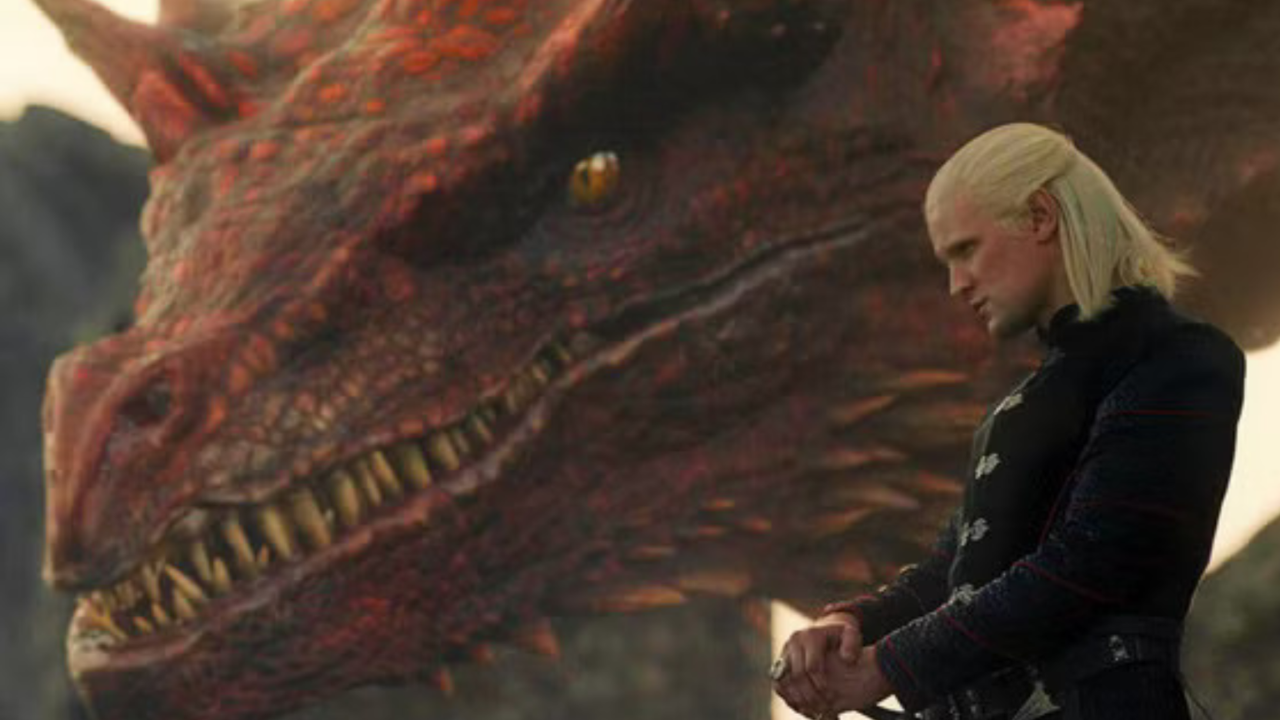
House of the Dragon is guilty, guilty of rewriting, reinventing, and reimagining a story George R. R. Martin already finished. Fire & Blood exists, the Dance of the Dragons is documented, and yet the show boldly colors outside every line. But before book purists sharpen their dragonglass, here is the truth: these liberties were never really a choice. They were an inevitability written into the DNA of adaptation itself.
As the source reads less like a story and more like a dusty maester's homework assignment, the real drama began in the writers' room.
The complete book was never actually a story
ADVERTISEMENT
Article continues below this ad
Fire & Blood reads like a history textbook written by someone with a grudge and three unreliable interns, Archmaester Gyldayn piecing together Mushroom's outrageous gossip, Septon Eustace's shameless propaganda, and gaps wide enough to fly a dragon through. No dialogue. No intimate moments. No dramatized scenes. Just a summary.
House of the Dragon's writers had to excavate an actual story from this archaeological dig, picking one truth from contradictions and inventing emotional texture from scratch. Without that, four seasons would feel like a very expensive university lecture.
While the book's deliberate vagueness handed showrunners creative freedom, serialized television came with its own merciless rulebook.
Weekly TV is a beast no history book could have prepared for
Television does not care that the outcome is already written. It demands hooks, heartbreak, and reasons to return every single week. So House of the Dragon built a genuine friendship between young Rhaenyra and Alicent, something the book barely gestures at, because audiences needed to feel the eventual betrayal in their bones, not just understand it intellectually. The result? Viewers passionately arguing Team Green versus Team Black over a war they already know ends in mutual destruction. That is not an accident. That is masterful, deliberate engineering.
As storytelling ambition reshaped the narrative, real-world production logistics arrived uninvited and rewrote several chapters themselves.
A law nobody talks about changed everything
The United Kingdom child actor regulations quietly became one of the most consequential creative forces on the entire show. Young performers cannot depict certain content on screen, which meant Rhaenyra, Alicent, and several key characters had to be aged up significantly beyond their book versions. One legal compliance decision rippled through entire relationship dynamics, altered early-season timelines, and shifted the emotional weight of pivotal moments. What audiences read as bold artistic choices were frequently paperwork obligations dressed in period costume.
While casting ages shifted the story's foundations, certain book scenes presented an entirely different category of impossible.
Some pages simply could not be filmed
Blood & Cheese, as written, involves toddlers at the center of one of the most harrowing sequences in the entire saga. Filming that with actual young children is not just logistically nightmarish; it is ethically indefensible under any reasonable production standard. Adjustments were not optional creative flourishes; they were non-negotiable. Across the source material, multiple violent and disturbing sequences involving very young characters required the same careful reworking. The emotional devastation had to survive even when the literal details could not.
As scene-by-scene compromises accumulated, the cold mathematics of budget and runtime demanded even bigger structural sacrifices.
Every dragon on screen cost a character somewhere
Dragons are breathtaking. Dragons are also extraordinarily expensive. With a limited episode count per season, every minute of CGI spectacle is a trade-off happening quietly in the script, a minor character cut, a subplot collapsed, a storyline quietly retired. Fire & Blood is dense with figures and events; House of the Dragon cannot afford to be. Showrunners must constantly choose between faithful complexity and watchable, propulsive television. The dragons always win. Somebody always pays for it.
While budget decisions thinned the canvas, the creative team used every remaining brushstroke to deepen what the book left deliberately skeletal.
The show gave these characters an actual inner life
Book Rhaenyra, Alicent, and Daemon are filtered through historians with agendas, leaving them emotionally distant and somewhat archetypal. Ryan Condal and Sara Hess treated that vagueness as a creative invitation, building Alicent's suffocating religious guilt, Rhaenyra's frustrated hunger for autonomy, and Daemon's spectacular moral chaos. Suddenly, the civil war is not a historical footnote but a personal catastrophe that audiences feel arriving in slow motion. The show did not betray these characters. It finally introduced them properly.
As the characters evolved on screen, even their original architect found himself watching something that had grown beyond his blueprint.
Even George R. R. Martin cannot fully control what he started
ADVERTISEMENT
Article continues below this ad
George R. R. Martin collaborated during early development but has publicly acknowledged frustrations with certain changes and their cascading butterfly effects. His discomfort is telling rather than damning; it confirms that television and literature are genuinely different languages, and translation always loses something. The show positions itself as the definitive truth while the book remains a deliberately unreliable record. Honoring an author's vision and serving ten million weekly viewers are two obligations that will never fully agree.
As the new cast joins Season 3 and the Dance of the Dragons intensifies, these liberties will only multiply, and so will the debates surrounding them. One changed age, one adjusted scene, one invented friendship, and suddenly the entire adaptation is its own living, breathing, fire-breathing thing entirely. Whether that excites or frustrates viewers depends entirely on which side of the book you are reading from.
ADVERTISEMENT
Article continues below this ad
What are your thoughts on the liberties House of the Dragon takes, necessary evolution or unnecessary deviation? Let us know in the comments.
ADVERTISEMENT

Edited By: Aliza Siddiqui
More from Netflix Junkie on Hollywood News




ADVERTISEMENT