
‘The Pitt’ Season 2 Episode 6 Recap: A Tragic Death Changes the Shift
Season 2 episode 6 pushes The Pitt into a tighter, more volatile space, where every storyline feels closer to breaking. Ethical disputes harden, overcrowding becomes unavoidable, and emotional fallouts refuse to stay contained.
Personal histories surface at the worst possible moments, while professional restraint is tested again and again. No decision feels isolated anymore, and every choice carries consequences that linger beyond the trauma bay. The hour moves with mounting pressure, stacking conflict on top of exhaustion, loss, and uncertainty.
This hour does not offer relief, only momentum, as tragedy and responsibility stack faster than anyone can process them.
ADVERTISEMENT
Article continues below this ad
The Pitt season 2, episode 6: Louie’s death and the cost of saving everyone else
Louie’s death becomes one of the most grounding moments in The Pitt season 2, episode 6, revealing the true cost of working in a system that never slows down. The episode opens with Dr Robby and Dr Frank Langdon desperately trying to save Louie as his lungs fill with blood, compressions continuing while time slips away.
When the code is called at 12:07 p.m., there is no pause for grief. Dana Evans immediately redirects the team as another trauma approaches, reminding everyone that the emergency room does not stop for loss. Robby offers a brief moment of dignity, inviting anyone who wants to pay their respects to join him in the viewing room, then thanks the staff and walks out.
Perla volunteers to clean Louie’s body, though her anxiety is obvious, and Evans urges her to take a moment before continuing. The aftermath deepens when it is revealed that Louie has no clear emergency contact, no wife or children, and no family easily found.
Whitaker arrives too late, learning what happened from Langdon, and the weight of the loss settles unevenly across the team. Louie dies surrounded by professionals who cared, yet his passing underscores how often compassion must exist alongside relentless forward motion.
West Bridge and the ER pushed past capacity in The Pitt episode 6
The overcrowding crisis triggered by West Bridge becomes a constant and suffocating presence in The Pitt season 2, episode 6, reshaping every decision made inside the emergency room. As ambulances reroute from West Bridge, patients arrive faster than beds can be cleared, and gurneys begin lining the walls, turning hallways into extensions of trauma bays.
Dr Robby works alongside Dr Al-Hashimi to manage the surge, tracking which rooms can open, which patients might be discharged, and how to keep incoming trauma cases from overwhelming an already strained staff. Their conversations are practical, rapid, and uneasy, revealing how quickly medicine shifts from ideal care to controlled compromise.
The pressure forces difficult calls, including moving patients sooner than preferred and constantly reshuffling assignments to create space where none truly exists. This strain becomes more than a logistical problem and instead defines the emotional rhythm of the episode. There is no room for reflection, only motion. Triage decisions replace closure, and efficiency begins to outweigh comfort.
The ER transforms into a system stretched beyond its intended limits, where even experienced physicians must accept that they cannot give every patient the time and attention they deserve. West Bridge is never seen on screen, yet its impact dominates the hospital, exposing how fragile the balance of emergency care becomes when one part of the system fails. By the final moments, survival depends less on solutions and more on endurance, as the shift grinds forward without relief or resolution.
Gus Varney and the limits of medical responsibility
Gus Varney’s case becomes the clearest ethical fault line in The Pitt season 2, episode 6, forcing the staff to confront what responsibility truly means inside an overburdened system. Gus arrives with multiple rib fractures, visible malnutrition, and dangerously low protein and vitamin levels; his condition is shaped as much by neglect as by injury.
Imaging reveals a pulmonary contusion and a jaw fracture that will heal without surgery, limiting him to a liquid diet and nutritional supplements. Medically, his condition appears manageable, yet the question of discharge exposes deeper concerns. Dr Al-Hashimi argues that sending Gus back to prison would mean returning him to an environment unable to meet his basic nutritional and medical needs.
Dr Robby counters with the reality facing the emergency department, emphasising limited beds, incoming trauma patients, and a system already stretched beyond capacity. Their disagreement is not personal but philosophical, rooted in competing definitions of care. One side prioritises the individual patient and the inequities of incarceration, while the other must weigh the needs of the many against the needs of one.
The exchange captures the episode’s central tension, where medicine, social justice, and practical reality collide without offering a clean or satisfying resolution. In the end, the silence that follows feels heavier than the argument itself, underscoring how often these decisions leave no one fully right, only responsible for the consequences that inevitably linger.
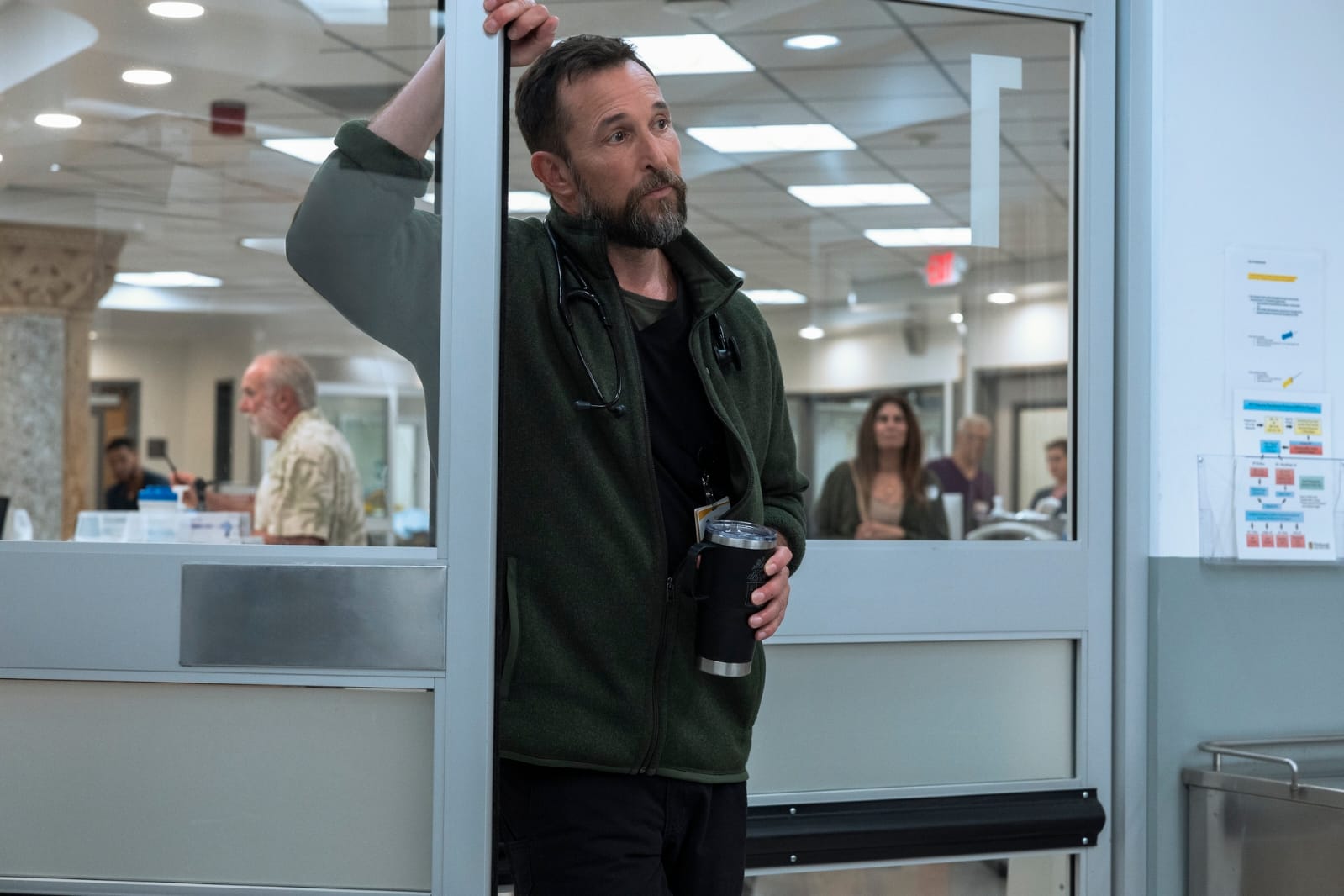
This episode barely pauses to breathe, stacking loss, overcrowding, and impossible decisions in rapid succession, until the emergency room feels one mistake away from collapse.
The Pitt season 2: Jackson and the weight of unseen voices
Jackson’s psychiatric evaluation introduces a quieter but deeply unsettling tension in The Pitt season 2, episode 6, shifting the focus from physical trauma to the fragility of the mind. Brought in after displaying paranoia and auditory hallucinations, Jackson struggles to explain what is happening to him, only able to describe a growing sense of threat that feels both real and inescapable.
He fixates on the belief that unseen forces are actively preventing him from crossing an important threshold in his life, specifically his goal of becoming a lawyer. The fear in his reasoning is not loud or erratic, but persistent, shaping every response he gives. As the evaluation continues, his sister is asked to leave the room, a necessary but painful step that emphasises how isolated mental health crises can become.
The absence of a clear family history of treatment hints at how long his condition may have gone unaddressed. The storyline carefully highlights the tension between protecting Jackson’s safety and respecting his autonomy, showing how easily concern can turn into confinement.
Unlike other emergencies in the episode, Jackson’s crisis cannot be stabilised with medication or discharge plans, leaving uncertainty as its most lasting effect. The episode allows that uncertainty to linger, reflecting how mental illness resists simple solutions and how fear, once rooted, can reshape a person’s entire sense of possibility and self.
Life in the ER goes on: Trauma, dark humor, and survival
Life in the emergency room continues with relentless momentum, blending trauma, dark humour, and emotional endurance throughout The Pitt season 2, episode 6. As the staff moves from one case to the next, a motorcycle accident patient demands careful assessment while aggressive patients test the limits of patience and control.
Moments later, the absurdity of a hot dog eating contest gone wrong briefly cuts through the tension, offering uncomfortable relief before the seriousness of cancer discharge decisions returns the focus to consequence and responsibility. These rapid shifts in tone reflect how survival in the ER often depends on emotional flexibility as much as medical skill.
The pressure intensifies when an AI charting error creates conflict, reminding the team that efficiency without human verification carries real risk. Technology may assist, but it cannot replace judgment. Amid the chaos, Dana Evans and Frank Langdon share a quieter reconnection, confronting guilt, recovery, and the possibility of second chances after time apart. Their exchange adds a layer of personal reckoning to an already demanding shift.
The episode closes on a reflective note as Dr Robby shares Louie’s backstory, offering the staff a brief moment of stillness. In that pause, the noise of the ER fades, and the weight of loss settles, reminding everyone why the work, despite everything, continues. That closing moment captures the emotional rhythm of the series itself, where exhaustion and compassion coexist, and the choice to keep showing up becomes the most meaningful act of all.
The Pitt season 2 episode 6: Final thoughts
The Pitt season 2, episode 6, closes without offering comfort, choosing instead to sit with the weight of everything it unleashes. The episode understands that emergency medicine rarely delivers clean victories, only temporary balance before the next crisis arrives.
ADVERTISEMENT
Article continues below this ad
Ethical disputes remain unresolved, overcrowding feels structural rather than situational, and personal losses refuse to stay compartmentalised. What makes the hour effective is its restraint, allowing quiet moments to carry as much impact as the loudest emergencies, elevated by a stellar cast that brings emotional precision to every exchange.
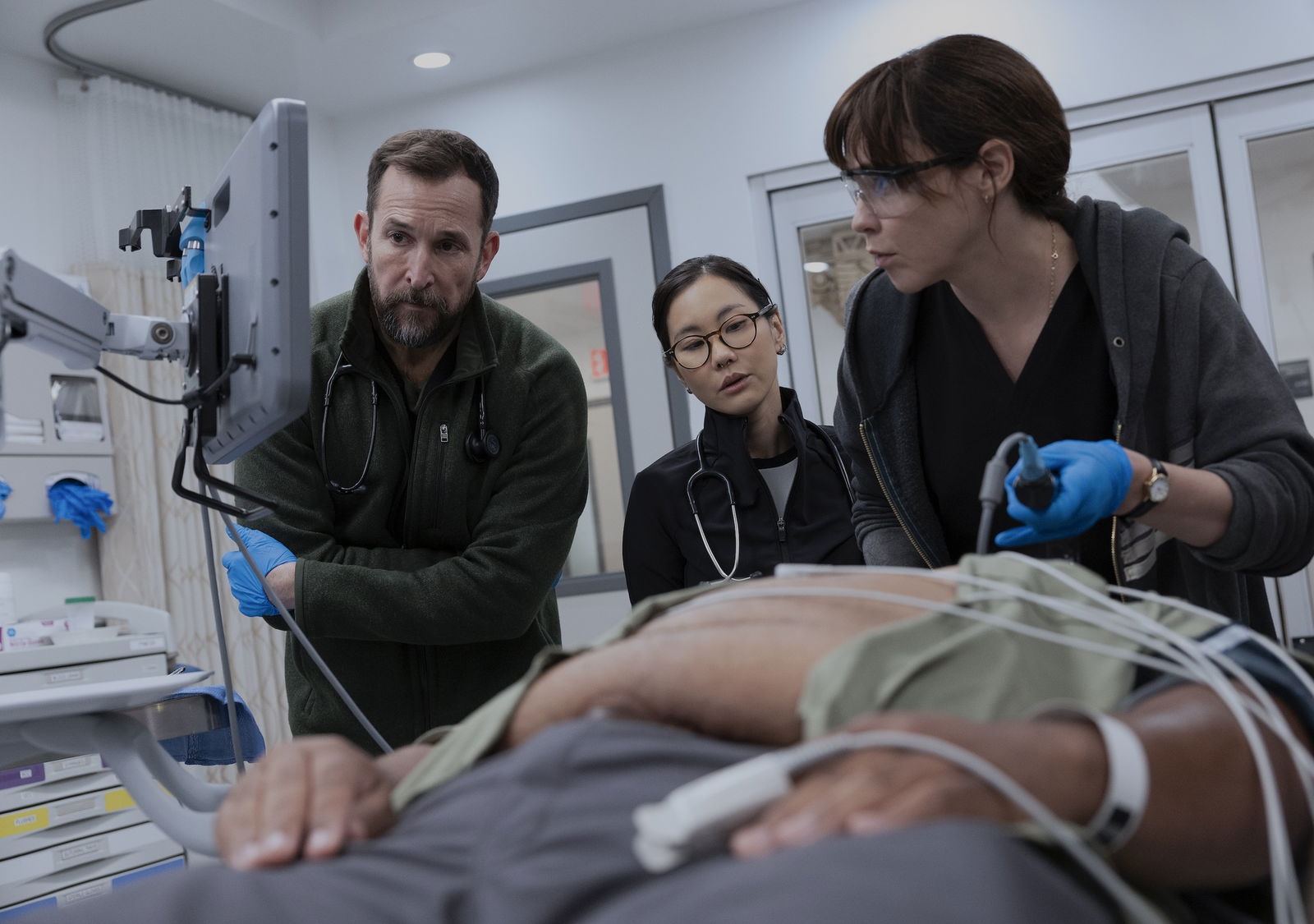
Characters are forced to move forward without clarity, guided by instinct, responsibility, and exhaustion rather than certainty. By grounding its final moments in reflection rather than spectacle, the episode reinforces its central truth: survival in this space is not about fixing everything, but about continuing despite what cannot be fixed. In doing so, episode 6 deepens the season’s emotional core and ensures its consequences will linger well beyond the end of the shift.
ADVERTISEMENT
Article continues below this ad
What do you think about The Pitt season 2, episode 6? Let us know in the comments.
ADVERTISEMENT

Edited By: Aliza Siddiqui
More from Netflix Junkie on Hollywood News






ADVERTISEMENT