
'The Office’s' Comedy Editor Thinks AI Is the Next Big Tool for Laughs
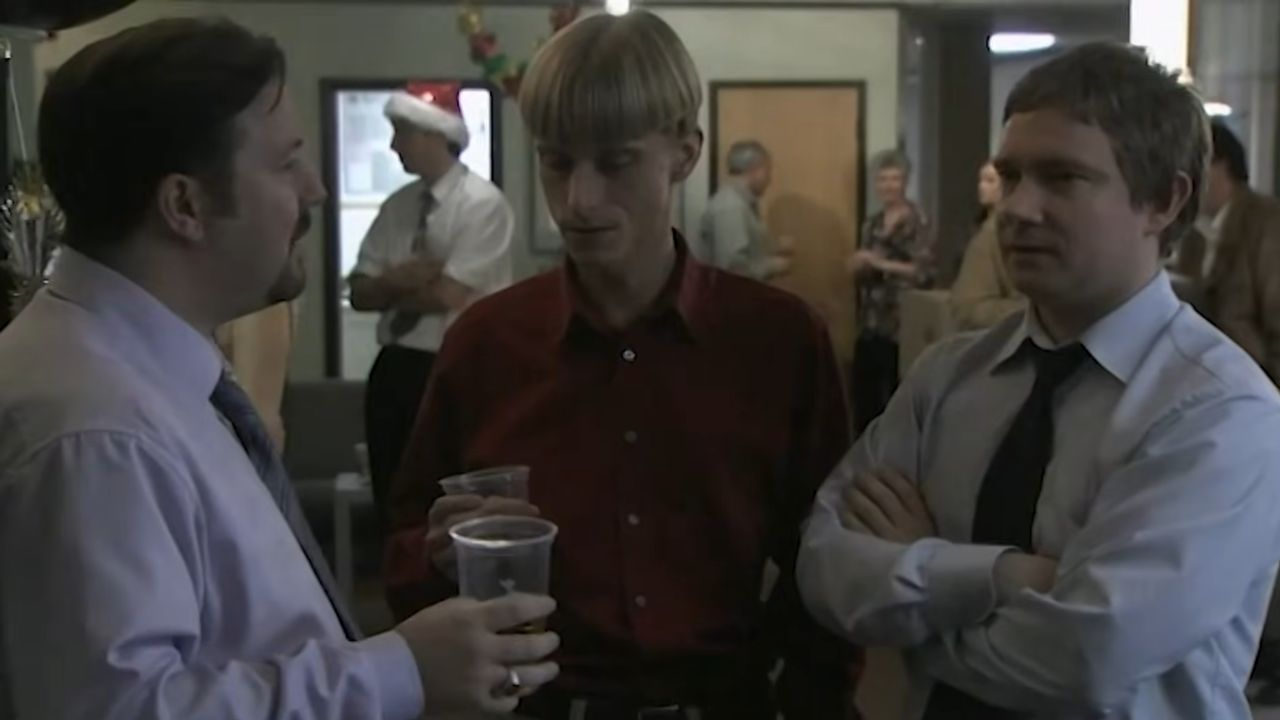
Credits: Tim and Dawn Finally Kiss | The Office/ @BritBox via YouTube/ Produced by The Identity Company and Capital United Nations Entertainment/ Distributed by BBC
Credits: Tim and Dawn Finally Kiss | The Office/ @BritBox via YouTube/ Produced by The Identity Company and Capital United Nations Entertainment/ Distributed by BBC
The Office's editor recently said that AI can make comedy funnier. Artificial intelligence is rapidly reshaping entertainment, from deepfake visuals to automated scripts, sparking intense fear across Hollywood. Actors worry about replacement, writers fear creative erosion, and studios grapple with ethical lines. The industry's "AI ickiness" has become a cultural battleground.
Yet amidst this panic, one veteran comedy editor just dropped a shocking claim: AI can actually make humor funnier than humans, and he's not joking.
The Office editor says AI could sharpen comedy timing
Nigel Williams, the acclaimed editor behind British comedy hits like The Office and Derry Girls, is making a bold case for artificial intelligence in comedy editing. Williams experimented with Flawless, an AI dubbing technology, to automatically adjust an actor's dialogue and lip movements mid-shot, ensuring punchlines landed without cutting away from their face.
Though producers were initially horrified by the AI method and the fix was ultimately scrapped due to industry "AI ickiness," Williams remains convinced the technology belongs in the comedy toolkit.
"Editing is one big cheat. If AI can make production better, why not use it?," he shared with Rendering, Deadline's AI column. His perspective reframes AI not as a replacement for creativity but as an extension of long-standing post-production tricks. In his view, comedy has always relied on illusion, timing, and manipulation behind the scenes.
He notes that Flawless only alters facial movement from the nose down, comparing it to older editing techniques like reversing footage to sync dialogue. Support for his stance also came from Derry Girls producer Jimmy Mulville, who described the AI experiment as a human editor using ingenuity to enhance storytelling.
But while editors see opportunity, the wider industry remains deeply divided as seen on Cannes this year.
Cannes Film Festival 2026 exposes Hollywood’s growing AI divide
Cannes 2026 became the battleground where Hollywood's fractured relationship with artificial intelligence played out in stark contrast. On one side stood Demi Moore, urging pragmatism and acceptance. She argued that AI is inevitable and should be approached as a collaborative tool, while emphasizing that human emotion remains the core of artistic expression.
On the other side, Seth Rogen drew a hard line, insisting that anyone relying on AI to write scripts should not be considered a writer. For Rogen, the creative process itself is sacred, and delegating it to machines undermines the very essence of storytelling. The clash highlighted a deeper philosophical divide about what creativity means in the age of automation.
Despite banning generative AI in competition, the festival market told a different story. Projects began branding themselves as human-led but AI-assisted, while filmmakers like Roger Avary experimented with AI integration in adaptations. Meanwhile, ventures like Acme AI & FX signaled a future where technology and filmmaking are increasingly intertwined.
The debate at Cannes was not theoretical. It revealed an industry already in transition, grappling with how to balance innovation, ethics, and survival in a rapidly evolving landscape.

What do you think about Nigel Williams' take on AI? Let us know in the comments.

Edited By: Itti Mahajan
