
'The Odyssey': Lupita Nyong'o’s Helen is More Lore Accurate Than 'Troy’s' When It Comes to One Detail
Credit: Universal Pictures
Credit: Universal Pictures
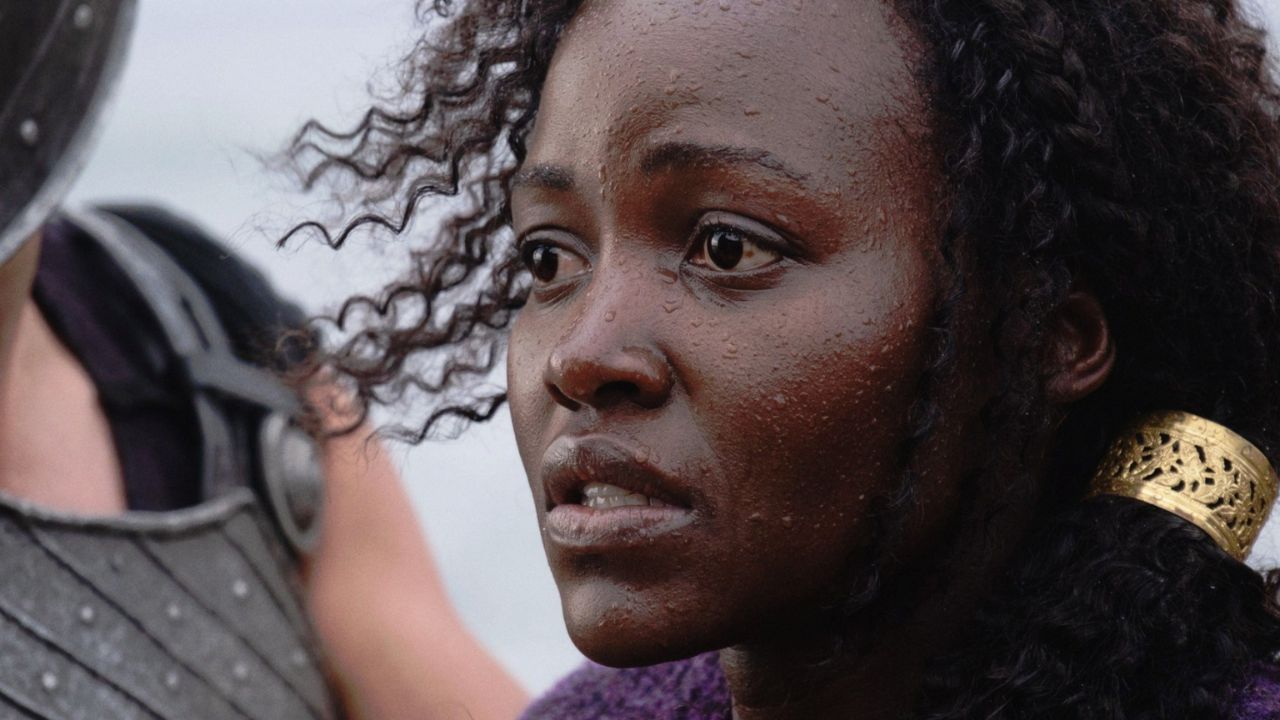
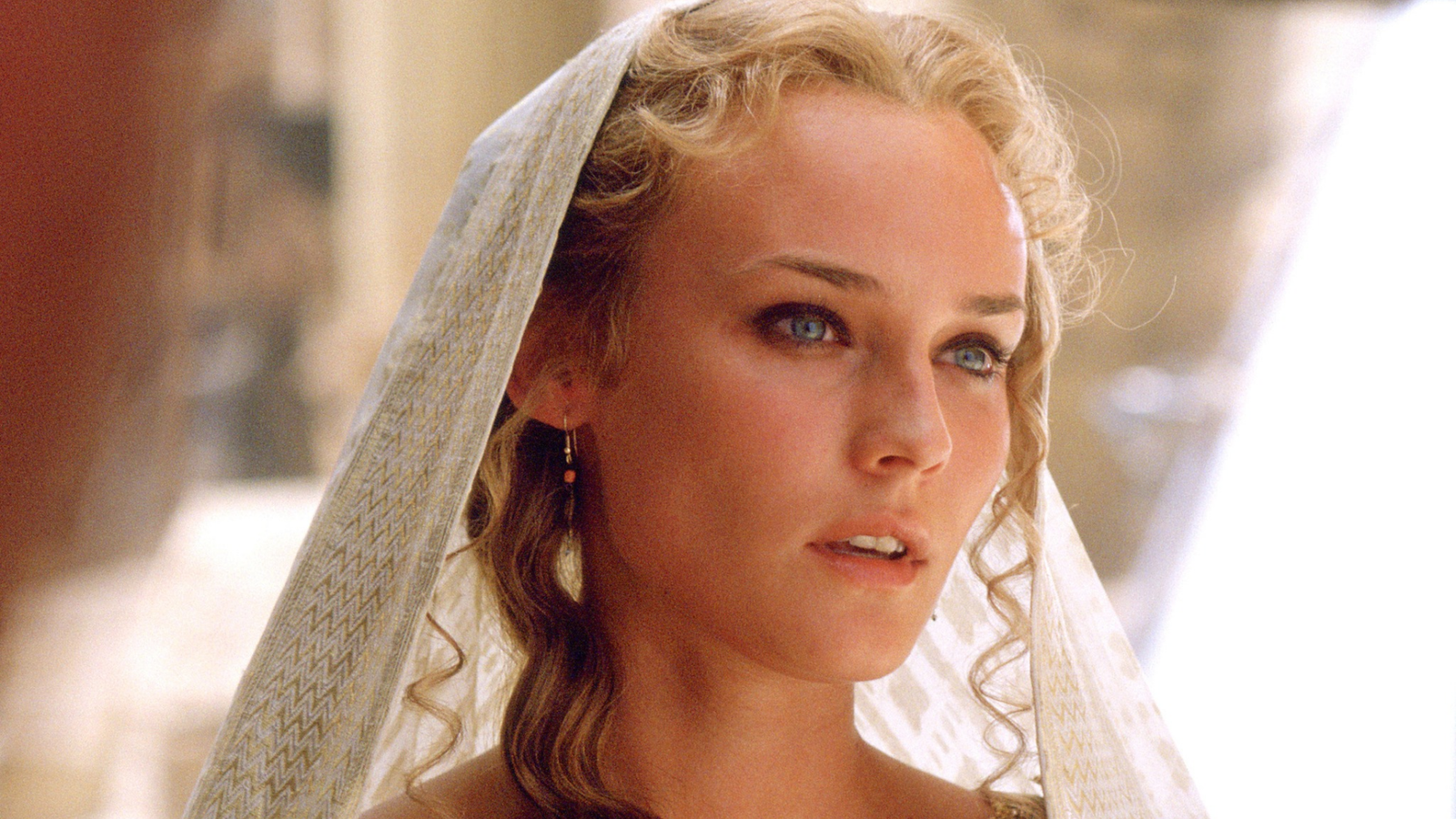
Christopher Nolan's The Odyssey has sparked conversations on multiple fronts, from its ambitious adaptation of Homer's timeless epic to its ensemble cast and bold creative choices. While much of the discussion has centered on Nolan's sweeping vision of Odysseus' journey, one performance has quietly stood out for a very different reason. Lupita Nyong'o's portrayal of Helen has prompted audiences to revisit what Homer's texts actually say about one of mythology's most misunderstood women. For years, Wolfgang Petersen's Troy (2004) shaped mainstream perceptions of Helen through Diane Kruger's graceful and glamorous performance.
Nolan's version, however, approaches the legendary figure from another angle altogether. Rather than asking audiences why Helen inspired a war, The Odyssey asks what it meant to live with the consequences of one.
Helen's emotional burden brings Christopher Nolan's version closer to Homer
The biggest difference between Lupita Nyong'o's Helen and Diane Kruger's interpretation has very little to do with appearance. It lies in how each film understands Helen's emotional world. Homer's Iliad and Odyssey rarely dwell on specific physical characteristics beyond poetic epithets such as "white-armed" and "lovely-haired." Instead, the epics devote surprising attention to Helen's inner conflict. She repeatedly expresses shame over the devastation caused by the Trojan War, questions her own choices, and mourns the lives lost because of a conflict forever associated with her name.
Nyong'o's Helen carries visible and invisible scars throughout the film, reflecting years of guilt, grief and fractured identity. Even though Nolan introduces a facial scar that never appears in Homer's writings, the creative decision functions as a metaphor for the psychological wounds Helen has carried since Troy fell.

via Imago
Credits: Imago
Rather than presenting her simply as an object of desire, the film allows her to exist as a woman haunted by history, mirroring the reflective, regretful figure who welcomes Telemachus to Sparta in The Odyssey. The emotional consequences of the war become more important than the perfection of her beauty, making her characterization arguably more faithful to Homer's intentions.

That contrast becomes even clearer when both cinematic versions of Helen are placed side by side.
Two adaptations, two very different interpretations of the Queen of Sparta
Wolfgang Petersen's Troy embraces Helen primarily through the lens of romance. Diane Kruger's performance emphasizes youthful innocence, extraordinary beauty and the forbidden relationship with Paris that ultimately ignites the war. While the film acknowledges Helen's sorrow, her role often remains tied to the central love story, making her a symbol around which larger events unfold rather than an active emotional participant in them. The spectacle of the Trojan War frequently overshadows the quieter complexities of her character.
Christopher Nolan's The Odyssey shifts that perspective significantly. Although the film still recognizes Helen's legendary beauty, it spends considerably more time exploring what years of conflict have done to her emotionally. Nyong'o portrays a queen who has survived extraordinary circumstances, someone forced to live with blame, political expectations, and memories that cannot simply disappear after the war ends.
Credits: Warner Bros. Pictures
Credits: Warner Bros. Pictures
Christopher Nolan also strengthens the female perspective through Nyong'o's dual role as Helen and Clytemnestra, subtly drawing parallels between two women whose lives were irrevocably shaped by decisions made largely by powerful men. The result is a version of Helen who feels less like mythology's ultimate prize and more like one of its greatest survivors.
Ultimately, the comparison between Lupita Nyong'o's Helen and Diane Kruger's is not about deciding which actress is "better." Both performances serve the stories their filmmakers wanted to tell. Troy presents Helen as the legendary beauty whose love changed history, while The Odyssey reimagines her as a woman forever changed by that history. In doing so, Nolan's adaptation captures one of the most overlooked truths about Homer's epics: Helen's greatest defining characteristic was never simply her beauty, but the profound emotional burden she carried because of it.

Do you think Lupita Nyong'o's Helen is more lore-accurate than Diane Kruger's portrayal in Troy? Share your thoughts in the comments!

Edited By: Aliza Siddiqui
