
The Making of Scott Pelley: How The Texas Journo Became CBS’s National Fame
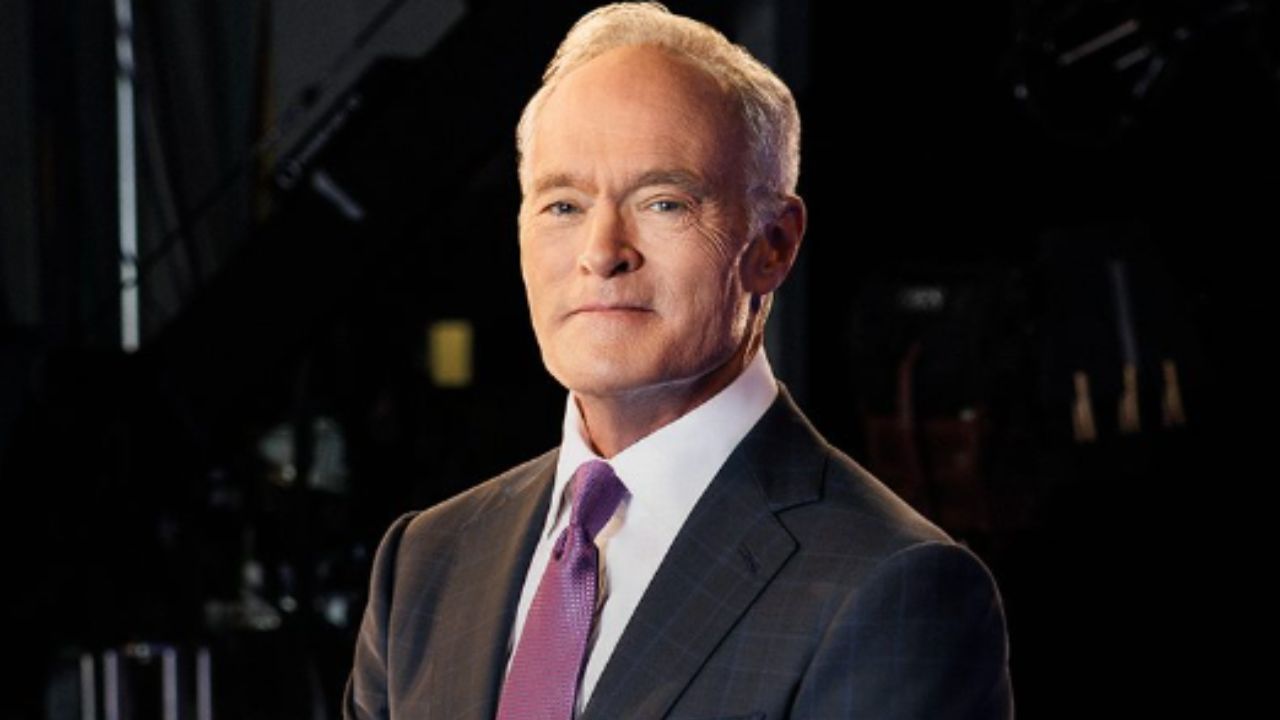
via Getty
Credits: Scott Pelley/@people via Instagram/Photography- Michele Crowe/CBS News via Getty Images
For more than three decades, Scott Pelley has been one of the most recognizable faces in American television journalism. Known for his calm on-air presence, hard-hitting interviews, and reporting from war zones and political battlegrounds alike, Pelley built a reputation as one of CBS News' most respected correspondents. However, in June 2026, the veteran journalist found himself at the center of a major media controversy after being dismissed from 60 Minutes amid a highly publicized clash with CBS News leadership, sending shockwaves through the journalism industry.
So, in light of the recent events that have put Scott Pelley back in the spotlight, it is a fitting time as ever to look back at how it all began by revisiting his milestones, opportunities, and defining moments that shaped Pelley’s rise from a young reporter with a passion for news into one of the most influential journalists of his generation.
A Texas kid with a reporter's dream: Scott Pelley
Long before he became a household name in broadcast news, Scott Pelley was a Texas teenager captivated by the world of reporting. Born Scott Cameron Pelley on July 28, 1957, in San Antonio, Texas, he spent most of his childhood in Lubbock, while his family roots also stretched into Oklahoma, with both of his parents originally coming from Pottawatomie County. Interestingly, Pelley's relationship with journalism started long before college or national television.
At just 15 years old, he secured a job as a copy boy at the Lubbock Avalanche-Journal, a local newspaper that would become the launching pad for his career. Years later, he recalled falling in love with the newsroom almost instantly. The energy, urgency, and sense that reporters knew what was happening before the rest of the world fascinated him. Unlike many future television personalities who dream of fame or life in front of the camera, Pelley's early ambition appeared to have been centered on reporting itself and the pursuit of stories.
After graduating from Coronado High School in Lubbock, Pelley enrolled at Texas Tech University to study journalism. However, his professional career was already gaining momentum. By the mid-1970s, Pelley had already begun working in local television news. He joined KSEL-TV in Lubbock, where he gained hands-on experience in reporting and production. From there, he moved to larger markets, including KXAS-TV and later WFAA-TV in Dallas. These years were far from glamorous.
But that did not stop Pelley from living his life to the fullest. According to his wife, Jane Boone, whom he married in 1983 and raised two children, Reece and Blai, Pelley enjoyed a lot of fun activities when they first met, such as hang gliding, scuba diving, photography, and even developing his own film.
He was also drawn to cultural pursuits like opera. Those who knew him during his younger years described him as intensely curious, a quality that would later become one of the defining characteristics of his reporting career, and by the time CBS News came calling, Pelley had already spent nearly 15 years honing his craft in Texas newsrooms, building the skills and reputation that would soon propel him onto the national stage.
A new stage at CBS News
Scott Pelley joined CBS News in 1989, stepping out of Texas local television and straight into the national spotlight. CBS placed him in the middle of major breaking news coverage almost immediately, trusting him with stories that defined the early 1990s.
In the first years of his CBS career, Pelley became closely associated with crisis reporting. He covered the Gulf War, reporting from the Middle East and alongside U.S. military units during Operation Desert Storm. Back home, he was deployed to some of the most significant domestic tragedies of the decade, including the 1993 World Trade Center bombing and the Waco siege in Texas. These assignments demanded speed, clarity, and composure under pressure, and Pelley’s reporting style began to take shape around those qualities.
By the mid-1990s, his role expanded further as he covered the Oklahoma City bombing and its aftermath, including the investigation and trial of Timothy McVeigh. This period cemented his reputation as a dependable national crisis correspondent. He was no longer just a reporter on assignment, but someone CBS relied on when the country was watching the news unfold in real time.
A major turning point came in 1997 when he was named Chief White House Correspondent for CBS News. In this role, Scott Pelley covered the Clinton administration during one of the most politically charged eras in modern American history. He reported on foreign policy trips, domestic political battles, and the unfolding impeachment process. One of his most significant breakthroughs during this time was reporting that Monica Lewinsky had become a cooperating witness in the independent counsel investigation, a development that intensified national attention on the scandal.
After his White House tenure, Pelley transitioned into long-form journalism with 60 Minutes, joining in 1999 through 60 Minutes II. His most defining phase began in 2004 when he became a full correspondent on 60 Minutes. From this point, Pelley’s work expanded globally, with extensive reporting from conflict zones including Iraq, Afghanistan, Sudan, Syria, and later Ukraine. His war reporting became one of his defining trademarks, often embedding with military units or reporting directly from active conflict regions. At the same time, he conducted high-profile interviews with world leaders, including U.S. presidents, Federal Reserve Chair Ben Bernanke, FBI Director James Comey, and even Pope Francis.
Alongside international reporting, Pelley also produced major investigative stories on terrorism, intelligence operations, and global crises. His work covered everything from ISIS-related conflicts in Iraq to humanitarian disasters such as the Darfur genocide and the Ebola outbreak response. These reports often combined frontline field reporting with access-driven interviews, reinforcing his reputation as a journalist capable of operating in both dangerous environments and high-level political circles. In 2011, Pelley took on one of the most visible roles in American broadcast journalism when he became anchor and managing editor of CBS Evening News. Under his leadership, the broadcast saw a noticeable increase in viewership and returned to a more traditional, fact-driven style of reporting.
By the time his CBS era reached its later years, Pelley had become one of the defining voices of long-form broadcast journalism, with a career that moved steadily from breaking news assignments to some of the most consequential reporting in modern television news history. But after more than thirty years inside the CBS newsroom, the story of Scott Pelley took an unexpected turn, one that shifted him from reporting the news to becoming part of it.
Departure from CBS News
The veteran correspondent, Scott Pelley, was dismissed from 60 Minutes following a heated internal conflict that quickly escalated into one of the most talked-about newsroom shakeups in recent memory. The controversy began during a tense staff meeting at 60 Minutes, where new leadership under executive producer Nick Bilton and editor-in-chief Bari Weiss laid out major structural changes to the program. According to multiple reports, Pelley openly challenged the direction of the show and questioned the qualifications of the new leadership team. In the meeting, he accused Weiss of fundamentally damaging the program’s legacy, saying she was “murdering 60 Minutes” and that she had been brought in to “kill it.”
The remarks were directed at sweeping changes inside CBS News following corporate restructuring and leadership shifts. Several senior producers and correspondents had recently been removed from the program, including Sharyn Alfonsi and Cecilia Vega, sparking internal tension and widespread backlash among staff. Pelley reportedly described these firings as “cruel,” arguing that they destabilized the newsroom and undermined the program’s journalistic standards.
The situation escalated further when Pelley confronted Bilton during a subsequent meeting, demanding answers about recent staff departures and questioning whether the leadership understood the legacy of the program. Management later described his behavior as “unacceptable” and cited his lack of cooperation with the show’s future direction as the reason for termination.
Following his departure, Pelley released a strongly worded statement accusing CBS leadership of undermining journalistic integrity and interfering in editorial decisions. He claimed that the leadership of 60 Minutes was “no longer recognizable” and that the principles he had built his career on were “gone.” The firing marked a sharp and emotional end to a 37-year career at CBS, where Pelley had risen from a field reporter covering wars and political crises to one of the most prominent voices in American broadcast journalism.
Media reaction was immediate and divided. Some observers described the situation as a breakdown between legacy journalism and modern newsroom restructuring, while others viewed it as the consequence of internal conflict becoming public and unmanageable. The incident quickly became symbolic of a larger tension inside legacy media institutions struggling to redefine themselves in a changing broadcast landscape. However, from a Texas newsroom dream to a turbulent CBS exit, Scott Pelley’s story ultimately became a full-circle journey through the very institution that made him.
What are your thoughts on Scott Pelley? Let us know in the comments!

Edited By: Adiba Nizami
