
‘The AI Doc' 2026 Draws Inspiration from 'The Day After's Haunting Nuclear Aftermath, says Tristan Harris
In moments of global uncertainty, storytelling has often been the clearest mirror to our deepest fears. During the Cold War, the threat of nuclear annihilation loomed large, but it was The Day After that translated that abstract dread into something visceral and unforgettable. By showing ordinary lives unravel in the wake of a nuclear catastrophe, it forced millions to confront a future they could no longer ignore.
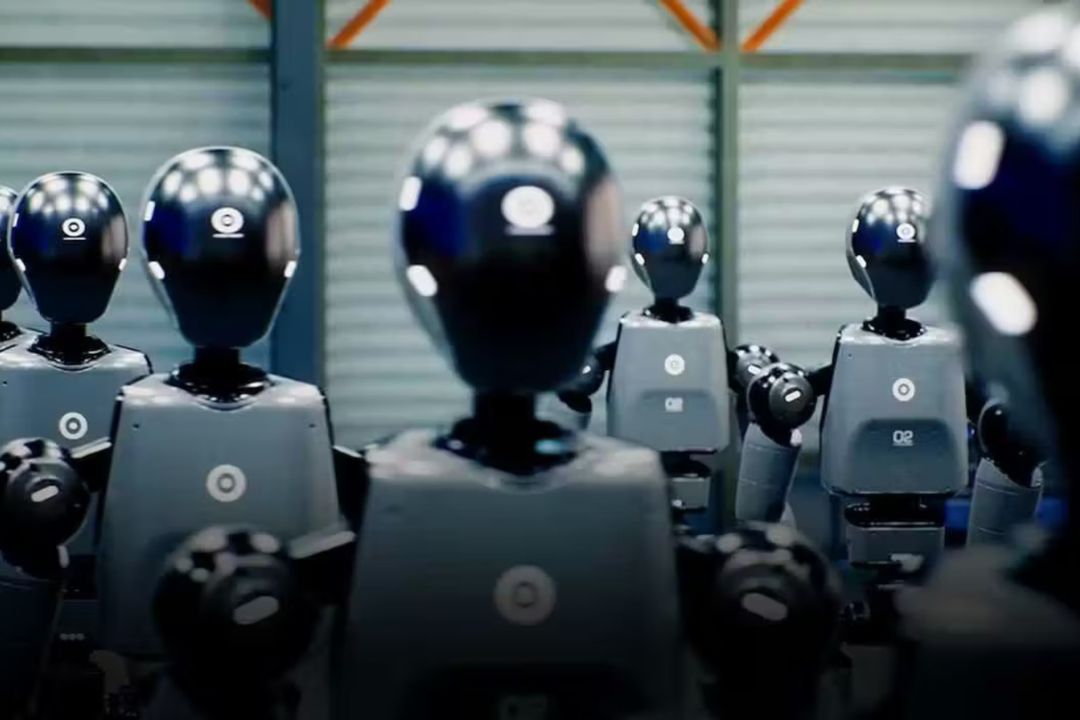
Decades later, a different kind of anxiety grips the world, one driven not by missiles but by machines, namely, Artificial Intelligence. The AI Doc: Or How I Became an Apocaloptimist explores this very evolution of AI and its existential risks.
Unexpectedly, it feels like an extension of The Day After’s haunting themes, as per Tristan Harris, featured in the 2026 documentary.
ADVERTISEMENT
Article continues below this ad
Tristan Harris compares The AI Doc to The Day After
Technology ethicist Tristan Harris has framed The AI Doc: Or How I Became an Apocaloptimist, the new AI‑focused documentary, as a contemporary echo of the 1983 TV film The Day After. In his conversation on Talk Easy with Sam Fragoso, Harris started by explaining that The Day After was a massive, prime‑time event.
“100 million Americans watched the same movie at the same time,” turning fictional devastation into a shared national experience.
He went on to describe how the film viscerally visualized the aftermath of a nuclear exchange between the US and the Soviet Union, forcing viewers to feel the scale of the horror rather than simply intellectualize it. Drawing that parallel, Harris says he wants The AI Doc to make audiences confront a similarly uncomfortable truth.
“The default trajectory is eight soon‑to‑be trillionaires basically deciding the future for all of humanity without being accountable to all of humanity,” a path he calls “an anti‑human future.” While The AI Doc draws from the cultural shock of The Day After, it focuses on today’s AI realities in a similar way.
The 2026 documentary, directed by Daniel Roher and Charlie Tyrell, looks at how AI is changing politics, jobs, and everyday life.
The AI Doc explores AI’s impact through personal and global lenses
The AI Doc: Or How I Became an Apocaloptimist is a feature-length documentary that blends personal narrative and visual essay. At its core, the film follows Tristan Harris and his team as they travel across the US, interviewing engineers, policymakers, parents, and activists to trace the chain of decisions.
ADVERTISEMENT
Article continues below this ad
Through illustrated sequences and intimate voiceover, director Daniel Roher frames himself not just as a critic but as a concerned father trying to picture the world his child will inherit in an AI-saturated era. Rather than focusing on speculative, far-future sci-fi scenarios, The AI Doc zeroes in on already-visible tipping points.
In this light, The AI Doc reads as a 21st-century counterpart to the kind of cultural shockwaves that The Day After once produced, only now the crisis is algorithmic rather than nuclear. Just like the 1980s film, Tristan Harris hopes his documentary can give audiences a common, emotional understanding of AI’s stakes so that the default, anti-human trajectory he describes can be collectively rejected before it becomes irreversible.

ADVERTISEMENT
Article continues below this ad
What do you think about Tristan Harris comparing The AI Doc to The Day After? Let us know in the comments
ADVERTISEMENT

Edited By: Hriddhi Maitra
ADVERTISEMENT
ADVERTISEMENT
