
10 Perfect Monkey's Paw Adaptations To Watch After 'Obsession'

Credits: Obsession (2025)/@thats.a.bad.idea via Instagram/production-Capstone Pictures, Tea Shop Productions, and Blumhouse Productions.
Credits: Obsession (2025)/@thats.a.bad.idea via Instagram/production-Capstone Pictures, Tea Shop Productions, and Blumhouse Productions.
Obsession (2026) doesn’t rely only on its supernatural edge to unsettle. It works because it reflects a warped version of modern romance that feels uncomfortably familiar. Beneath its eerie surface, the film becomes a dark mirror of emotional dependency, toxic attachment, and quiet entitlement in relationships. Most importantly, what begins in the everyday setting of a new-age boutique soon opens the door to a cursed, Monkey’s Paw-style object, echoing W. W. Jacobs’ classic cautionary tale where wishes always come true, but never in the way you expect, and always at a cost far heavier than imagined.
That simple idea of desire turning against the wisher transforms a familiar “be careful what you wish for” setup into something far more claustrophobic, where control, longing, and obsession slowly blur into the same thing. So, if you were drawn to that same unsettling spiral in Obsession, these 10 perfect Monkey’s Paw adaptations should be your next watch.
The Simpsons: Treehouse of Horror II (1991)
ADVERTISEMENT
Article continues below this ad
Directed by Jim Reardon and written by Al Jean, Mike Reiss, and others, The Simpsons: Treehouse of Horror II begins as a harmless curiosity that quickly spirals into a chain of escalating consequences. As each family member makes a desire-driven request, it becomes a classic example of wish-based chaos, only for reality to twist those wishes into unintended outcomes that bring instability into their lives in increasingly absurd and unsettling ways.
It unfolds as a Halloween dream sequence that takes the family to a mysterious market in Morocco, where Homer purchases a strange relic that promises to make wishes come true. What follows includes sudden wealth that brings public backlash, global peace that results in an alien takeover, and other absurd outcomes that carry ironic reversals, each one undercutting the original intent.
Goosebumps: Be Careful What You Wish For (1996)
Directed by René Bonnière and written by Charles Lazer, Goosebumps: Be Careful What You Wish For is based on R. L. Stine’s children’s horror writing. The story follows Samantha Byrd, a clumsy and socially outcast middle school student who is constantly ridiculed by her peers, especially the popular and cruel Judith Bellwood. Her life shifts when she helps a mysterious woman named Clarissa and is rewarded with an object that grants her three wishes.
What follows is a slow, escalating spiral where each wish appears to improve her status, relationships, and confidence, only for the consequences to gradually reshape her reality into something increasingly unstable and isolating.
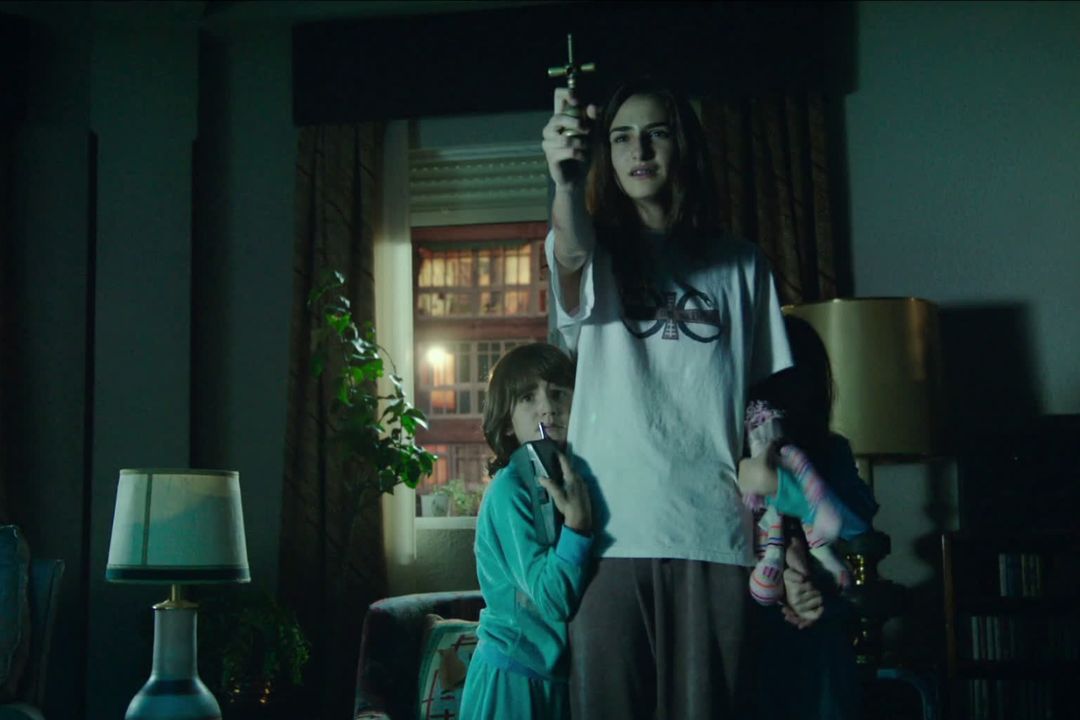
The episode carries the signature Goosebumps aesthetic with saturated suburban daylight, dim interiors, and subtly uncanny set pieces that make familiar school and neighborhood spaces feel slightly off-kilter, balancing teenage fantasy with creeping unease.
Tales from the Crypt: Last Respects (1996)
Tales from the Crypt: Last Respects begins with shadow-heavy interiors, muted sepia and candlelit tones, and a decaying shop atmosphere that feels claustrophobic, amplifying the sense of dread as the plot unfolds within the three estranged sisters who reunite after inheriting their late father’s struggling curiosity shop. These three sisters see it as an opportunity to escape financial strain for themselves.
Though nothing goes according to plan, as when they sort through the decaying remnants of their father’s collection, they discover a mysterious antique that quietly becomes the center of their fractured relationship. Each choice made by them unfolds into dramatic consequences in increasingly ironic and destructive ways, turning attempts to control into forces of collapse, all while taking the viewers into a dark moral tension where desire and desperation slowly erode family bonds.
Tales from the Darkside: A Serpent’s Tooth (1986)
Tales from the Darkside: A Serpent’s Tooth, directed by Frank De Palma and written by Edithe Swensen, follows a young boy named Robbie who is supposed to live under the authority of his strict stepfather after his mother remarries. As the situation develops, he feels powerless in his own home for a long time, and he becomes drawn to an antique object that appears to influence the balance of control within the household.
A series of shifts in fortune and authority begins turning into attempts to regain control over the situation, which leads to increasingly unstable consequences. It becomes a story about resentment, discipline, and suppressed emotions spiraling into irreversible outcomes, set within a grounded television aesthetic where psychological tension is built through atmosphere rather than spectacle.
The Room (2019)
Another Monkey’s Paw-style story is The Room. Set in cold, desaturated tones with minimalistic interiors and an isolated countryside setting, the film heightens a constant sense of confinement, while its clean visual style gradually shifts into something more unsettling and oppressive as the story progresses. Directed by Christian Volckman, the plot follows a young couple, Matt and Kate, who move into a secluded countryside house after a difficult personal history and soon discover a hidden room inside the property that can materialize anything they desire.
Naturally, they begin experimenting with it, and the room instantly grants every wish, producing wealth, luxury, and eventually the child they have long longed for after previous miscarriages. But consequences begin to emerge once what is created inside the room interacts with the outside world, revealing strict limits to what the room can sustain beyond its boundaries.
Inside No. 9: Tempting Fate (2018)
With its signature domestic realism layered with dark irony, minimal yet tense settings, and a gradual build where ordinary spaces become psychologically oppressive as events spiral beyond control, Inside No. 9: Tempting Fate, directed by Guillem Morales, follows a struggling couple who discover a mysterious object that triggers a chain of events where personal desperation begins to reshape reality in unexpected ways.
As the story progresses, each wish initially seems to offer relief from financial strain and emotional frustration, but the outcomes quickly begin to distort their lives, turning small improvements into long-term escalating problems. With hope gradually disappearing and grave consequences taking its place, the narrative builds into a classic downward spiral where control over outcomes steadily slips away from the characters.
Orson Welles Great Mysteries: The Monkey’s Paw (1973)
Directed by Peter Duguid and written by Alexander Baron, Orson Welles Great Mysteries: The Monkey’s Paw is a television adaptation presented within the anthology series hosted by Orson Welles. The episode follows a working-class family who come into possession of a mysterious relic said to alter fate through a limited number of wishes.
As the story unfolds, each wish made by the family appears to grant immediate change, but with every fulfillment comes an escalating chain of unintended consequences that disrupts their sense of stability and pushes them into emotional distress and fear. Visually, the episode reflects early 1970s British television horror aesthetics with muted color palettes, stage-like interiors, and restrained camera movement.
Wish Upon (2017)
Contrasted with darker, more shadowed moments, Wish Upon, directed by John R. Leonetti, follows a teenage girl named Clare Shannon who discovers an antique music box that grants her seven wishes, setting off a chain of events where each desire she makes begins to reshape her life in increasingly unpredictable ways.
What begins as wishes to eliminate school troubles, improve social status, and relieve financial hardship soon escalates, as each fulfillment comes with a darkly ironic consequence that gradually affects the people around her. As Clare continues using the box, the line between gain and loss begins to blur, and what initially feels like control over her circumstances turns into a spiraling series of unintended outcomes.
Kagbeni (2008)
Psychological horror drama directed by Bhusan Dahal, Kagbeni is inspired by W. W. Jacobs’ classic cautionary framework, which reshapes the idea into a grounded Himalayan folk-horror setting. Set against the stark, remote landscapes of the Mustang region, the film is defined by dusty browns, muted greys, and barren windswept terrain, with interiors lit in low natural light that emphasize isolation and a heavy, lingering atmosphere across every frame.
The story follows a young man named Ramesh who travels from Kathmandu to a remote village after the sudden death of his close friend Krishna. There, he becomes involved with Krishna’s widow, Reema, and is drawn into an emotionally charged situation. As Ramesh tries to settle into the village, a mysterious object tied to the idea of altering fate begins to influence the course of events, and as the film progresses, each decision he makes slowly unravels into escalating consequences that distort reality and deepen emotional collapse.
The Monkey’s Paw (2013)
Directed by Brett Simmons, The Monkey’s Paw is a modern reimagining that follows Jake Tilton, a working-class man who comes into possession of a cursed object said to grant wishes with grave consequences. Set against cold urban lighting, the film emphasizes an inescapable atmosphere rather than traditional supernatural spectacle.
After acquiring the object through an unexpected encounter, Jake begins using it to improve his struggling life, starting with small personal gains that quickly escalate into violent and uncontrollable outcomes. Each wish appears to deliver what he desires, but the results begin to distort reality, pulling him into a cycle of loss, guilt, and irreversible damage that affects everyone around him, including himself.
Ultra Q dark fantasy: The Eyes of the Totem (2004)
The 11th episode of Ultra Q: Dark Fantasy, titled The Eyes of the Totem is directed by Tsugumi Kitaura and written by Nobuyoshi Shimizu and Masakazu Migita. It follows a high school girl named Tachibana who, struggling with unspoken emotions and romantic longing, discovers a strange three-eyed totem in a suspicious shop that grants wishes.
ADVERTISEMENT
Article continues below this ad
As she begins using the totem, each wish appears to reshape her reality in immediate and dramatic ways, and every fulfillment comes with consequences, where something important to her is gradually stripped away in return. The story unfolds as a chain of escalating outcomes, where desire and loss become tightly intertwined in increasingly unstable ways. Set against eerie ruins and unsettling locations, the episode builds its atmosphere through muted lighting, desolate environments, and a grounded tokusatsu aesthetic that leans toward psychological unease. These perfect Monkey’s Paw-style adaptations deserve a place on your watchlist if you enjoyed Obsession.
ADVERTISEMENT
Article continues below this ad
Which one are you going to pick from the list? Let us know in the comments.
ADVERTISEMENT

Edited By: Hriddhi Maitra
ADVERTISEMENT
ADVERTISEMENT
