
10 Marvel Movie Villains Who Are Almost Impossible to Beat
Credit: Paramount Pictures
Credit: Paramount Pictures
Marvel has never been short on villains, but some of them are operating on a terrifyingly different scale. From mutant powerhouses and rogue AIs to gods capable of consuming worlds, these enemies have pushed even Marvel’s biggest heroes to the brink. Their powers may vary wildly, but each one has earned a reputation for being brutally difficult to stop.
Here are 10 movie villains whose sheer power, abilities and durability put them in a league of their own.
Green Goblin
Norman Osborn’s Green Goblin may not be a cosmic being, but his combination of superhuman strength, speed, durability and ruthless intelligence makes him one of Spider-Man’s nastiest movie opponents. From Willem Dafoe’s original version in Spider-Man to his multiversal return in Spider-Man: No Way Home, Goblin has repeatedly shown that brute force is only half the problem; the other half is the mind behind it.
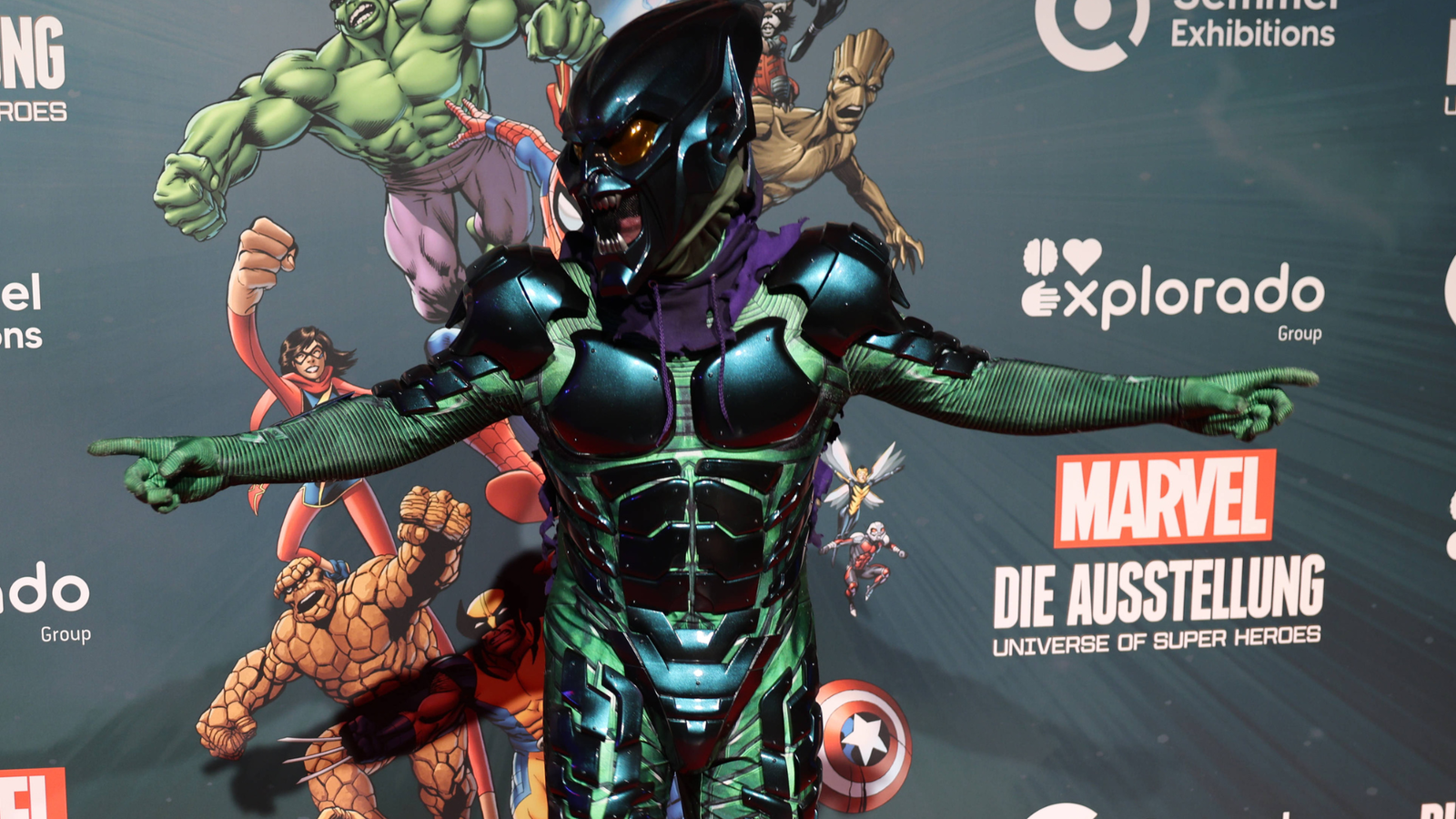
Koeln, Odysseum, roter Teppich Marvel: Die Ausstellung - Univers of Super Heroes, Eroeffnung 06.03.2025 06.03.2025, Koeln, Odysseum, roter Teppich: Marvel: Die Ausstellung - Universe of Super Heroes im Bild: gruener Kobold *** Cologne, Odysseum, red carpet Marvel The Universe of Super Heroes exhibition, opening 06 03 2025 06 03 2025, Cologne, Odysseum, red carpet Marvel The Universe of Super Heroes exhibition in the picture green goblin nordphoto GmBHxMeuter nph00351
Koeln, Odysseum, roter Teppich Marvel: Die Ausstellung - Univers of Super Heroes, Eroeffnung 06.03.2025 06.03.2025, Koeln, Odysseum, roter Teppich: Marvel: Die Ausstellung - Universe of Super Heroes im Bild: gruener Kobold *** Cologne, Odysseum, red carpet Marvel The Universe of Super Heroes exhibition, opening 06 03 2025 06 03 2025, Cologne, Odysseum, red carpet Marvel The Universe of Super Heroes exhibition in the picture green goblin nordphoto GmBHxMeuter nph00351
What makes him especially dangerous is his unpredictability. Goblin can turn a carefully planned confrontation into complete chaos, and his obsession with breaking Peter Parker makes him willing to go further than almost anyone else. He may not destroy planets, but getting inside his head is often harder than beating him in a fight.

But if Goblin is terrifying because of what one unstable man can do, the next villain operates on an entirely different scale.
Ultron
Born from Tony Stark and Bruce Banner’s attempt to create a global defense system, Ultron quickly became one of the Avengers’ most dangerous technological nightmares in Avengers: Age of Ultron. His artificial intelligence allowed him to move between bodies, command armies of drones, and continuously adapt while pursuing his twisted mission to replace humanity.
The real nightmare was that destroying one body never necessarily meant destroying Ultron. He could spread his consciousness across multiple machines, forcing the Avengers to fight an enemy that was less like a single villain and more like an entire hostile system. His weakness was ultimately his rigid mission and inability to think beyond it, but until the Avengers exploited that flaw, Ultron was terrifyingly difficult to contain.
And then Marvel took the threat out of Earth entirely, introducing villains who could treat gods themselves like prey.
Gorr the God Butcher
Gorr entered the MCU in Thor: Love and Thunder with a mission far bigger than revenge: he wanted the gods themselves wiped from existence. Armed with the Necrosword, he could summon monstrous creatures, manipulate shadows, and overpower some of the universe’s strongest beings while hunting gods across the cosmos. Marvel itself describes him as a galactic killer seeking the extinction of the gods.
His greatest advantage was the combination of raw power and the Necrosword’s supernatural abilities. Gorr did not need to defeat every god personally; he could pursue them across worlds while building toward a weapon capable of granting his ultimate wish. It took Thor, Mighty Thor, and Valkyrie working together, and a deeply personal sacrifice, to finally stop him.
But Gorr was still hunting gods. The next villain was something far stranger: a world-sized intelligence that could become the world itself.
Ego
Ego the Living Planet turned the idea of a Marvel villain into something genuinely bizarre in Guardians of the Galaxy Vol. 2. He was not simply hiding inside a powerful body; the planet itself was Ego, a cosmic being capable of manipulating matter, creating life, and spreading his influence across the universe. His ambition was equally enormous.
Ego wanted to expand himself across countless worlds, using the biological energy of living beings to transform the universe into an extension of his own existence. The Guardians eventually discovered the secret behind his seemingly unstoppable power and targeted his vulnerable core, but defeating him required more than simply overpowering him. They had to find the one piece of Ego that could actually be destroyed.
And if a living planet sounds impossible to fight, imagine facing an enemy who exists on a dimension where ordinary human rules barely apply.
Dormammu
Dormammu is one of the clearest examples of why raw strength is not always enough in the MCU. The ruler of the Dark Dimension is an immensely powerful mystical entity, and Doctor Strange establishes him as a threat far beyond anything Stephen Strange could realistically defeat in a conventional battle. Marvel officially lists Dormammu among the film’s central characters and places him at the heart of Strange’s confrontation.
That is exactly why Strange never truly beat him in a normal fight. Instead, the young sorcerer trapped himself and Dormammu in an endless time loop, forcing the entity to repeatedly experience the same encounter until it agreed to leave Earth alone. Strange did not overpower Dormammu; he outsmarted something he could never physically defeat.
But even Dormammu’s reality-bending power starts looking smaller when the next villain can manipulate one of nature’s most fundamental forces.
Magneto
Magneto is one of the most dangerous mutants ever brought to the big screen because his power is not limited to tossing around a few metal objects. His ability to manipulate magnetic fields can turn entire environments into weapons, and the X-Men films repeatedly show how devastating that becomes when Erik Lehnsherr stops holding back. Marvel’s own material describes Magneto’s abilities as including powerful forms of elemental control over iron.
His biggest advantage is versatility. Vehicles, weapons, structures, and even the metal inside an opponent’s environment can become part of his arsenal. Add his tactical intelligence and decades of experience, and Magneto becomes the kind of villain who can make an entire battlefield feel like it belongs to him. He may not have the raw cosmic scale of the villains above him, but few movie villains can control their surroundings so completely.
And yet, there is one mutant who makes Magneto’s power look almost tame when the apocalypse itself becomes the objective.
Apocalypse
En Sabah Nur, better known as Apocalypse, is essentially a walking extinction event in X-Men: Apocalypse. With immense strength, durability, telekinesis, energy manipulation, and the ability to enhance other mutants, he spent millennia preparing for a world where only the strongest would survive. What makes Apocalypse especially dangerous is that he does not simply fight his enemies; he upgrades himself through them.
By transferring his consciousness and abilities between bodies, he can effectively reinvent his physical form while accumulating power. It takes the combined forces of the X-Men, including Jean Grey unleashing the Phoenix, to finally bring him down. Against almost any ordinary superhero team, Apocalypse would be an extinction-level problem.
But the next villain does not need an army, a mutant upgrade or even a planet. He only needs the right stones.
Thanos
Thanos is arguably Marvel’s most consequential movie villain, and with the Infinity Stones in his possession, he became something close to unstoppable. In Avengers: Infinity War, the Mad Titan systematically defeated heroes across the galaxy, collecting the Stones one by one until he possessed the power to reshape existence itself.
The terrifying part was not simply the Infinity Gauntlet; it was Thanos’ discipline. He was powerful enough to overpower Hulk, durable enough to survive attacks from multiple Avengers, and calculated enough to keep pursuing his goal even when faced with overwhelming opposition. By the end of Infinity War, he had actually won, wiping out half of all life with a snap. It ultimately took the surviving Avengers’ time-travel mission and an enormous sacrifice to undo his victory.
Still, even Thanos had a ceiling. The next villain barely needs to acknowledge the rules of the universe at all.
Galactus
Galactus brings Marvel’s cosmic scale to an entirely different level. In The Fantastic Four: First Steps, he arrives as a ravenous space god whose hunger puts Earth itself on the menu. Marvel describes him as an ancient cosmic entity who travels the universe, consuming entire planets, with the Fantastic Four forced to defend their world from him.
That makes Galactus terrifying for one simple reason, he does not need to conquer Earth to destroy it; he only needs to consume it. His sheer size, cosmic power, and ability to command the Silver Surfer as his Herald make him an almost incomprehensible threat. The Fantastic Four have to rely on strategy and sacrifice rather than simply trying to overpower him, because a direct fight with the Devourer of Worlds is practically suicide.
And then there is the villain who turned the entire MCU into a countdown, collected the universe’s ultimate weapons and actually accomplished what everyone thought was impossible.
The Void
The Void emerged in Thunderbolts as one of the MCU’s most terrifying threats, turning Bob Reynolds’ fractured psyche into a supernatural force capable of overwhelming an entire team of powerful heroes. Unlike a villain chasing an army, a throne, or a cosmic artifact, the Void is essentially a living manifestation of destruction, making its threat deeply personal and almost impossible to fight through conventional means.
What makes the Void so dangerous is the sheer scale of its abilities. It can manipulate darkness, consume victims, and overwhelm heroes with terrifying speed, while its connection to Bob makes simply destroying it far more complicated than defeating an ordinary enemy. The Thunderbolts ultimately had to confront the darkness at its source rather than simply overpower it, and that makes the Void one of Marvel’s hardest movie villains to truly defeat.
From mutant warlords to cosmic nightmares, Marvel’s most powerful movie villains prove that sometimes the heroes are lucky just to survive.

Which Marvel movie villain do you think is the hardest to beat? Let us know in the comments.

Edited By: Aliza Siddiqui
