
10 Hollywood A-listers Who Turned Down Major James Bond Roles Which Went On to Be Hits
via Imago
Credits: Imago
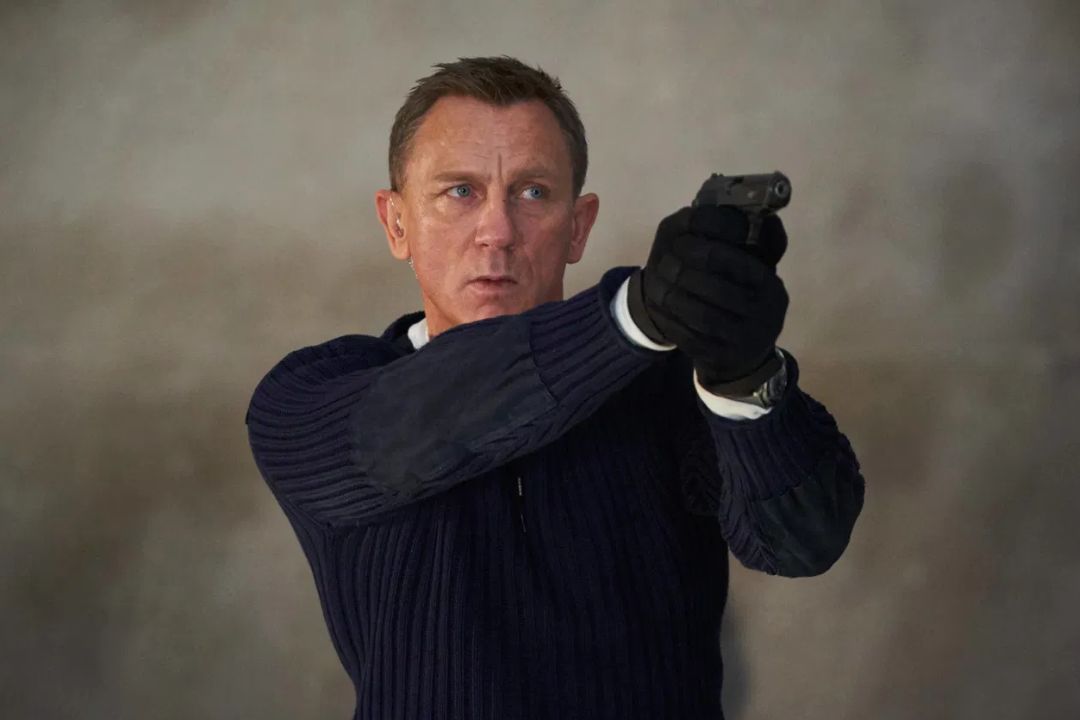
Fans of James Bond tend to speak about him as if he stepped out of cinema itself rather than being written for it, because 007 is not just a spy, he's a figure wrapped in tuxedo precision, shaken martinis, impossible calm under pressure, and a strange kind of elegance, even in chaos. Over the decades, actors like Sean Connery, Pierce Brosnan, Daniel Craig, and others portrayed Bond, bringing in a unique touch to each reboot of Bond, carrying the character like different instruments in the same orchestra, yet the melody stayed unmistakably 007.
However, behind that legendary silhouette lies an alternate history. At different points, A-list stars were invited into the world of 007, but they passed on the offer, leaving behind versions of Bond that never made it to the screen. So, here are 10 actors who turned down the role of 007, paving the way for the ultimate James Bond that fans now know and love.
Richard Burton
Before James Bond became a global cinema symbol, producers and Ian Fleming, the creator of James Bond, explored several major names for the role. Among them was Richard Burton, who was already a powerful presence in cinema, known for intense and commanding performances in films like The Robe, Look Back in Anger, and later Cleopatra.
He was approached by Ian Fleming himself, who was attempting to see if his first James Bond novel, Casino Royale, could be adapted for the screen. However, Burton was not convinced the idea was right for him. Later reports also suggest that even when approached after Connery’s exit, negotiations did not progress, as expectations and terms did not align.
Ultimately, the role went to Sean Connery in Dr. No (1962), which defined the foundation of the Bond franchise as we know it today.
Dominic West
During the post-Brosnan casting phase around 2005, Dominic West was considered during early discussions for the next James Bond as EON Productions developed what would become Casino Royale (2006). His name appeared in the wider pool of British actors being talked about at the time, and he has mentioned attending early, informal meetings or audition situations in a very casual way, even recalling turning up in jeans and a T-shirt.
At the time, he also admitted he was not particularly drawn to James Bond and viewed the franchise as creatively uninteresting before the Daniel Craig reboot reshaped it. Instead, West went on to build his reputation through powerful performances, most notably as Jimmy McNulty in The Wire, a role that remains his defining work in television.
Michael Gambon
Michael Gambon was considered for James Bond during the franchise’s transitional casting period following Sean Connery’s early exit, particularly around the late 1960s to early 1970s era that led into Diamonds Are Forever (1971). According to production histories, he was among several British actors placed in informal discussions or early consideration pools during the search for a new 007, especially around the post-Connery transition period that also included On Her Majesty’s Secret Service (1969), the only Bond film starring George Lazenby.
However, Gambon himself explained in an interview with The Independent that he did not seriously pursue the role. He often dismissed the idea with self-deprecating humour, suggesting he was not the right physical type for James Bond. In later comments, he reinforced that he simply did not see himself as Bond and effectively opted out of consideration rather than being formally rejected. Gambon remains widely known for his iconic portrayal of Albus Dumbledore from Harry Potter and the Prisoner of Azkaban (2004) onward, stepping into one of cinema’s most beloved fantasy roles.
Timothy Dalton
Timothy Dalton could have become James Bond much earlier, during the transition phase when Sean Connery stepped away from the role and the franchise moved toward On Her Majesty’s Secret Service (1969). At that time, he was just 23, and still too early in his career to fully commit. He was considered again in the early 1980s, when Roger Moore was nearing the end of his run as Bond, and it was in this later phase that Dalton felt the timing was finally right.
He eventually made his debut in The Living Daylights (1987), followed by Licence to Kill (1989). Unlike many “almost Bond” stories, Dalton’s path is unique because he first declined the role and later stepped into it, ultimately showing the world his interpretation of the character. During the period he stepped away, he built a strong, dramatic career, notably playing Heathcliff in Wuthering Heights (1970). Later, he also delivered a memorable villain performance in The Rocketeer (1991), further proving his range beyond the Bond legacy.
Liam Neeson
Before Pierce Brosnan officially became James Bond in GoldenEye (1995), Liam Neeson was informally approached for the role by producer Albert R. Broccoli. It was not a formal long-term contract situation, but more of an early conversation following Neeson’s acclaimed, Oscar-nominated performance in Schindler’s List (1993). However, he did not take it up. Neeson has explained in later interviews that the decision was influenced in part by his personal life, as his partner at the time, Natasha Richardson, reportedly was not comfortable with him taking on the role. He also was not fully convinced about committing to a long-running franchise.
Instead, Neeson moved into a very different cinematic path, appearing as Qui-Gon Jinn in Star Wars: Episode I – The Phantom Menace (1999), and later reinventing himself as a modern action lead with Taken (2008), which launched his late-career action era and reshaped him into a new kind of screen hero.
Hugh Jackman
Hugh Jackman, our very own Wolverine from the X-Men franchise, was also seriously considered for James Bond in the early 2000s before Daniel Craig was officially cast. After Pierce Brosnan’s run ended with Die Another Day (2002), producers were exploring a younger, more physical Bond, and Jackman was already a global star due to X-Men (2000). In a 2015 Variety interview, he explained that at the time he was already deeply committed to playing Wolverine in the X-Men franchise, and felt he couldn’t realistically take on another major franchise alongside Marvel’s growing universe. He was also concerned about being locked into two long-term commitments at once, which led him to step away from the Bond opportunity.
Eventually, Daniel Craig was cast in Casino Royale (2006), while Jackman went on to build a diverse career across blockbuster and critically acclaimed films. Beyond X-Men, he earned an Academy Award nomination for his role as Jean Valjean in Les Misérables (2012), and delivered a standout performance in the psychological thriller The Prestige (2006) alongside Christian Bale.
Lord Lucan
In 1974, Lord Lucan became the prime suspect in a violent attack at his London home, where his children’s nanny, Sandra Rivett, was murde*ed, and his estranged wife was also attacked but survived and identified him as the assailant. What followed remains one of Britain’s most enduring mysteries, as Lucan fled the scene, briefly appeared at a friend’s house in Sussex, and then vanished completely. That was the last confirmed sighting of him. Theories surrounding his disappearance have ranged from escape to suicide, but no definitive answer was ever found. His demise was officially declared in 1999.
Long before this, producer Albert R. Broccoli was reportedly intrigued by the idea of casting a real aristocrat as James Bond, believing Lucan’s appearance and upper-class background matched the early Bond type they were exploring. He was invited for consideration as a screen test candidate, though he declined the opportunity. It is also noted that he had briefly attempted acting work through a screen test in the 1960s.
Cary Grant
The North by Northwest (1959) star Cary Grant stands as one of the most fascinating “almost Bond” stories, arriving right at the moment when James Bond was beginning to take shape on screen. In the early 1960s, during the casting phase for Dr. No (1962), producers were searching for the perfect face of 007 to launch a new cinematic era. Grant, already a global icon by then, was approached, but he was in the later stages of his career. He reportedly expressed interest only if it were a single film, not a long-running franchise, as he was gradually stepping away from acting.
The role ultimately went to Sean Connery in 1962 with Dr. No, directed by Terence Young, which became the foundation of the entire James Bond franchise and the template for every Bond that followed. However, given that in North by Northwest (1959), Grant moved through an espionage thriller that feels strikingly Bond-adjacent, it would have been interesting to see him as 007.
Christian Bale
After his breakout performance in the cult psychological film American Psycho (2000), Christian Bale was considered by producer Barbara Broccoli for the role of James Bond. He could have added another iconic character to his career alongside Batman, but ultimately stepped away, as he was not interested in committing to a long-running franchise. He has also been noted as being uncomfortable with certain aspects of Bond’s traditional image and stereotypical framing.
Instead, Bale went on to define a new era of screen intensity through the Batman trilogy, earned an Academy Award for The Fighter (2010), and received further acclaim with Vice (2018), which brought him another Oscar nomination. Ultimately, the 007 role went to Daniel Craig, who redefined James Bond in Casino Royale (2006).
Clint Eastwood
Clint Eastwood was approached after Sean Connery initially left the Bond franchise, most likely in the period following You Only Live Twice (1967), and again referenced around the early 1970s transition period after Diamonds Are Forever (1971). The connection reportedly came through industry ties, as his lawyer also represented the Broccoli family, which helped open discussions.
However, in a Los Angeles Times interview in 2010, Eastwood confirmed that he felt Bond already belonged to Sean Connery and believed the character should be played by a British actor. Creatively, he also did not feel it was the right fit for him. Eastwood remains one of Hollywood’s most influential actor-directors, known for shaping modern screen masculinity through films like Dirty Harry (1971), where he defined the iconic “Do you feel lucky?” era, later winning acclaim for his Oscar-winning direction of Million Dollar Baby (2004), and delivering powerful late-career performances in films like Gran Torino (2008). These actors could have definitely changed the trajectory of the James Bond Franchise.
Which actor would you have loved to see step into 007’s tuxedo? Let us know in the comments.

Edited By: Adiba Nizami
