
Stephen Colbert Opens Final 'Late Show' by Revisiting 1800 Episode-Old Promise He Made on First Night
via Imago
Credits: IMAGO / SOPA Images
In his final Late Show monologue, Stephen Colbert revisited the same core promise he made over 1,800 episodes earlier, turning the farewell into a quiet, full-circle moment rather than a punchline-driven send-off. He reminded the audience in the Ed Sullivan Theater and the viewers at home that the show’s mission had always been about feeling the news together, not just broadcasting it.
The way he framed that opening pledge immediately signaled that this was not just another topical monologue, but a reflection on the entire 11-year run of the show.
A promise revisited, and a connection redefined
ADVERTISEMENT
Article continues below this ad
Stephen Colbert started his last episode by saying.
“We have done over 1,800 of these shows, and most nights I come out here and I talk to the audience beforehand, and tonight I thought I’d talk to the audience in here and the audience out there at home.”
That line reoriented the live-crowd energy into a more intimate, communal address that extended far beyond the studio walls. He then returned to the original promise from his first night.
“I said anyone can read the news to you. I promise to feel the news at you.”
The phrasing echoed his early days while also showing how his perspective had evolved. He acknowledged that what began as projecting emotion had gradually transformed into “feeling the news with you,” shifting the relationship into something more reciprocal. Wrapping the sentiment into a direct expression of gratitude, Colbert concluded.
“I just want to let all y’all know in here and out there how important you’ve been to what we have done… We’ve given it all right back to you.” The closing thought balanced appreciation with familiarity, maintaining the conversational tone that defined the show. It reinforced that the experience had always been shared, never one-sided.
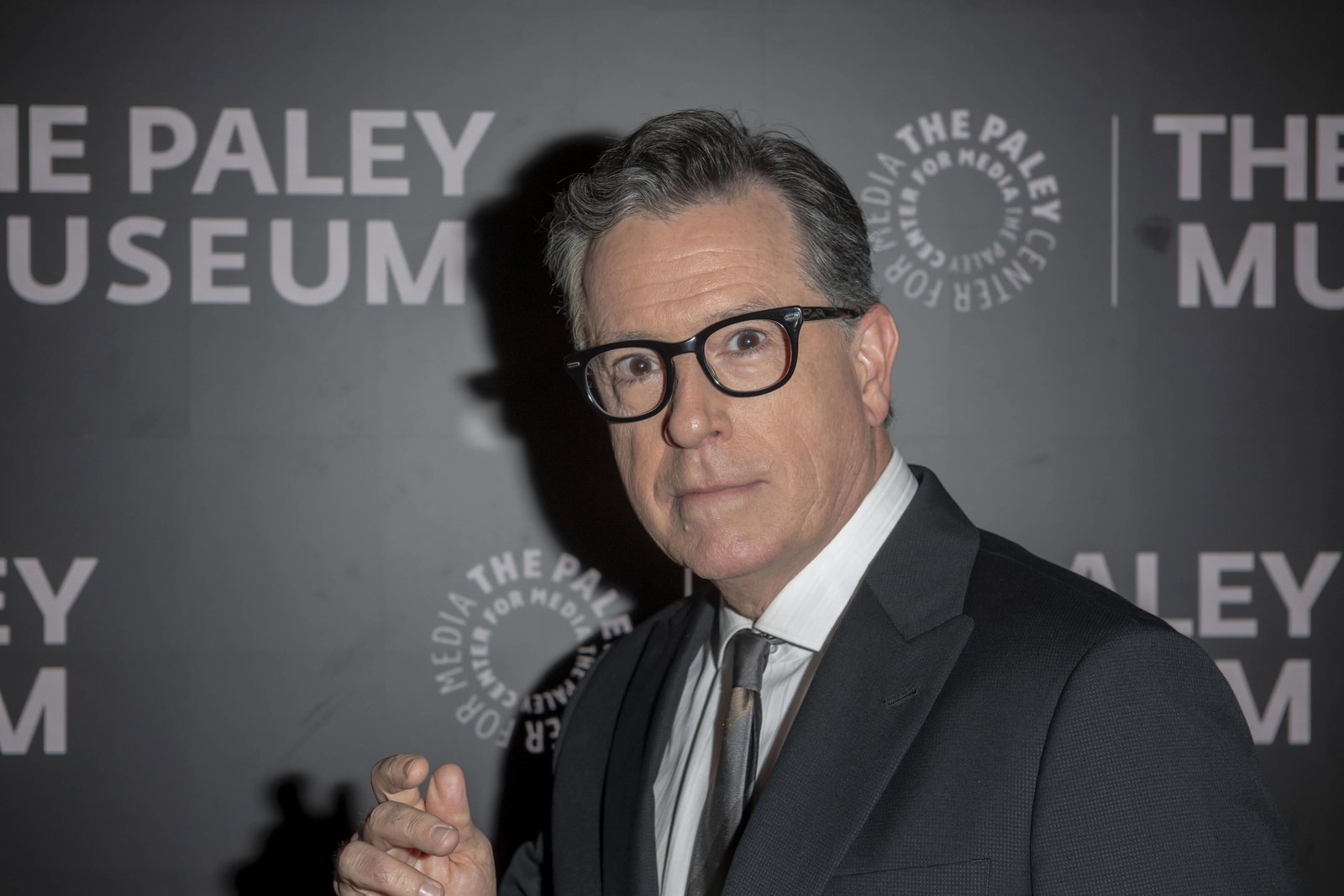
And with that emotional groundwork laid, the finale expanded into something bigger than a monologue, turning into a layered goodbye filled with familiar faces and moments.
A farewell filled with humor, history, and heart
The final episode leaned into a mix of nostalgia, humor, and genuine emotion, creating a send-off that felt both celebratory and reflective. The extended runtime allowed space for callbacks, guest appearances, and a steady rhythm of jokes that carried the audience through the evening. Beneath the playful tone, there was a clear sense of closure shaped by more than a decade of late-night storytelling.
ADVERTISEMENT
Article continues below this ad
A lineup of notable guests, including Paul McCartney, Elvis Costello, Bryan Cranston, and Tig Notaro, highlighted how deeply the show had embedded itself in entertainment culture. Their presence felt less like routine appearances and more like markers of the show’s long journey. Each cameo contributed to the sense that this was not just an ending, but a gathering of its extended creative family.
The episode also drew on the history of the Ed Sullivan Theater, using McCartney’s appearance to echo the legacy of The Beatles and their iconic 1964 debut. Costello’s performance of ‘Jump Up’ added a quieter, reflective layer to the night, contrasting with the more playful segments. Altogether, the finale felt like a carefully shaped goodbye that blended spectacle with sincerity.
ADVERTISEMENT
Article continues below this ad
What did you think of Stephen Colbert’s final Late Show moment? Did the full-circle promise make the goodbye more meaningful? Let us know in the comments.
ADVERTISEMENT

Edited By: Hriddhi Maitra
More from Netflix Junkie on Hollywood News

ADVERTISEMENT