
Spooky Red Carpet Looks at Met Gala 2026: Nichapat Suphap and Jordan Roth’s Costumes and Their Inspiration
Credits: jordan_roth and nichapat/ via Instagram
Credits: jordan_roth and nichapat/ via Instagram
Spooky theatrics have always found a comfortable home at the Met Gala, where elegance occasionally takes a delightfully sinister turn. Kim Kardashian once appeared as a walking Balenciaga shadow, while Billie Eilish favored gothic lace by Simone Rocha. Jared Leto brought his own head as an accessory, and Hunter Schafer opted for unsettling adornments, ensuring discomfort remained fashionable.
Met Gala 2026, predictably, continued this tradition, offering hauntingly artistic costumes that proved beauty and unease remain close companions.
1. Nichapat Suphap
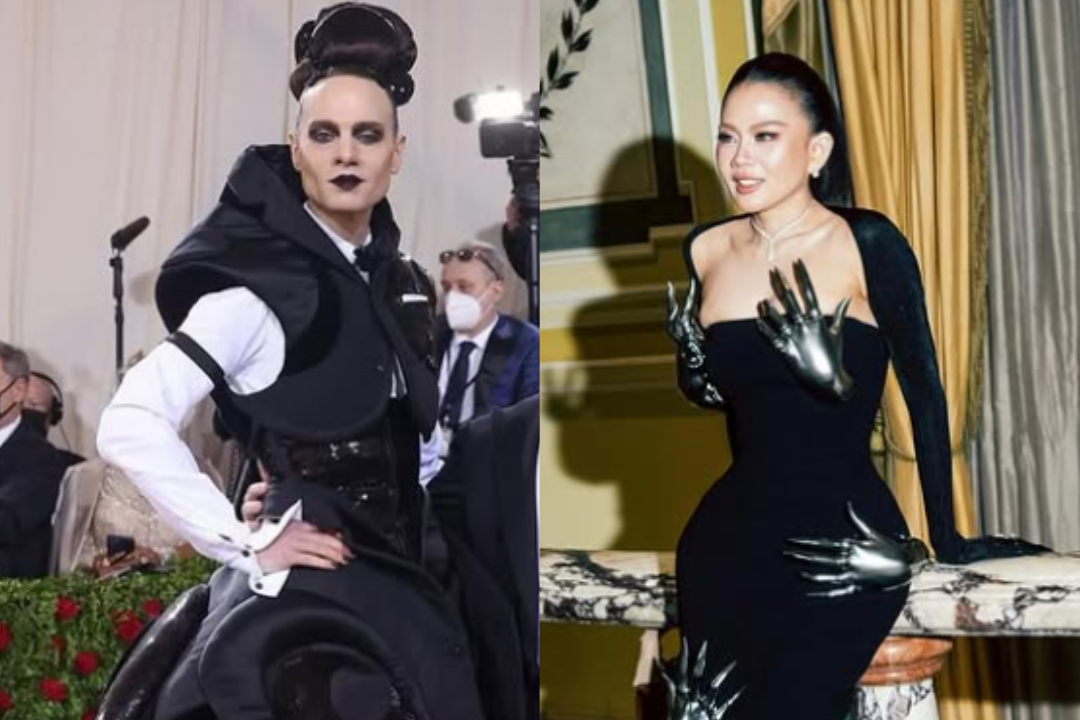
Nichapat Suphap approached the Met Gala 2026 theme with unapologetic precision, arriving in a custom creation by Robert Wun that felt less like attire and more like a curated installation. The black gown, sharply structured and deliberately severe, set the stage for its most arresting feature: sculptural chrome hands gripping her form with uncanny realism, turning the body into both canvas and subject.
Those metallic hands were placed with a certain calculated audacity, two stationed at the bodice and two descending along the skirt like uninvited thoughts. The effect was equal parts sculpture and spectacle, suggesting possession without ever clarifying the possessor. Suphap appeared both in control and entirely claimed, which is precisely the sort of contradiction fashion enjoys.
The inspiration drew directly from The Creation of Adam by Michelangelo, translating its iconic gesture into a tactile, dimensional form. By centering the motif of hands, Suphap explored authorship and power within fashion, suggesting that creation itself can be both intimate and intrusive. It was a literal yet sophisticated interpretation of 'Fashion Is Art,' rendered with striking clarity, something expected of the celebrities attending the Met Gala 2026.
2. Jordan Roth
Jordan Roth approached the Met Gala 2026 theme with theatrical accuracy, arriving in a custom creation by Robert Wun that transformed the red carpet into a stage. The slate gray velvet dress offered a restrained foundation, allowing the conceptual centerpiece to command attention. Roth did not simply wear fashion; Roth presented a narrative in motion.
That narrative unfolded through a haunting 3D-printed figure attached to Roth’s back, its faceless form appearing to cling, embrace, or perhaps pursue. The engineering itself became part of the story, as the original sculpture proved too heavy and required reconstruction using lighter materials. Even then, the piece remained cumbersome, designed to be detached later, reinforcing its performative intent.
The inspiration traced back to Pygmalion and Galatea by Jean-Léon Gérôme, capturing the precise moment when art awakens into life. By physically carrying the sculpture, Roth embodied both creator and creation, collapsing the distinction between artist and object. It was a literal and intellectual interpretation of 'Fashion Is Art,' rendered with striking clarity. And while Jordan Roth announced the drama outright, Sabine Getty let it quietly settle in, which proved considerably more unsettling.
3. Sabine Getty
Sabine Getty ensured that the Met Gala 2026 remained steeped in eerie imagination, arriving in a custom couture creation by Ashi Studio that treated fashion as sculptural intervention. The gown’s cascading fringe created a restless sense of motion, while its integrated, surrealist hands echoed a quiet unease. Getty did not merely dress for the theme; Getty extended its haunting vocabulary.
The silhouette itself felt alive, with strands of fringe shifting like shadows in motion, even at stillness. Those sculptural hands, seamlessly embedded into the garment, suggested a dialogue between wearer and creation. The look carried a deliberate tension, as though the dress both adorned and claimed Sabine Getty in equal measure, a theme which was also found in Nichapat Suphap's Met Gala look.
Observers noted the delicate 'spider webbing' texture layered across the fabric, lending the ensemble an aged, almost forgotten quality. It evoked the feeling of a preserved artifact rediscovered, aligning perfectly with the museum-like spirit of the evening. Getty appeared less like a guest and more like a curated exhibit brought hauntingly to life.
The inspiration drew from distorted classical motifs by Olan Ventura, paired with a headpiece by Stephen Jones referencing Woman with a Winged Bonnet. Twisted silk constructions reinforced the sculptural illusion, blurring garment and object. Together, Sabine Getty, Nichapat Suphap, and Jordan Roth defined the evening’s most unforgettable, spooky Met Gala looks.
Which Met Gala costume did you find the most hauntingly beautiful? Let us know in the comments!

Edited By: Aliza Siddiqui
