
Robert Eggers Had to Hire a Dialect Coach to Make 'Werwulf' Middle English Dialogue Comprehensible
via Imago
Credits: Imago
Robert Eggers went so deep into 13th-century authenticity for Werwulf that he needed a dialect coach just to make its Middle English dialogue understandable today. Eggers has built a reputation as one of the most obsessive stylists in contemporary cinema, a filmmaker who treats period detail like a sacred text.
From the sea salt dialects of The Lighthouse to the mythic language of The Northman and the gothic specificity of Nosferatu, he does not just set stories in the past, he makes them sound like they belong there.
For his next film, Werwulf, he is pushing that commitment even further, right down to how every line of dialogue is spoken.
ADVERTISEMENT
Article continues below this ad
Robert Eggers language experiment rooted in history
Speaking about Werwulf, Robert Eggers explained that the movie’s script was shaped in close collaboration with the Icelandic writer Sjón, who also co‑wrote The Northman, emphasizing how their partnership allowed them to lean fully into the film’s medieval setting. Then he revealed just how far they went.
“We worked with two Oxford professors on the dialogue, which is in Middle English, and then worked extensively with a dialect coach on a way to temper the pronunciation in a way that would be understandable to modern audiences.”
That single line by Eggers to Esquire gives the core of the story, this is not just a werewolf film with old‑timey vibes, it is one whose language is rooted in the 13th century. The choice of Middle English rather than a generic faux‑archaic style is a natural extension of Eggers’ method. He has always refused to flatten historical texture into modern speech, insisting that the way characters talk is part of what makes a world feel real.
But Middle English, as anyone who has struggled through Chaucer knows, can be nearly opaque to contemporary ears. That is why bringing in Oxford scholars and a dialect coach matters: Eggers wants the audience to hear something genuinely of its time without losing them in a wall of unfamiliar sounds.
That meticulous approach to sound and speech feeds directly into the film’s broader vision, which is now becoming clearer as more details emerge.
A brutal medieval world takes shape for Werwulf
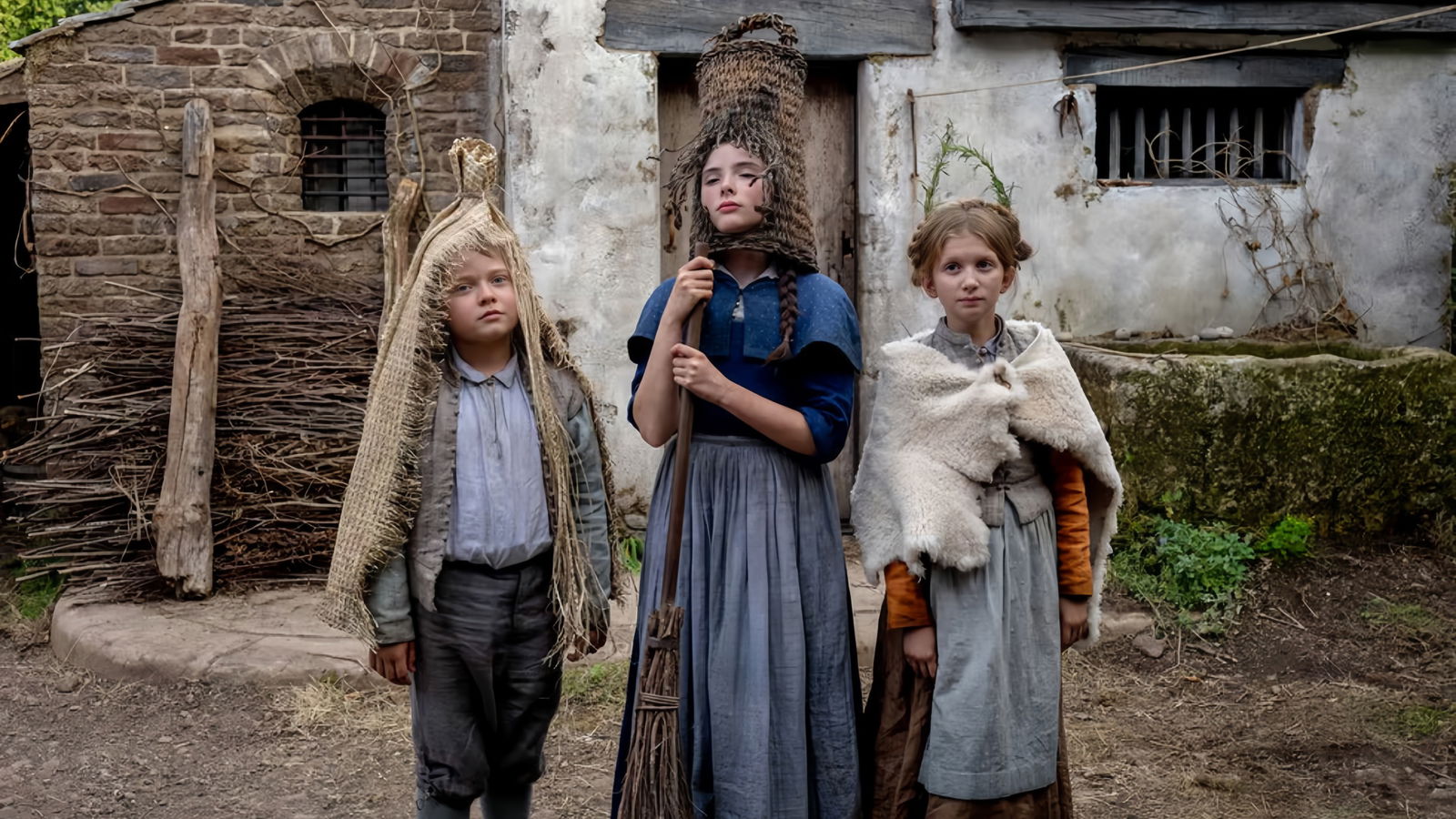
Robert Eggers’ Werwulf has moved beyond early speculation with the release of its first look and new story details. The film is set in the 13th century and follows a farmer whose life is destroyed by a curse that transforms him into a werewolf. The first still features Aaron Taylor-Johnson as the unnamed protagonist, often referred to simply as “Man”.
ADVERTISEMENT
Article continues below this ad
Lily-Rose Depp plays his wife, positioned as the emotional anchor of the story, while Willem Dafoe appears as a hunter. The characters are intentionally left without formal names, reinforcing their roles as archetypes within a bleak fable. On the production side, Werwulf is shot on 35mm and treated to give the visuals a sickly, aged texture. Techniques that mimic black and white grain over color footage are used to make faces appear more worn and haunted.
Taylor Johnson reportedly trained extensively with a movement coach and studied wolves to capture the physical strain of transformation. Eggers also draws from early English and continental European folklore, while avoiding familiar genre elements like silver bullets or simplified myth rules. The result positions Werwulf as a grounded reinterpretation of werewolf lore, shaped more by history and tragedy than spectacle.
ADVERTISEMENT
Article continues below this ad
What do you think about Robert Eggers using Middle English and dialect coaching to shape Werwulf? Let us know in the comments.
ADVERTISEMENT

Edited By: Aliza Siddiqui
More from Netflix Junkie on Hollywood News


ADVERTISEMENT