
'Outer Banks' Season 5 [INTERVIEW]: J. Anthony Crane Breaks Down JJ’s Brutal Fate, Chandler Groff's Revenge and His Dark End
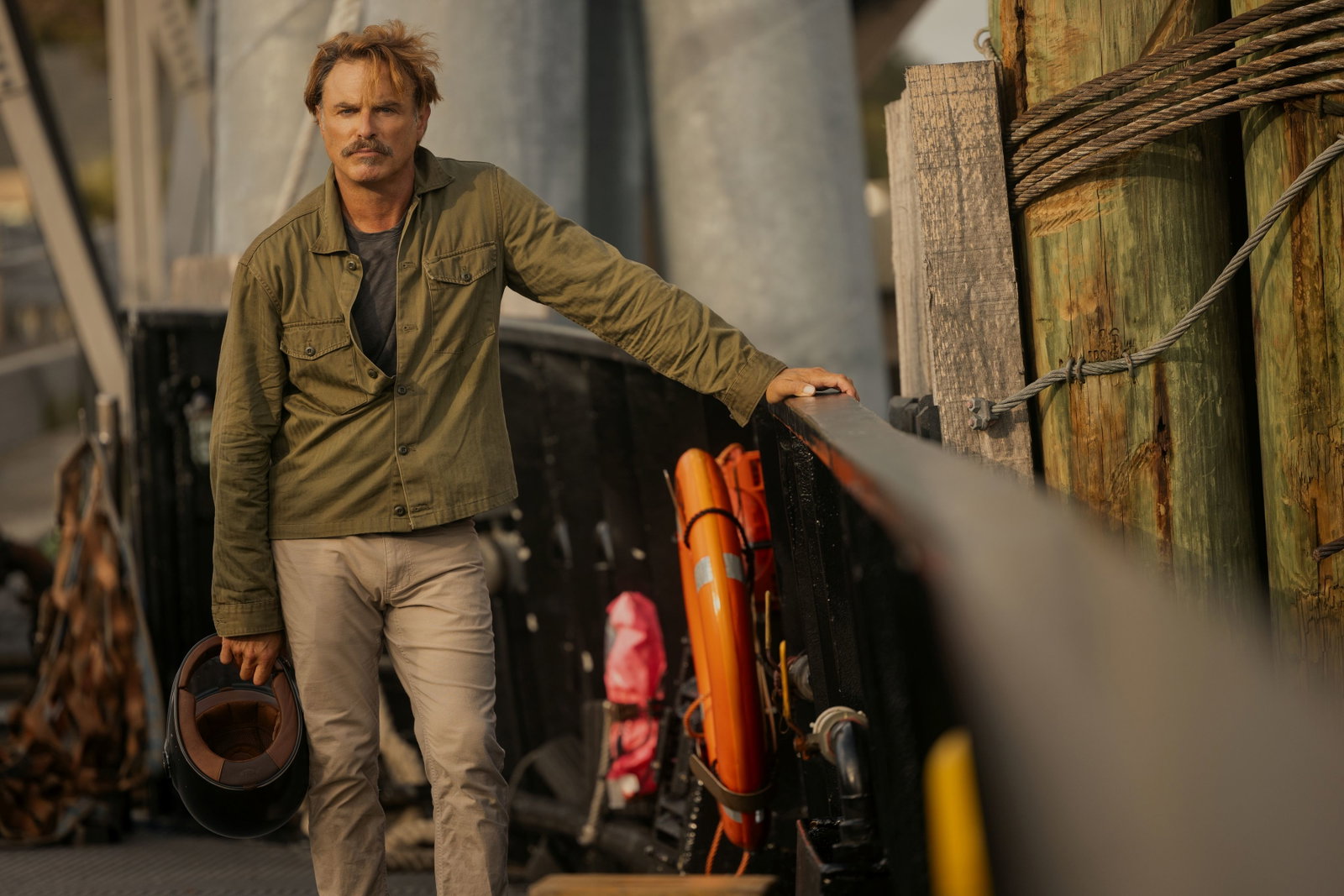
Tony Crane as Groff in episode 506 of Outer Banks. (Photo Credit: Jackson Lee Davis/Netflix)
Tony Crane as Groff in episode 506 of Outer Banks. (Photo Credit: Jackson Lee Davis/Netflix)
In 2020, Netflix took the world by storm by introducing a gang of youngsters looking for gold. For some, it might sound like a childlike adventure, but as the story progressed, everyone realised that it was much more than that, and we just couldn't get our eyes off our TV screens. Yes, we are talking about Outer Banks. The show just premiered its fifth and final season and is taking fans on one last treasure hunt filled with danger and unexpected twists. But what makes this show such a riveting watch is its characters, who have grown alongside the story and kept fans invested. One such character is J. Anthony Crane's Chandler Groff, a man whose obsession with wealth and power pushed him into dangerous territory.
In Season 4, Groff did not shy away from sacrificing his own son, JJ (played by Rudy Pankow), to accomplish his mission. Normally, a person would showcase extreme emotions after committing such a heinous crime. However, Groff felt nothing, and that is one of the reasons why he is such a menacing character. As the final season explores the consequences of his actions and takes his character to a fitting end, NetflixJunkie spoke with J. Anthony Crane about Chandler Groff's transformation, the relationship he shared with JJ, and whether redemption was ever possible for a man who had already gone too far.
Aayush Sharma: Chandler Groff is someone who “became a monster over time,” rather than someone who was simply born evil. In Season 5, how did you calibrate that distinction in your performance? Was there a point where you consciously stopped playing Chandler as a damaged or insecure man and started playing him as someone who has fully accepted the person he has become?
J. Anthony Crane: I think you are right. This is not someone who suddenly became this way overnight. What he did in season four was the result of a series of different breaks and experiences that gradually pushed him to this point. By the time he makes that choice, I think something inside him is broken, not just mentally, but emotionally as well. As we move forward, we continue to explore that. He starts to understand the repercussions of what he has done and has to reckon with them. He has achieved what he thought he wanted, but it came at a cost. And as the story unfolds, he has to keep confronting what that cost really is. I think that is an interesting direction for the character because people are often uncomfortable confronting their own problems. There are many ways people avoid dealing with what is right in front of them. For him, I think that is where the adventure really begins.
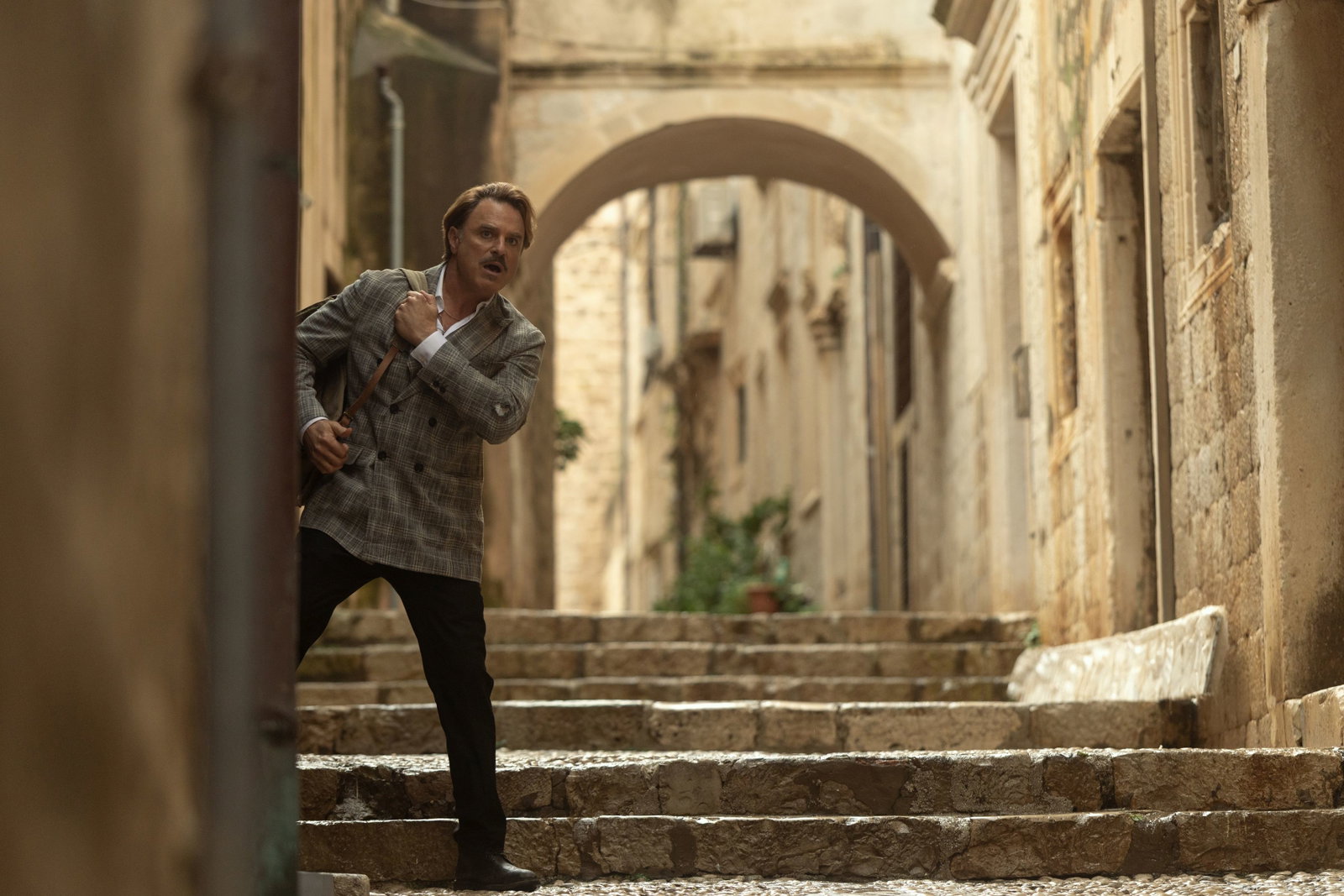
Tony Crane as Groff in episode 502 of Outer Banks. (Photo Credit: Jackson Lee Davis/Netflix)
Tony Crane as Groff in episode 502 of Outer Banks. (Photo Credit: Jackson Lee Davis/Netflix)
Aayush Sharma: The most disturbing thing about Chandler killing JJ is that, dramatically, he doesn't actually need to do it. JJ has already surrendered the Blue Crown, and Chandler has effectively won. What did you discover about Chandler's psychology in that moment that made the murder feel less like a calculated strategic decision and more like an expression of who he fundamentally is?
J. Anthony Crane: I think it 100% does. Chandler is someone whose background has been shaped by comparison and a desire for what other people have. He is a product of this town—Kildare—and, in many ways, his story fits perfectly within the larger mythology of the show. We have seen this before with Sarah and Rafe's father. The town created a man who came from one world and became something else, but his desire to change his place in life ultimately poisoned him. I think Chandler is on a similar journey. He is someone who was taught that, to matter, he needed power, wealth, and a certain level of glory. He grew up believing that the only way to measure up to the people he saw as successful was to achieve those things himself. But over time, that pursuit can poison you.
What is brilliant about this show is that it places these young characters at a point in their lives where they are allowed to strive for something and overcome the odds, but they also have to hold on to their souls in the process. When you look at many of the older characters in Outer Banks, you see people who have lost their ability to stay grounded. They're no longer focused on who they are; they are simply chasing glory. And I think you have really hit the nail on the head with that observation. Eventually, you can lose sight of what something is costing you because you are so focused on achieving the thing you believe will finally fix your life. That's something I am trying to explore with Chandler this year and see just how far that journey takes him.

Aayush Sharma: You previously connected Chandler's behavior to the class struggle on Kildare Island and compared his trajectory, in some ways, to Ward and Rafe. In the final season, did you think of Chandler as the culmination of that cycle—the extreme version of what happens when resentment, insecurity, and the desire for status are allowed to consume someone? And did that idea influence how you played him opposite the Pogues?
J Anthony Crane: I think it’s interesting because, in previous seasons, the goal was gold. It was money. But in this past season, the treasure has an added allure; it represents the possibility of achieving something almost magical. It’s described as the ultimate goal, the ultimate prize. It’s something greater than gold, and we don’t fully know what that means yet. But we understand what it represents: glory. For Chandler, it means achieving something greater than everyone who has ever looked down on him. It means finally being able to say, “I accomplished something that you couldn’t.” For someone like Chandler, I think that’s incredibly powerful. No matter what he may have achieved over the years—and there may not have been much- he has probably always felt like he was being put in his place. He had to navigate his wealthy wife’s family and later survive in this world of mercenaries and the black market. He was always relying on his wits, but he was still beneath someone else. He was always answering to someone from a class or position above him.
I think his ultimate goal is to get out from under that thumb, to never again feel like he has to answer to someone else or measure himself against a higher class. That’s a struggle a lot of people can understand, but it’s also an illusion. We’re constantly chasing the idea that the next achievement will finally fix everything. As the Buddha taught, you don’t escape that cycle unless you step away from the wheel altogether, and I don’t think Chandler understands that this is even an option for him. I think something inside him has broken. It’s a little like gambling: if you lose early in the night, you can spend the rest of the night trying to win it all back. And by the end, you might start making increasingly risky bets. Without giving anything away, especially with the show only released today, and as much as I’m dying to spoil it for you, I think that’s a pretty good metaphor for where Chandler is headed.
Aayush Sharma: Season 5 is the final season, so there is an interesting question about whether a character like Chandler can actually have a conventional redemption arc. Without asking you to spoil his ending, did you ever discuss with the writers whether Chandler was capable of genuine remorse, or was the more interesting dramatic question whether he could even recognize the damage he had caused?
J. Anthony Crane: That's exactly it. He doesn't even fully recognize the extent of the damage at first. When we last see him, he's standing in the river, holding the prize and realizing, in that very moment, what it has cost him. That's exactly where we pick up. He already knows that he has blood on his hands. It's very much like The Scottish Play; he's trying to wash the blood away. But I don't think he yet understands that there may not be a prize valuable enough, or clean enough, to erase what he's done. The question the writers and I discussed was: Is it more important for him to fully recognize his actions and ask for forgiveness, or for us, as the audience, to understand why he is the way he is?
That's something I find really interesting. I think the more meaningful pieces of art aren't always designed to give every character a moment of catharsis. Sometimes that kind of arc is reserved for the heroes. And sometimes, as an audience, the more important thing is simply that we take something away from a character's actions, that we receive a lesson from watching them. A lot of great tragedies work that way. You also have to love villains because their motivations can become completely out of control. They've been amplified to a point where the character can no longer control them. I think that's closer to what we're going to see with him. He's trying to outrun something, but the question is whether he can ever truly escape it.
Aayush Sharma: Chandler's relationship with JJ is arguably the darkest version of the father-son dynamic we've seen on Outer Banks. When you were playing their final confrontation, were you thinking about Chandler seeing JJ as his son, as a reflection of himself, or even as a reminder of everything he failed to become? How did that interpretation affect the way you played your scenes with Rudy Pankow?
J. Anthony Crane: I think it's sad to say, but Chandler saw his relationship with his son as just another con. He recognized that it gave him certain options and, more importantly, provided a way into something he had been after. So he plays the relationship exactly as he needs to, to get where he wants to go and ultimately get what he wants. In the end, I think the action he chooses to take comes from a place of pure pettiness, competition, and a certain smallness. It's the result of the kind of life he's ingrained himself to live and the cheapness with which he's come to view human life. At that point, you really see that Chandler is a sociopath.
He can kill for the smallest reasons—out of resentment, a grudge, or simply because someone has become an obstacle in his mind. Once he decides that someone is a problem, his solution is to make that problem disappear. Those thoughts are not things he can simply reason his way out of. Working with Rudy at the time was interesting because we were both very aware of what was happening beneath the surface. I didn't tell him anything about what I was playing or what I was thinking, but he's a very smart actor, and I think he could sense what was going on. For him, playing someone who was being drawn in by Chandler's manipulation was probably difficult at times. His character had to be slightly more trusting, perhaps more credulous, than Rudy himself would naturally be. But I think that speaks more to the character's youth and inexperience than anything else.
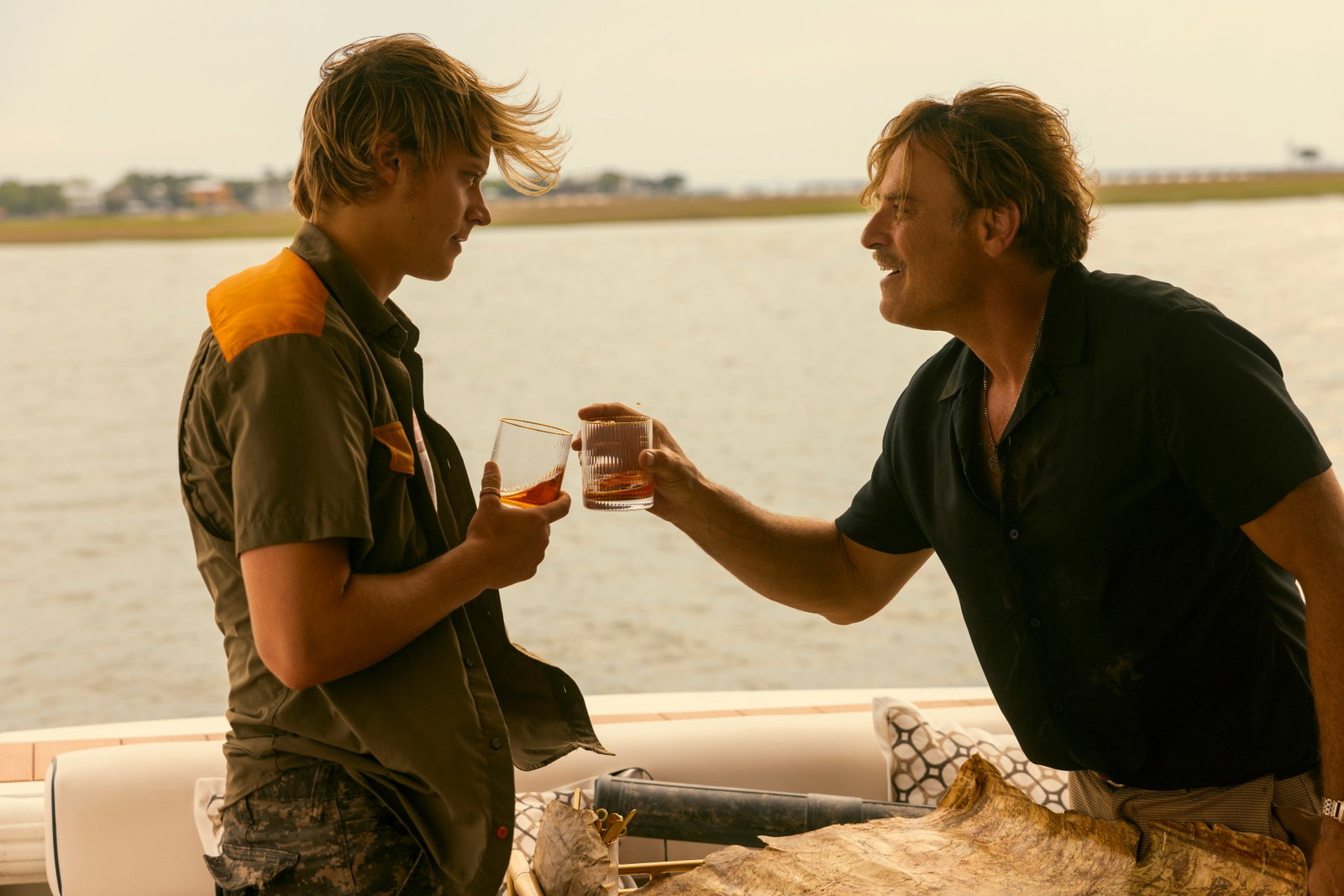
Rudy Pankow as JJ, Tony Crane as Groff in episode 408 of Outer Banks. (Photo Credit: Jackson Lee Davis/Netflix)
Rudy Pankow as JJ, Tony Crane as Groff in episode 408 of Outer Banks. (Photo Credit: Jackson Lee Davis/Netflix)
Aayush Sharma: The show has always balanced heightened adventure, humor, and melodrama with surprisingly dark character psychology. You mentioned earlier that you studied the series carefully to understand its tone. By Season 5, did you find yourself having to adjust your performance again because the material surrounding JJ's death and the Pogues' revenge becomes considerably more emotionally grounded?
J. Anthony Crane: I try to go back and look at the arc they gave Ward in Season 3, and it was very dark. It stayed dark throughout the season, and he eventually got a redemption arc, which was lovely. But I wasn't sure that we needed to do that with Chandler. I think what my character is capable of may not necessarily earn him that redemption. But maybe it does. We'll see. Because we established at the very end of Season 4 that revenge is high on the group's list of priorities, I think that's where we begin. And for that reason alone, this season feels very different from the previous ones. It starts like a slingshot and more or less stays there. There is still some of that home-life material that the show has always done well—building cafés, surf shops, and creating a sense of community. But even when we spend time in those spaces this season, we're dealing with more serious things. We're taking care of each other and, in some ways, taking better care of our hearts. I think the characters recognize how easy it is to lose that. And this time, it wasn't about money.
Aayush Sharma: There is an interesting reversal in Season 5: Chandler spent Season 4 hunting for the Pogues and controlling people around him, but now he becomes the person being hunted. How does that change the physicality of your performance? Did you consciously make him more paranoid, improvisational, or physically desperate, or does Chandler become even more dangerous precisely because he refuses to acknowledge that he has lost control?
J. Anthony Crane: I tried to remind myself, as Chandler, that he's been through this before. He's been pursued by danger for most of his life. He's spent years getting involved with terrible people, and who knows what other dangerous groups he may have crossed paths with before. Yet somehow, he's always managed to come through it relatively unscathed. He's also a bit of a chameleon. He changes his skin depending on the situation, and part of being a chameleon is knowing when to stay still until it's time to strike. That became part of my approach to Chandler. I didn't want to give too much away, so I tried to remain calm and relaxed. When you're being chased or trying not to be discovered, it's easy to become desperate—for help, money, or a solution to whatever problem you're facing. But I think Chandler understands that you don't get what you want by reacting too quickly. You have to wait for the right moment. So, for me, a lot of the work was simply about staying calm. It leaves room to think, and it allows you to keep your intentions hidden. That was the mindset I tried to bring to him throughout those moments.
Aayush Sharma: Because this is the final season, Chandler's story ultimately becomes part of the larger question Outer Banks has been asking since Season 1: what are people willing to sacrifice for wealth, family, love, and belonging? After spending so much time inside Chandler's head, what do you think he fundamentally misunderstood about those things, and is there any part of him that realizes, even at the very end, that he sacrificed the very things he was trying to obtain?
J. Anthony Crane: JJ says, “I had everything at the end. I had things you never had. I have things you'll never have,” right before he dies. I think that hits Chandler in a place where he's finally ready to confront something about himself. He hears something in JJ's words that really means something to him. Chandler grew up in a place like Kildare, which, in some ways, is a metaphor for a lot of cities in America, and for a particular kind of class struggle. We've coveted wealth, status, and achievement to such an extent, and we've marketed those things as part of our identity, that it's very easy to become poisoned by the pursuit of them.
If you're not careful, you can become so consumed by that pursuit that you lose your ability to recognize basic human decency, human vulnerability, or even the importance of love. I think that's something Chandler missed while he was busy chasing something else. I don't know if he fully realizes that by the end. I hope he does, but I fear he's become so driven by hatred that it's ultimately made him lose sight of everything else.
Outer Banks Season 5 is currently streaming on Netflix.
Have you seen the final season of Outer Banks? Let us know your thoughts.

Edited By: Aayush Sharma
