
Millie Bobby Brown Hollywood Growth: Tracing the Highs and Lows of 'Enola Holmes' Star's Career
Credits: Netflix
Credits: Netflix
Millie Bobby Brown has grown from a breakout child star into one of Hollywood's most influential young performers. She became a global phenomenon through Stranger Things, captivating audiences as the mysterious, silent girl with a shaved head whose haunting innocence and extraordinary powers made her instantly unforgettable. Her performance helped define Netflix's biggest cultural sensation, while Netflix, in turn, became synonymous with her rise.
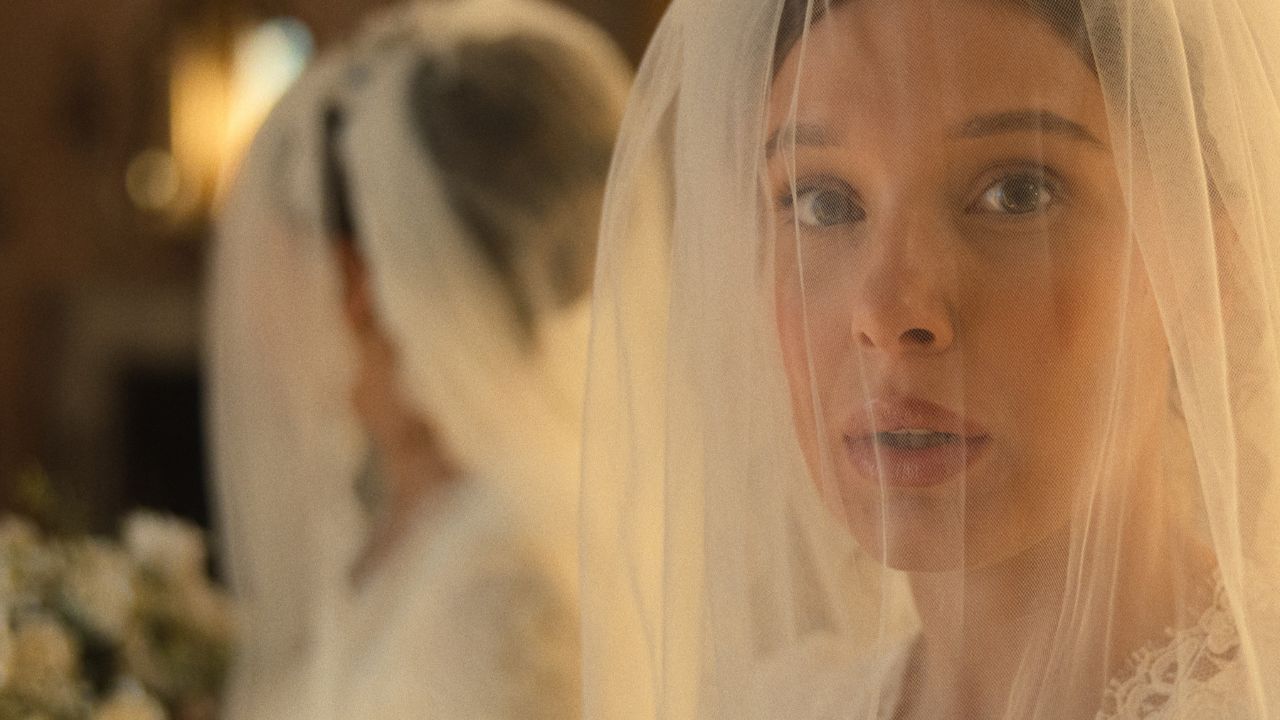
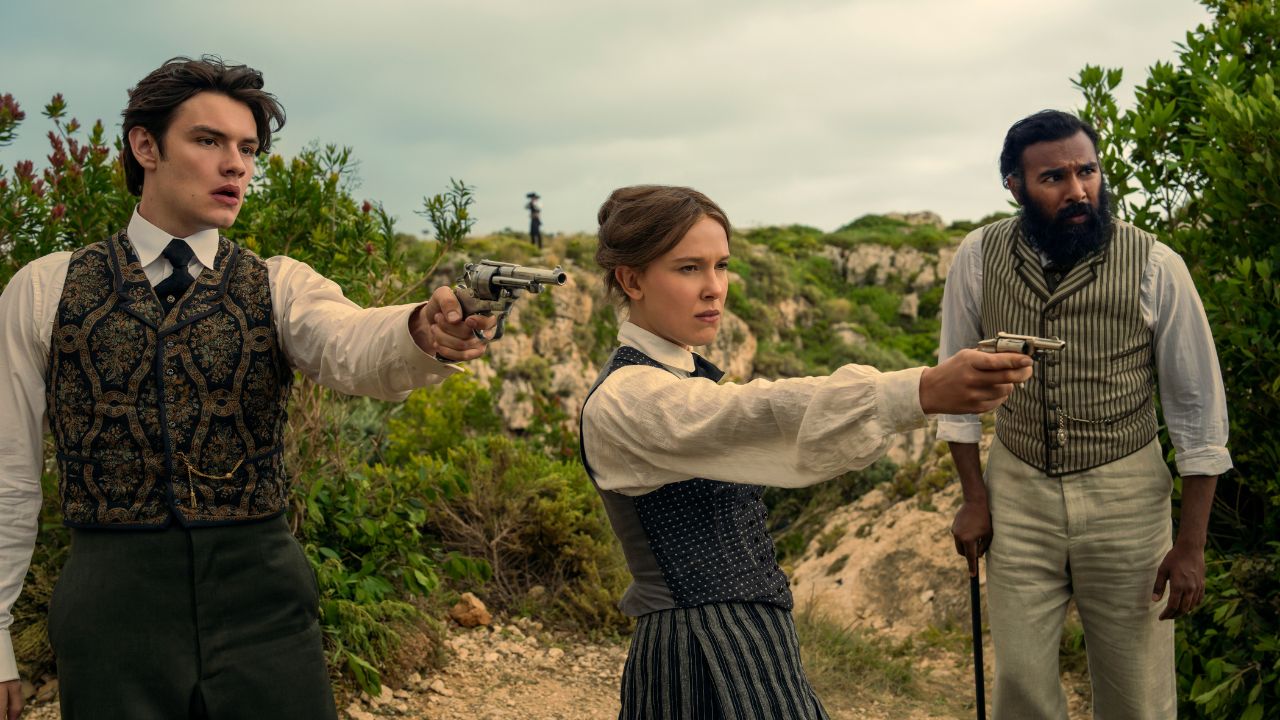
Since then, Brown has built an impressive résumé with leading roles, blockbuster franchises, producing credits, and entrepreneurial ventures, including the Enola Holmes series, with the latest addition, Enola Holmes 3, achieving more before her twenties than many actors accomplish in decades. But that glamorous career has come with its own share of highs and lows.
Millie Bobby Brown's early years were far from glamorous
Everyone starts somewhere, but Millie Bobby Brown began her journey from an especially difficult place. To carve out a place in Hollywood, her family made enormous sacrifices. Believing wholeheartedly in their daughter's talent, Robert and Kelly Brown sold much of what they owned and moved the family from the United Kingdom to Los Angeles in hopes of launching her career. The gamble even nearly collapsed. Auditions came and went, but the breakthrough never arrived.
Money became so scarce that the family struggled to afford food and rent, forcing Millie's British manager, Melanie Greene, to lend them money just to get by. Then came one of the biggest disappointments of her early career. Brown auditioned for the role of Lyanna Mormont in Game of Thrones but lost the part. The rejection devastated her confidence so deeply that she seriously questioned whether acting was the right path. With their savings exhausted and hope fading, the family returned to England and moved into her aunt's home, believing the Hollywood dream had come to an end.
Just when everything seemed lost, one final self-taped audition arrived for a mysterious Netflix project then known as Montauk. Brown seldom got the opportunity she had spent years chasing, but that audition became Stranger Things, and the rest is history. That, however, was far from the end of the story. Long before she became one of Hollywood's brightest young stars, she was navigating a devastating personal challenge all while pursuing an impossible dream.
Born with partial hearing in one ear, Brown gradually lost all hearing on that side despite undergoing multiple medical procedures as a child. The condition makes life on set more difficult than for others. Missing off-camera cues, struggling to locate where voices were coming from, and relying more heavily on visual awareness have become part of her daily routine.
Yet audiences never see those behind-the-scenes obstacles. They see a fearless performance that redefined child stardom, proving that the very challenges she carried into Hollywood became part of what made her unforgettable.
No discussion of Millie Bobby Brown is complete without Stranger Things
Stranger Things was not just a career breakthrough. It became a cultural force that reshaped Millie Bobby Brown’s entire life trajectory, lifting her and her family from financial strain into global recognition in an astonishingly short span of time. For Brown, it has always been more than a role; it was a blessing in disguise, a project that did not just launch her career but also stabilized her family’s circumstances and opened doors she had never imagined. Her connection to it is so deeply personal that she even carries a permanent “011” tattoo, a quiet tribute to the character that changed everything.
The audition process itself has since become part of Hollywood folklore. When she flew in for the screen test with the Duffer Brothers, she was not given traditional scripted material. Instead, she was handed unconventional improvisational prompts designed to test instinct over preparation. One of the most famous exercises involved a cardboard box filled with clothes, where she was asked to imagine encountering fabric for the very first time.
It was a surreal, abstract test meant to see if she could embody Eleven’s unfamiliarity with the world. Her response was instinctive, physical, and emotionally precise, which immediately set her apart. There were also moments of coincidence that fans often point to as symbolic. During that trip, she was assigned seat number 11 on her flight and stayed on the 11th floor of her hotel, details that later became part of the mythos surrounding her casting as Eleven.
The impact of Stranger Things was almost immediate. By age 13, Brown earned her first Emmy nomination for Outstanding Supporting Actress in a Drama Series, making her one of the youngest nominees in history. A second nomination followed at age 14, reinforcing that her performance was not a one-time breakout but a sustained demonstration of extraordinary talent. Her influence extended far beyond awards season. In 2018, she was named to the Time 100 list at just 14 years old, becoming the youngest person ever included at the time.
That same year, she was appointed as the youngest-ever UNICEF Goodwill Ambassador, using her platform to speak out on issues such as bullying and children’s rights, transforming her fame into active advocacy on a global scale. Yet the glow of fame was not without its shadows.
Alongside global fame, Millie Bobby Brown faced increasing public scrutiny
Fame has always carried a strange contradiction: the more visible a person becomes, the easier it is for strangers to forget they are human. This is especially true for child actors, and even more so for young women growing up in the digital age, where millions of people can comment, judge, and distort a life they have never lived. The experience is not unique to Millie Bobby Brown; child stars from earlier generations, such as Emma Watson during the Harry Potter era, have faced similar patterns of public scrutiny. But in her case, the scale is amplified by the fully digital, always-online world she grew up in.
As her fame grew through Stranger Things, so did the scrutiny. This was not just casual criticism, but coordinated waves of online hostility that reflected how easily the internet can turn a global audience into a crowd of faceless judges. One of the most disturbing examples came in 2018, when a viral online trend using the hashtag #TakeDownMillieBobbyBrown spread across social media. Innocent photos of her were digitally altered with fabricated captions and offensive content, creating a wave of misinformation that targeted her reputation despite her being a teenager and a vocal anti-bullying advocate. The intensity of the harassment eventually led her to deactivate her Twitter account entirely, stepping away from a platform that had become overwhelmingly hostile.
As she moved closer to adulthood, another layer of scrutiny emerged, this time tied to her appearance. Online spaces began obsessively tracking her transition from child star to young adult, often crossing into invasive and predatory territory. In 2022, shortly after turning 18, she spoke openly about the sudden shift in how she was being viewed, describing the sexualization of young girls in the entertainment industry and how uncomfortable and widespread it had become.
At the same time, her evolving red carpet style became a constant target of commentary. Because she often wore high-fashion, structured looks from luxury designers, critics labeled her “too mature” or claimed she was aging herself unnecessarily. Yet when she dressed more casually or youthfully, she was criticized for not fitting the image expected of her. It became a no-win cycle. Every choice was interpreted, judged, and dissected through the lens of public expectation rather than personal expression.
In response, she gradually stepped back from direct engagement with social media, relying on professional management to handle her platforms and create distance from the constant noise of public opinion. Ultimately, her experience reflects a broader reality of modern fame: it is easy to comment from behind a screen, yet those words shape the reality of someone growing up under relentless public observation. However, she did not slow down. If anything, she came back stronger, and it shows.
Millie Bobby Brown took the power back and built her own space in Hollywood
You would think the early scrutiny, rejection, and pressure of growing up in the spotlight might have slowed Millie Bobby Brown down. Instead, she transformed that experience into structure, control, and long-term strategy, building an entire ecosystem around her career rather than relying solely on it. A major part of that shift came through PCMA Productions, the production company she founded with her family. Instead of being just a nominal credit, PCMA became her entry point into real creative authority.
Through it, she stepped into the producer’s role on major projects, including the Enola Holmes franchise, where she led the story on screen while also influencing its development behind the scenes. The success of the first film quickly elevated her position, leading to a landmark deal for Enola Holmes 2, where her compensation rose from an estimated $6.1 million for the first film (including acting and producer fees) to around $10 million upfront for the sequel. This jump reflected both her growing market power and her expanding influence within the industry.
That influence extended beyond one franchise. PCMA Productions expanded into a broader slate of projects, including high-profile streaming films such as Damsel and The Electric State, positioning her not just as an actor attached to successful titles, but as a driving force behind what gets made. Each project reinforced the same pattern: she was no longer simply part of Hollywood’s system; she was actively helping shape it.
Her entrepreneurial reach expanded far beyond production through Florence by Mills, a clean beauty and skincare line that marked a distinct shift from typical celebrity endorsements. While celebrity makeup lines are common, Millie Bobby Brown’s execution differed significantly in its corporate structure and long-term vision. The brand was initially launched in 2019 in partnership with Beach House Group, but by 2020, she and her family’s company had acquired a majority stake, securing greater financial and creative autonomy over the ecosystem. This move positioned Florence by Mills not just as a side project, but as a fully independent business entity under her growing portfolio.
Her expansion into storytelling continued with Nineteen Steps, released in 2023. The novel marked her entry into publishing, but not as a standard celebrity memoir. It is a historical fiction work inspired by her own family history, particularly the experiences of her grandmother, Ruth, who survived the 1943 Bethnal Green tube station disaster in London during World War II. The story grounded her creative identity in personal legacy, blending historical memory with fiction in a deeply intimate way.
True to her broader pattern of creative control, she quickly moved to extend the book beyond print. Almost immediately after its release, she secured adaptation rights with Netflix, ensuring Nineteen Steps would transition into a feature film, with her attached as both star and producer. For audiences following her evolution beyond acting, early glimpses into her continuing creative direction can be seen in projects like Enola Holmes 3, where she continues to operate both in front of the camera, returning to solve new cases while balancing her independence and family legacy, and as a primary producer shaping the franchise’s direction. Outside of Hollywood, she has continued to grow as a person, prioritizing family and personal development.
Millie Bobby Brown has built a beautiful private life in a public world
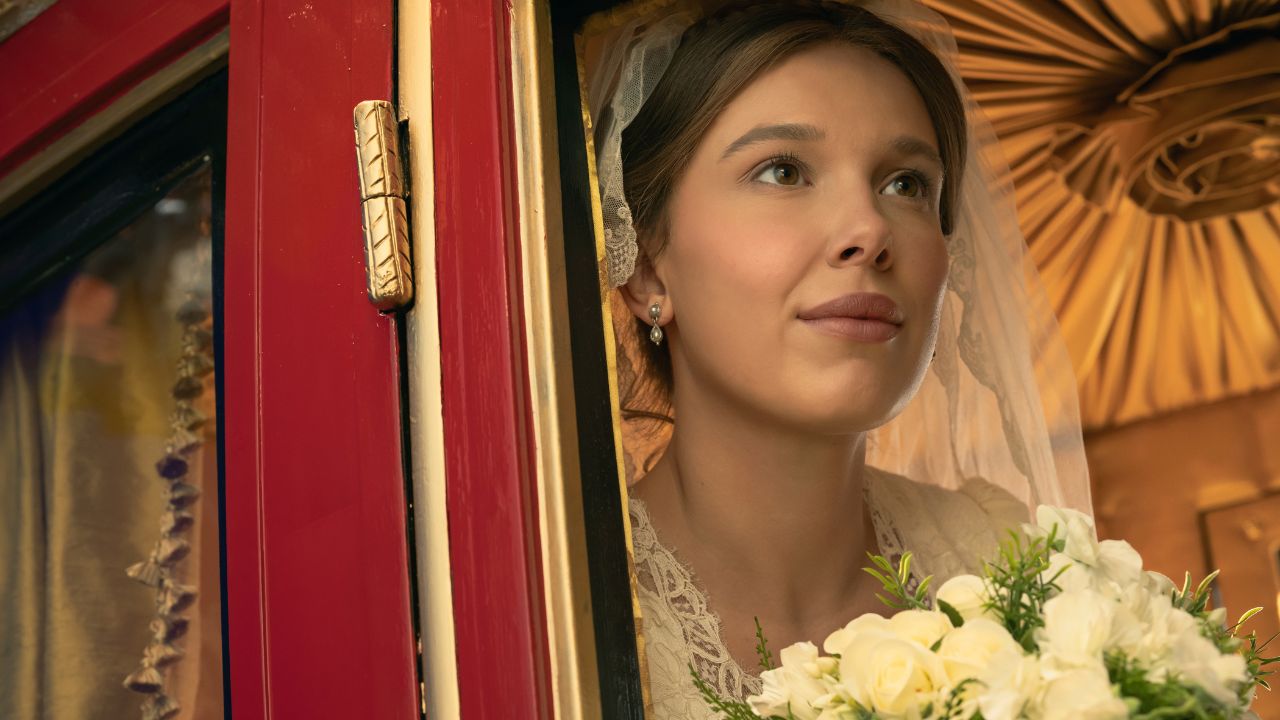
Even after everything, Millie Bobby Brown has kept her personal life steady and protected from the pressures of fame. Her marriage to Jake Bongiovi reflects that sense of grounded stability. The pair began dating in 2021 and made their red carpet debut at the BAFTA Film Awards in March 2022. Their engagement followed in April 2023, drawing public attention due to their young ages at the time, when Brown was 19 and Bongiovi was 20. Despite the noise, their relationship continued to grow away from speculation, culminating in two weddings in 2024. The first was a legal ceremony in the United States in May, followed by a larger destination celebration in Tuscany, Italy, in September, officiated by her Stranger Things co-star Matthew Modine.
Their partnership has also extended into her professional world. Jake Bongiovi has taken on executive producer responsibilities on select projects, including Enola Holmes 3, reflecting how closely her personal and creative lives now intertwine. In August 2025, the couple announced the adoption of their daughter, choosing to share the news with a strong emphasis on privacy. Brown described stepping into parenthood as a journey rooted in “peace and privacy,” reinforcing her consistent decision to keep deeply personal milestones away from excessive public exposure.
Beyond relationships and family, she has also spoken about how her upbringing shaped her socially. Growing up on film sets surrounded largely by adults meant she missed many typical peer experiences, something she has acknowledged affects how she navigates everyday social interaction. She has credited her husband with helping her ease into a more balanced “social era,” describing him as a “social butterfly” who encourages her to step outside her comfort zone in everyday life.
Throughout it all, she has built strong boundaries to protect her mental and emotional well-being. She avoids using mainstream social media directly on her personal devices, instead relying on a curated professional team to manage her public presence. She also steps away from the traditional Hollywood social circuit, choosing a quieter life centered on family, close friendships, and her business ventures, maintaining control over a world that is constantly trying to watch her.
Millie Bobby Brown’s journey reflects both brilliance and burden within modern fame. Early struggles, relentless scrutiny, and global success have shaped a path defined by resilience and reinvention. Each challenge has strengthened her evolution, establishing her as one of Hollywood’s most influential young figures with a career built on persistence.
Which aspect of Millie Bobby Brown’s journey is your favorite? Let us know in the comments.

Edited By: Itti Mahajan
