
Loved 'Backrooms'? 5 Liminal Space Movies to Watch If You Enjoyed The 2026 Horror Hit

Credits: The Backrooms (Found Footage) / Kane Pixels via Youtube/ Production: A24, Atomic Monster, and 21 Laps / Distribution: A24
Credits: The Backrooms (Found Footage) / Kane Pixels via Youtube/ Production: A24, Atomic Monster, and 21 Laps / Distribution: A24
The massive success of Backrooms has reintroduced mainstream audiences to the strange and unsettling world of liminal horror. Originally inspired by a viral internet creepypasta, the concept revolves around accidentally “noclipping” out of reality and becoming trapped inside an endless maze of empty yellow rooms, buzzing fluorescent lights, damp carpets, and hallways that seem to stretch on forever. Released by A24 on May 29, 2026, the film adaptation directed by Kane Parsons expands the idea into a larger psychological and sci-fi horror story about a mysterious dimension hidden beyond reality.
So, if the unsettling atmosphere, endless corridors, and dreamlike dread of Backrooms stayed with you after the credits rolled, here are the 5 movies that need to be on your watchlist, as these capture that same eerie liminal-space feeling where reality seems to subtly unravel.
Skinmarink (2023)
When Skinamarink was released in January 2023, it quickly became one of the most divisive horror movies in years. On paper, the story sounds deceptively simple: two young children, Kevin and Kaylee, wake up in the middle of the night to discover that their father has disappeared, but things become more unsettling when the windows and doors inside their house begin to vanish, trapping them in an increasingly distorted version of their home. As they wander through dark hallways illuminated only by television static and dim night lights, an unseen entity appears to communicate with them, creating a sense of dread that feels beyond bizarre.
What makes Skinamarink unique is its unconventional approach to storytelling. The camera rarely focuses on faces, instead lingering on ceilings, corners, hallways, toys, and dark rooms, and dialogue is sparse and often difficult to hear, causing events to unfold with the fragmented logic of a nightmare rather than a traditional narrative.
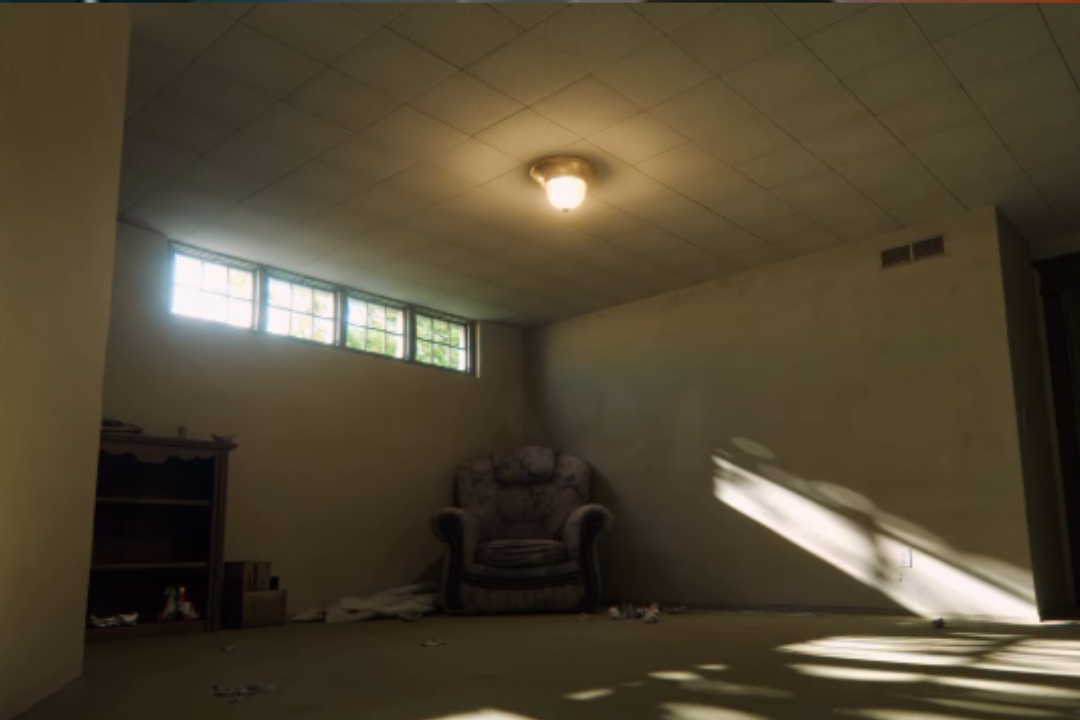
By the film's conclusion, it is heavily implied that the children are trapped within an endless nightmare-like dimension where escape may be impossible. The deliberately ambiguous ending leaves viewers searching for answers long after the credits roll.
Cube (1998)
Made for a fraction of a typical Hollywood budget, Cube, released in 1998, is a highly inventive, claustrophobic sci-fi thriller that is the blueprint for the modern "escape room" and puzzle-gore genres. The premise is brilliantly simple, with a group of strangers waking up inside a gigantic structure made up of interconnected cube-shaped rooms, with no memory of how they got there, who put them there, or why they were chosen.
Every room looks nearly identical except for its color, but many conceal deadly traps, including razor-wire snares, acid sprays, explosive mechanisms, and motion-triggered death devices. Yet the film's greatest mystery remains unanswered: who built it and why. While the story hints at the involvement of a vast, impersonal government bureaucracy, it never provides a definitive explanation, leaving fans debating its true meaning decades after its release.
Pulse (2001)
One of the most unsettling Japanese horror films ever made, Pulse, also known as Kairo, is a masterclass in atmospheric dread. Directed by Kiyoshi Kurosawa, the film arrived during the early days of widespread internet use and transformed fears surrounding technology, loneliness, and human disconnection into a slow-burning apocalyptic nightmare.
The story follows two seemingly separate groups of people in Tokyo who begin experiencing strange events linked to computers and the internet. As the mystery deepens, it becomes apparent that ghosts are somehow using the online world as a gateway into the realm of the living.
Yet Pulse is not really a ghost story. Long before social media became an everyday part of life, Pulse suggested that technology could bring people closer together while simultaneously making them feel more alone than ever. One of the film's most haunting ideas is its portrayal of the afterlife as a place of endless loneliness, a concept that lingers long after the credits roll and remains as relevant today as it was when the film first premiered.
Vivarium (2019)
The houses are identical, the clouds are fake, and there is no noise or natural life, where Tom and Gemma, played by Jesse Eisenberg and Imogen Poots, live in the film Vivarium, making it one of the most unsettling psychological sci-fi horror films of the last decade. Many fans found the film especially disturbing because its horror is rooted in ordinary life. Instead of haunted houses or monsters, the nightmare comes from being trapped inside a version of the life society tells people they should want.
The mysterious child at the center of Vivarium became one of the film’s most talked-about elements after release, largely due to its unsettling behavior and eerie, inhuman mimicry, with the title of the film giving viewers the biggest clue, because a vivarium is an enclosed space used to observe animals in captivity. What unfolds next pushes the concept into increasingly strange and psychologically draining territory, leading to consequences that feel both metaphorically rich and deeply mind-bending in execution.
Donnie Darko (2001)
An absolute cult classic, Donnie Darko stars Jake Gyllenhaal, Drew Barrymore, Maggie Gyllenhaal, and Seth Rogen in one of his earlier appearances, and remains a must-watch for every film lover drawn to psychologically rich sci-fi storytelling. The film follows Donnie, a troubled teenager living in suburban Virginia in the late 1980s, who becomes entangled in what appears to be a “tangent universe,” a temporary and unstable reality slowly collapsing under the weight of its own contradictions.
Guided by visions and a strange sense of destiny, Donnie is pulled toward a final decision that will determine whether reality resets or collapses entirely.
the film is a psychological sci-fi exploration of a teen navigating a 28-day countdown to the end of the world, where every choice feels both personal and cosmically significant. The ending suggests that Donnie’s actions are tied to restoring the original timeline, but the mechanics remain intentionally abstract, leaving room for interpretation and debate long after the credits roll.
Upon release, Donnie Darko was not a box office success and initially struggled to find its audience; however, over time, it evolved into a cult phenomenon. Its impact was further amplified by its iconic soundtrack, especially the use of Mad World, which deepened the film’s melancholic and unsettling tone. These 5 movies each bend reality in their own unsettling way, just like Backrooms.

Which one are you going to pick from the list? Let us know in the comments.

Edited By: Hriddhi Maitra
