
‘Last Seen’ Review: Apple TV+’s Series Turns a Crime Drama Into Something Far More Devastating
Credit: Apple TV
Credit: Apple TV
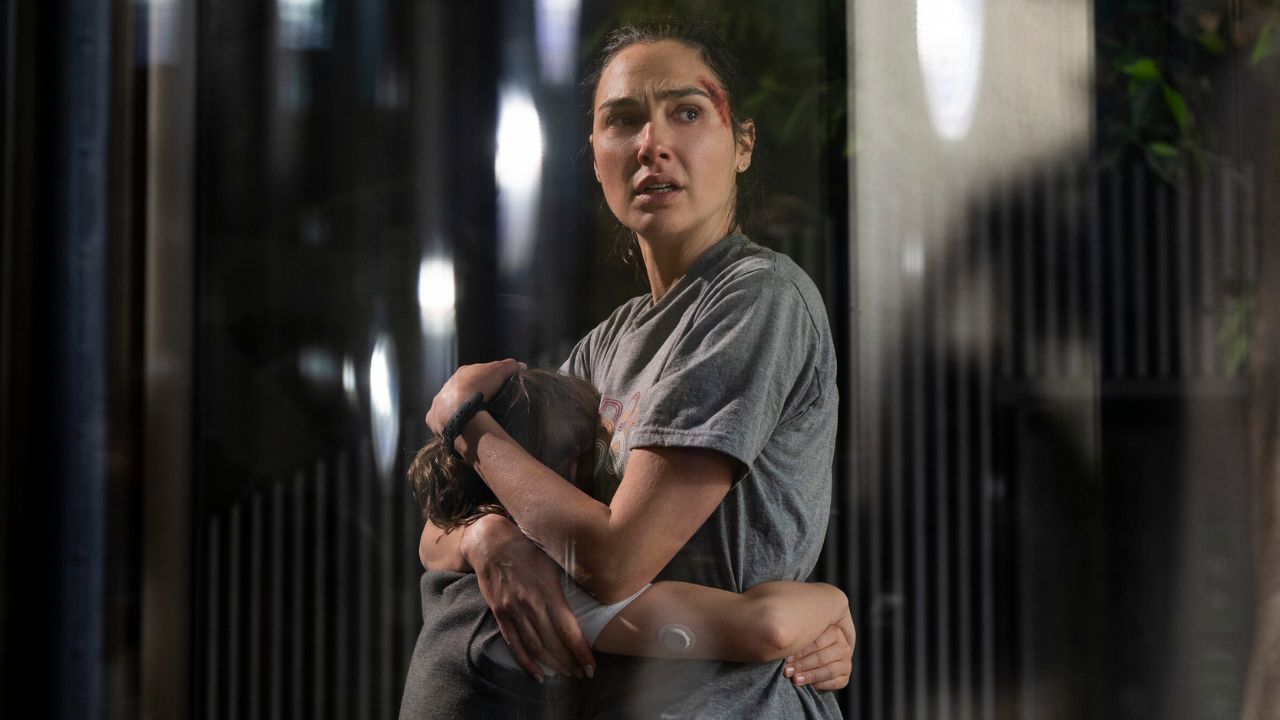
What begins as a mystery about a father searching for his daughter eleven years after she vanished soon becomes a far more painful story. Last Seen follows Ian Ridley as he discovers that his missing daughter was taken by a couple and raised under another identity. Yet what looks like a straightforward kidnapping thriller gradually becomes a heartbreaking exploration of trauma, family, and everything lost along the way.
With Patrick Brammall's raw performance, Sarah's devastating identity struggle, and Henry Reid and Jenna's tangled morality, the mystery becomes only the beginning.
A missing child and a mountain of feelings
ADVERTISEMENT
Article continues below this ad
Last Seen looked perfectly capable of being an ordinary mystery thriller, which was almost suspiciously polite of it. There was a missing child, a grieving father, suspicious people, buried secrets, and enough emotional damage to furnish several suburban therapy practices. Then the series quietly revealed that it had no intention of behaving like a conventional thriller.
Ian Ridley was particularly inconvenient in the best possible way. He was not a handsome machine for revenge, striding through the Australian wilderness with excellent hair and an increasingly impressive collection of firearms. He was tired, grieving, occasionally self-destructive, and held together largely by the stubborn belief that finding his daughter might still mean something.
Credits: Apple TV
Credits: Apple TV
Patrick Brammall played him beautifully. The actor, so closely associated with the comic timing of Colin from Accounts, brought a completely different instrument to Last Seen, as did the rest of the cast, in fact. His Ian Ridley seemed permanently exhausted by his own memories, as though eleven years of grief had settled physically into his shoulders, eyes, voice, and every unfortunate decision he made.
The opening at the emergency-dispatch desk was a splendid little act of cruelty. Ian Ridley heard a voice that might belong to the daughter who disappeared years earlier, and suddenly an ordinary workday became an emotional car crash. Patrick Brammall did not need to shout for the scene to become unbearable. His face did the shouting for him.
Sarah was not a prize at the end
The treatment of Sarah was perhaps the series' most emotionally intelligent decision. Last Seen did not tuck her trauma beneath the carpet once the mystery became exciting. Her need to be called Sarah actually made sense, because Margaret was the child Ian Ridley lost, while Sarah was the person who survived the years that followed.
That distinction mattered enormously. A lesser thriller might have treated identity as a sentimental reunion accessory, with everyone eventually hugging and agreeing that the correct name had been waiting patiently for the credits. Last Seen understood that eleven years had happened to Sarah too. She could not simply step back into another person's memories because the investigation had finally caught up with her.
Credits: Apple TV
Credits: Apple TV
Henry Reid and Jenna were similarly troublesome characters, which was precisely why they worked. The series did not excuse their actions, but it also resisted the cheap pleasure of making them emotionally empty villains. Their genuine love and devotion to Sarah, despite kidnapping her, created the sort of moral knot that could not be untied with one conveniently villainous speech.
This gave the mystery a rather nasty little advantage: the more the audience learned, the less comfortable certainty became. Ian Ridley wanted answers, naturally, but answers did not arrive carrying tidy emotional receipts. Donald, Henry Reid, Jenna, Sarah, and Debbie McGuire all had their own versions of the catastrophe, and none of them were particularly pleasant.
Six episodes and merciful restraint
The six-episode structure was another blessing. Last Seen did not take a perfectly respectable mystery, inflate it like an overstuffed suitcase, and drag it through twelve episodes because somebody in a boardroom had discovered the word engagement. The story moved. Each episode changed the situation instead of merely rearranging the furniture.
Even better, the series did not confuse mystery with withholding. A major early revelation shifted the story away from a simple who-did-it puzzle and toward something far more painful. Once the audience understood more, the question became less about identifying a culprit and more about discovering what the truth would do to everyone involved.

That was where Last Seen showed unusual confidence. It trusted the audience to notice things without underlining them in fluorescent ink. Characters could sit in silence, behave strangely, hide information, or make terrible choices without the screenplay immediately explaining their psychology like an anxious tour guide.
The result was a thriller that kept becoming more interested in its own people. The suspense came from emotional consequences rather than an endless parade of artificial shocks. By the time the investigation reached its destination, the audience was not merely waiting to discover what happened. It was dreading what knowing would mean.
Australia, but make it miserable
Christian Schwochow's direction and Bonnie Elliott's cinematography gave the series an Australia with very little interest in selling postcards. The landscapes were dry, remote, and oppressive, while the visual texture made even wide-open spaces feel strangely enclosed. Nature was beautiful, certainly, but it was not exactly offering anyone a comforting hug.
The isolated world surrounding Henry Reid and Jenna was especially effective. Their distance from ordinary society became part of the story rather than simply a convenient excuse for characters to disappear without mobile-phone reception. The setting made their lives feel detached from familiar rules, which suited a narrative increasingly interested in moral decisions without easy moral labels.
ADVERTISEMENT
Article continues below this ad
That was ultimately the trick Last Seen pulled off. It made a mystery thriller out of grief, then made grief more interesting than the mystery. Patrick Brammall supplied the raw nerve, Sarah supplied the emotional complication, Henry Reid and Jenna supplied the moral headache, and the rest of the cast made the whole thing ache. Quite an achievement for six episodes.
ADVERTISEMENT
Article continues below this ad
What did you think of Last Seen? Let us know in the comments!
ADVERTISEMENT

Edited By: Hriddhi Maitra
More from Netflix Junkie on Hollywood News
ADVERTISEMENT