
‘Lanterns’ Episode 3 Recap: John Stewart’s Past, His Father’s Burden and the Making of a Fearless Hero
Credits: Credit: John Johnson/HBO
Credits: Credit: John Johnson/HBO
“Courage is Fear who said his prayers.” John Stewart’s mother, Bernadette, gives Lanterns Episode 3 its defining idea. The episode turns away from the central mystery for an hour to reveal how John became the man capable of carrying a Green Lantern ring. Through an unusual interview with a disguised Guardian, the episode moves through his childhood, his father’s trauma, brutal training, military service, and eventual path toward art school.
John was not simply raised to be fearless. He was deliberately trained to suppress fear, emotion, and even his natural artistic instincts. The story also gives him a fresh origin within the DCU.
An origin that actually makes his connection to Hal Jordan far more personal.
John Stewart’s father was the first one chosen
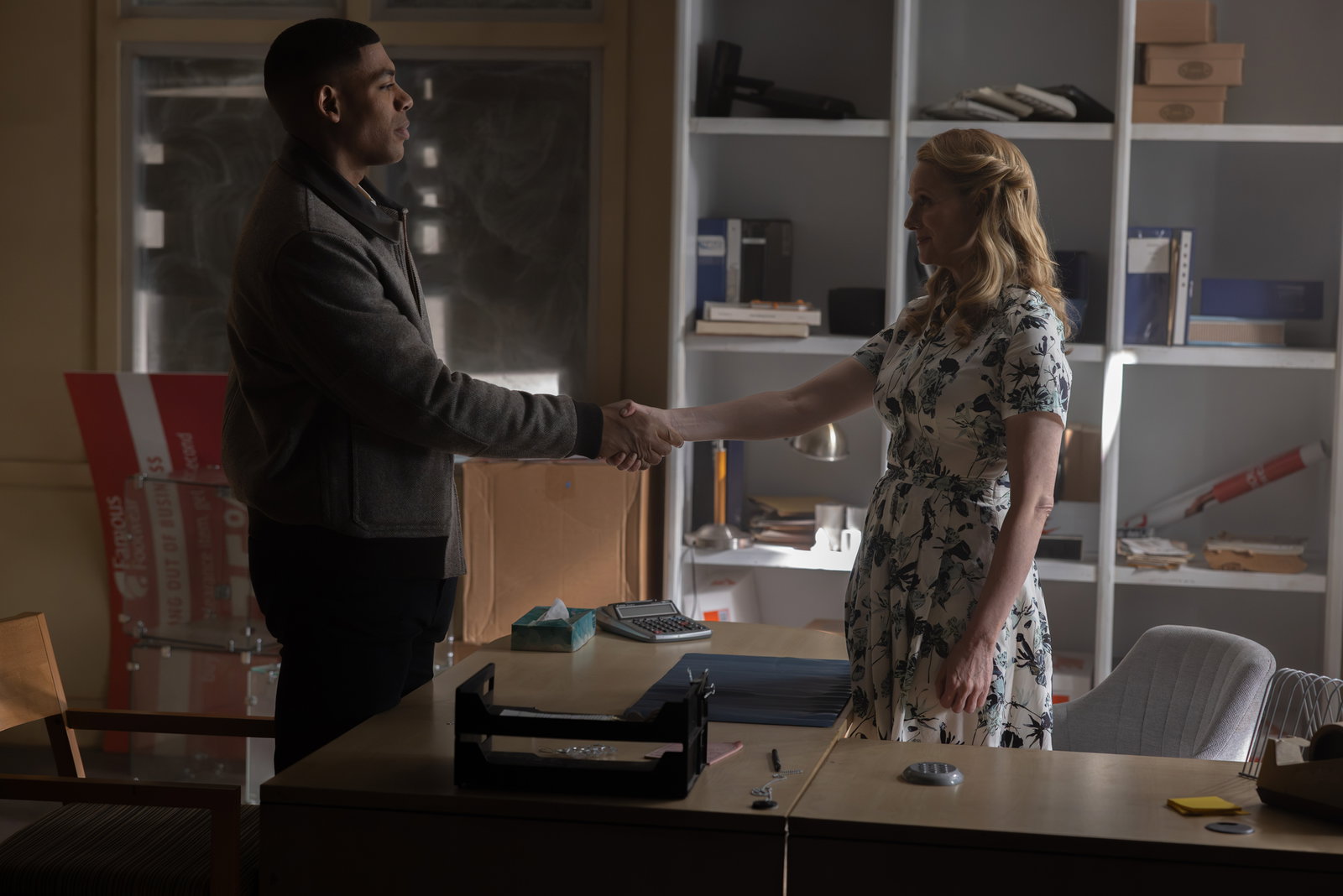
The episode begins with John falling onto mattresses inside an abandoned shopping mall before entering a tiny office for what appears to be a strange job interview. The woman waiting for him is eventually revealed as a Guardian of the Universe, and the conversation becomes the framework for a sweeping series of flashbacks. The Guardian is assessing John for a position within the Green Lantern Corps, forcing him to confront the life that brought him there.
Credits: John Johnson/HBO
Credits: John Johnson/HBO
The story reaches back to 1986, when John is still an infant. A green light enters the Stewart home, and the ring effectively tests his father, John Stewart Sr., asking whether he is afraid. He answers honestly. That moment devastates him because the Green Lantern ideal demands fearlessness. His wife, Bernadette, watches her husband spiral as the encounter becomes a source of shame and trauma.
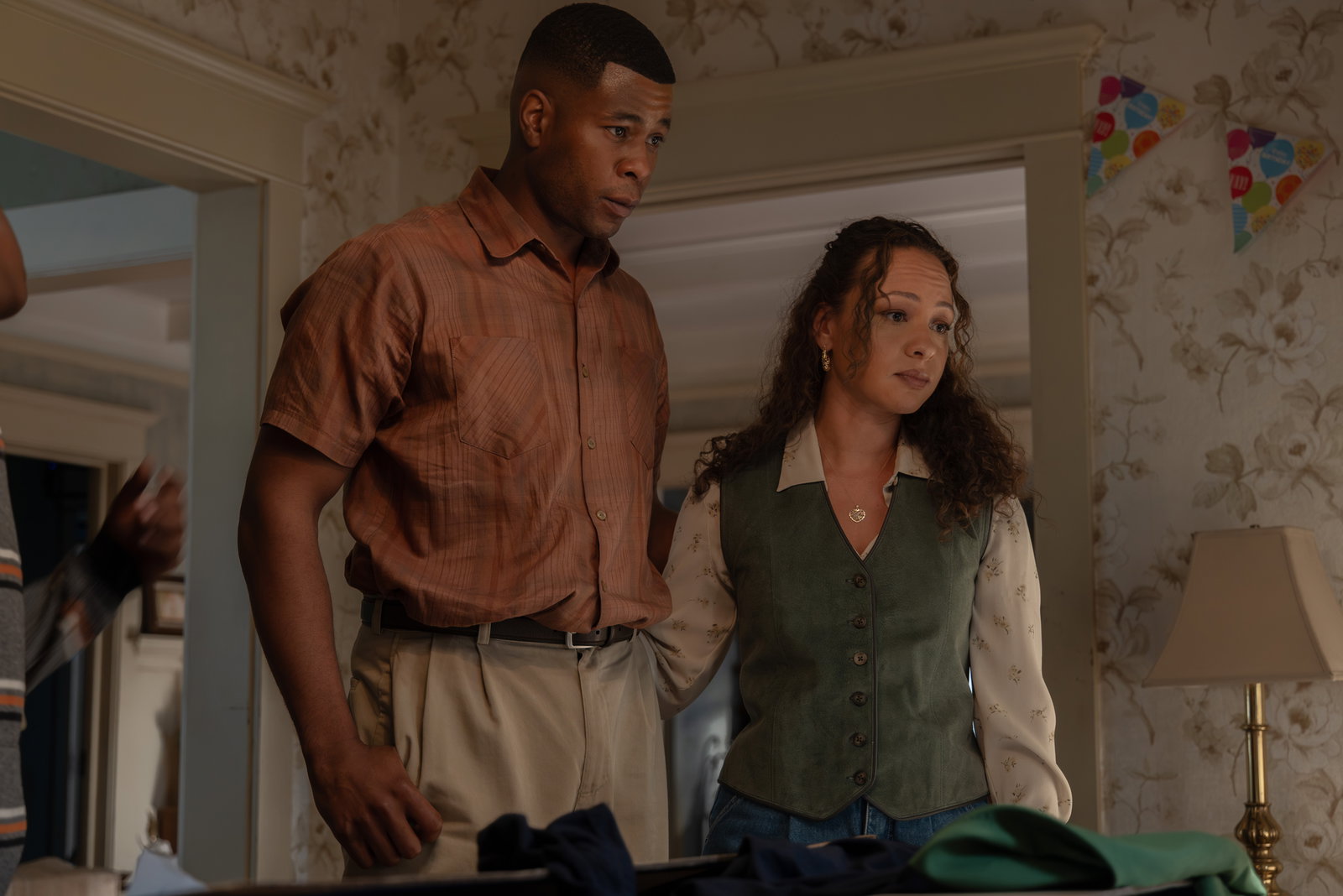
A Guardian later visits the family and explains that whatever drew the ring to John Sr. exists in his genetic makeup. Bernadette sees an opportunity. She and her husband begin preparing their son for a destiny neither of them fully understands. John is isolated from his brothers, taught that birds are watching him for the Guardians, and subjected to increasingly severe tests. He receives a Green Lantern costume and a rifle as a child, while courage becomes the central principle governing his upbringing.
That training reaches its most disturbing point with the famous apple exercise. Young John places an apple on his head and lets his father s**** it away. Later, the roles reverse. John cannot bring himself to s**** his father, exposing the humanity his parents have tried to extinguish. Bernadette eventually admits that the supposed bird surveillance was a lie, yet John still chooses to continue. H
e ultimately s***** the fruit from his mother’s head, completing the test. Race is central to this upbringing. Bernadette understands that her Black son will enter institutions where he may have to prove himself repeatedly, a theme that echoes the racial concerns historically associated with Green Lantern/Green Arrow.
The Guardian initially struggles to understand those realities, while the Stewart family treats exceptional discipline as protection against a society they know will judge John differently.
The boy trained to suppress fear eventually becomes a soldier, but the next stage of his life reveals the artistic self his family nearly erased.
From marine sniper to aspiring artist
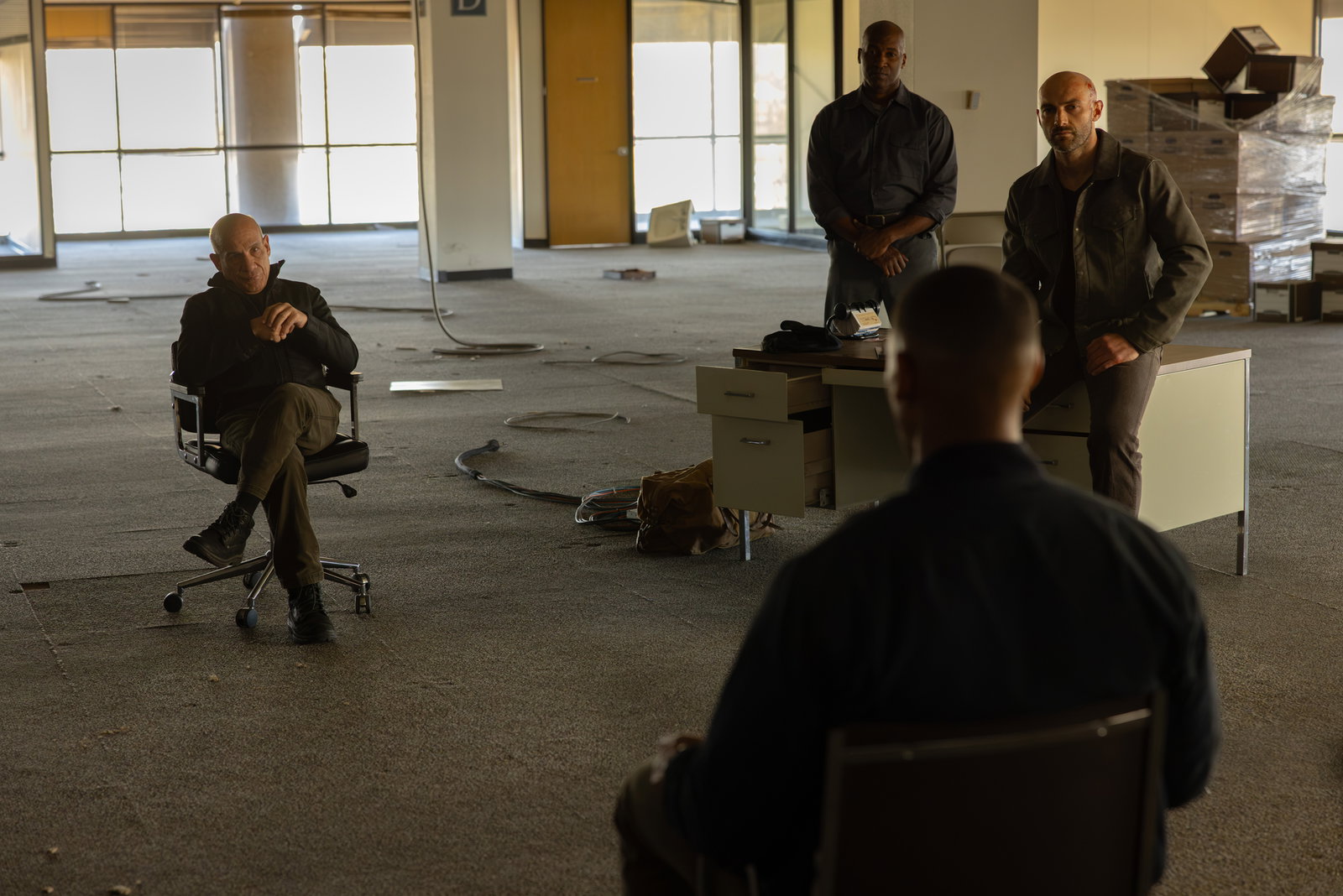
John eventually joins the Marines, rises to sergeant major, and becomes an extraordinarily patient sniper. His military career reflects everything his parents demanded from him: obedience, endurance, precision, and emotional control. On one assignment in Russia, John spends months tracking a target known as Grey Wolf. The mission is finally disrupted when Hal Jordan arrives and captures the target himself.
The operation creates a diplomatic crisis, and John receives a dishonorable discharge as authorities attempt to contain the fallout.

Credits: John Johnson/HBO
Credits: John Johnson/HBO
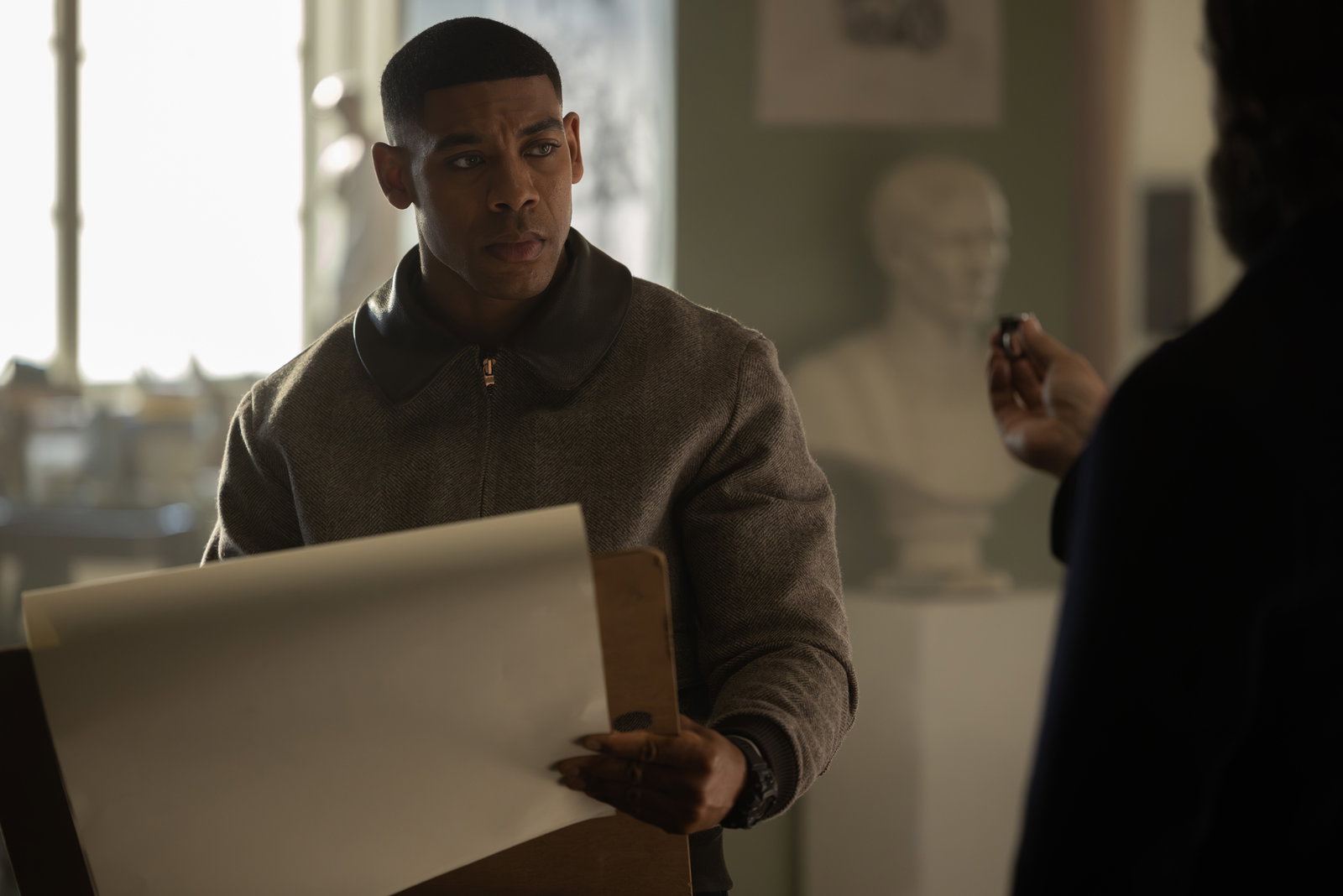
This is where Lanterns reshapes John Stewart’s history from the comics. The comic-book character is famously associated with architecture after an earlier history as a community activist, while later adaptations established him as a Marine. The series makes him a Marine who eventually attends art school, allowing both identities to coexist. That choice becomes crucial to his Green Lantern abilities because his imagination and artistic precision translate directly into his constructs.
After his discharge, Bernadette encourages John to pursue art. He enters art school and begins reconnecting with the part of himself that childhood training had pushed aside. There, a mysterious recruiter approaches him about a special project. John is asked to draw a building before being handed a Green Lantern ring and told to recreate his father’s wristwatch from memory.
He constructs an intricate, fully realized version of the object, demonstrating why his artistic gift matters to his future as a Lantern. The recruiter then sends John through a portal and directly into the interview from the episode’s opening. The circular structure reveals that every stage of his life has been moving toward this moment. When the Guardian asks whether he would be comfortable replacing Hal, John responds with characteristic discipline: if it is an order, personal feelings do not matter.
The Guardian accepts him as a new candidate.
John finally receives the destiny his family promised him, but his first meeting with Hal turns that victory into a deeply personal conflict.
Hal Jordan’s death still hangs over John’s story
John returns home expecting to tell his parents that he has finally become a Green Lantern candidate. Instead, he discovers that Hal has already arrived and delivered the news himself. Hal casually praises the Stewarts, even referring to them as the “Midwest Huxtables,” an intended compliment that lands awkwardly. For John, the moment becomes another instance in which Hal takes control of something deeply personal.
Credits: John Johnson/HBO
Credits: John Johnson/HBO
Outside the house, Hal makes his position clear. He does not want John replacing him, and he tells the younger Lantern that it would happen only over his d*** body. John remains outwardly composed, but the hostility between them is unmistakable. The episode therefore transforms their partnership into something far more volatile. John has spent his entire life following orders, while Hal represents the person who repeatedly disrupted the path he was trained to follow.
That tension carries additional weight because viewers already know what eventually happens to Hal. Episode 1 ended with a disturbing flash-forward showing Hal dead on a football field, leaving the identity of his k***** as one of the season’s biggest mysteries. Episode 3 adds another possible emotional layer by showing how John and Hal’s relationship began long before their partnership in Nebraska. Hal’s eventual death therefore looms over every revelation about their connection.
Most importantly, the episode does not present John’s fearlessness as a simple superpower. His courage has been manufactured through family trauma, racial expectations, military conditioning, and years of emotional sacrifice. His art offers the first glimpse of the person underneath that training. The series suggests that his greatest strength may come from combining those two sides: the disciplined soldier and the imaginative artist.

What did you think of Lanterns Episode 3 and its new origin for John Stewart? Does this make the Hal Jordan mystery even more intriguing? Let us know in the comments.

Edited By: Adiba Nizami
