
INTERVIEW: 'The Season' Stars Justin Chien and Chris Pang on Representation, Privilege, and the Humanity Behind Their Characters
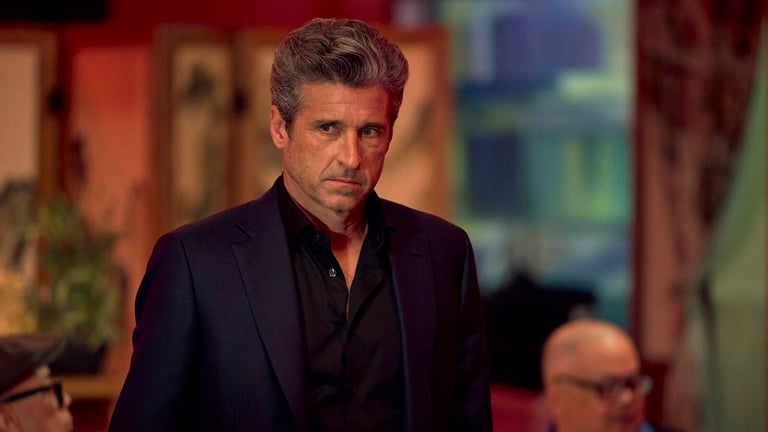
Justin Chien and Chris Pang in 'The Season' (Image Courtesy: Hulu)
Justin Chien and Chris Pang in 'The Season' (Image Courtesy: Hulu)
Whenever a debate about representation takes place in the entertainment industry, one question inevitably emerges: Is the industry really changing, or is it simply catching up to a reality that has long existed? Projects like Crazy Rich Asians, The Brothers Sun, and Interior Chinatown have proved that stories showcasing different cultures could attract broad audiences. Joining the bandwagon is Yalun Tu's drama thriller, The Season, which has all the ingredients of becoming your new obsession.
The Hulu series takes viewers into the glamorous world of Hong Kong's wealthy elite, where luxury, status, and power often hide darker truths. The show is set against a backdrop of yachts, charity galas, high-profile romances, and exclusive social circles. But what happens when a group of privileged individuals starts learning more about the world they live in? Their carefully crafted lives slowly start to crumble as secrets emerge and loyalties are tested. What makes this show such a riveting watch is how Tu has managed to create a world that looks so different from our own, yet we manage to connect with it. Moreover, the cast's brilliant performances elevate the viewing experience.
Among the standout performances are Justin Chien as David Ho and Chris Pang as Andrew Fung. Both characters are different from each other. They are confident, but they both are grappling with deeper insecurities beneath the surface. In a conversation with Netflix Junkie, Chien and Pang discuss their characters and finding the humanity in them. Moreover, they talk about exploring themes of identity and perception, and how they managed to bring The Season's complicated world to life.
ADVERTISEMENT
Article continues below this ad
A production still from 'The Season' (Image Courtesy: Hulu)
A production still from 'The Season' (Image Courtesy: Hulu)
Aayush Sharma: The Season appears to use Hong Kong's world of yacht clubs, charity galas, and old-money dynasties not merely as a backdrop, but almost as a character in itself. As actors, how did you navigate portraying people who operate within such rarefied social circles without reducing them to symbols of wealth or privilege?
Justin Chien: That is an excellent question. I think the status of these characters, these high-net-worth individuals, informs the packaging of these characters. But I think what helped me, at least, was tapping into who David was at his core. And on the surface, I think he wants to show his warmest, kindest, most composed side. But deep down, he is feeling a lot of conflicting, tumultuous emotions. So, rooting my understanding of him, and the way that I would relate to these characters, from an emotional place as opposed to a logical place, I think that's what helped bring David to life for me and helped me be a better scene partner to everyone else on the cast.
Chris Pang: I think I have been quite fortunate. I live in Las Vegas now, and I have met a lot of very wealthy people. And what I have realized about people who have wealth and abundance is that you don't go out of your way to exist differently because you are rich. You are just rich, you just exist. So it made it a lot easier for me to do my character work because I just created this character, and I let everything else do the work for me. So it was the fact that I was wearing expensive clothes, rocking up in a Ferrari, and talking about the private yacht that made me feel rich. It was not necessarily anything that I had to inject into the character. And that freed us up to explore the details of the character that make them interesting, which is their flaws, right? Because all of our characters have put up these facades and walls of projecting who they want to be and how they want to be portrayed to the social elite circle that they are a part of. But then, as that cracks and we start seeing what is underneath, we get to explore the intricacies of these characters. That was what made it interesting.
Aayush: Actors are often asked to find empathy for characters whose decisions may be morally questionable. Was there a moment while filming when you found yourself unexpectedly defending or understanding a choice your character made, even if you personally disagreed with it?
Chien: Oh, that is another excellent question. There was a moment in episode six, so obviously, I cannot say it is a spoiler. But it was a scene between Celina Jade, who was an excellent scene partner, and me. It was a short scene. On the page, it did not call for a grand performance. But I think when we were both doing it, we suddenly found ourselves tearing up on each other's coverage. And I went home that night and felt like I got hit by a bus and was wondering, like, why do I feel this way? And I was like, oh, yeah, I just did the scene with Celina. I think it was moments like that that really helped me to, like, I felt like I'd lost myself in the role that day. And it was moments like that that I kept trying to find.
Pang: My stuff is quite relatable with Andrew. As you see, he goes through things that are not too far out of anyone's reality to imagine. But I think it is our job as actors to empathize with the character because every decision the character makes, every word that is spoken, has to come from somewhere. And it is really our job to make that a reality. So, if you have not understood that, then you have not really done your job. So when you say, like, is there a moment where I felt like I understood the character or would like to defend the character in their actions, it is the entire shoot.
Aayush: Both of you have worked on projects that contribute to the growing global visibility of Asian and Asian-diasporic storytelling. Do you feel audiences are now looking for more culturally specific stories, or are they simply responding to great characters regardless of cultural context? How does The Season fit into that evolution?
Chien: I think it is both. I think when audiences of every group on earth witness truthful, universal storytelling, they want to see more. I am glad that we get to be a part of this. When Crazy Rich Asians came out, I was in a theater in LA, and I got to see this handsome young man get married on screen. That was Chris Pang as Colin, and that obviously resonated with people around the world. Because of that, we had opportunities that opened the door for shows like The Brothers Sun, Interior Chinatown, and The Season. So it is an honor to be a part of that. And I really hope that we continue to push this forward, push progress forward, not just for ourselves, but for the next generation.
ADVERTISEMENT
Article continues below this ad
Pang: I think it is both too. I mean, to a certain extent, one allows the other. But with us putting more Asian faces on screen and having more representation, it is a journey, right? Each step we take takes us a little further, and that opens the door to breaking down that stereotype even more. So, as we progress, we get to expand the types of characters, and we get to expand the experiences and the authenticity. Whereas at the start, you might not get to do that. So I think it goes hand in hand.
The Season is available for streaming exclusively on Hulu.
ADVERTISEMENT
Article continues below this ad
Did you watch The Season? Let us know your thoughts in the comments.
ADVERTISEMENT

Edited By: Adiba Nizami
More from Netflix Junkie on Hollywood News
ADVERTISEMENT