
INTERVIEW: Janet Goldwater, Barbara Attie, and Mike Attie Talk About the Inspirations, Intersectionality, and Interventions Behind Creating ‘Hollywood Does Abortion’ (TRIBECA)
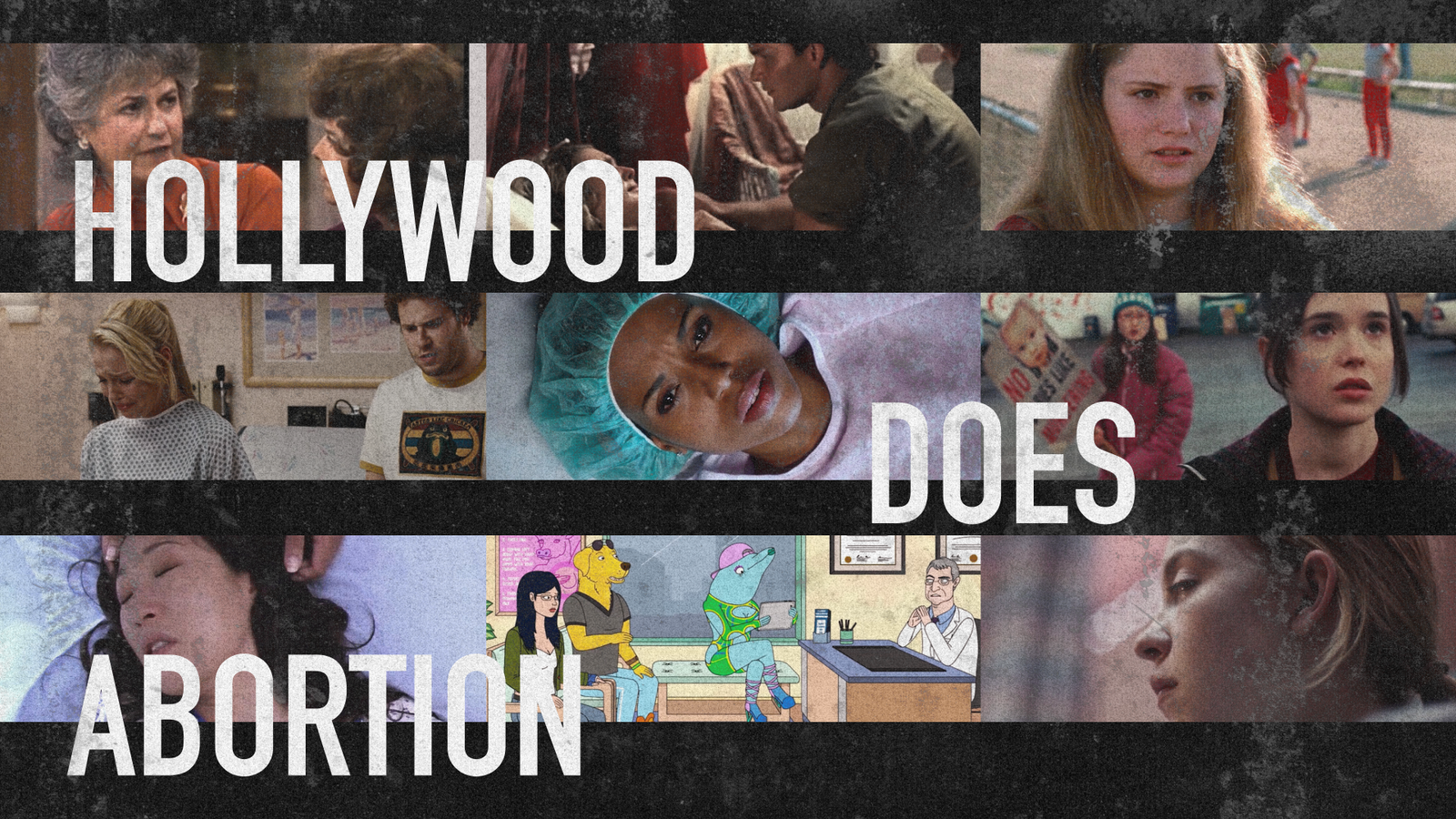
Credits: Falcon Ink
Credits: Falcon Ink
It is not every day that one comes across cinema dissecting itself. Perhaps in the same vein as the metaphysicalities explored in The Studio, BoJack Horseman, The Truman Show, and more, Hollywood Does Abortion brings forth yet another unsettling image of the biggest driving force of pop culture looking inwards at its own guts. How it has shaped a perception around something that is considered by many a non-negotiable now sits somewhat spread across the table, waiting for the conversation to start.
Barbara Attie, Janet Goldwater banded together to examine the sphere of abortion back in the 1990s. With Mike Attie joining them shortly, they have today given TRIBECA, and in turn Hollywood, a lot to reflect on this year, yet again. With some time to spare and sit down with NetflixJunkie, the trio has revealed some of the nitty-grits that form the matrix of Hollywood Does Abortion.
Adiba: I watched your documentary, and it was exactly my area. I’m really intrigued by how Hollywood and cinema in general just affects pop culture. And you landed on Hollywood Does Abortion after all of your trysts on the topic throughout the years. I noticed that many of the interviewees discuss the films and television shows that shape their understanding of abortion, gender, and personal autonomy. I’m curious about what your own experiences as filmmakers and in this particular documentary were there any specific pieces of art, books, films, or cultural moments, or even your own experiences that influenced the way that you have approached this documentary or even posed the questions that you have in this documentary?
Janet: That’s a wonderful question. I’m going to back up and tell you about a film we saw. We made another short film about abortion called Abortion Helpline, which was at Sundance six years ago. And while we were there, we saw a film called Disclosure, which was about how trans people are depicted on camera, on screen. And we found that a really moving film. And I realized, watching it, how many of my implicit biases about trans people had been shaped by what I had seen on TV and in movies over the years. And I was kind of shocked, honestly. And because we, as a filmmaking team, have been engaged with the issue of abortion a lot, it occurred to us that this would be an interesting way to look at abortion and really encourage our audiences to look hard at what they’re seeing on screen when they think about abortion.
Mike: I think for me, what’s interesting is now, and I think it’s more been the process of making this film. We spent what I thought was like many, many months just watching the — just to, again, to back up a little bit, there’s a great resource, an organization called Answer has done some really extensive research into depictions of abortion in film and television, and how they’ve, in different, they’ve basically catalogued all this. So we use that to some extent as our kind of base level of research for how to put the film together or what to draw upon. And so, while making the film, we had to watch these clips to figure out what could actually be in the film and re-watching the shows that I watched when I was younger, like Party of Five or movies like Juno, which treat abortion in a kind of like dismissive or almost stigmatized way. I realized, again, how many of my biases were influenced by these television shows. And I think it almost just like, it made me realize how important this film could be. And then to realize that a lot of these things are still happening today that to some extent have progressed in depictions. So it was a lot of, it was a lot of just like the research and realizing things and re-watching things that I’d watched when I was younger.
Barbara: When we started making this film, we would ask people, not just the people that we interviewed, but just people in general, if they could remember the first time that they saw an abortion depicted in a film or on television. And a few people said Dirty Dancing. Most people would think about it and say that they just couldn’t, they couldn’t remember. And when I thought about it personally, I don’t, I like to think it was Juno because Juno was so controversial when it came out. But when we, what it made me start thinking about is how many, how these depictions that we’ve seen on television are so different from what is happening in real life. Like the people that we were seeing on screen were white. They were middle-class. They were young. That’s not the demographic that primarily gets abortions. And so it was kind of revelatory to me when we started making this film, how different the actuality was from what we were seeing on the screen, and how people that we talked to were kind of clueless about that as well, except for all the other people that we interviewed for the film.
Adiba: Although the documentary is deeply rooted in American politics and culture, Hollywood films circulate globally and are integrated through vastly different cultural, religious, and social contexts around the world. Did you consider how international audiences might interpret the stories explored in the documentary? And were there any concerns about making a film that is both specifically American and globally relevant at the same time?
Janet: Interesting. I mean, it is interesting that, yeah, it’s a pretty Eurocentric film, obviously. I mean, there have been movies being made in Europe specifically, which have an abortion theme, and I assume all over the world. And of course, the ones in Europe are the ones I’ve watched. But no, I mean, I think we do, we are hoping for an international audience. And, you know, we’re hoping that it will be among people who are consumers of Hollywood. And there are some, when we were doing the research on this film, there are some really wonderful European films that actually treat this subject kind of like more accurately and honestly than some of what we see in America. But yet we felt that we had to restrict ourselves to American films because the subject matter would just get too broad and unwieldy. And we couldn’t handle that in an hour and a half film. But yeah, we did watch some amazing films, one from France, one from Romania.
Mike: I mean, interestingly, while abortion politics have been, you know, under, or abortion rights have been under siege in the United States, we’re actually seeing globally, a lot of countries becoming more progressive on the issue, while we’re going in the other direction, which is interesting to think about, because we think of Hollywood as being such a progressive sort of creator of content. And I think Hollywood thinks of itself as being progressive. And yet somehow it’s managed to sort of reinforce a lot of what’s happening politically. And there were so many scenes and stories that we had to cut, just because we wanted to make something digestible. I mean, I think something like that, we almost require like a series, I think, to go through all of that. But yeah, you have to always make some really hard decisions when you’re filming. And I think for us, or when you’re working on a film, and for us, you know, we were able to create the constraint of like, from Roe to Dobbs is like our timeline. Those are the standards with which we’re working, I guess, to present it technically. So yeah, it was difficult to make that decision.
Adiba: So moving on, one of the documentary’s most compelling observations is that Hollywood has long been willing to depict murder, war, trauma, and countless forms of violence. Yet abortion remained largely invisible. There is a point in the documentary where Lizz Winstead mentions that as racism was beginning to die in these conversations, it was beginning to die as a point that could be attacked. Abortion became a substitute for these extremist differences.
Why do you think that abortion has been such a big challenge to hold a conversation about in Hollywood, and poses such a unique challenge for storytellers in particular?
Janet: Well, yeah, well, as you point out, the reference you made to when Jerry Falwell, the sort of large figurehead in the religious right movement, when he realized that it was no longer sort of culturally acceptable to just be openly white supremacist, as a sort of rallying point for gaining religious backing, he switched. He found abortion would be an issue that would, you know, that could appeal to a wide audience. And he built a movement on that. And the political right saw that as a group that could be of a voting bloc that could be captured. And so that force has driven abortion politics, right up until today. And I’m not saying there’s not still, you know, a lot of racism intertwined in that, because I think we can see that there is both on screen and in real life. But that original sort of shift to using abortion as a wedge issue just continues to drive the discussion.
Barbara: Well, it really actually, we did find it to be this really interesting issue, because in fact, most people in this country in the United States support a woman’s right to control what she does to her body. Those statistics, I don’t know, Janet or Mike, if you remember what the statistics are, that how many people approve of abortion. Yet, on the other hand, our political system has so demonized this issue, and it found it as such an effective issue that in half the country now, you know, a person who wants an abortion will have a really difficult time getting one. So there is this big dichotomy in this country, and it’s kind of like tried to show that it started back in the late 70s. And Ronald Reagan, who had been a pro-abortion governor, then became an anti-abortion president and got a lot of followers that way. So that demographic has been — they vote, they vote, they are strong supporters of their candidates, and they’ve been very powerful.
Mike: One thing that I found really fascinating in our research was that, and this isn’t in the film, but there was a certain general named Sievert Koop, who spent a lot of his earlier career basically campaigning against abortion and produced this very wacky film that was shown in churches around the country in the 70s, but it was actually really foundational to the anti-abortion movement in the late 70s and early 80s. And later in his career, Reagan basically tasked him to put together a study finding the ill effects of abortion. Like, what are the post-traumatic experiences that women have after getting an abortion? He was tasked with putting these together, and he went and did the research and ultimately determined, no, I can’t find anything substantial. And when he reported that, he actually became sort of persona non grata amongst the Republicans, amongst the right, which I found to be really fascinating.
Barbara: But I think that the contradiction that all of us have pointed out of the fact that not just the majority, but really a rapidly growing majority of people in the U.S. support abortion and in some form, to some degree, they would like to go back to something approximating Roe. And so while that majority grows, we see access to abortion shrinking. And so I think everybody involved in the issue knows that messaging is a large part of it, how this is — the actual language and depiction of abortion is crucial to why that’s happening. And so, you know, we tried to provide enough information that people know how to think about that.
Adiba: The documentary examines how filmmakers have historically embedded messages, both subtly and overtly, within their work. Filmmakers have used these subliminal messages and concepts folded into their storytelling. Do you find yourselves engaging in similar forms of storytelling construction while making this particular documentary? Maybe subtle, maybe something we might have missed?
Janet: I love that question. I think maybe the way that we treat Blonde. So the most recent film that we look at in the movie is Blonde, with a story of a fictional film about Marilyn Monroe. And so by having what we did, was have our interviewees look at clips of this movie in which the fetus becomes a talking baby. And we have them look at that and show their reactions. So I think we are — that’s probably our most sort of manipulative moment in the film, if that answers your question. I think we’re also showing our interviewees those clips. We discovered that most of them had not seen the film. I think Renee had seen the film, but many of the people we showed those clips to, it was the first time they were seeing the clip. So they were really reacting genuinely to what they were seeing for the first time.
Mike: Yeah, just certainly. I mean, I think also, you know, as filmmakers in general, that I was immediately wanting to go to Blonde and Janet said it. And that was like a real fun thing to do, to hand — because in interviews, often when you’re interviewing people, there’s always this, when you hand them the monitor and look at it, there’s this really interesting moment where they’re responding and to see their faces. And then also, I just think in general, as music is obviously — the score is playing a big part in that as well. We worked with a really great composer too, Saul Williams, who I think really just found the right emotional notes to think about not just individual scenes, individual clips, but how all these are playing together and getting those ideas across.
What do you think of Hollywood Does Abortion and its creators' views on the questions discussed? Let us know in the comments.

Edited By: Hriddhi Maitra
