
INTERVIEW: Filmmaker Traci Hays on Bringing Martha Carelli’s True Story to Life in Lifetime's 'Kidnapped In Her Own Home: The Martha Carelli Story'
Credit: Lifetime
Credit: Lifetime
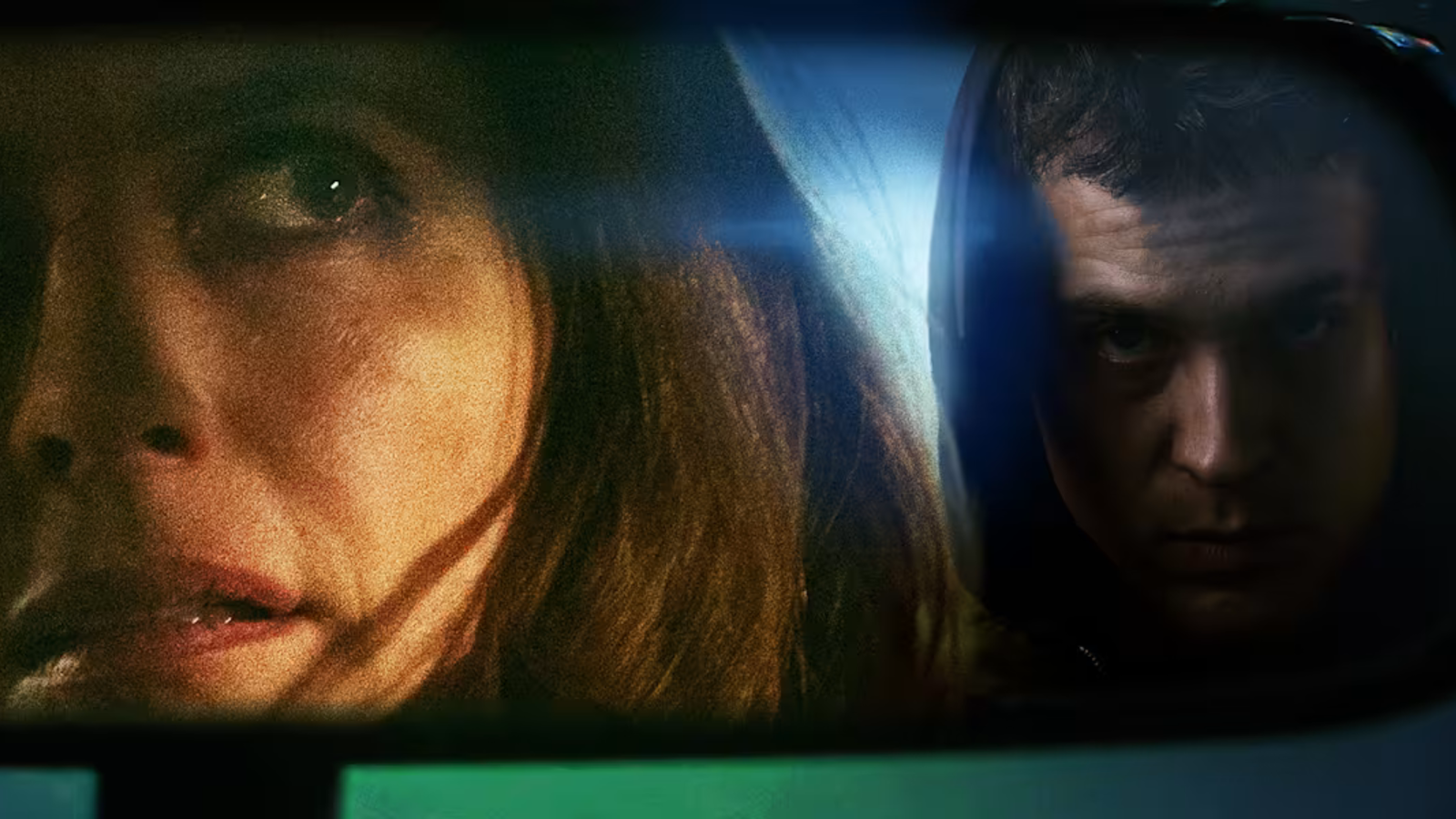
Inspired by true events, Lifetime's Kidnapped In Her Own Home: The Martha Carelli Story follows a woman whose life takes a terrifying turn when an escaped convict hides in her basement and takes her hostage. Forced into a dangerous journey against her will, Martha finds herself locked in a tense psychological battle where every decision could mean the difference between life and death.
Directed by Traci Hays, the film explores fear, survival, resilience, and the strength of the human spirit under extreme circumstances. In an exclusive conversation with Netflix Junkie, Hays discusses adapting a real-life story, balancing authenticity with cinematic storytelling, working with Stana Katic, and the creative choices that shaped the film’s gripping emotional and psychological tension.
Aayush Sharma: Your film is rooted in a non-fictional story. When adapting a story that carries such emotional and factual weight, how did you navigate the balance between staying true to documented events and shaping dramatic tension for cinematic storytelling—especially in a way that preserves the emotional truth of Martha Carelli’s experience rather than sensationalizing it?
Traci Hays: It is always fascinating when you are taking on something that is based on true events or inspired by a person's traumatic experience. Obviously, I have personally always been drawn to true crime, just like at an early age. So, it was a real treat and an honor to be able to take this woman's story. And it is interesting because Martha Carelli, if you look her name up on Google, you won't find anything because the woman who actually went through this, rather the family that went through this, all their names were changed by the family's request. So, Ann Rule, who is a very famous true crime writer, changed the names. So, you can read her true-crime book, which includes a chapter about Martha Carelli's journey, with all the names changed, but it's only one chapter.
I was so bummed when I started because I am like, I wanted to know more about these people and their lives, and try to build off the truth as much as possible. Like, Martha Carelli was really into bowling. She was on a bowling team, and the story took place in 1976. So, there were all these things that you have to look at the creative liberties we took. Obviously, shooting in the '70s is expensive, and Lifetime doesn't do that much. Most of their films are set in the present day. So, yes, that full stop was a big leap there. I love period films, period. Like, all period films are great. It's fun to play in different time periods. But ultimately, we did take into account money, scope, time, and mandates. So, we did have some creative liberties changed for that.
Aayush: Ann Rule’s writing is often celebrated for its psychological insight and restraint rather than overt sensationalism. How did her narrative approach influence your directorial choices, particularly in how you built tension and controlled pacing without relying on conventional thriller exaggerations?
Traci: It is so interesting. I was thinking about it, I haven't read her book since I was making this last year. But I do remember she is really detailed in her writing and very specific about how she describes each character and where they are. And it is not like an inner monologue. She is not writing from, like, she's not narrating on behalf of the individual. She is very factual in the sort of way she writes. And I don't know if all of her writing is like that. I've only read Martha Carelli's story specifically. But I was just trying to pay attention to the details. Like, she was really emotional, like she was talking about how Martha's injuries were getting worse over the period of time from when we started with her to the 24-48 hours of when they are rescued. Like, that period of time, she tracked the injuries.
Credit: Katz Public Relations/Lifetime
Credit: Katz Public Relations/Lifetime
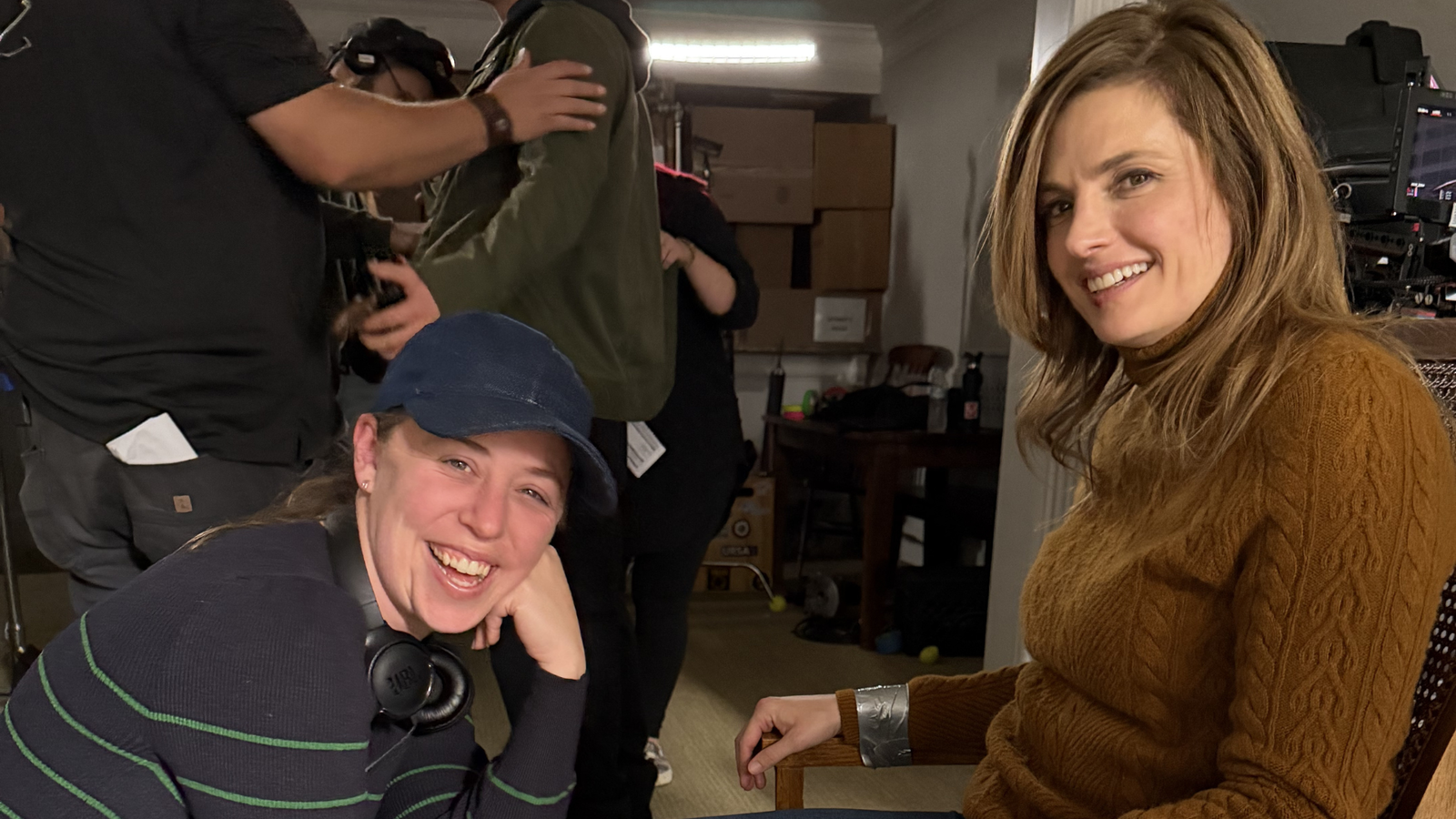
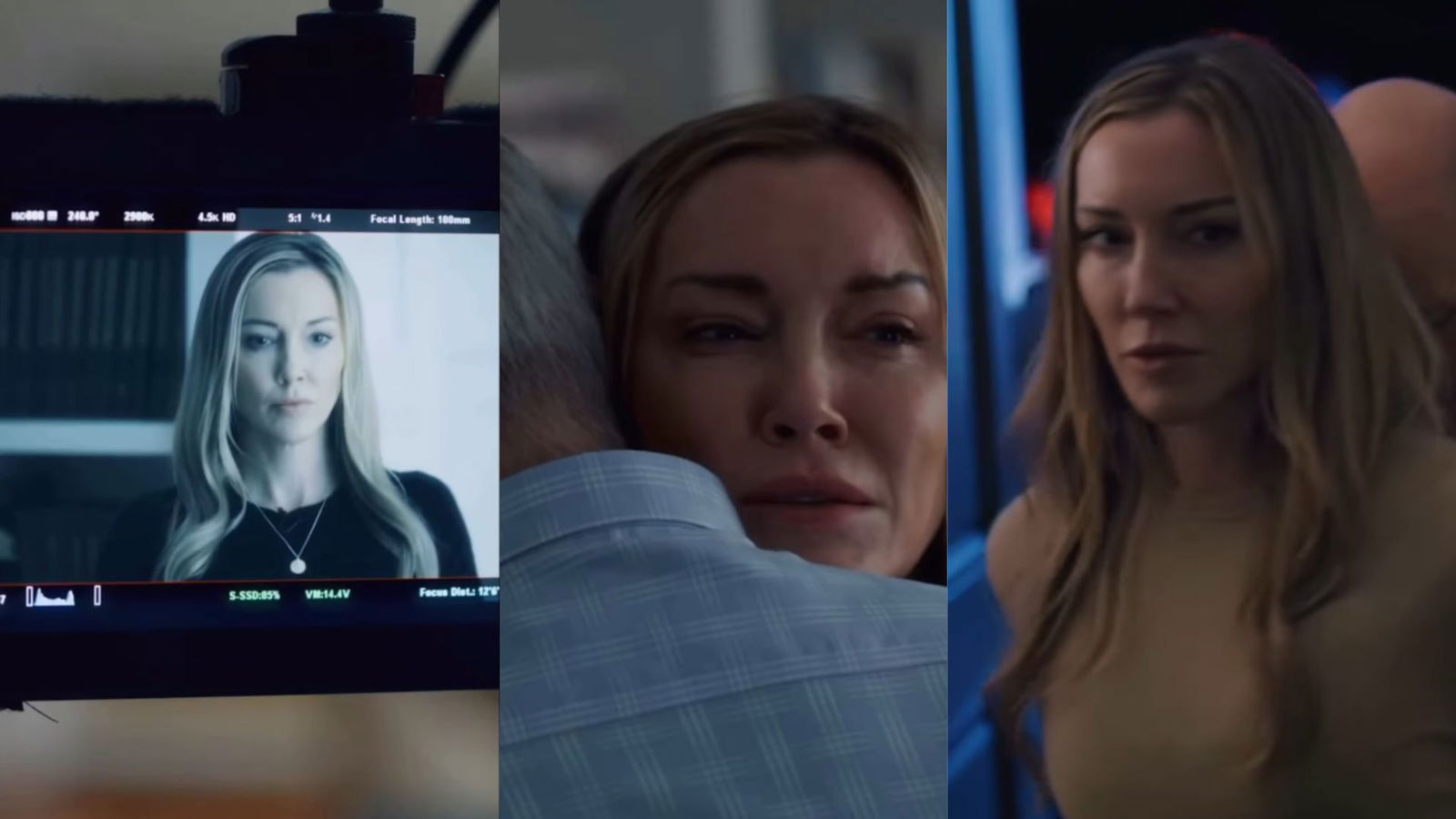
So that was something I was really conscious about. Okay. Because we film out of order, as you know. So we're like, okay, where in the story is Martha at? Not only cognitively, but also visually, with the bruise. I mean, it was a lot to track, and obviously, Stana Katic just did a phenomenal job of trying to track all those ups and downs.
Aayush: Much of the film unfolds within confined spaces—a home, a car, even a single room. How did you approach these environments not just as physical locations, but as evolving psychological landscapes that mirror Martha’s internal state as the situation intensifies?
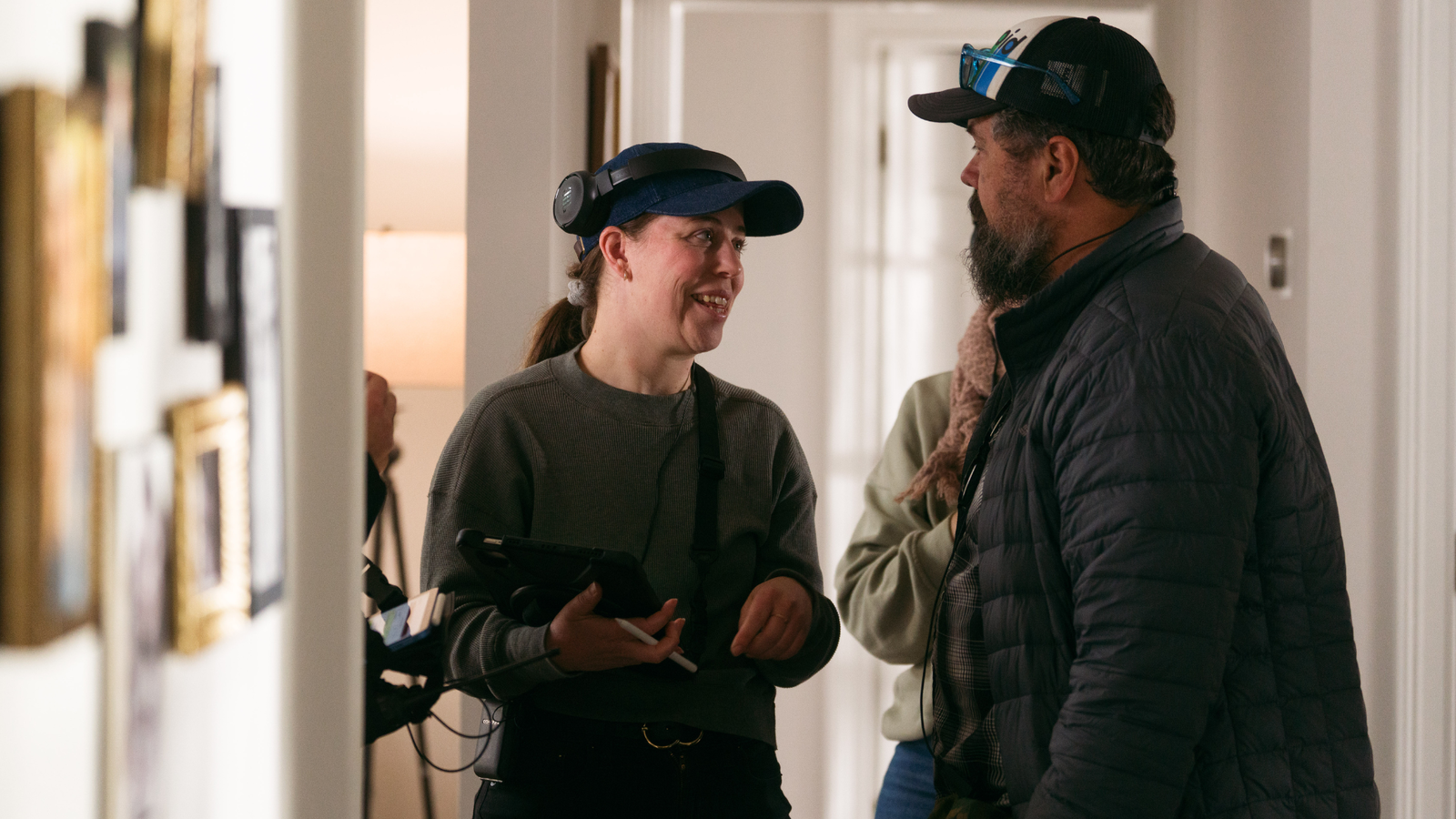
Traci: She is very much almost like a mouse caught in a trap in a lot of ways in her own home, which totally changes. And I hope that comes across in the bookend of the film, where you see her at the beginning in her own home, and how she feels about it toward the end. We won't give away too many spoilers, I guess. I was thinking about that. I was like, "Oh, how much to say?" But I wanted, yeah, to answer your question about the psychology, yes, psychologically, where she is in the space, I was very conscious of that. I also did not want to make it; I wanted to keep it interesting. So we are not just all on the thing, framing in the same sort of box? I'm always like, how do we create depth? How do we show tension?
So I was always moving the camera and trying to find ways to play with light and shadow, so that we're like, "What's behind the corner?" Or like, what...? To emphasize, when you walk down your street, and everything seems seemingly normal, to go through an experience and how that shifted. So we weren't, I was not really wide a lot, intentionally. I wanted us to feel, especially when we were in the car, her claustrophobia, her survival, the power of the human spirit, and how she was able to overcome it.
Aayush: Following on that, did you and your cinematographer develop a distinct visual grammar for each of these spaces? For instance, were there specific choices in framing, lighting, or camera movement that were designed to reflect shifts in power, control, and Martha’s mental state as the narrative progresses?
Traci: Absolutely. That started from the first phone call. Once we got the script, and we were off to the races in prep, Greg Hudgins, who shot the film, and I had done a previous film together, but it was very different in tone, not at all a thriller. So, you want to approach it differently. I kind of came in with ideas about films that I was really inspired by for different reasons. A lot of David Fincher's work. Prisoners was a really big influence for me, not only in terms of tone and the look of the film, but also because it did kind of mirror a similar missing-person story. So a lot of it comes together. There is a lot of dreaming that happens at the beginning of the process, and then it gets a little more, I guess the word is, zoomed in once we settle on locations. Because this entire film, minus a few days, was basically shot on location.
And so the location really informs what you are seeing and how you are seeing it, and how we build our shot list. So, in the case of Gone Girl, they actually built the home that you see in the film. In our case, we obviously filmed at an actual house. So we are not moving walls out of the way. We are really using the architecture of what's there. So I am always thinking about how we wanted the audience to really fall in love with Martha really quickly at the beginning of the film, because then we are on this kind of journey with her. And we are not really in her home for most of it. We are in a car. So how do you make that interesting, being in the car? So, it was all about when we moved the camera, how I moved the camera. It's all based on tension and motivation. And then, obviously, when the perpetrator comes into the picture, the power dynamic shifts in terms of who holds the power. In every scene, there is a pivotal scene in the film, and I won't give it away, where that power shifts. And it's a really powerful scene. So we did not want to be low on Martha's character. We wanted to feel that shift. So, in every scene, we are asking that question: who is the person driving the power of the scene?
Aayush: Tension-driven films often rely heavily on constant movement or escalation, but your film seems to embrace moments of silence and stillness. Were these pauses consciously designed, and how do they function within the overall rhythm of the film in terms of building or releasing tension?
Traci: I thought of it as almost like electricity, right? Like the idea of how there's always this vibrating, and at certain times it will spike. And very much with the character that Michael, the perpetrator, plays, specifically, the goal was to never really know what the next move was, and if, and when, he was going to pull out his gun, and if he was going to pull the trigger. So it is almost like every scene had multiple shifts going on. There's a moment of breathing and then holding your breath. And then it's like, I mean, it is obviously definitely not a film that's a relaxing, meandering experience. There is a lot of tension, and that was definitely purposely designed. And that goes back to the writing and the script. I think I had this incredible blueprint to work off of, right?
So there was not; then it was about the intentionality around not only shots, but in the editing, the pace. We did want to sit in silence. There is a scene towards the end that's really, you see, a character unlike you would expect. What I love about it is that there are no good or bad people. I think we're all a bit gray. So, how do you show power dynamic shifts? And so, sitting in the quietness, I am really glad that you brought that up because that was definitely purposeful, to kind of, as an audience member, lean in and go, actually, I can see where this person's coming from, or hopefully have a little empathy for people in a film that might have bad intentions. That was definitely purposeful.
Aayush: In terms of perspective, how closely are we aligned with Martha’s point of view throughout the film? Did you ever feel the need to step outside her experience to provide the audience with additional context, or was it important to keep viewers fully immersed in her subjective reality?
Traci: In the case of this particular film, I really wanted to be with Martha, from her perspective, the whole time. I mean, there are definitely, like, even POV shots of Martha where we're seeing things from her point of view. So, I think, obviously, there are times when I wanted the audience to lean into maybe empathizing with her perpetrator a little bit, but I was always seeing the world through her eyes and how she sees her life and her family and how she's driving so much of this. I mean, she is driving a lot of the narrative, but also Michael Anderson's character is very much involved. While he might be seemingly holding the power in the scenes, we are still with her perspective because it is not about Michael, it is about Martha. I mean, it is ultimately about their relationship and how they change one another at the end, but there is only one scene where I would say the perspective shifts, and it's basically at the end when we are starting to understand why Michael made the choice he made, and if he's going to make a different choice. But other than that, it was always Martha.
Credit: Katz Public Relations/Lifetime
Credit: Katz Public Relations/Lifetime
Aayush: Stana Katic delivers a performance that feels both grounded and deeply human. How did you work with her to portray resilience in a way that avoids familiar “survivor” tropes, especially within such a contained and high-pressure narrative where subtlety becomes crucial?
Traci: She (Stana Katic) was offered. So that role, usually with the leads of films, they are offer-only roles usually. So I, the studio, and our lovely casting director, Lindsay Chag, really orchestrated that. So I was really pleasantly surprised when I heard. Like, it is always navigating timing and budget and certain people's availability. I was very happy, though, that we landed where we did with her specifically. I think I went in just knowing she is such a pro, and I knew, based on our first conversation, she just understood this character so deeply and had done such thoughtful script analysis and prep. And we'd have really deep conversations about what it meant to be a mother and what it meant to find the power shifts. I mean, she's so thorough in her preparation.
So I was obviously so over the moon to know because I think this is the kind of role where you could lean into what we are talking about, which is the tropes. It is like, we do not want her screaming? She is not crying the whole movie. Because then it just feels so inauthentic. She just brought so much of that to her, frankly, herself. And it was more about just having those conversations ahead of time. Then, on the day, a lot of it is just giving them the space and trust to do the work. I mean, I was joking. I had to stop wearing mascara on set because I would be in the corner crying. After all, it was so good. Just on the day, feeling the commitment that she had. And obviously, she could not do it alone. She very much had her scene partner, which Tyler Thomas Perez just completely embodied. Finding and casting that particular role was extremely challenging, and Tyler just embodied that character from the moment I saw him work.
Aayush: When portraying real-life trauma, there’s always an ethical dimension to consider—especially when certain moments may not be fully documented. How did you approach these gaps in the narrative, and what guided your decisions in dramatizing such sensitive material responsibly?
Traci: I had a lot of trust from my producers and Lifetime. They really allowed me the creative freedom, not just from a technical standpoint, like camera lenses, but I just mean overall, the whole experience. So, I knew that I just wanted this to feel immediate. Like, I wanted there to be this ever-present sense of danger and what it means to be selfless. I mean, Martha's character was selfless and willing to die for her family. And that kind of sacrifice and true love is just something I was always trying to find in every scene of the film. So some of it was subconscious, honestly. There were gaps, but there were also creative liberties I got to take because it was inspired by, it wasn't the actual moment-by-moment true story.
We did kind of veer off and meander and find other moments that felt authentic. I'm trying to think of a good example. Like, in the story, I remember when, for example, in reality, while Martha was being interrogated, her husband did in fact escape. But the reason the SWAT team ended up going into the house before they were supposed to was that a bunch of neighborhood kids were being shitty and cherry-bombing all the mailboxes in the neighborhood. And there was a whole other sequence that was written that was very much based on the book—or excuse me, the true experience. But it was just not really feasible with our time and our budget. We had a very quick shoot, so we had to take some liberties. Certain things had to change when we got into the thick of it.
Aayush: Finally, what do you hope audiences ultimately take away from Martha Carelli’s story? Beyond the idea of survival, is there a deeper reflection you want viewers to have about resilience, agency, and the psychological endurance required in extreme situations?
Traci: I mean, obviously, survival and resilience are a part of that journey. I would go even further to say that sacrifice and love can conquer all if you're able. I hope that they can find and learn from her journey that the sacrifice to be selfless is a lesson that I think we all could be reminded of, and how important family is, whether that's chosen family or not. I think being able to go on this journey and know that there's something worth living for or someone worth living for, someone worth saving.
Did you watch Lifetime's Kidnapped In Her Own Home: The Martha Carelli Story? Let us know your thoughts.

Edited By: Itti Mahajan
