
Interview: Birva Pandya on How Chase Infiniti and the Ensemble in ‘The Testaments’ Shaped a New Gilead
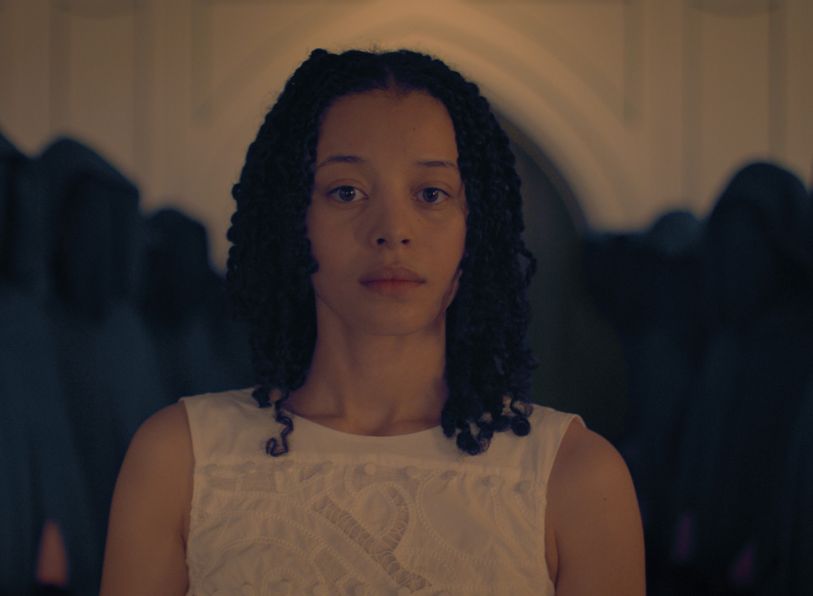
The Testaments does not kick off with rebellion; it starts with conditioning quietly doing its work. Set fifteen years after The Handmaid’s Tale, the series steps into a world where Gilead is no longer breaking in new rules; it is enforcing old ones, normalized, internalized, and second nature to those born into it.
What makes this chapter so gripping is not just the return to a dystopian regime, but the shift in who gets to tell the story. Through young women raised on opposite sides of Gilead’s border, the narrative moves from system to psyche, how belief is shaped, stretched, and slowly unlearned. Agnes grows up inside the machinery and begins to question its seams, while Nicole, raised outside, starts to realize the truths she trusted might not hold.
In this conversation, Birva Pandya opens up to Netflix Junkie about stepping into that world, where less is more, symbolism does the talking, and every emotion lives just beneath the surface. From mapping a character shaped entirely by Gilead’s ideology to finding truth without external reference points, she reflects on the art of building a performance inside a system designed to control it.
ADVERTISEMENT
Article continues below this ad
Shraddha: In The Testaments, Mariam has no memory of life outside Gilead, which means her worldview is entirely shaped by the system. How did you build her inner emotional landscape, especially when she lacks any personal reference point for freedom or individuality? Did you rely more on instinct, research, or source material?
Birva Pandya: Yeah, it was a bit of both. I think that The Handmaid's Tale is such like a big, you know, piece of IP, especially in Canada, but also, Margaret Atwood has made it such a point to really hone in on all the events that happen in terms of like, stuff that has happened in real life in history from all over the world. And so it is such a powerful and culturally impactful piece of writing.
I studied The Handmaid's Tale in high school. And so I was very familiar with the source material, and I watched the show. And so when I got the audition for The Testaments, it was under a working title. And so, in my first few auditions, I really had no idea it was a part of The Handmaid's Tale universe.
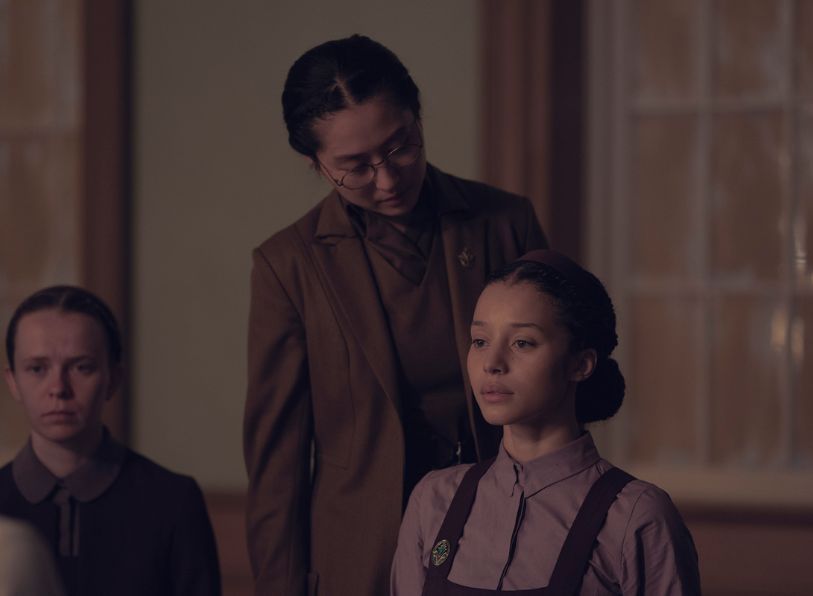
And then as I kept auditioning, you get kind of an idea of, okay, this is a sequel to this show. And I tried to really just keep myself hidden from that. Because I loved the scripts and the sides and the characters that I was auditioning for. And I feel like I find so much potential in those early stages of auditioning. And it is almost like I have also kind of grown to like love auditioning because of that.
It is just like, you know, it is your place. It is like your imagination. And it is the only time where it is your idea of this character in this world that exists. And so even as, you know, I started to realize that this was a sequel, I really tried to keep myself, like, just closed off from that and try to live in the ignorance of like, I do not know what is happening, even though I kind of did.
And I think that really helped me, even on set, just like, understanding that this was in the same world, but still such a different project. And I think that you could see that. I think audiences will be able to see that, too, how much of a difference it is.
Shraddha: The camera in The Testaments often lingers on subtle expressions. Did you adjust your performance style to be more restrained, and how did you calibrate micro-expressions for such an intimate visual language?
Birva Pandya: Yeah, I do not think that I necessarily thought of that entirely. Because again, I think that the styles of The Handmaid's Tale and The Testaments kind of differ because you are seeing it through such like a new lens.
And so I think the way that I just approached it while being on set was just living in the subtlety of it. Because, you know, we are playing very young girls. It is like this youthful energy. And so I feel like when I was a little kid, you were almost kind of so ignorant to like everything around you.
And so instead of honing in on something specific, it was just like living in this youthful energy in the place of a teenager. I feel like it was a lot of nostalgia, I think, while filming, because so many parts of the show, as I remembered from my own life when I was like 13 and 14 years old. And so I think it was just living in, in like the real and in the present.
Shraddha: The domestic art scene, especially leading up to the teapot moment, is very precise. How closely did you collaborate with the director to ensure that moment felt both accidental and socially charged?
Birva Pandya: Yeah, it was actually not practiced that much. I remember being on set, and we just kind of did it a few times. And we tried it in different ways.
It was actually that was one of my favorite scenes to film. And it is kind of a really heightened moment in the show. But I think that it, it was not too much like, it just felt like play, you know, because in the real world, that is such a small moment that you really would not even think it would be that tense or heightened.
And so it was just so fun to like, you know, play with everybody's reaction on set and like really go off of that. So it was just a lot of playing around and moving within the set.
Shraddha: The ball sequence is visually elegant but emotionally tense, especially with the characters becoming more uninhibited. While executing the choreography, how did you ensure that Mariam’s anxiety and pressure remained visible beneath the surface?
Birva Pandya: That scene in that episode, specifically, is kind of the first time that you see the girls a little bit more loose.
You see them like you see a glimpse of what their life is about to look like. And I think that the costumes and the lighting played such a huge role in being able to step into the characters, really, there because for so long, we were building who these girls are as Plums.
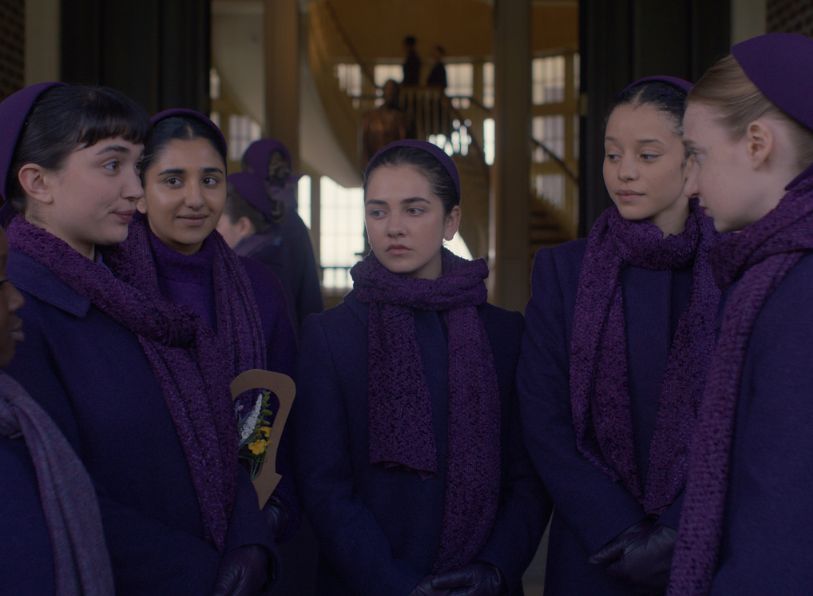
And it is almost like, even though they are a little bit more loosened up, it is almost even more suffocating seeing them in this light, because the way that, you know, they really assembled that ball sequence and like, all the commanders and the dresses and you know, all of it is it is kind of restricting in a way. And so it is ironic, because even though they have a little bit more freedom, it is almost even more suffocating.
And so I think even just like getting into the costume and walking on to set that for that day, just like, immediately, it all clicks. I do not think it took that long, but they were very particular about the choreography. Validly.
So I think that it was, I did, I think, like two dance rehearsals, I could not make one of them because I was doing school at the same time. So I had to fly out for school. But it was like a week, I think of the choreography that was taking place.
But they had a lot of videos and, you know, for practicing, and then we did a bit of practicing on set. But yeah, I think that it was mostly just the camera work, along with the choreography, that had to be kind of in sync. So it was more of that on set, like finding the right balance to showcase all the beautiful girls and the wonderful dances.
Shraddha: The costumes in Gilead are deeply symbolic, from pinks to plums to green pins. How did wearing these distinct markers of status influence your mindset and performance throughout Mariam’s journey?
Birva Pandya: Yeah, it is kind of what I was talking about earlier. Costumes are such an integral part of the show. And I think even with The Handmaid's Tale, fans could see how production design and set decoration, and especially costumes is such an influential role.
It is the way that you are labeled, I think, as a woman in this society. And so with the young girls, you know, you have the pearls, you have the pinks, and the plums. And I think, especially when we had a lot of like, heavy days with like the ensemble cast, and like, you have all the extras around you too.
And it is like, you really are building that world. When you see it, and especially like stepping into Mariam for me, who, this is like all she has ever known. It is, you know, the puzzle pieces all kind of fit. And through her eyes, it is order. It is like the way of order. It is the way this world works.
So it, for her, just makes sense. And it is this idea that, she is driven by this one purpose is to be a wife. And, so I think that it just really represents the labels that like Gilead sets for these young women. And especially when you see it in the show and all the different colors, like it really comes to life.
Shraddha: What was your experience like working with your co-star Chase Infiniti and the rest of the cast?
Birva Pandya: I have been so lucky to have worked on projects where I have gotten to learn from so many talented people. And I think everybody in this cast is just so perfect. I think the casting did such a tremendous job on casting every character.
And, you know, some of these days, they were like long days. And so it is really such a great experience, like when you get to be on set for like these long days with people that you really, you know, like and have a friendship with.
And I think, especially to speak to Chase, I mean, she is like so talented, and also just so incredibly kind. And I think that you see that through her characters. And it is one of my favorite things about Agnes, like her, her empathy for others, and the kindness that she shows even when she is under such insane circumstances when we all are.
And I think that everybody brought just such a unique and distinct personality trait to their characters. And it is what really makes the show come alive. And it is why the theme of friendship is also so important. I do not think that, you know, you would be able to see that on screen if we did not have that offset.
Shraddha: The Testaments is not just a sequel but a tonal and generational shift within the Gilead timeline. How did you balance continuity with The Handmaid’s Tale while carving out a distinct identity for this new chapter?
Birva Pandya: I think the balance plays out quite well because, like, it makes sense. Of course, if you are seeing the perspective through a new lens and through the lens of like a bunch of teenage girls, you are going to find such a semblance of balance between the anger and the power and the, and the humor of it.
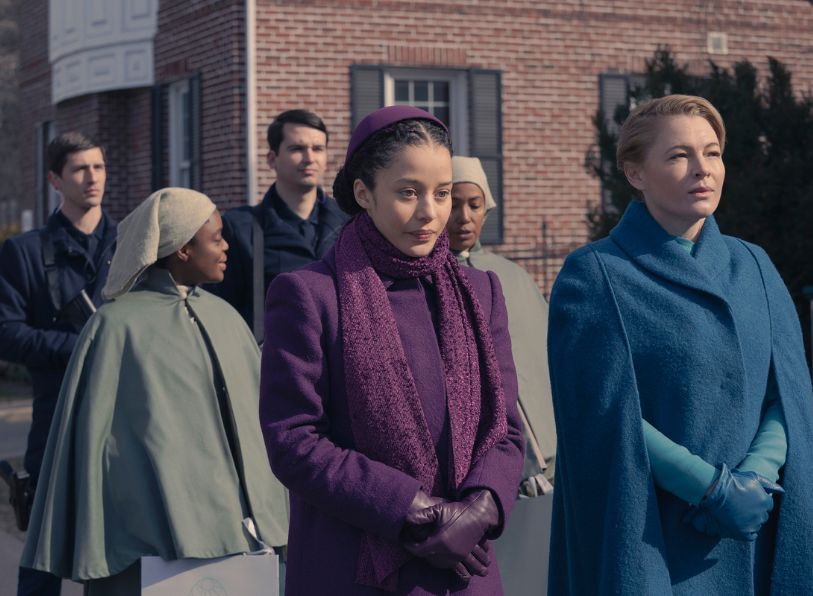
Because I remember even just going back to like my experiences of being like a teenager, it is, you are, it is like such a transitional phase in your life, and you are going through all these emotions. And I think that it is just so brilliant, and it plays out so well because of course you have these dark themes, but when you are seeing it through the perspective of like a group of girls, everything automatically just is so much closer, and it hits so much deeper because of that.
I feel like the stakes are raised even more because you are looking at like these young girls and you are like, you feel so bad for them, but there is this humor with it because they are also just girls. And so I love that.
Shraddha: Figures like Aunt Lydia operate as both authority and enigma within Gilead. How does Mariam perceive such figures, and how did that perception influence your performance in the series, especially in relation to power and control?
Birva Pandya: Yeah, for sure. I think that Mariam is someone who really values order because that is really, I think, how she makes sense of this world, through order and finding, like the right way of things, like she needs a path to look at.
ADVERTISEMENT
Article continues below this ad
And so with the aunts, in the school, I think that there is there are people that she looks up to and also often as mentors because from her parents and also from Gilead and the aunts, like her one purpose is just to be a wife and find a husband and gain the most power she can over her life and gain the most agency she can.
And so I think that she really believes that if she just follows orders and, you know, the way of things and follows the rules, she will get to that. And so throughout the season, when she kind of feels like the purpose that she has been like looking for her entire life, it is almost like falling right in front of her. It is like now, like, where do I go from here?
ADVERTISEMENT
Article continues below this ad
What are your thoughts on the upcoming sequel to The Handmaid’s Tale, The Testaments? Let us know in the comments.
ADVERTISEMENT

Edited By: Itti Mahajan
ADVERTISEMENT
ADVERTISEMENT
